.webp&w=384&q=75)

Loading, please wait...
Loading, please wait...
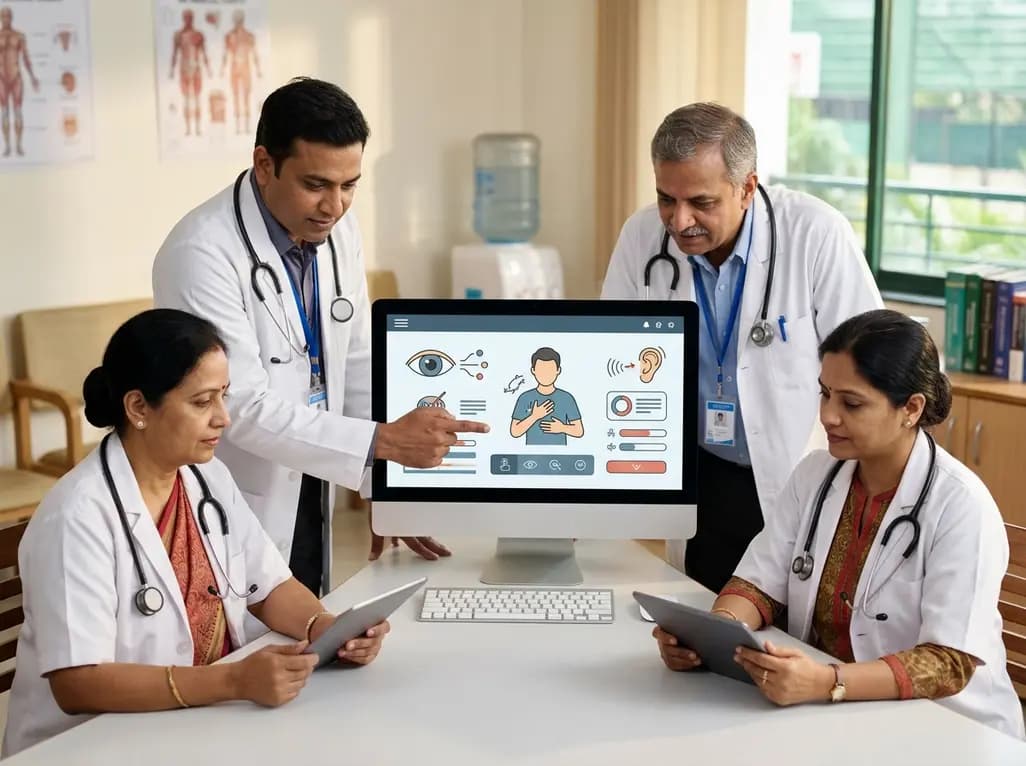
The National Medical Commission (NMC) has issued a vital public notice urging all medical colleges and institutions to engage in crucial initiatives for Deafblindness Awareness. This directive emphasizes participation in an 'Awareness Quiz' and a comprehensive 'Online Course' to coincide with the International Day of Deafblindness, observed globally on June 27th each year. This significant date marks the birth anniversary of Helen Keller, a world-renowned deafblind author, educator, and ardent advocate for the rights and education of individuals with disabilities. Consequently, the NMC's proactive stance aims to foster a more inclusive and empathetic medical community across India. Therefore, understanding these initiatives is crucial for all healthcare professionals.
The core objective of these programs is to elevate public and professional understanding of deafblindness, promote the fundamental rights of affected individuals, and champion their inclusion and overall well-being. Additionally, the Department of School Education & Literacy has developed an Awareness Quiz, specifically designed to enhance understanding of deafblindness and highlight the pressing need for accessible education, effective communication strategies, and inclusive opportunities for persons living with this unique disability. This quiz caters to school students, teachers, and the general public, broadening its reach significantly. Furthermore, this broad approach ensures that the message of inclusion resonates across various segments of society, reinforcing the importance of sustained Deafblindness Awareness.
Deafblindness represents a distinct disability, characterized by a dual sensory impairment encompassing both hearing and vision loss, which significantly affects communication, mobility, and access to information. Importantly, a person does not need to be completely deaf and completely blind to be considered deafblind; the severity of the condition varies widely. This unique combination presents profound challenges for individuals in their daily lives, as approximately 95% of human learning typically occurs through sight and hearing. Consequently, those with deafblindness often face substantial difficulties interacting with their environment and engaging in society. Recognizing this, the United Nations officially proclaimed June 27th as the International Day of Deafblindness in 2021, affirming it as a distinct disability requiring specific support and services globally.
In India, estimates suggest approximately 5.5 lakh people live with severe deafblindness, highlighting the immense scale of this challenge. Despite its prevalence, deafblindness often remains a low-incidence and 'hidden' disability within communities, largely due to limited visibility and widespread awareness. The NMC's initiative directly addresses this gap by promoting enhanced Deafblindness Awareness among medical professionals. Moreover, increased awareness can lead to earlier identification and intervention, which are critical for improving outcomes and enabling affected individuals to achieve their full potential. Therefore, these educational programs are indispensable for equipping healthcare providers with the knowledge needed to support this vulnerable population effectively.
To further enhance national Deafblindness Awareness and build the capacity of essential stakeholders, the Central Institute of Educational Technology (CIET-NCERT), in collaboration with 'Sense International India,' has developed a comprehensive five-day online awareness course titled "Understanding Deaf-Blindness". This course is meticulously designed to sensitize a broad audience, including teachers, special educators, caregivers, students, and the general public. It covers crucial aspects such as the causes and characteristics of deafblindness, effective communication strategies, assistive technologies, and the necessary support systems for ensuring the inclusion and active participation of persons with deafblindness. The course content is accessible via a dedicated YouTube link, making it widely available for self-paced learning. (Course Link).
The NMC's public notice specifically requests all Medical Colleges and Institutions to actively encourage their faculty members and students to participate in both the 'MyGov Awareness Quiz' and this five-day online course. This direct appeal underscores the regulatory body's commitment to integrating disability awareness into mainstream medical education. Participation in these initiatives offers a structured pathway for healthcare professionals to deepen their understanding of this complex condition. Additionally, the quiz, which went live on July 6, 2026, provides an interactive platform for assessing and reinforcing knowledge acquisition (Quiz Link). Consequently, these programs represent a significant step towards creating a more informed and empathetic healthcare workforce, critically improving Deafblindness Awareness.
The NMC's emphasis on Deafblindness Awareness directly translates into tangible benefits for medical professionals and the patients they serve. By participating in these specialized courses and quizzes, doctors gain essential insights into early identification, appropriate referral pathways, and effective communication techniques for individuals with deafblindness. This enhanced knowledge equips them to provide more holistic and person-centered care, moving beyond mere symptom management to address the broader needs of patients with dual sensory loss. Moreover, understanding assistive technologies and support systems allows medical practitioners to advocate more effectively for their patients, ensuring access to necessary resources and services.
Furthermore, the directive fosters a culture of inclusivity within medical institutions. When future doctors are trained with a strong foundation in disability awareness, they are more likely to approach all patients with sensitivity and respect for their unique challenges. This ultimately leads to improved patient satisfaction and better health outcomes for the deafblind community. For instance, an ophthalmologist or an otolaryngologist, while specializing in vision or hearing, can significantly benefit from a holistic understanding of deafblindness, appreciating the compounding effect of dual impairment. Therefore, the NMC's encouragement acts as a catalyst for integrating comprehensive disability education into the medical curriculum, enhancing the quality of healthcare provided across various specialties. Learn more about inclusive healthcare practices.
The International Day of Deafblindness, celebrated annually on June 27th, profoundly connects to the extraordinary life and enduring legacy of Helen Keller. Born on this day in 1880, Keller lost her sight and hearing at just 19 months old due to an illness, yet she defied all odds to become an internationally recognized author, educator, and activist. Her remarkable journey, especially learning to communicate through the dedicated efforts of her teacher Anne Sullivan, transformed perceptions of deafblindness worldwide. Keller's autobiography, "The Story of My Life," published in 1904, brought her experiences to a global audience, demonstrating the immense potential of individuals with disabilities. She subsequently travelled to 35 countries, advocating for disability rights, women's suffrage, labor rights, and world peace.
Helen Keller's unwavering advocacy has inspired countless initiatives aimed at promoting Deafblindness Awareness and inclusion. Her life serves as a powerful testament to the fact that with appropriate support and opportunities, individuals with deafblindness can lead fulfilling and impactful lives. Consequently, observing the International Day of Deafblindness on her birth anniversary is a fitting tribute to her pioneering spirit and relentless efforts to break down barriers. Her work laid the groundwork for organizations like Sense International India, which continue to champion the rights and well-being of the deafblind community today. Therefore, the NMC's recent public notice, by aligning with this significant date, reinforces the global commitment to advancing Keller's vision of a more accessible and inclusive world for everyone.
Medical colleges and practitioners can implement several practical steps to actively foster more inclusive healthcare environments for individuals with deafblindness, moving beyond mere awareness to actionable change. Firstly, institutions should establish clear protocols for identifying and documenting deafblindness in patient records, ensuring that appropriate communication aids and support are offered from the outset. Training staff, including receptionists, nurses, and doctors, in basic communication methods like tactile signing or guided hand-over-hand techniques can significantly improve patient interactions. Moreover, medical facilities should ensure that information, such as appointment details or patient education materials, is available in accessible formats, including large print, Braille, or digital formats compatible with screen readers. This proactive approach ensures equitable access to critical health information.
Secondly, collaborating with local disability organizations, such as Sense International India, can provide invaluable resources and expertise in developing and implementing inclusive practices. These partnerships can facilitate workshops, provide specialized training, and offer guidance on adapting physical environments to be more accessible, such as ensuring clear pathways and appropriate lighting. Furthermore, promoting research into the specific health challenges and needs of the deafblind community can lead to more targeted and effective interventions. By actively engaging with these strategies, medical professionals can play a pivotal role in dismantling barriers and creating healthcare systems that genuinely serve all members of society. Hence, sustained commitment to these practical measures is essential for comprehensive Deafblindness Awareness and inclusion.
Disclaimer: This content is for informational and educational purposes only... Refer to the latest local and national guidelines for clinical practice.
References

Read summarized clinical updates, watch expert medical content, and earn CME certifications right from your smartphone.
Open your smartphone camera to scan and install.





The National Medical Commission (NMC) encourages medical colleges and institutions to participate in 'Awareness Quiz' and 'Online Course' initiatives focusing on Deafblindness Awareness, coinciding with the International Day of Deafblindness. This effort aims to foster greater understanding and inclusion.
3 months ago

As monsoon seasons elevate arboviral disease threats, Tamil Nadu has initiated an ICMR-monitored evaluation of the tetravalent dengue vaccine in Tenkasi district. Clinicians emphasize clinical monitoring, public prevention, and high-quality early pediatric care to reduce disease morbidity across endemic regions.
Today

A comparative cohort study evaluates vNOTES vs TLH hysterectomy for benign conditions, demonstrating shorter operative duration, faster return to daily activities, and equivalent female sexual function scores without increased dyspareunia.
Today

Review how tailored exercise programs benefit frail older patients with heart failure. Explore pathophysiological mechanisms, individualized training prescriptions, and strategies to overcome adherence barriers in clinical practice.
Today

This comparative study evaluates posterior labral tears with and without glenohumeral instability, highlighting distinct demographic patterns, MRI underestimation in stable shoulders, and successful arthroscopic repair outcomes.
Today

A clinical study demonstrates that early intervention with tocilizumab, either as monotherapy or bridged with corticosteroids, achieves significant proptosis reduction and resolves active inflammation in treatment-naive thyroid eye disease.
Today
