.webp&w=384&q=75)

Loading, please wait...
Loading, please wait...

The surgical management of ductal carcinoma in situ (DCIS) has undergone significant evolution over the past several decades. Clinicians have long debated the appropriate width for surgical margins to minimize the risk of ipsilateral breast tumor recurrence (IBTR). Traditionally, a 2 mm margin has been considered the gold standard for adequacy in patients undergoing breast-conserving surgery. However, recent evidence from the NRG Oncology/NSABP B-35 randomized clinical trial suggests that this rigid threshold might require reevaluation. Understanding the clinical implications of DCIS lumpectomy margins is vital for surgeons and oncologists aiming to optimize patient outcomes while avoiding unnecessary re-excisions. This prospective analysis investigates how margin width influences recurrence in postmenopausal women receiving multimodal therapy. Specifically, the study highlights the efficacy of combining whole-breast irradiation with endocrine therapy. Consequently, the findings provide a more nuanced perspective on surgical success. By examining long-term data, this research challenges historical mandates and offers a pathway toward more personalized surgical care in breast oncology. Therefore, the focus shifts from margin width alone to the cumulative benefit of all treatment modalities.
Historically, the transition from radical mastectomy to breast-conserving therapy necessitated clear evidence regarding the safety of smaller excisions. Initial trials focused on invasive cancer, yet DCIS presented unique challenges due to its non-obligate progression and multifocal nature. Furthermore, early consensus statements often varied in their definitions of a negative margin, ranging from simple "no ink on tumor" to widths exceeding 10 mm. In 2016, the Society of Surgical Oncology (SSO) and the American Society for Radiation Oncology (ASTRO) established the 2 mm rule. This guideline aimed to provide a standardized target for surgeons worldwide. However, this recommendation was largely based on retrospective meta-analyses rather than prospective randomized trials. Consequently, many patients with margins under 2 mm were routinely subjected to re-excision surgeries. While re-excision ensures local control, it also increases patient anxiety, healthcare costs, and the risk of poor cosmetic results. In addition, the physiological impact of multiple surgeries can be significant for older patients. Therefore, the medical community has eagerly awaited prospective data to clarify whether this 2 mm threshold is truly mandatory when effective adjuvant therapies are utilized. Notably, the integration of radiation and hormone blockers has fundamentally changed the landscape of local recurrence risk management.
The NSABP B-35 trial was a phase 3, double-blind, randomized clinical study designed primarily to compare the efficacy of tamoxifen and anastrozole in postmenopausal women. Specifically, the study enrolled participants with hormone receptor-positive DCIS who had undergone lumpectomy and whole-breast irradiation. A key component of this trial was the prospective collection of margin width data within three months of randomization. Researchers categorized margins into distinct groups: positive (ink on tumor), close (less than 2 mm), and negative (greater than or equal to 2 mm). Subsequently, they monitored these patients for a median follow-up period of nearly a decade to assess the rates of ipsilateral breast tumor recurrence. Because the trial maintained a homogeneous population of postmenopausal women, it provided a robust environment for secondary analysis. Moreover, the trial’s structure allowed for a direct comparison of how different endocrine therapies interact with surgical outcomes. This methodology represents a significant advancement over previous retrospective studies, which often lacked standardized reporting. By analyzing more than 2,500 patients, the trial offered sufficient statistical power to detect meaningful differences in recurrence based on surgical margins. Consequently, the results carry substantial weight in contemporary surgical oncology discussions.
When analyzing the primary outcomes, the researchers focused intensely on the 10-year cumulative incidence of local recurrence. Specifically, they found that for patients with DCIS lumpectomy margins less than 2 mm, the incidence of recurrence was approximately 5.3%. In contrast, patients who achieved margins of 2 mm or greater experienced a recurrence rate of 3.8%. Although this difference achieved borderline statistical significance, its clinical impact is considered minimal by many experts. Furthermore, when the threshold was lowered to 1 mm, the results remained similarly consistent. Patients with margins under 1 mm had a 10-year recurrence rate of 5.6%, while those with wider margins were at 4.0%. Notably, the study also tracked the incidence of invasive versus non-invasive recurrences. Interestingly, the type of endocrine therapy used—either tamoxifen or anastrozole—did not significantly alter the relationship between margin width and recurrence risk. Therefore, the absolute risk reduction provided by achieving a wider margin appears relatively small in the context of modern adjuvant care. These findings suggest that for postmenopausal women receiving radiation and hormone therapy, a "close" margin of 1 to 2 mm may be oncologically acceptable. Consequently, the routine practice of returning to the operating room for such narrow margins may warrant serious reconsiderations in clinical practice.
One of the most significant takeaways from the NSABP B-35 analysis is the powerful role of adjuvant treatment in neutralizing the risks associated with narrow margins. Specifically, whole-breast irradiation (WBI) serves as a critical safety net by eradicating residual microscopic disease that may persist near the surgical site. Moreover, the addition of five years of endocrine therapy provides a secondary layer of protection by addressing the hormone-sensitive nature of the DCIS cells. In this trial, the overall low rates of recurrence across all margin categories highlight the synergy between these modalities. Furthermore, the data indicate that systemic control effectively compensates for less-than-optimal surgical clearance. Consequently, the aggressive pursuit of wide margins may be less critical than ensuring high compliance with radiation and hormonal regimens. In addition, this multimodal approach allows for a more conservative surgical strategy, which can improve patient satisfaction and cosmetic outcomes. Interestingly, the trial did not observe a significant benefit for margins wider than 5 mm, suggesting a plateau in the benefit of surgical clearance. Therefore, clinicians should view surgery as one component of a broader, integrated treatment plan rather than a standalone curative measure. This perspective shifts the focus toward the total burden of care and the long-term quality of life for the patient.
The clinical implications of these findings are profound for the modern breast surgeon. Specifically, the data provide a strong argument for de-escalating surgical intervention in carefully selected patients. If a postmenopausal woman with hormone receptor-positive DCIS has a clear but narrow margin, the decision for re-excision should be personalized. Surgeons must consider the patient’s overall health, the size of the tumor, and the potential cosmetic deformity from additional surgery. Moreover, the minimal absolute difference in recurrence rates suggests that the benefit of re-operation may not outweigh the risks for many individuals. Therefore, the "2 mm rule" should perhaps be viewed as a guideline rather than a strict mandate. Notably, this trial reinforces the importance of patient counseling, where the small risk of recurrence is balanced against the benefits of breast conservation. Furthermore, the findings may help reduce the psychological burden on patients who are often distressed by the news of "close" margins. Consequently, the surgical community is moving toward a more flexible, evidence-based approach that prioritizes individualized risk assessment over rigid histological cutoffs. Ultimately, these results from the NSABP B-35 trial empower clinicians to make more informed, patient-centered decisions in the management of DCIS.
Before this landmark trial, the standard guidelines were established by a consensus panel in 2016. These recommendations stated that a 2 mm margin was the optimal width to minimize the risk of recurrence in DCIS patients treated with breast-conserving surgery and radiation. This threshold was widely adopted to reduce variability in surgical practice and to provide a clear target for pathologists and surgeons across various clinical settings.
The NSABP B-35 trial prospectively collected margin data on over 2,500 postmenopausal women. Unlike previous retrospective analyses, this study followed patients who were randomized to receive specific endocrine therapies alongside radiation. By tracking outcomes for a decade, researchers could precisely calculate the risk of recurrence for margins under 1 mm, between 1 and 2 mm, and over 2 mm, providing the most robust prospective data currently available on this topic.
For postmenopausal women with hormone receptor-positive DCIS receiving both radiation and endocrine therapy, a margin under 2 mm does not significantly increase the long-term risk of recurrence compared to wider margins. This suggests that routine re-excision may be unnecessary for patients in this specific demographic. Instead, clinicians should focus on ensuring the patient completes their adjuvant therapy, which effectively compensates for the small absolute risk associated with narrow surgical margins.
Disclaimer: This content is for informational and educational purposes only. It does not constitute professional medical advice, diagnosis, or treatment. Always seek the advice of your physician or other qualified healthcare provider with any questions you may have regarding a medical condition. Refer to the latest local and national guidelines for clinical practice.
References
Wapnir IL et al. Lumpectomy Margins and Local Recurrence in DCIS: Results From the NRG Oncology/NSABP B-35 Randomized Clinical Trial. JAMA Surg. 2026 Jul 01. doi: 10.1001/jamasurg.2026.2340. PMID: 42384406.
Morrow M, Van Zee KJ, Solin LJ, et al. Society of Surgical Oncology-American Society for Radiation Oncology-American Society of Clinical Oncology Consensus Guideline on Margins for Breast-Conserving Surgery with Whole-Breast Irradiation in Ductal Carcinoma in Situ. Ann Surg Oncol. 2016;23(12):3801-3810.
Margolese RG, Cecchini RS, Julian TB, et al. Anastrozole versus tamoxifen in postmenopausal women with ductal carcinoma in situ undergoing lumpectomy plus radiotherapy (NSABP B-35): a randomised, double-blind, phase 3 clinical trial. Lancet. 2016;387(10021):849-856.

Read summarized clinical updates, watch expert medical content, and earn CME certifications right from your smartphone.
Open your smartphone camera to scan and install.





The NSABP B-35 trial reevaluates the necessity of wide margins in postmenopausal women with DCIS. Findings suggest that with whole-breast irradiation and endocrine therapy, margins under 2mm do not significantly increase local recurrence risk, potentially reducing the need for routine re-excision surgery.
3 months ago

The TREM-AB open-label pilot study evaluated a wearable passive nonlinear vibration absorber for essential tremor. The Nonlinear Energy Sink bracelet reduced clinical Fahn-Tolosa-Marin tremor scores by 32.1% and electrophysiological tremor power by 49.2% with no adverse effects reported.
Today

A population-based study of 20,928 children reveals that small vulnerable newborns face sex-divergent mental capital outcomes at ages 6-7: term SGA girls show higher behavioral difficulties and lower resilience, while preterm non-SGA boys experience increased behavioral problems.
Today
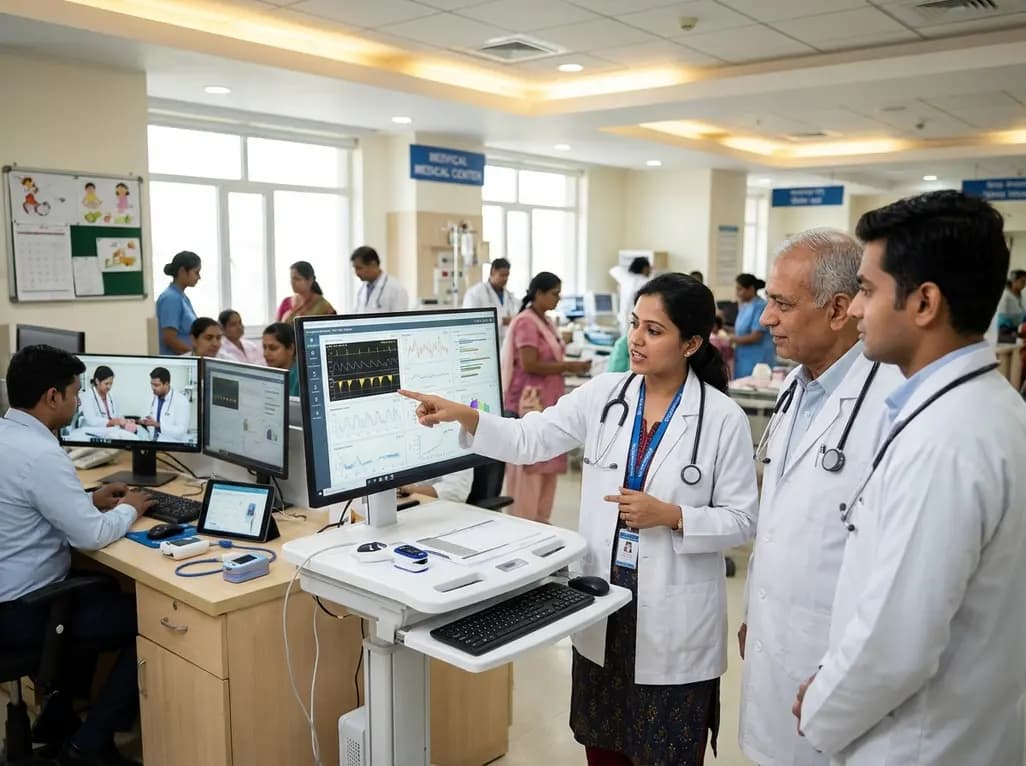
A landmark study details how an enterprise pediatric remote patient management model expanded from a single cardiology pilot to 16 diverse specialty programs by combining centralized digital operations with specialty clinical leadership.
Today

A comparative review of tension band wiring and intramedullary screw fixation in thumb metacarpophalangeal arthrodesis, evaluating union rates, hardware complications, and clinical outcomes.
Today

A breakthrough ultrathin multimodal sensor decouples physical hemodynamic monitoring from disposable electrochemical calibration, achieving long-term wearable glucose prediction with 81.36% accuracy and a 9.12% MARD. This offers a robust, drift-free solution for outpatient metabolic surveillance.
Today
