.webp&w=384&q=75)

Loading, please wait...
Loading, please wait...

Researchers recently introduced CUNEX. Specifically, this is an innovative open-source corneal segmentation deep learning framework designed for anterior segment optical coherence tomography (AS-OCT). In addition, this tool automates the segmentation process. Consequently, it is essential for diagnosing corneal pathologies. Furthermore, by utilizing a large dataset from Moorfields, the model identifies healthy corneas. Moreover, it detects conditions like keratoconus. Therefore, this advancement addresses the need for reliable analysis. In conclusion, it represents a major step forward.
Furthermore, CUNEX outperforms traditional models. Specifically, it generalizes across different devices. However, most existing algorithms suffer from performance drops when using new hardware. In contrast, CUNEX maintains high accuracy across multiple platforms. Similarly, it works well with Casia and Anterion devices. Therefore, it provides a stable foundation for research. Moreover, the open-source nature encourages transparency. Consequently, it fosters rapid improvement. In addition, it supports multicenter research. Finally, it ensures data consistency.
Additionally, the accuracy of this framework allows for precise tasks. For instance, it improves disease staging for Fuchs endothelial corneal dystrophy. Moreover, the model helps analyze demographic factors like age and sex. Because the segmentation is meaningful, it ensures clinical relevance. Specifically, clinicians can rely on automated measurements. Consequently, they can monitor progression. Therefore, this efficiency improves management. In addition, it boosts diagnostic accuracy. Furthermore, it saves time for practitioners. As a result, patient outcomes may improve.
CUNEX offers superior cross-device external validation. Specifically, while other models degrade when using images from different OCT machines, CUNEX maintains high accuracy. Therefore, it is more versatile for various clinical settings.
The model was specifically trained on healthy eyes, keratoconus, and Fuchs endothelial corneal dystrophy. Consequently, it provides robust segmentation for these common conditions.
Disclaimer: This content is for informational and educational purposes only. It does not constitute medical advice or a professional relationship. Refer to the latest local and national guidelines for clinical practice.
References
Kandakji L et al. An Open-Source Deep Learning Framework for Automated Corneal Segmentation in Anterior Segment Optical Coherence Tomography With Cross-Device External Validation. Cornea. 2026 Apr 10. doi: 10.1097/ICO.0000000000004130. PMID: 41962147.
Falk T, et al. U-Net: deep learning for cell counting, detection, and morphometry. Nature Methods. 2019.

Read summarized clinical updates, watch expert medical content, and earn CME certifications right from your smartphone.
Open your smartphone camera to scan and install.





CUNEX is an open-source deep learning framework providing automated corneal segmentation in AS-OCT images with high accuracy across different devices....
6 months ago
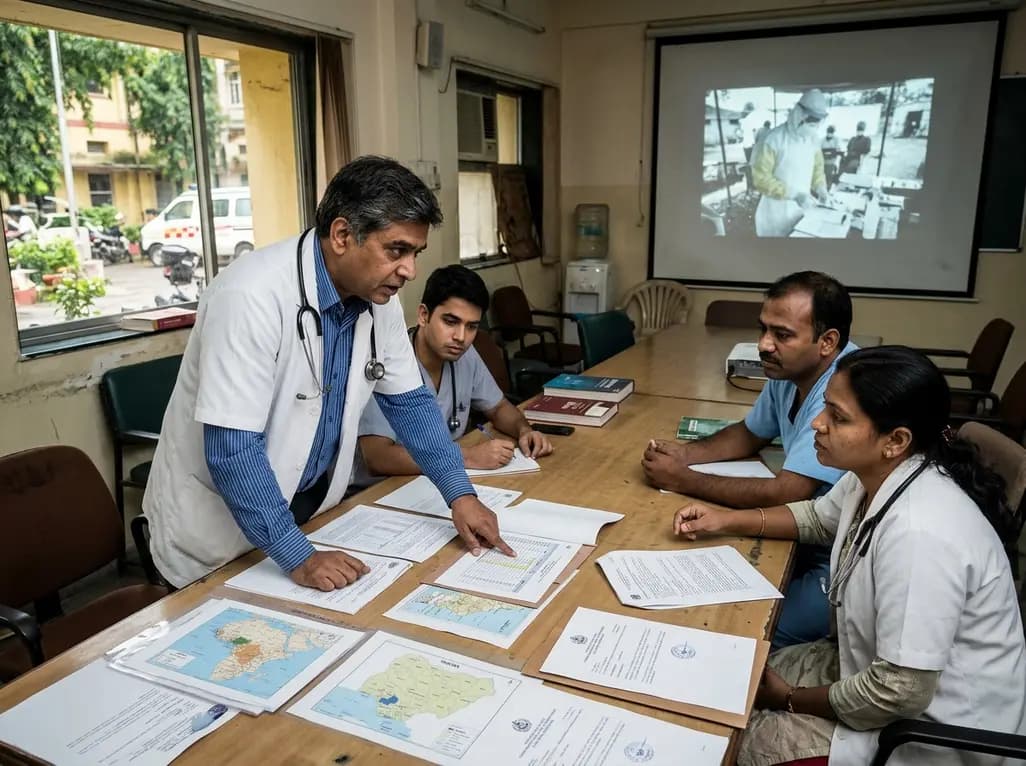
Following Nigeria's first recorded Ebola case linked to regional travel, the Africa CDC has convened an emergency ministerial summit. This alert underscores critical clinical priorities for healthcare professionals, including differentiating early viral infection from malaria, implementing barrier nursing, and triage.
Today

Leucine Rich Bio has introduced South Asia's first comprehensive vaginal microbiome test, BugSpeaks. By profiling microbial dysbiosis, pathogens, and antimicrobial resistance, this next-generation diagnostic platform provides clinicians with deeper insights into recurrent infections, fertility, and reproductive health.
Today

Review how tailored exercise programs benefit frail older patients with heart failure. Explore pathophysiological mechanisms, individualized training prescriptions, and strategies to overcome adherence barriers in clinical practice.
Today

This comparative study evaluates posterior labral tears with and without glenohumeral instability, highlighting distinct demographic patterns, MRI underestimation in stable shoulders, and successful arthroscopic repair outcomes.
Today

A clinical study demonstrates that early intervention with tocilizumab, either as monotherapy or bridged with corticosteroids, achieves significant proptosis reduction and resolves active inflammation in treatment-naive thyroid eye disease.
Today
