.webp&w=384&q=75)

Loading, please wait...
Loading, please wait...
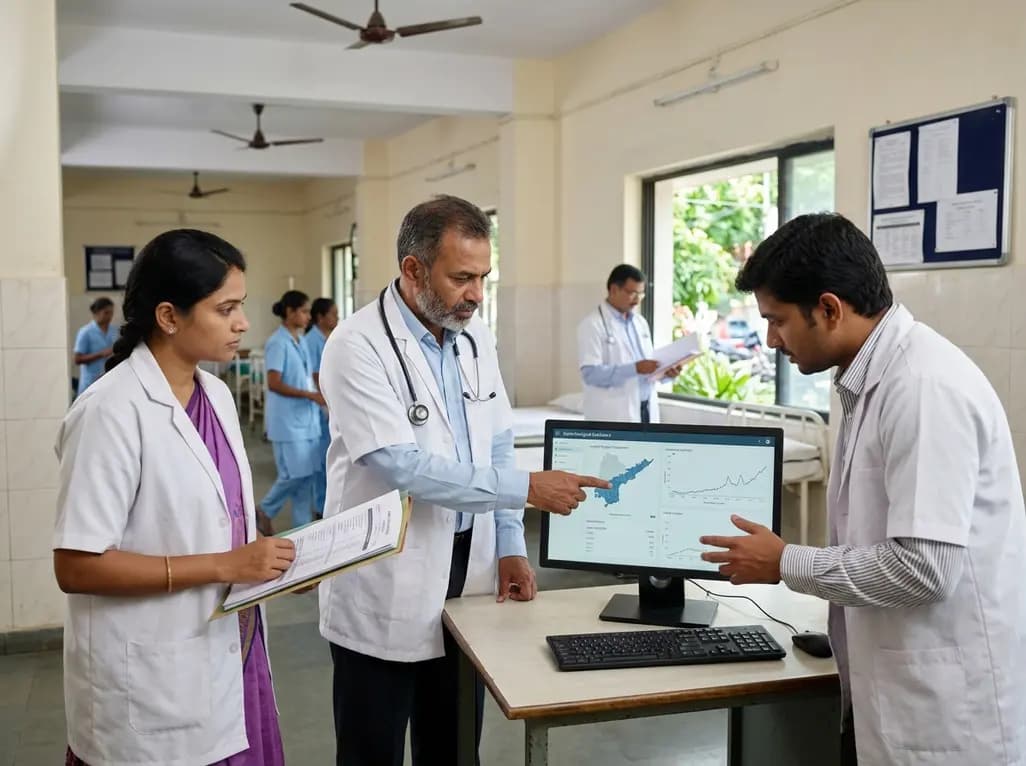
The sudden emergence of new Covid-19 cases in Andhra has caught the attention of healthcare professionals across India. Between June 26 and July 16, 2026, the state recorded twelve positive cases and four associated deaths. Consequently, this development has sparked discussion regarding current public health measures and epidemiological trends. Although these numbers remain low, clinicians must understand the underlying patterns. This article provides an extensive clinical overview of the recent cases, localized distribution, comorbidities, and the state's preparedness.
According to official reports, the first patient of the year emerged on June 26 in Kadapa district. Subsequently, between July 1 and July 16, eleven more infections appeared. This brought the cumulative total of Covid-19 cases in Andhra to twelve. Fortunately, public health officials have confirmed that the spread is largely sporadic rather than a clustered outbreak. Health Commissioner G Veerapandian stated that officials detected cases across different municipal mandals and localities. Therefore, this pattern indicates that there is no active cluster transmission. Among the infected individuals, three remain in home isolation, while two undergo hospital treatment. Meanwhile, three patients have successfully recovered and been discharged. The remaining four cases unfortunately resulted in patient fatalities. Clinicians should observe that the state conducted sixty-seven diagnostic tests in this timeframe. This yields a high test positivity rate of approximately sixteen percent. Furthermore, physicians at Christian Medical College in Vellore diagnosed one positive case. This highlights critical cross-border healthcare seeking behaviors. Medical authorities continue to trace contacts closely to prevent any potential community transmission.
While the infection rate remains low, the clinical severity among vulnerable patient groups demands close attention. All four patients who succumbed to the virus during this period suffered from severe, pre-existing comorbidities. Specifically, the Health Department identified hypertension, diabetes, and renal diseases as primary contributing factors in these fatalities. For instance, a forty-six-year-old male admitted with acute breathlessness succumbed to severe bilateral lung damage. Another sixty-year-old patient with extensive kidney disease and uncontrolled diabetes died while undergoing specialized treatment. Therefore, these cases reinforce the established clinical consensus that older adults and individuals with chronic diseases face the highest risk of severe outcomes. Consequently, medical practitioners must maintain a high index of suspicion when treating respiratory symptoms in these specific patient cohorts. Early diagnostic testing and prompt intervention remain essential to manage complications. In addition, healthcare providers should emphasize the importance of regular monitoring for diabetic and renal patients. By optimizing the management of chronic conditions, clinicians can significantly reduce the likelihood of severe respiratory infections. Ultimately, protective strategies must prioritize these vulnerable groups to mitigate mortality rates during localized viral surges.
An examination of the geographical distribution reveals that Kadapa district reported the highest volume of infections. Specifically, Kadapa accounted for eight of the twelve active cases and three of the four fatalities. Meanwhile, Guntur reported two cases, while Visakhapatnam and Kakinada recorded one case each. The remaining death occurred in Kakinada district. Because these infections occurred across different mandals, authorities have not classified this as a synchronized outbreak. However, neighboring states have initiated precautionary measures to prevent potential cross-border transmission. For example, the state of Odisha has expanded diagnostic testing in districts sharing borders with Andhra Pradesh. Additionally, health officials in Andhra Pradesh deployed rapid response teams to perform contact tracing. They also initiated localized sanitation drives in the affected areas. To identify the exact circulating viral variant, authorities sent five patient samples to the National Institute of Virology in Pune for genome sequencing. Experts believe that the currently circulating variants belong to the Omicron lineage. These variants generally cause mild symptoms in healthy individuals but pose risks to high-risk patients. Thus, maintaining active genomic surveillance is crucial to identify potential mutations.
To place these numbers in a broader perspective, we must examine the national epidemiological landscape. Since July 1, 2026, India has reported a total of 339 active cases across several states. Kerala leads this nationwide tally with 115 cases, followed by Karnataka with 64 cases. In addition, Maharashtra recorded 43 cases, while Tamil Nadu reported 39 cases. Both Delhi and the Andaman and Nicobar Islands documented 18 cases each, and Rajasthan recorded 12 cases. Consequently, this indicates that viral activity is not isolated to Andhra Pradesh. Instead, it reflects a broader, low-level national trend of fluctuating viral circulation. Fortunately, clinical data suggests that the overall national caseload remains extremely manageable compared to past waves. Hospitals are not experiencing severe surges, oxygen shortages, or critical resource deficits. Because widespread immunity from vaccinations and prior infections protects the general public, most patients experience only mild, self-limiting symptoms. However, localized increases in transmission still occur in periodic cycles. Therefore, medical professionals must stay informed about these regional fluctuations to provide accurate patient counseling. Understanding the national context helps clinicians reassure the public while maintaining necessary clinical vigilance.
Based on the current clinical findings, healthcare providers must implement proactive strategies to protect high-risk populations. First, physicians should actively counsel elderly patients and those with underlying illnesses to wear masks in crowded settings. Furthermore, clinicians must encourage up-to-date vaccinations for individuals who have significant chronic health conditions. In the outpatient clinic, maintaining a high index of suspicion for respiratory symptoms is essential. For instance, clinicians should perform rapid antigen or RT-PCR tests for patients presenting with persistent cough or fever. Additionally, hospitals must ensure that isolation facilities and essential medical stocks remain fully prepared. Although the current outbreak does not warrant public panic, structured clinical preparedness remains vital. Clinicians should also educate patients on basic hand hygiene and self-isolation protocols if they develop mild symptoms. By acting as reliable sources of evidence-based information, doctors can prevent unnecessary anxiety in the community. Ultimately, managing localized surges successfully relies on early identification, targeted protection of vulnerable individuals, and clear communication. Through these efforts, the medical community can ensure that sporadic cases do not escalate into widespread health emergencies.
Q1: Why are we seeing a rise in Covid-19 cases in Andhra?
The minor rise in Covid-19 cases in Andhra represents a natural, periodic fluctuation typical of endemic respiratory pathogens. Rather than indicating a new major wave, these sporadic cases occur as the virus mutates slightly to bypass existing immunity. Because the overall population has robust immunity from vaccination and prior exposure, the transmission remains localized, slow, and mostly mild, except in individuals with severe underlying medical conditions.
Q2: Which patient populations face the highest risk during these localized surges?
Elderly individuals and patients with severe comorbidities face the highest risk of severe complications and mortality. Clinical data from the recent cases highlights that underlying conditions such as uncontrolled diabetes, chronic kidney disease, and severe hypertension significantly elevate the risk. Therefore, healthcare providers must focus protective measures on these specific patient groups, ensuring early diagnosis, regular health monitoring, and the prompt management of respiratory symptoms.
Q3: What clinical precautions should medical practitioners implement now?
Medical practitioners should focus on active clinical surveillance and targeted patient education without inducing public alarm. Clinicians must maintain a low threshold for diagnostic testing in vulnerable patients presenting with respiratory complaints. Additionally, they should advise high-risk patients to wear protective masks in crowded indoor environments and stay updated on vaccinations. Hospitals must also verify that their isolation wards and supportive treatment stocks are fully prepared.
Disclaimer: This content is for informational and educational purposes only. It does not constitute medical advice or replace professional judgment. Refer to the latest local and national guidelines for clinical practice.
References

Read summarized clinical updates, watch expert medical content, and earn CME certifications right from your smartphone.
Open your smartphone camera to scan and install.





Andhra Pradesh recently reported 12 Covid-19 infections and four deaths in patients with severe comorbidities. Learn about the localized spread, state surveillance measures, and the nationwide context to help clinicians understand why vigilance is necessary without any need to panic.
3 months ago

Review how tailored exercise programs benefit frail older patients with heart failure. Explore pathophysiological mechanisms, individualized training prescriptions, and strategies to overcome adherence barriers in clinical practice.
Today
Recent clinical studies reveal maternal autoantibodies targeting IL-1RA as potential triggers for preterm labor, opening avenues for targeted cytokine therapies. Concurrently, new perioperative findings show inhaled cannabis increases propofol requirements during upper endoscopy compared to oral edible consumption.
Today

In high-risk pulmonary embolism complicated by severe anemia and active uterine bleeding, systemic thrombolysis is contraindicated. Large-bore aspiration thrombectomy provides rapid hemodynamic rescue without fibrinolysis, supported by inferior vena cava filter placement and multidisciplinary critical care.
Today

This comparative study evaluates posterior labral tears with and without glenohumeral instability, highlighting distinct demographic patterns, MRI underestimation in stable shoulders, and successful arthroscopic repair outcomes.
Today

A clinical study demonstrates that early intervention with tocilizumab, either as monotherapy or bridged with corticosteroids, achieves significant proptosis reduction and resolves active inflammation in treatment-naive thyroid eye disease.
Today
