.webp&w=384&q=75)

Loading, please wait...
Loading, please wait...
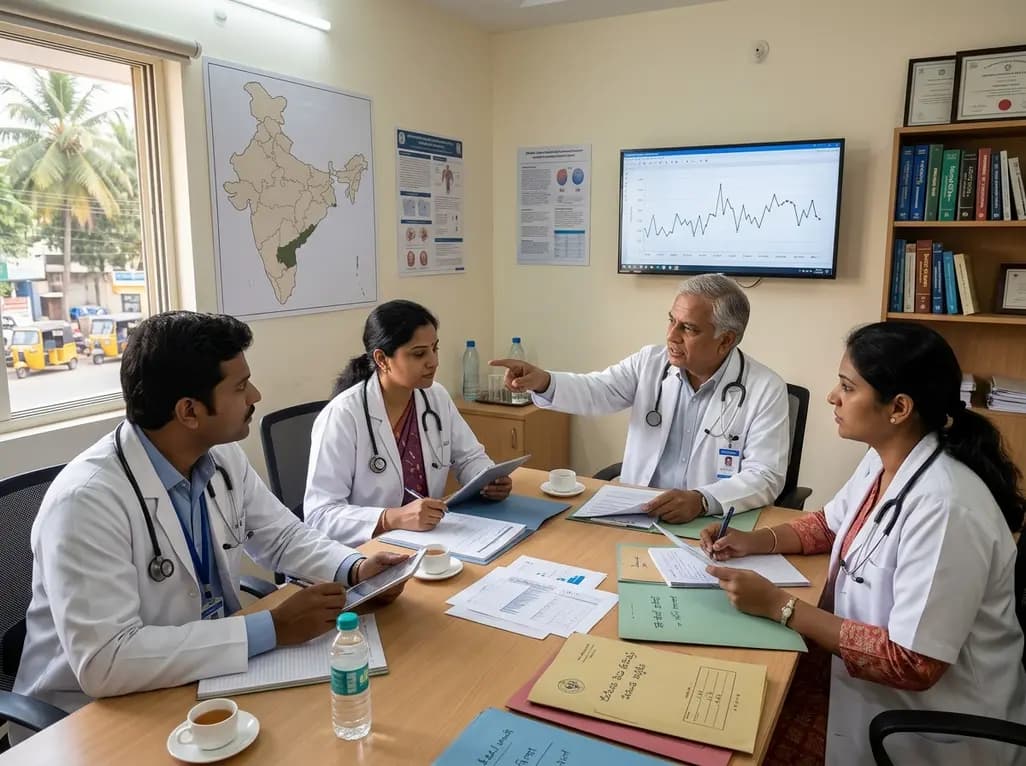
The detection of sporadic cases of Covid-19 in Andhra Pradesh has recently triggered a state-wide alert, especially after the Kadapa district reported two deaths linked to the virus. Medical experts quickly stepped in to clarify that these clinical events are not indicative of a new, dangerous wave or a massive viral resurgence. Instead, these infections demonstrate how SARS-CoV-2 has established itself as an endemic pathogen in our communities. Since the pandemic's global peaks, the virus has mutated and continued to circulate at extremely low baseline levels. Therefore, healthcare providers should anticipate occasional regional spikes and localized outbreaks rather than a widespread public health emergency. This shift to an endemic pattern is highly characteristic of respiratory viruses that remain in the population long after their initial epidemic phase. Consequently, clinicians should view these updates as routine epidemiologic fluctuations rather than signs of an imminent nationwide crisis. Understanding these dynamics helps medical professionals counsel worried patients, reducing unnecessary panic.
To put the Kadapa cluster into proper clinical perspective, physicians must analyze the baseline epidemiological context of the state. Because the virus continues to mutate, newer Omicron sub-lineages periodically emerge and navigate around existing immune barriers. The recent deaths in Kadapa do not imply that the virus has suddenly become more virulent. On the contrary, these clinical outcomes highlight the natural degradation of both vaccine-induced and infection-acquired immunity. As population immunity wanes, susceptible individuals inevitably face a higher risk of symptomatic reinfection. Medical experts emphasize that the virus never truly disappeared from local environments. It simply transitioned to a low-level background circulation that occasionally becomes visible when targeted testing is performed on symptomatic patients. Clinicians must maintain a high index of suspicion for respiratory pathogens when evaluating vulnerable patients, but they should also reassure the public that a localized cluster does not equal widespread community transmission. Therefore, this situation represents a successful application of public health containment protocols rather than an uncontrolled epidemiological failure.
A critical aspect of the recent reports is that both deceased patients had previously received vaccinations. At first glance, this observation might cause public anxiety regarding vaccine efficacy, but immunologists quickly clarify this misconception. Vaccine protection naturally declines over time, especially against milder infections and newer viral variants. Furthermore, both individuals suffered from severe underlying comorbidities, which compromised their immune systems' ability to mount a robust protective response. In highly vulnerable groups, vaccines are designed to reduce the risk of severe disease, but they cannot offer absolute, permanent immunity, particularly when severe pre-existing conditions are present. Thus, these unfortunate fatalities should be interpreted as the consequence of weakened host defenses rather than a failure of the vaccine itself. For practicing physicians, this clinical reality underscores the absolute importance of recommending targeted annual booster doses for high-risk cohorts. By reinforcing immune memory, regular immunization helps shield patients with diabetes, renal failure, or chronic pulmonary diseases from severe clinical complications.
The apparent sudden increase in cases can be largely attributed to shifts in diagnostic practices. For several years, routine diagnostic testing for respiratory viruses had almost completely stopped in most healthcare facilities. Consequently, thousands of mild cases went completely undocumented as people recovered at home without official confirmation. Now, when a patient presents with severe respiratory symptoms and undergoes mandatory hospital testing, positive results suddenly appear on official state records. This sudden visibility creates an illusion of a massive comeback, whereas it is simply a reflection of enhanced diagnostic vigilance. If we do not test, the virus remains invisible; if we resume targeted screening, cases naturally surface. Clinicians should recognize that this pattern does not represent a sudden surge in transmission rates but rather an accurate capture of existing background levels. Therefore, interpreting epidemiologic data requires a careful understanding of testing denominators. By educating patients about this statistical nuance, doctors can significantly reduce unnecessary anxiety.
Looking to the future, health authorities in Andhra Pradesh have proactively intensified local surveillance, contact tracing, and focused testing. These standard public health actions are essential to ensure the current cluster remains localized within the Kadapa district. The primary epidemiological indicator to watch in the coming weeks is whether unrelated cases emerge across multiple districts without identifiable transmission links. If infections remain confined to the initial cluster, the threat of broader community transmission remains exceptionally low. Meanwhile, individuals residing in affected areas must maintain standard hygiene practices and seek early medical evaluation if they develop high fever, persistent cough, or respiratory distress. Clinicians must lead the effort in promoting these rational precautions without inducing widespread hysteria. It is vital to integrate Covid-19 management into routine respiratory care frameworks, treating it similarly to other endemic seasonal pathogens. Through genomic sequencing, India can comfortably manage these sporadic cases without disrupting daily life.
For medical practitioners across the region, these events underscore the necessity of a balanced clinical approach. First, physicians must actively differentiate between mild seasonal viral infections and potential cases of severe respiratory distress. Second, it is highly recommended to encourage yearly vaccinations for elderly individuals and patients with chronic underlying diseases, aligning with the World Health Organization's global recommendations. Because immunity naturally wanes over time, targeted annual immunizations are crucial to maintaining protective thresholds in vulnerable populations. Furthermore, clinicians should utilize this opportunity to reinforce basic preventive hygiene, such as hand sanitation and respiratory etiquette, especially in crowded indoor settings. Since most mild cases can be successfully managed in home isolation, providing clear guidance on home care remains essential. By keeping clinical pathways clear and avoiding unnecessary hospital admissions for mild infections, the healthcare infrastructure can remain resilient. Ultimately, this approach ensures that intensive care resources are preserved exclusively for patients who present with genuine clinical emergencies.
Q1: Why are Covid-19 cases in Andhra Pradesh not considered a sign of a new viral resurgence?
Medical experts explain that the virus is now endemic, meaning it circulates permanently at low levels and causes occasional, localized clusters. The apparent rise in cases in Andhra Pradesh is primarily due to targeted testing of hospitalized respiratory patients rather than a rapid, widespread transmission wave. Consequently, these sporadic cases represent normal epidemiologic fluctuations rather than an impending public health emergency.
Q2: Why did vaccinated individuals succumb to the virus in the recent Kadapa district cluster?
Both deceased individuals suffered from severe underlying comorbidities, which significantly weakened their immune systems. While vaccines are highly effective at reducing severe illness, they do not provide absolute protection for immunocompromised patients, especially as vaccine-induced immunity naturally wanes over time. Therefore, these outcomes reflect individual host vulnerabilities and comorbidities rather than a failure of the Covid-19 vaccines themselves.
Q3: What precautions should high-risk patients take during these sporadic localized outbreaks?
High-risk patients, especially those with chronic conditions like diabetes or heart disease, should consider obtaining annual booster vaccines according to WHO guidelines. Additionally, they must monitor themselves for warning symptoms such as persistent fever, continuous coughing, and breathing difficulties. Practicing basic hand hygiene and wearing masks in crowded indoor environments also offers crucial protection against respiratory transmission during sporadic spikes.
Disclaimer: This content is for informational and educational purposes only. It does not constitute medical advice or replace professional judgment. Refer to the latest local and national guidelines for clinical practice.
References

Read summarized clinical updates, watch expert medical content, and earn CME certifications right from your smartphone.
Open your smartphone camera to scan and install.





Recent Covid-19 fatalities in Andhra Pradesh's Kadapa district raised alarms. However, leading medical experts clarify that these sporadic cases indicate the virus's transition to an endemic state rather than a full resurgence, emphasizing the role of targeted testing and waning vaccine immunity.
3 months ago

Review how tailored exercise programs benefit frail older patients with heart failure. Explore pathophysiological mechanisms, individualized training prescriptions, and strategies to overcome adherence barriers in clinical practice.
Today

Leucine Rich Bio has introduced South Asia's first comprehensive vaginal microbiome test, BugSpeaks. By profiling microbial dysbiosis, pathogens, and antimicrobial resistance, this next-generation diagnostic platform provides clinicians with deeper insights into recurrent infections, fertility, and reproductive health.
Today

In high-risk pulmonary embolism complicated by severe anemia and active uterine bleeding, systemic thrombolysis is contraindicated. Large-bore aspiration thrombectomy provides rapid hemodynamic rescue without fibrinolysis, supported by inferior vena cava filter placement and multidisciplinary critical care.
Today

This comparative study evaluates posterior labral tears with and without glenohumeral instability, highlighting distinct demographic patterns, MRI underestimation in stable shoulders, and successful arthroscopic repair outcomes.
Today

A clinical study demonstrates that early intervention with tocilizumab, either as monotherapy or bridged with corticosteroids, achieves significant proptosis reduction and resolves active inflammation in treatment-naive thyroid eye disease.
Today
