.webp&w=384&q=75)

Loading, please wait...
Loading, please wait...
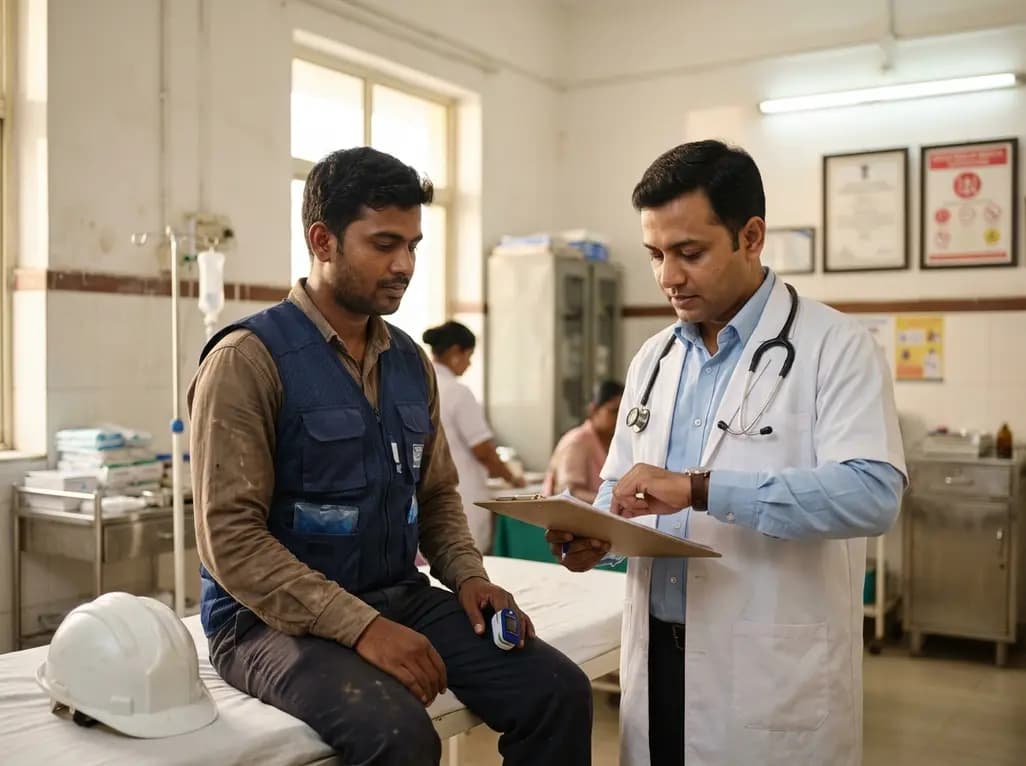
Occupational heat stress poses a critical hazard to outdoor laborers worldwide, particularly across tropical regions where humidity and ambient temperatures frequently surge. Manual laborers in infrastructure development, road building, and masonry face unyielding thermal loads. Consequently, their bodies struggle to maintain thermoregulatory equilibrium when intense physical work combines with heavy solar radiation. Internal core temperature climbs rapidly when evaporative heat dissipation fails. In response, peripheral blood vessels dilate to shunt heated blood toward the dermis. This vascular shift demands substantial cardiac output and places profound circulatory strain on the cardiovascular system. In addition, protective equipment often restricts natural convective cooling, which further traps moisture against the skin. Physicians frequently encounter acute clinical consequences such as heat syncope, muscle cramping, and heat exhaustion among these individuals. Repeated episodes of uncompensated thermal stress can also contribute to chronic kidney injury and severe systemic inflammation. Therefore, clinical teams and occupational health experts must prioritize pragmatic interventions to lessen thermal strain. Microclimate personal protective technologies, such as body-worn cooling vests, have emerged as viable frontline tools. These garments shield vulnerable outdoor workers before thermal exhaustion leads to irreversible metabolic or multi-organ collapse.
Investigating the real-world utility of personal cooling systems requires rigorous pragmatic assessment in active work environments. Recently, investigators conducted a prospective crossover study across a two-day period to evaluate physiological outcomes in construction personnel. The researchers recruited twelve outdoor construction workers and divided them into two counterbalanced cohorts. Each participant served as their own control to account for baseline variability in physical fitness and acclimatization status. The investigators tested whether wearing personal cooling vests with frozen gel inserts could attenuate heat-related cardiovascular and pulmonary burdens during outdoor shifts. To evaluate the intervention, researchers continuously tracked breathing rate and heart rate variability across sequential work intervals. Statistical analyses utilizing the Mann-Whitney U test and Wilcoxon rank-sum tests clarified the cooling vests' dynamic effects over time. Notably, the field conditions replicated typical operational challenges, including radiant solar load, ambient humidity, and continuous physical labor. Previous laboratory simulations often failed to capture these messy workplace factors. Consequently, this pragmatic crossover framework provides realistic clinical insight into how microclimate cooling alters acute physiological responses under severe thermal pressure.
The study demonstrated that cooling vests significantly lowered the breathing rate of workers across the operational period. Interestingly, this ventilatory reduction emerged most prominently during the initial ten to twenty minutes of heavy exertion. Under high ambient temperatures, hyperventilation often develops as an autonomic compensatory reflex to dissipate excess thermal energy through convective respiratory tract exchange. However, sustained tachypnea carries physiological disadvantages. Rapid breathing increases respiratory muscle work, consumes substantial metabolic energy, and accelerates fluid loss through mucosal evaporation. Furthermore, acute hyperventilation can induce mild respiratory alkalosis and exacerbate subjective sensations of dyspnea and air hunger. By creating an immediate localized microclimate around the torso, cooling vests rapidly temper cutaneous thermoreceptor stimulation. Consequently, the central autonomic drive calms, which curtails unnecessary respiratory compensation early during the work cycle. Workers maintain a more stable, controlled ventilatory pattern despite severe outdoor heat. This finding indicates that personal microclimate intervention delivers rapid physiological relief when workers transition from rest to heavy labor. Thus, mitigating early respiratory strain may prevent subsequent exhaustion and reduce overall cumulative fatigue across protracted shifts.
Heart rate variability serves as an established clinical marker of autonomic nervous system balance and cardiovascular resilience. Elevated sympathetic tone and withdrawn vagal activity typically accompany heat-induced cardiovascular strain, resulting in depressed variability. Surprisingly, while cooling vests significantly suppressed tachypnea, the trial revealed no statistically significant increase in overall heart rate variability metrics. Several physiological mechanisms may explain this divergent autonomic response. First, heavy manual construction labor requires intense musculoskeletal exertion that inherently drives high sympathetic adrenergic activity. This physical workload may override the subtle autonomic benefits generated by localized superficial cooling. Second, passive gel-pack vests provide finite conductive cooling capacity. As ice packs absorb ambient heat over time, their thermal transfer coefficient steadily declines. Therefore, while cooling vests offer rapid sensory and ventilatory relief, they may not single-handedly normalize cardiac autonomic tone during uninterrupted heavy lifting. Clinicians must recognize that autonomic strain reflects the combined burden of metabolic workload, dehydration, and ambient heat. Consequently, personal cooling garments cannot completely replace systematic administrative controls, scheduled shade periods, and proactive fluid replenishment.
Integrating personal cooling technology into broader workplace safety protocols requires a comprehensive understanding of human ergonomics and clinical preventive medicine. In tropical environments, such as during intense Indian summer heatwaves, ambient temperatures routinely exceed physiological coping limits. Recently, regulatory authorities, including India's Ministry of Labour and Employment, issued advisories urging workplaces to establish structured heat illness prevention plans. These guidelines recommend scheduled rest breaks in shaded areas, plentiful drinking water, and emergency medical stations equipped with oral rehydration salts and cooling packs. However, wearable cooling garments offer an essential portable defense that operates directly during active labor. To optimize utility, occupational health teams must select lightweight designs that do not add prohibitive metabolic burdens. Furthermore, employers must implement cold-chain logistics to rotate thawed ice packs every two hours. Primary care practitioners, emergency medicine specialists, and industrial physicians should actively educate enterprise leaders regarding early heat strain indicators. Combining innovative microclimate technology with established hydration and administrative safeguards provides the most robust protection against heat exhaustion, rhabdomyolysis, and life-threatening heatstroke in vulnerable workforces.
Cooling vests extract excess heat from the torso through direct conduction, thereby suppressing cutaneous warm-receptor signaling to the brain. Under heat stress, the respiratory center normally triggers tachypnea to blow off thermal energy through convective respiratory airflow. By attenuating initial thermal sensations, the vest prevents rapid breathing, curtails metabolic energy expenditure in respiratory muscles, and stabilizes minute ventilation. Consequently, laborers experience lower respiratory rates and less dyspnea during exertion.
Heart rate variability reflects delicate cardiac autonomic balance, which responds strongly to heavy physical exertion and metabolic demands. In construction workers, the sympathetic drive from continuous muscular work often dominates autonomic regulation, overriding the modest cooling effects of passive vests. Furthermore, frozen gel packs quickly lose cooling efficiency in extreme ambient heat. Thus, while cooling vests provide rapid subjective and ventilatory relief, they do not sufficiently diminish overall cardiovascular sympathetic tone during heavy exertion.
No, cooling vests cannot replace fundamental heat illness interventions such as hydration, shaded rest, and work rotation. Wearable garments merely provide adjunct microclimate cooling and cannot reverse dehydration, electrolyte depletion, or systemic core heating from sustained labor. Instead, comprehensive occupational safety programs must combine cooling apparel with mandatory electrolyte-rich fluid intake, scheduled canopy breaks, and environmental heat index monitoring to protect outdoor workers from life-threatening conditions like exertional heatstroke.
Disclaimer: This content is for informational and educational purposes only... Refer to the latest local and national guidelines for clinical practice.
References

Read summarized clinical updates, watch expert medical content, and earn CME certifications right from your smartphone.
Open your smartphone camera to scan and install.





A pragmatic crossover study shows that personal cooling vests significantly lower breathing rates during physical exertion under extreme conditions, mitigating early physiological strain from occupational heat stress in outdoor construction workers.
last month
Following Nigeria's first recorded Ebola case linked to regional travel, the Africa CDC has convened an emergency ministerial summit. This alert underscores critical clinical priorities for healthcare professionals, including differentiating early viral infection from malaria, implementing barrier nursing, and triage.
Today

Leucine Rich Bio has introduced South Asia's first comprehensive vaginal microbiome test, BugSpeaks. By profiling microbial dysbiosis, pathogens, and antimicrobial resistance, this next-generation diagnostic platform provides clinicians with deeper insights into recurrent infections, fertility, and reproductive health.
Today

Review how tailored exercise programs benefit frail older patients with heart failure. Explore pathophysiological mechanisms, individualized training prescriptions, and strategies to overcome adherence barriers in clinical practice.
Today

This comparative study evaluates posterior labral tears with and without glenohumeral instability, highlighting distinct demographic patterns, MRI underestimation in stable shoulders, and successful arthroscopic repair outcomes.
Today

A clinical study demonstrates that early intervention with tocilizumab, either as monotherapy or bridged with corticosteroids, achieves significant proptosis reduction and resolves active inflammation in treatment-naive thyroid eye disease.
Today
