.webp&w=384&q=75)

Loading, please wait...
Loading, please wait...

Public health officials often view contact tracing effectiveness as a vital component of pandemic preparedness and routine disease control. This recent rapid systematic review analyzed 86 studies to determine how identifying contacts impacts disease transmission and mortality. While the evidence remains heterogeneous, the findings offer critical insights for managing respiratory and sexually transmitted infections (STIs). Governments in high-burden regions, such as India, can utilize these insights to refine their epidemic response strategies.
In the context of tuberculosis (TB), the review found that contact tracing can successfully reduce disease prevalence in specific populations. For instance, proactive identification of household contacts significantly breaks the chain of transmission. In India, where TB remains a major public health priority, these findings support current national guidelines for aggressive screening. Consequently, health workers should prioritize thorough follow-ups to maximize the impact of these interventions. However, the evidence for other respiratory diseases like COVID-19 showed more variation, likely due to different transmission dynamics.
Evidence suggests that provider-initiated contact tracing often outperforms patient-led methods, particularly for STIs and HIV. When healthcare professionals handle notifications directly, they typically identify a higher number of at-risk individuals. Furthermore, direct involvement helps overcome the social barriers and stigma that often prevent patients from informing their partners. Therefore, transitioning toward more supported models could improve outcomes in clinical practice. This pro-active approach ensures that contacts receive timely testing and necessary medical intervention.
The review also highlighted significant gaps in current knowledge regarding contact tracing. Most studies lacked concurrent comparators, making it difficult to establish the optimal approach for every setting. Moreover, very few reports addressed the unintended consequences of tracing, such as social stigma or psychological distress. Future research must focus on the Global South to ensure that contact tracing mechanisms are culturally and contextually appropriate. Improving data quality will help health authorities prepare effectively for future infectious disease emergencies.
Provider-initiated tracing is more effective because healthcare professionals ensure that notifications are delivered accurately and promptly. Patients may feel hesitant or fearful of notifying partners themselves, which can lead to missed opportunities for treatment. Direct provider involvement helps bridge this gap.
No, the effectiveness varies significantly depending on the route of transmission. The review found stronger evidence for respiratory diseases like TB and blood-borne infections like HIV. However, there was a lack of evidence regarding vector-borne or water-borne transmission.
While data is limited, unintended consequences can include social stigma, domestic conflict, or psychological stress for both the index case and their contacts. Health programs should include support systems to mitigate these risks while maintaining privacy.
Disclaimer: This content is for informational and educational purposes only. It does not constitute professional medical advice, diagnosis, or treatment. Always seek the advice of your physician or other qualified health provider with any questions you may have regarding a medical condition. Refer to the latest local and national guidelines for clinical practice.
References

Read summarized clinical updates, watch expert medical content, and earn CME certifications right from your smartphone.
Open your smartphone camera to scan and install.





A systematic review evaluating contact tracing effectiveness across 86 studies, highlighting successes in TB and provider-led STI notification strategies....
6 months ago
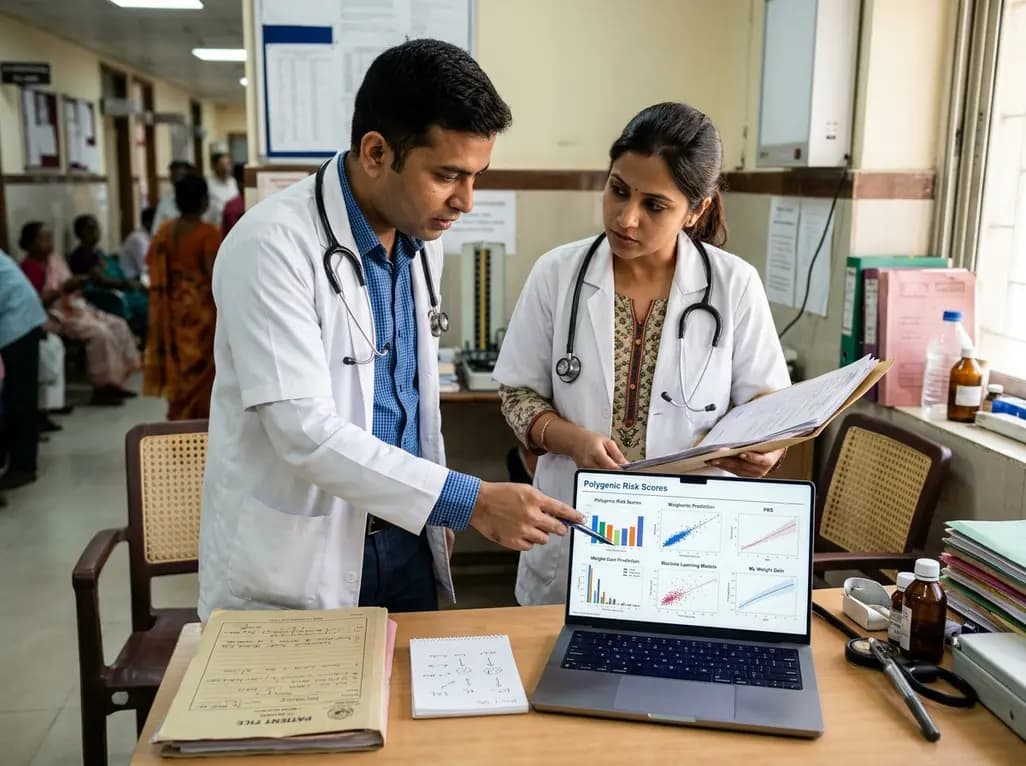
An observational study from the NIH All of Us Research Program reveals that adding a multi-ancestry polygenic risk score to machine learning models provides only modest improvements in predicting adult weight gain, underscoring the enduring significance of routine clinical and lifestyle factors.
Today

A study in JAMIA Open shows lightweight open-source reasoning LLMs achieve up to 95% sensitivity and accelerate evidence synthesis screening by nearly twentyfold, presenting a cost-effective, scalable AI solution for biomedical research and systematic reviews.
Today
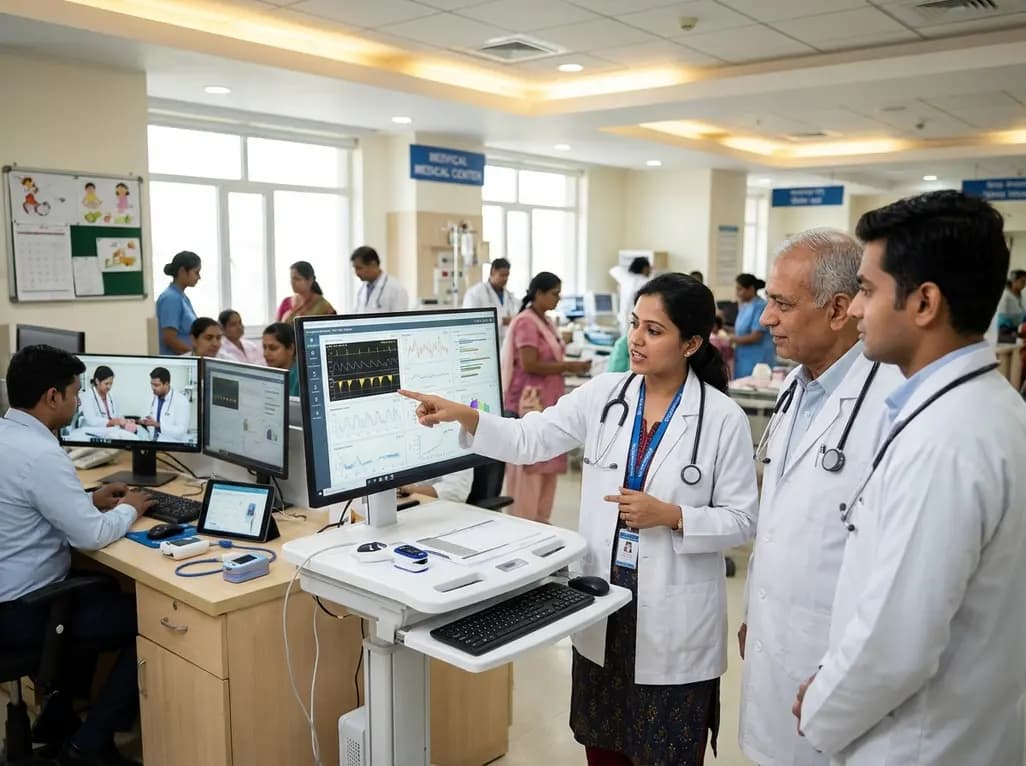
A landmark study details how an enterprise pediatric remote patient management model expanded from a single cardiology pilot to 16 diverse specialty programs by combining centralized digital operations with specialty clinical leadership.
Today

A comparative review of tension band wiring and intramedullary screw fixation in thumb metacarpophalangeal arthrodesis, evaluating union rates, hardware complications, and clinical outcomes.
Yesterday
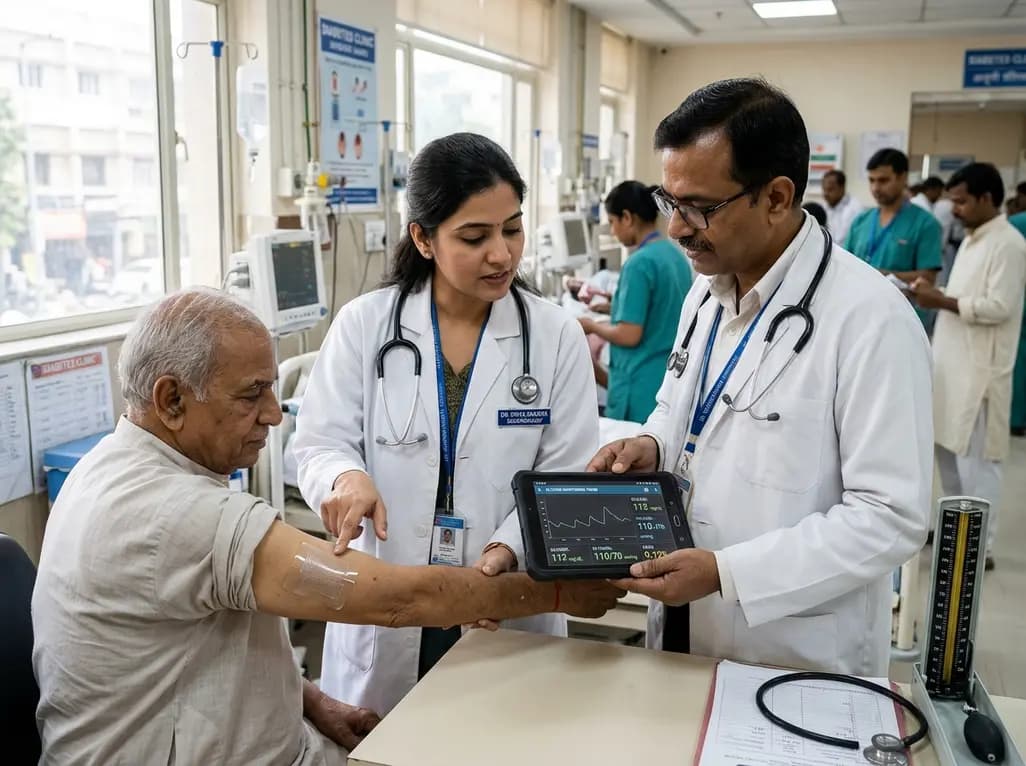
A breakthrough ultrathin multimodal sensor decouples physical hemodynamic monitoring from disposable electrochemical calibration, achieving long-term wearable glucose prediction with 81.36% accuracy and a 9.12% MARD. This offers a robust, drift-free solution for outpatient metabolic surveillance.
Yesterday
