.webp&w=384&q=75)

Loading, please wait...
Loading, please wait...

Myocardial infarction (MI) remains a leading cause of heart failure globally due to the irreversible loss of cardiomyocytes and subsequent scar formation. Recent advancements in regenerative medicine have introduced conductive hydrogel microspheres as a sophisticated approach to mend the electrical and mechanical properties of infarcted tissue.
A recent study published in ACS Applied Materials & Interfaces details the development of microspheres designed to mimic the native myocardium. Specifically, researchers utilized a myocardial tissue-derived decellularized extracellular matrix (d-ECM) modified with methacryloyl groups. Consequently, by using microfluidic technology, they created uniform microspheres and incorporated polypyrrole (PPY) to achieve electrical conductivity. This bio-inspired design effectively addresses common clinical issues such as mechanical mismatch and poor cellular infiltration often seen in traditional hydrogels.
The conductive hydrogel microspheres demonstrated remarkable results both in vitro and in vivo. For instance, in cell cultures, the microspheres significantly upregulated Connexin 43 (Cx43) expression, which is vital for electrical coupling between cardiomyocytes. Moreover, they promoted the migration and tube formation of endothelial cells, signaling enhanced angiogenesis. Furthermore, rat models treated with these microspheres showed improved cardiac output and reduced fibrotic area.
Simultaneously, the treatment suppressed apoptosis in the infarcted region. Therefore, this strategy effectively restores the local microenvironment, promoting both structural and functional recovery. These findings suggest that mimicking the biochemical and electrical cues of the heart is essential for successful myocardial regeneration.
The microspheres contain polypyrrole, a conductive polymer that facilitates electrical coupling with native heart tissues. This restores the transmission of electrical signals, which is often disrupted by non-conductive scar tissue after a heart attack.
By providing a better mechanical match to native heart tissue and restoring electrical synchrony via increased Connexin 43 expression, these microspheres help mitigate the electrical instability that typically leads to arrhythmias.
Disclaimer: This content is for informational and educational purposes only. It does not constitute medical advice or a professional physician-patient relationship. Refer to the latest local and national guidelines for clinical practice.
References
Hao Y et al. Cardiomyocyte-Mimetic Conductive Hydrogel Microspheres for Enhanced Myocardial Repair. ACS Appl Mater Interfaces. 2026 May 26. doi: 10.1021/acsami.6c04164. PMID: 42186875.
Guan H et al. Applications of elastic and conductive hydrogels in myocardial infarction repair. Colloid and Interface Science Communications. 2025 Dec 01. doi: 10.1016/j.colcom.2025.100804.
Shi T et al. Conductive Hydrogel Patches with High Elasticity and Fatigue Resistance for Cardiac Microenvironment Remodeling. ACS Appl Mater Interfaces. 2023 Mar 22;15(11):14005-14018. doi: 10.1021/acsami.2c22673.

Read summarized clinical updates, watch expert medical content, and earn CME certifications right from your smartphone.
Open your smartphone camera to scan and install.





New research highlights a conductive ECM-PPY hydrogel microsphere that improves cardiac function and reduces fibrosis following myocardial infarction....
4 months ago
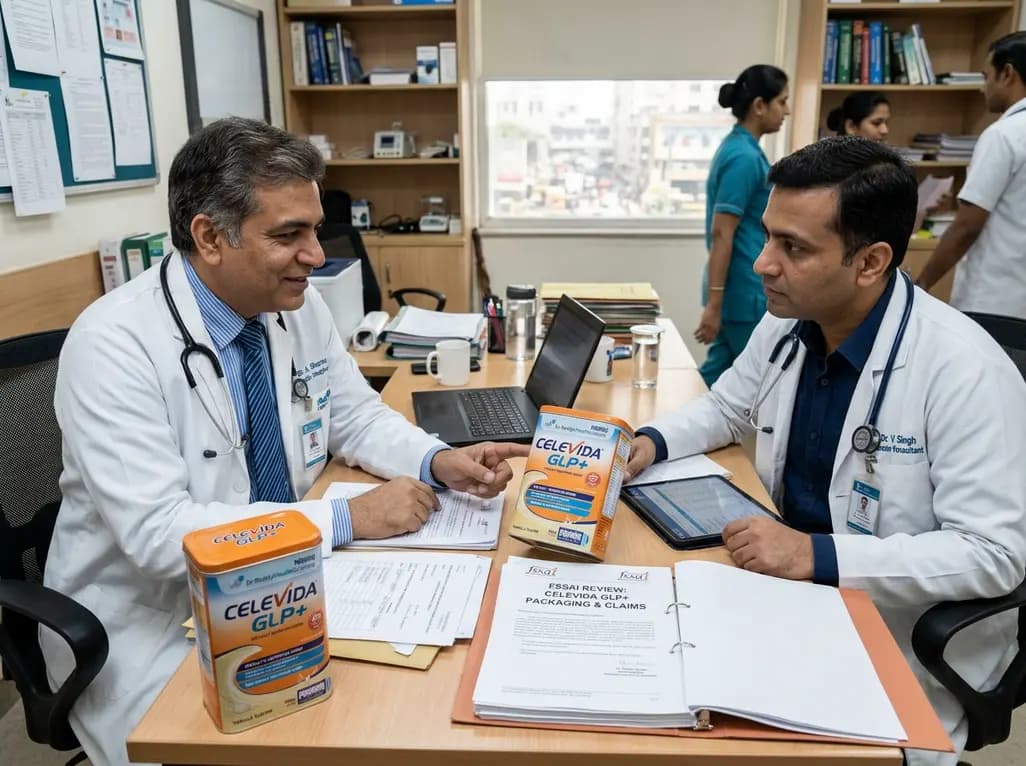
Following regulatory scrutiny from FSSAI regarding promotional representations and lean muscle preservation claims, Dr. Reddy's Laboratories and Nestlé Health Science are currently reviewing the branding and marketing strategy for their joint nutritional supplement Celevida GLP+.
Today

Demanding exhaustive hormonal profiling can inadvertently discourage clinical studies involving females. Methodological standards must align with the specific scientific question to expand, not restrict, equitable evidence for women.
Today

The Directorate General of Health Services directs Indian states to halt the hazardous reuse and reprocessing of single-use medical devices. Discover regulatory implications under the Drugs and Cosmetics Act, critical infection risks, legal liabilities, and operational changes required across clinical specialties.
Today
A novel calcium polyphosphate coacervate enables injectable bone implants with in situ hierarchical porosity via phase separation and gas foaming, significantly enhancing cell proliferation, energy metabolism, and osteogenic differentiation for minimally invasive bone defect repair.
Today

India is advancing preventive healthcare by integrating genomics, artificial intelligence, and quantum technologies. With the SANGAM programme sequencing one million Indian genomes, clinicians can unlock personalized therapies, detect cardiometabolic risks early, and curb the burden of diabetes and heart disease.
Today
