.webp&w=384&q=75)

Loading, please wait...
Loading, please wait...

The launch of comprehensive cancer care services at Zynova Shalby Multi-Specialty Hospital in Mumbai marks a significant milestone in Indian healthcare. This dedicated department aims to address the rising cancer burden through a structured, patient-centric approach. Consequently, patients can now access end-to-end services, including advanced imaging, biopsy, and systemic therapies, in a single location. Furthermore, the hospital emphasizes timely diagnosis to improve overall survival outcomes and quality of life.
Cancer remains a leading health concern in India, often exacerbated by lifestyle factors and low screening rates. Recent data indicates that early detection can significantly reduce the financial and clinical burden of the disease. However, many patients still face fragmented care pathways that delay essential treatment. Therefore, the integration of screening, staging, and therapy is vital for modern oncology practice. Moreover, recent budget initiatives have prioritized making such specialized care more accessible to the public.
The new department operates under the leadership of Dr. Deepak Khanna, a senior consultant in head and neck surgery. Additionally, a multidisciplinary team comprising surgeons, medical oncologists, and support staff manages complex cases. This collaborative model ensures that specialists review each case from multiple perspectives. Specifically, the team includes experts in breast, thoracic, and gastrointestinal oncology. Furthermore, evidence suggests that multidisciplinary teams enhance patient satisfaction and lead to more accurate staging. Consequently, this approach reduces treatment delays and optimizes resource utilization.
Beyond clinical interventions, the department provides nutritional guidance and emotional support to patients. Families often require close connection with medical teams throughout the treatment journey. Therefore, the hospital has invested in advanced infrastructure to deliver evidence-based therapies. High screening rates remain the cornerstone of effective cancer management. Thus, the facility offers specialized tools like mammography and endoscopy for early detection. By prioritizing holistic support, the hospital aims to improve the long-term quality of life for survivors.
Q1: What services are offered at the new Zynova Shalby oncology department?
The department provides comprehensive cancer care services including screening, advanced diagnostics, chemotherapy, immunotherapy, and surgical oncology.
Q2: Who leads the oncology team at Zynova Shalby Mumbai?
The team is led by Dr. Deepak Khanna, a Senior Consultant in Head and Neck Onco-Surgery, along with a multidisciplinary specialist group.
Q3: Why is early detection emphasized at this facility?
Early detection prevents complications like metastasis and organ damage, which significantly improves survival rates and reduces treatment costs.
Disclaimer: This content is for informational and educational purposes only. It does not constitute medical advice or replace professional judgment. Refer to the latest local and national guidelines for clinical practice.
References

Read summarized clinical updates, watch expert medical content, and earn CME certifications right from your smartphone.
Open your smartphone camera to scan and install.





Zynova Shalby Hospital Mumbai has launched a dedicated oncology department to offer comprehensive cancer care services, including screening and advanced the...
6 months ago

A recent study highlights the utility of two-dimensional speckle tracking echocardiography in assessing right atrial mechanics in OSAHS. Progressive reductions in reservoir and conduit strain, coupled with elevated contraction strain, signal early right heart remodeling correlated with apnea severity.
Today

A multicentre RCT in China shows that the PAICS AI system significantly boosts sonographer sensitivity in detecting fetal intracranial malformations by 8.7% without compromising specificity, offering promising diagnostic support for prenatal neurosonography.
Today

A 2026 meta-analysis evaluates PDE5 inhibitors in advanced ILD with severe gas exchange impairment. While overall mortality was not significantly reduced, a targeted subgroup with pulmonary hypertension showed a 49% risk reduction, underscoring the necessity of precise hemodynamic phenotyping.
Today
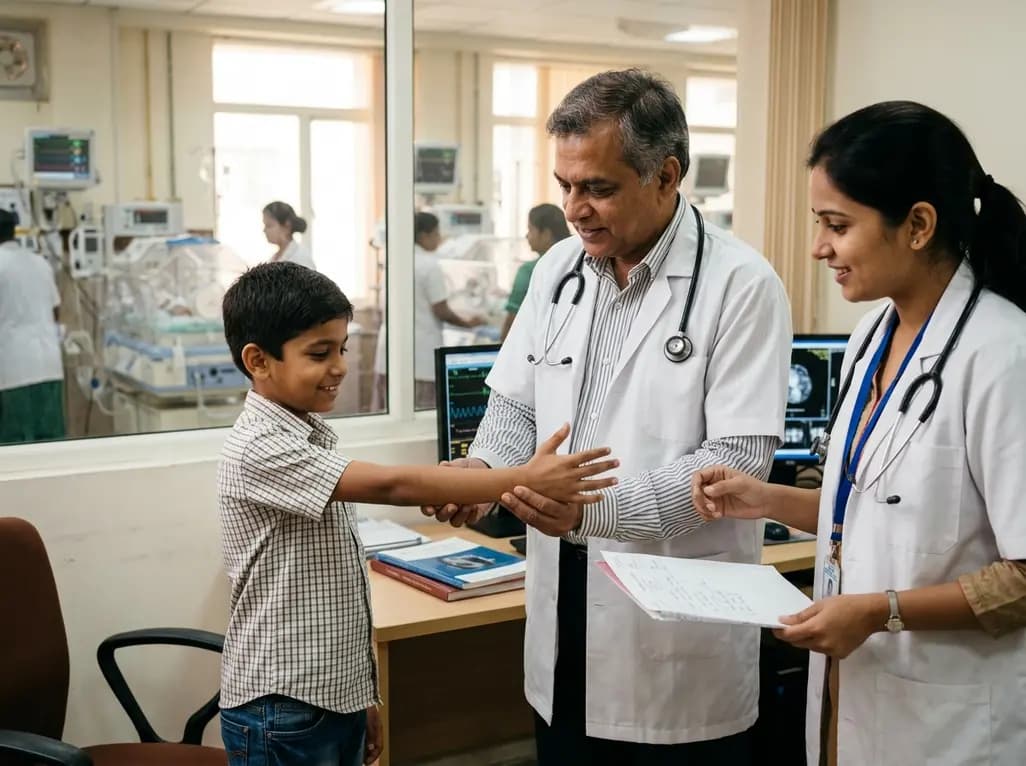
A premature neonate developed upper limb compartment syndrome after uterine rupture extruded the arm through a scar defect. Conservative management with continuous monitoring yielded complete functional recovery and normal limb growth at 10-year follow-up, highlighting non-operative safety in selected cases.
Yesterday

The Supreme Court questioned FSSAI's phased warning approach, urging single-phase implementation for foods exceeding limits in any nutrient of concern. Backed by ICMR-NIN recommendations, the proposed red hexagonal warnings target added sugar, salt, and fat to combat India's escalating chronic disease epidemic.
Today
