.webp&w=384&q=75)

Loading, please wait...
Loading, please wait...

Social isolation significantly impacts the health and well-being of the elderly population globally. A recent study highlights how community-based activities effectively promote geriatric social participation. Researchers explored interventions such as coffee meetings, art workshops, and library tours to engage older adults at risk of exclusion. Consequently, participants reported noticeable improvements in their social interactions and physical environments. These findings provide a roadmap for healthcare providers to address the social determinants of health in older patients.
Several factors influence the success of community programs. Location plays a pivotal role, as proximity to the neighborhood's heart encourages attendance. Furthermore, adapting activities to personal preferences ensures long-term engagement. Conversely, a lack of accessibility remains the primary obstacle for many seniors. Therefore, urban planning must prioritize elderly-friendly infrastructure. When social environments become inclusive, older adults feel more connected to community services. This awareness often leads to better health outcomes and increased resilience against age-related challenges.
In the Indian context, the shift from joint to nuclear families has increased the risk of social exclusion for many seniors. Recent data suggests that loneliness affects nearly 18% to 44% of the Indian elderly population. Thus, implementing localized community interventions is essential for healthy aging. Clinicians should encourage patients to join local groups, religious centers, or hobby clubs. These interactions provide emotional support and vital mental stimulation. Moreover, active social engagement reduces the risk of cognitive decline and depression. By fostering geriatric social participation, we can build a more supportive environment for our aging population.
Social participation reduces isolation, improves mental health, and enhances cognitive function. It also increases awareness of available community and health services, leading to better self-care.
Providers can utilize "social prescribing" by recommending local community centers, senior citizen clubs, or organized workshops. Identifying barriers like transport or physical health is also crucial to facilitate participation.
Yes, activities adapted to the individual's preferences and physical abilities are more successful. The study found that artistic workshops and social coffee meetings were particularly effective at fostering meaningful interactions.
Disclaimer: This content is for informational and educational purposes only and does not constitute medical advice. Refer to the latest local and national guidelines for clinical practice.
References
Meynet S et al. Fostering Social Participation in Older Adults at Risk of Social Exclusion: Importance of Community Interventions Implemented in the Neighborhoods' Heart. Res Aging. 2026 Apr 26. doi: 10.1177/01640275261446984. PMID: 42035303.
Building a Knowledge Base on Population Ageing in India (BKPAI). Social relationships and subjective wellbeing of the older adults in India. 2011.
World Health Organization. Social isolation and loneliness among older people: advocacy brief. 2021.

Read summarized clinical updates, watch expert medical content, and earn CME certifications right from your smartphone.
Open your smartphone camera to scan and install.





This study explores community-based interventions to foster social participation in older adults, highlighting facilitators and barriers to engagement....
5 months ago
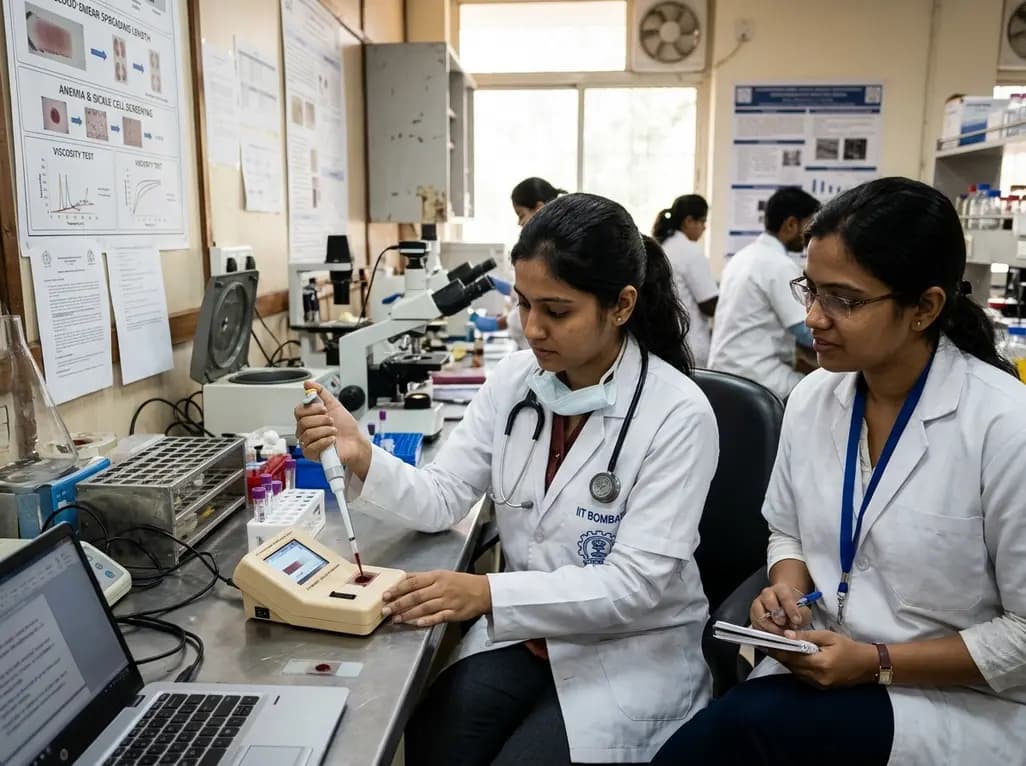
Researchers at IIT Bombay have engineered an automated, cost-effective point-of-care device that diagnoses anaemia and sickle cell disease from a single drop of blood. By measuring blood smear spreading length, this portable tool assesses blood viscosity to offer rapid screening in resource-limited healthcare centers.
Today

A population-based study of 20,928 children reveals that small vulnerable newborns face sex-divergent mental capital outcomes at ages 6-7: term SGA girls show higher behavioral difficulties and lower resilience, while preterm non-SGA boys experience increased behavioral problems.
Today
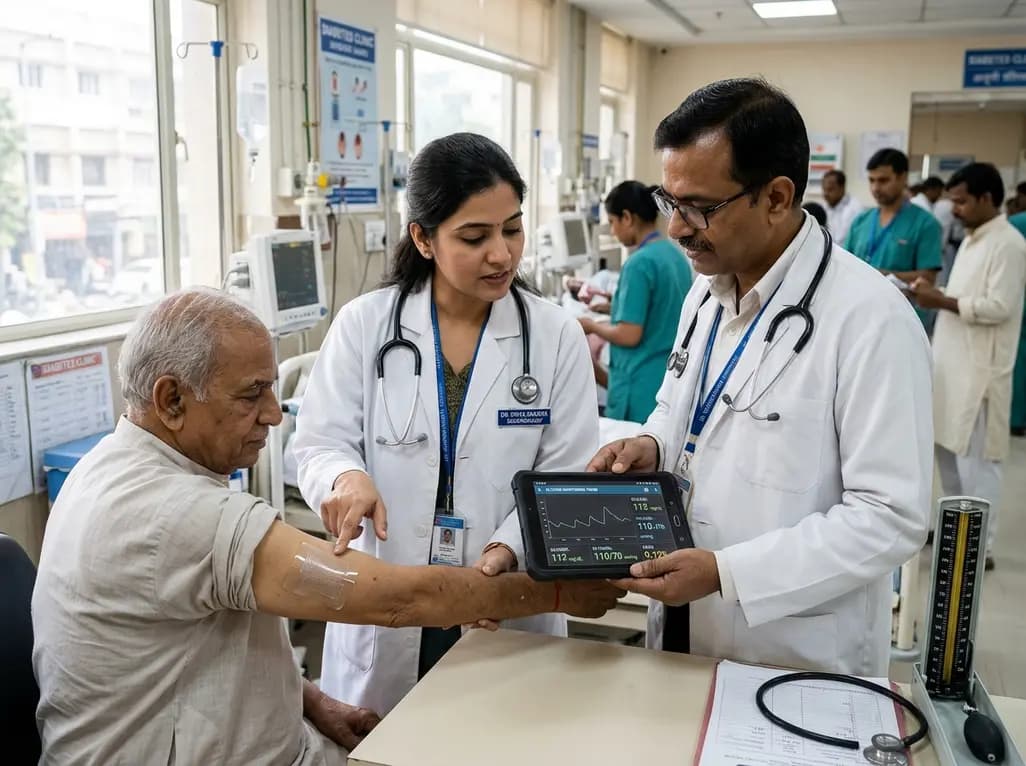
A breakthrough ultrathin multimodal sensor decouples physical hemodynamic monitoring from disposable electrochemical calibration, achieving long-term wearable glucose prediction with 81.36% accuracy and a 9.12% MARD. This offers a robust, drift-free solution for outpatient metabolic surveillance.
Today

A comparative review of tension band wiring and intramedullary screw fixation in thumb metacarpophalangeal arthrodesis, evaluating union rates, hardware complications, and clinical outcomes.
Today
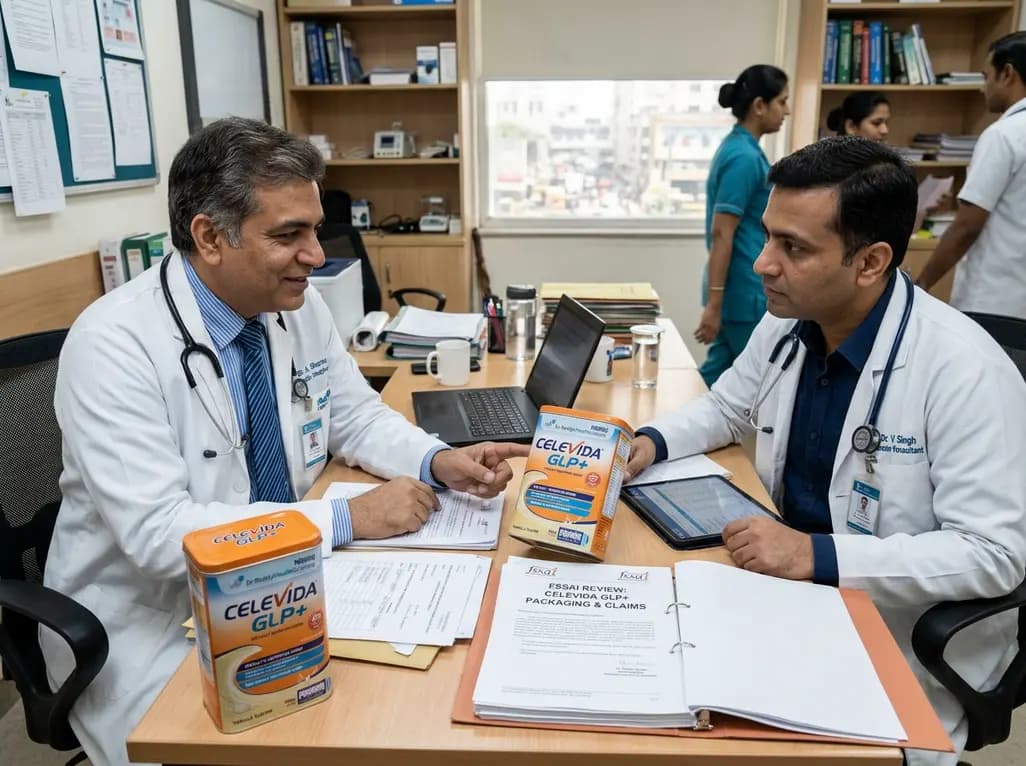
Following regulatory scrutiny from FSSAI regarding promotional representations and lean muscle preservation claims, Dr. Reddy's Laboratories and Nestlé Health Science are currently reviewing the branding and marketing strategy for their joint nutritional supplement Celevida GLP+.
Today
