.webp&w=384&q=75)

Loading, please wait...
Loading, please wait...
Colorectal cancer care timeliness represents a critical benchmark in modern oncology, directly influencing clinical decision-making and patient reassurance. Geographic barriers frequently compromise healthcare accessibility, especially for rural populations requiring specialized surgical oncology interventions. Recent clinical data investigating Veterans Affairs Medical Centers highlight how geographic travel distance impacts the interval between diagnosis and treatment initiation. Although prolonged transit distance delays therapy commencement, integrated high-volume systems appear to protect patients from adverse perioperative outcomes. Understanding the underlying drivers of these delays enables clinicians and administrators to optimize referral networks, streamline preoperative workups, and deliver equitable cancer therapy across diverse patient demographics.
Geographic distance creates substantial logistical hurdles for patients requiring complex multidisciplinary cancer care. In a retrospective cohort evaluating Veterans with Stage I to III colorectal cancer, investigators examined the interval from initial tissue diagnosis to definitive resection. Patients residing more than 100 miles from the treating medical center experienced a median delay of nearly twelve additional days compared to those living within 40 miles. Conversely, patients traveling intermediate distances between 41 and 100 miles did not show significant delays relative to local residents. Multivariable linear regression models, adjusted for age, disease stage, race, operative year, and comorbidities, confirmed that extreme geographic isolation independently prolonged time to treatment initiation. However, despite these measurable scheduling delays, total transit burden did not adversely alter long-term oncologic trajectory within this structured cohort. Consequently, these findings suggest that travel distance acts primarily as a pre-treatment logistical bottleneck rather than an insurmountable clinical hazard. Surgeons and care coordinators must therefore anticipate geographic barriers early in the diagnostic pathway. By implementing proactive scheduling protocols and centralized navigation, oncology teams can effectively shorten preoperative intervals for geographically distant individuals.
Delays extending beyond sixty days often stem from multifactorial clinical and administrative complexities. Transitions of care between non-system diagnostic facilities and central surgical hubs frequently introduce substantial communication friction. For instance, obtaining external pathology slides, transferring cross-sectional imaging, and repeating discordant diagnostic tests invariably consume critical weeks. In addition, extensive cardiopulmonary optimization represents a frequent contributor to surgical postponement among older individuals with multiple medical comorbidities. Patients with underlying coronary artery disease, chronic obstructive pulmonary disease, or renal impairment require multidisciplinary clearance before major abdominal surgery. Furthermore, necessary supplemental evaluations, such as staging magnetic resonance imaging for rectal lesions or preoperative nutritional replenishment, appropriately prolong the pre-treatment interval. While these delays might appear disadvantageous on surface metrics, thorough preoperative optimization often mitigates intraoperative complications. Therefore, clinicians must distinguish between preventable administrative sluggishness and medically justified physiologic optimization. When administrative handoffs cause delays, hospitals should deploy electronic health record interoperability and designated nurse navigators. These structured tools effectively accelerate document retrieval, maintain treatment momentum, and preserve patient trust during high-anxiety diagnostic intervals.
Interestingly, extended travel distance did not correlate with inferior postoperative metrics among patients undergoing colorectal cancer resection. Investigators observed equivalent surgical lengths of stay regardless of whether patients lived adjacent to the facility or traveled over one hundred miles. Similarly, 30-day hospital readmission rates remained statistically comparable across all geographic categories. Most importantly, perioperative 30-day mortality did not increase among patients experiencing distance-related delays. These robust clinical outcomes suggest that high-volume surgical centers provide standardized, high-quality perioperative care that effectively buffers against modest pre-treatment delays. Although timely surgical extirpation remains a cardinal oncologic principle, a brief delay of two to three weeks for physiologic optimization rarely compromises technical resectability in early-stage disease. Moreover, standardized postoperative care pathways, including early mobilization and multimodal analgesia, ensure consistent recovery trajectories across all patient groups. Nevertheless, clinicians must maintain rigorous discharge planning for rural patients who must travel long distances after hospital discharge. Coordinating local wound surveillance and establishing emergency escalation channels remain crucial for preventing avoidable readmissions.
Integrated healthcare systems possess structural advantages that mitigate traditional disparities associated with rural residency and remote travel distance. In a centralized model, standardized clinical protocols ensure uniform diagnostic staging, surgical expertise, and post-discharge surveillance. Furthermore, integrated systems frequently provide travel reimbursement, specialized lodging, and comprehensive telehealth infrastructure to alleviate the financial and logistical burden of travel. Telemedicine consultations allow surgical oncologists and enterostomal therapists to conduct preoperative assessments and routine wound reviews remotely. As a result, patients avoid unnecessary multi-hour travels for simple follow-up visits while maintaining direct access to tertiary specialist expertise. In contrast, fragmented fee-for-service environments often exacerbate geographic inequities, because rural patients may face fragmented referral networks and uncoordinated out-of-pocket travel costs. Centralized health systems also utilize multidisciplinary tumor boards where medical oncologists, surgical oncologists, and gastroenterologists jointly review complex cases. Consequently, distant patients receive the exact same guideline-concordant multidisciplinary recommendations as local urban residents. Expanding these integrated principles into broader clinical practice offers a proven strategy to democratize oncologic care across diverse geographical terrains.
Optimizing colorectal cancer care timeliness requires oncologists, gastroenterologists, and general surgeons to implement actionable care-coordination strategies. First, diagnostic endoscopy units must establish rapid-referral pathways immediately upon identifying suspicious colonic neoplasms. By initiating staging scans and surgical consultations concurrently rather than sequentially, clinical teams can reclaim valuable days. Second, pre-habilitation programs targeting physical fitness, smoking cessation, and nutritional status should commence immediately at the community level while tertiary appointments are arranged. This parallel processing prevents unnecessary delays once the patient reaches the surgical consultation. Third, healthcare systems must invest in dedicated cancer navigators who specifically track patients residing in remote areas. These navigators coordinate multi-specialty appointments into consolidated single-day hospital visits, thereby reducing travel fatigue and minimizing missed appointments. Additionally, digital monitoring tools and wearable health trackers can provide objective postoperative monitoring once rural patients return home. Ultimately, closing geographic equity gaps requires seamless communication across primary, secondary, and tertiary care tiers. Through integrated logistics and proactive patient engagement, oncology teams can guarantee equitable, prompt, and superior surgical care for all individuals regardless of their address.
Extended travel distance primarily prolongs the preoperative diagnostic and scheduling interval. Patients living over one hundred miles from tertiary surgical centers often encounter logistical challenges, including transportation scheduling, fragmented diagnostic handoffs, and multi-specialty appointment coordination. Consequently, these rural individuals experience modest treatment delays of approximately twelve days. However, when treated within integrated healthcare systems, these travel-related delays do not compromise surgical quality or overall perioperative survival.
Current clinical evidence indicates that moderate delays of several weeks do not significantly worsen postoperative complications, length of stay, or 30-day mortality in nonmetastatic disease. In many cases, these intervals allow essential preoperative cardiopulmonary optimization, nutritional support, and staging completion. However, unmanaged or excessive delays extending beyond several months may elevate metastatic risks; therefore, clinicians must prioritize timely scheduling without compromising essential preoperative medical preparation.
Healthcare networks can implement centralized referral pathways and dedicated nurse navigation to streamline diagnostic handoffs and bundle multi-specialty appointments into single-day visits. Additionally, expanding telemedicine for preoperative evaluations and postoperative follow-up minimizes burdensome travel. By using electronic record sharing across regional clinics and offering remote pre-habilitation, clinical systems significantly reduce transit barriers while maintaining strict adherence to standard oncologic guidelines.
Disclaimer: This content is for informational and educational purposes only and should not be considered medical advice. It is not intended to replace consultation with a qualified healthcare professional. Healthcare professionals should exercise their clinical judgment when evaluating and treating patients. The findings and perspectives discussed herein do not necessarily represent standard practice across all healthcare settings. Refer to the latest local and national guidelines for clinical practice.
References

Read summarized clinical updates, watch expert medical content, and earn CME certifications right from your smartphone.
Open your smartphone camera to scan and install.





A retrospective study examines how travel distance affects colorectal cancer care timeliness in Veterans. While living >100 miles away delays treatment by ~12 days, integrated care prevents adverse surgical outcomes or increased mortality.
4 weeks back
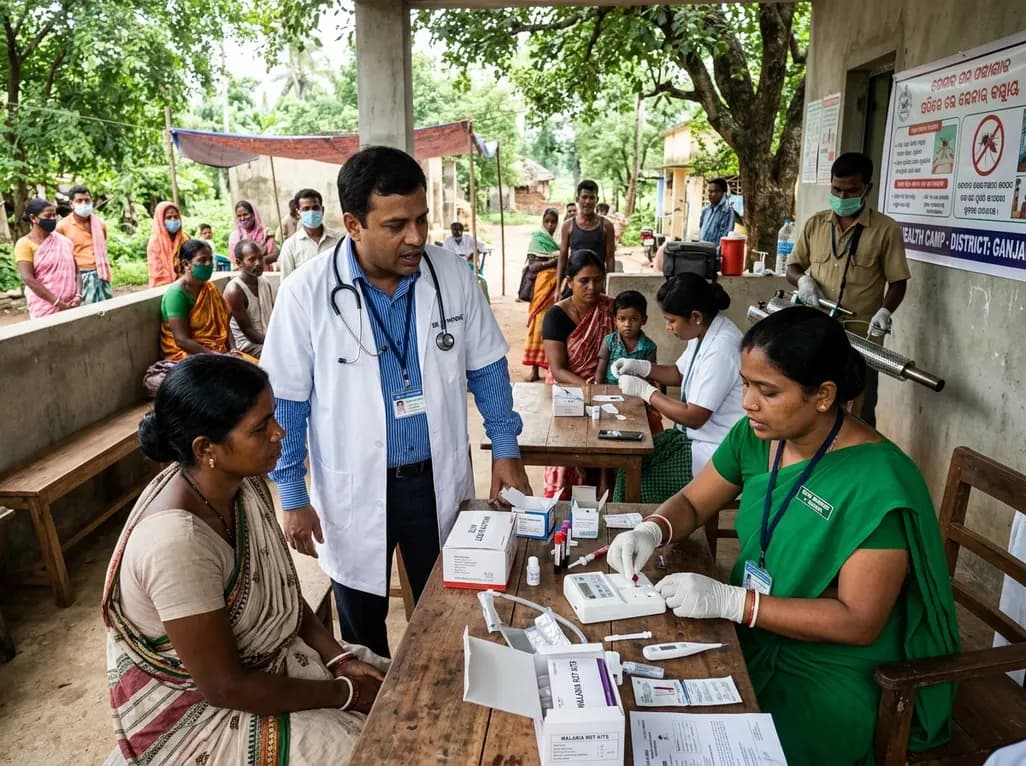
Following 37,899 reported cases and 9 deaths, Odisha has scaled up active case detection, rapid diagnostic testing, and vector control across high-burden districts. Here is a comprehensive clinical breakdown of the state's aggressive containment protocols, diagnostic pathways, and targeted field management.
Today

Endometriosis affects millions of women across India, yet diagnostic delays frequently exceed five years. Recent multi-centre genomic research has identified 21 novel genetic regions, notably on chromosome 13, establishing crucial population-specific insights to transform clinical screening and therapeutic strategies.
Today
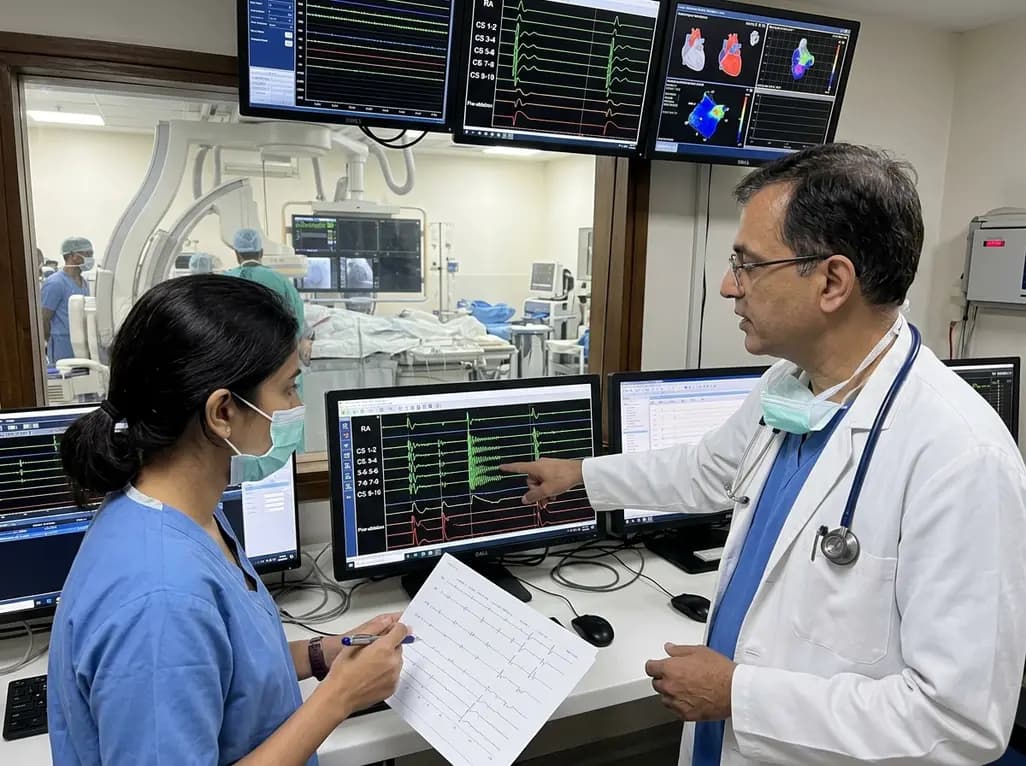
Radiofrequency catheter ablation of the cavotricuspid isthmus successfully terminates typical atrial flutter. This article reviews the mechanisms driving coronary sinus electrogram changes, wavefront activation pathways, and clinical criteria to verify bidirectional block during electrophysiology studies.
Today

A study comparing four knee flexion strength tests after ACL reconstruction using hamstring tendon autografts reveals marked variability in limb symmetry indices. Clinicians must recognize that different strength testing modalities yield divergent return-to-sport clearance rates.
Today

Discover how to identify superimposed entrapment neuropathy in diabetic patients. This review details clinical evaluation, surgical decompression evidence, and a structured algorithm for primary care referrals to prevent ulcers and preserve limb function.
Yesterday
