.webp&w=384&q=75)

Loading, please wait...
Loading, please wait...

Colorectal cancer screening programs worldwide detect and remove premalignant adenomatous polyps to prevent malignant transformation. However, establishing evidence-based colonoscopy surveillance intervals remains a persistent challenge for clinicians. Historically, international clinical practice guidelines have advised a three-year follow-up examination for individuals with high-risk adenomas. Yet, robust randomized data comparing alternative surveillance timelines have been remarkably scarce. The landmark European Polyp Surveillance (EPoS) II trial offers critical insights into this longstanding clinical paradigm. By evaluating five-year versus three-year surveillance protocols, the study delivers pivotal evidence to optimize clinical decision-making. Consequently, these findings allow clinicians to reassess traditional post-polypectomy surveillance intervals with greater confidence.
Current clinical practice guidelines frequently dictate frequent follow-up procedures after polypectomy. Specifically, European and American expert consensus panels have traditionally recommended repeating endoscopy within three years for patients presenting with high-risk lesions. High-risk features usually include large adenomas, villous histology, high-grade dysplasia, or multiple polyps. Consequently, gastroenterologists perform millions of surveillance colonoscopies globally every year. This high procedure volume imposes substantial logistical strain on healthcare infrastructure and endoscopic units. Furthermore, repeated colonoscopy carries notable procedure-related complications, such as bowel perforation and post-polypectomy hemorrhage. Patients also endure repeated bowel preparation, procedural sedation, psychological anxiety, and work absenteeism. Therefore, many gastroenterologists have questioned whether intense surveillance schedules truly deliver meaningful clinical benefits. Most previous recommendations relied on observational cohorts or retrospective evaluations rather than randomized clinical trials. Moreover, the absolute risk of interval cancer after complete adenoma resection might be significantly lower than initially presumed. Hence, oncologists and gastroenterologists urgently required rigorous prospective trials to determine whether extending surveillance timelines could safely reduce resource utilization without elevating cancer incidence.
To address this knowledge gap, investigators initiated the pragmatic, randomized EPoS II noninferiority trial across eight European nations. The trial recruited adult patients aged forty to seventy-four years who underwent complete removal of high-risk adenomas. The study team strictly defined high-risk adenomas as at least one lesion measuring ten millimeters or greater, high-grade dysplasia, villous histology, or three to ten adenomas of any size. Subsequently, investigators randomized 10,799 participants into two distinct surveillance arms. The less-frequent surveillance cohort comprised 5,398 patients scheduled for their first follow-up colonoscopy at five years. Conversely, the more-frequent surveillance cohort included 5,401 patients scheduled for surveillance at three years, followed by another examination at five years. In addition, researchers designed the study with a primary endpoint evaluating ten-year cumulative colorectal cancer incidence. For this interim analysis, researchers examined cumulative cancer incidence at 5.5 years of follow-up. They prespecified a noninferiority margin of 0.7 percentage points for the upper confidence interval boundary. Furthermore, the statistical analysis applied inverse probability weighting to address nonparticipation at five-year surveillance. Accordingly, this methodology ensured robust evaluation of real-world adherence patterns.
The interim trial analysis demonstrated remarkable findings regarding colorectal cancer incidence over the initial 5.5 years. Specifically, the five-year cumulative incidence of colorectal cancer was 0.77% in the five-year surveillance group. In comparison, cumulative cancer incidence reached 0.82% among patients assigned to the intensive three-year surveillance strategy. This comparison yielded an absolute difference of minus 0.05 percentage points. Consequently, the upper boundary of the one-sided 99.12% confidence interval reached 0.68 percentage points. Because this value remained comfortably below the prespecified noninferiority margin of 0.70 percentage points, the five-year interval met the formal statistical criteria for noninferiority. Moreover, disease-specific mortality remained exceptionally rare across both trial cohorts. Only three patients (0.06%) died from colorectal cancer in the five-year group, whereas two patients (0.04%) died in the three-year group. Therefore, postponing the initial surveillance colonoscopy from three to five years did not increase cancer detection rates or patient mortality. Overall, more than 99% of all participants in both study arms remained completely free of colorectal malignancy throughout five years of prospective observation. Thus, the clinical data strongly reinforce the noninferiority conclusion.
Beyond cumulative cancer incidence, investigators evaluated pathological tumor staging to determine whether delayed surveillance permitted disease progression. Reassuringly, the distribution of cancer stage at diagnosis did not differ substantially between the two surveillance groups. Patients who developed invasive cancer in the five-year surveillance arm exhibited similar proportions of localized versus advanced tumors compared to the three-year arm. Thus, extending the initial examination interval did not lead to a shift toward advanced, incurable presentations. Furthermore, these clinical outcomes challenge established paradigms regarding risk stratification after polypectomy. Historically, clinicians labeled polyps measuring ten millimeters or exhibiting villous elements as high-risk lesions requiring close surveillance. However, the EPoS II interim findings reveal that even patients meeting these high-risk criteria experience a very low five-year absolute cancer risk below one percent. Accordingly, high-quality baseline colonoscopy with complete, meticulous polypectomy appears to eliminate the dominant neoplastic risk. When endoscopists achieve clear resection margins during baseline screening, subsequent adenoma progression proceeds far more slowly than once feared. Consequently, clinicians can reconsider how aggressively they stratify post-polypectomy risk.
These clinical findings carry profound implications for endoscopy capacity, healthcare expenditures, and patient safety worldwide. Currently, endoscopy suites in both developed and developing healthcare systems face severe backlogs and resource constraints. Deferring the first surveillance procedure from three to five years significantly decreases the overall procedural burden. Consequently, clinical units can redirect valuable endoscopic slots toward symptomatic patients and primary screening candidates. In addition, reducing colonoscopy frequency spares patients from unnecessary procedural complications, dietary restrictions, and psychological distress. Nevertheless, clinicians must interpret these results within the framework of procedural quality standards. The EPoS II trial ensured rigorous baseline endoscopy with meticulous mucosal inspection and verified complete polyp clearance. Therefore, gastroenterologists should only apply extended surveillance intervals when baseline examinations meet strict quality benchmarks, including adequate bowel preparation and complete adenoma resection. Looking ahead, the final ten-year trial analysis will provide definitive confirmation regarding long-term cancer incidence. Meanwhile, these interim results provide compelling evidence supporting more conservative surveillance schedules for post-polypectomy patients. Indeed, adopting five-year surveillance intervals could transform endoscopic resource management globally.
The EPoS II trial defined high-risk adenomas based on specific endoscopic and histological features. Eligible patients presented with at least one adenoma measuring ten millimeters or larger, high-grade dysplasia, or prominent villous architecture. Alternatively, individuals harboring three to ten adenomas of any histological subtype met the high-risk definition. Consequently, this study population mirrored clinical cohorts that current international guidelines target for intensive post-polypectomy surveillance.
The interim analysis demonstrated that the five-year cumulative incidence of colorectal cancer was 0.77% in the five-year cohort versus 0.82% in the three-year cohort. Furthermore, the upper boundary of the 99.12% confidence interval for the absolute difference was 0.68 percentage points. Because this margin remained below the prespecified noninferiority threshold of 0.70 percentage points, clinicians can safely conclude that five-year surveillance does not increase cancer incidence.
Gastroenterologists should apply these findings cautiously and ensure that baseline procedures meet strict quality standards before extending intervals. Specifically, endoscopists must achieve complete polyp resection, document adequate bowel preparation, and perform thorough mucosal visualization to the cecum. Moreover, final recommendations await the ten-year trial analysis. Until guideline bodies formally update their surveillance recommendations, clinicians should individualize surveillance timing based on complete clinical evaluation, patient comorbidities, and shared decision-making.
Disclaimer: This content is for informational and educational purposes only... Refer to the latest local and national guidelines for clinical practice.
References

Read summarized clinical updates, watch expert medical content, and earn CME certifications right from your smartphone.
Open your smartphone camera to scan and install.





The randomized EPoS II trial reveals that extending colonoscopy surveillance intervals from 3 to 5 years after high-risk adenoma removal is noninferior for colorectal cancer prevention, significantly reducing procedural burden without compromising oncologic safety.
Today
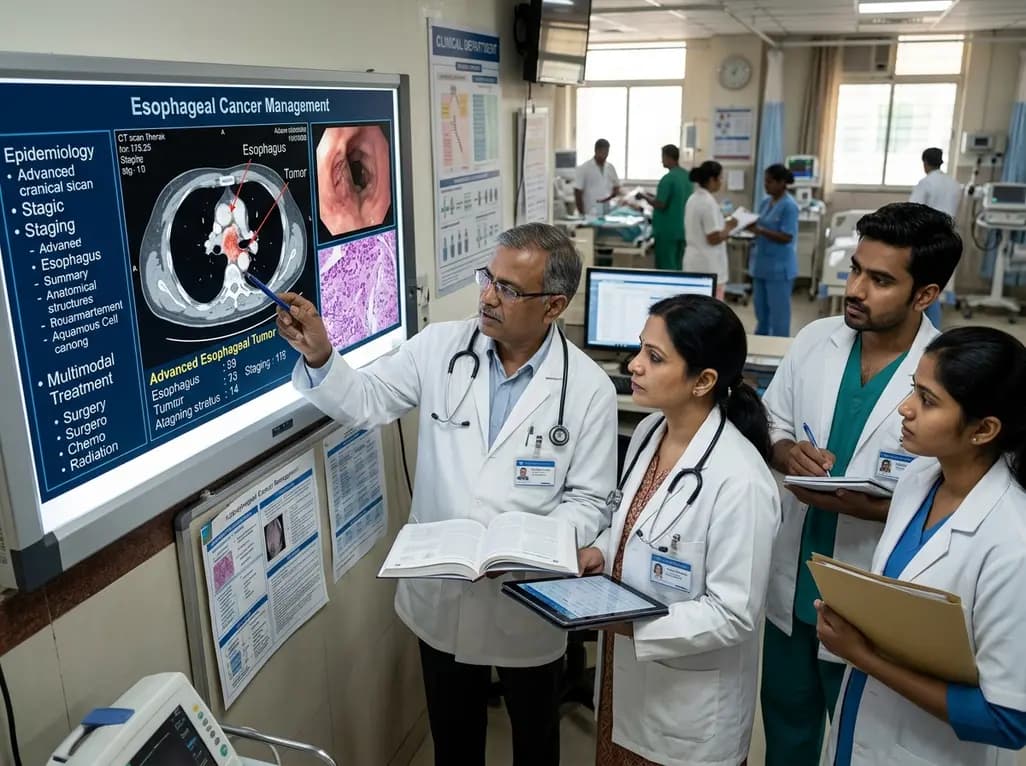
Esophageal cancer remains a global health challenge with low five-year survival. This review examines epidemiological shifts between adenocarcinoma and squamous cell carcinoma, updated staging, and modern multimodality treatment strategies.
Today

A quasi-experimental study demonstrates that culturally tailored educational interventions significantly boost HPV knowledge and vaccination intentions. These findings provide actionable strategies for healthcare providers in India to overcome vaccine hesitancy and advance cervical cancer prevention.
Today

A comprehensive meta-analysis evaluates the association between Body Mass Index and outcomes following abdominal aortic aneurysm repair. Discover how overweight and obesity correlate with lower mortality while underweight status confers heightened risk, challenging conventional preoperative risk stratification.
Today

The SOLARIO trial shows that a short course (≤7 days) of systemic antibiotic therapy is noninferior to long courses (≥4 weeks) in orthopedic infections treated with local antibiotic carriers, with significantly fewer adverse events.
Today
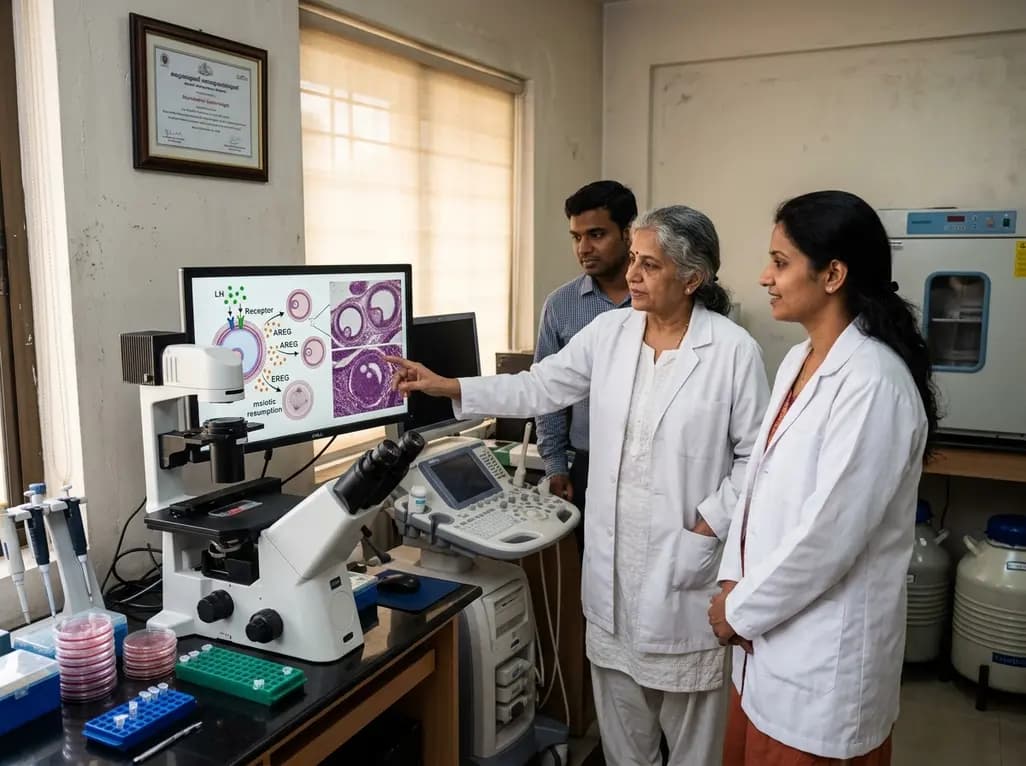
New research reveals that preovulatory follicles communicate via LH-induced paracrine signaling. Diffusible EGF ligands epiregulin and amphiregulin coordinate oocyte meiotic resumption across neighboring follicles, challenging traditional concepts of follicular autonomy.
Today
