.webp&w=384&q=75)

Loading, please wait...
Loading, please wait...

Esophageal cancer remains among the most lethal malignancies worldwide, claiming approximately 500,000 lives each year. Consequently, establishing effective esophageal cancer management protocols is crucial for improving patient outcomes. Although five-year survival has slowly improved in recent decades, it still rarely exceeds 20%. Therefore, multidisciplinary teams must integrate early detection, precise staging, and targeted therapies to optimize survival.
Esophageal malignancies comprise two principal histological subtypes that demonstrate profoundly divergent global incidence patterns. Squamous-cell carcinoma accounts for the majority of global cases, maintaining high prevalence across parts of Asia and Africa. In contrast, Western nations have experienced a rapid rise in esophageal adenocarcinoma over the past four decades, particularly among White men. Furthermore, squamous-cell carcinoma incidence has gradually declined in developed countries due to reduced tobacco and alcohol consumption. Conversely, adenocarcinoma rates continue to rise alongside escalating rates of obesity and chronic gastroesophageal reflux. In India, squamous-cell carcinoma remains the predominant subtype, especially across endemic northern and northeastern belts. However, urban centers increasingly encounter adenocarcinoma cases as dietary patterns modernize. Pathologists emphasize that these two entities represent biologically distinct diseases with unique somatic mutations. Consequently, differentiating histology during initial tissue assessment is essential for selecting subsequent therapy.
The pathogenesis of esophageal cancer involves distinct molecular mechanisms driven by specific environmental irritants. For squamous-cell carcinoma, chronic physical and chemical injury plays the primary pathogenic role. Specifically, heavy alcohol consumption and tobacco use act synergistically to induce genetic mutations in the esophageal squamous mucosa. Additionally, drinking scalding beverages, chewing areca nuts, and suffering from micronutrient deficiencies promote chronic mucosal inflammation in endemic populations. In contrast, esophageal adenocarcinoma follows an established progression from chronic gastroesophageal reflux disease to intestinal metaplasia. Over time, persistent acid and bile exposure transforms the stratified epithelium into specialized columnar cells termed Barrett esophagus. Moreover, central obesity exacerbates mechanical reflux and fosters a pro-inflammatory systemic environment via secreted adipokines. Subsequent genomic instability and progressive dysplasia ultimately foster invasive adenocarcinoma. Therefore, targeted lifestyle interventions and aggressive management of gastroesophageal reflux are crucial for primary cancer prevention.
Comprehensive staging guides clinical decision-making and prevents inappropriate surgical intervention. High-resolution endoscopy with targeted biopsy serves as the diagnostic cornerstone, identifying tumor location and macroscopic morphology. Furthermore, advanced imaging modalities, such as narrow-band imaging and chromoendoscopy, significantly enhance the detection of early mucosal lesions. Once pathologists confirm malignancy, endoscopists perform endoscopic ultrasound to evaluate tumor depth and locoregional lymph node involvement accurately. In addition, clinicians order contrast-enhanced computed tomography of the chest, abdomen, and pelvis to assess systemic metastases. Positron emission tomography combined with computed tomography provides superior accuracy in detecting occult distant metastases and secondary nodal disease. Consequently, international guidelines mandate integrated PET-CT scans for all potentially curable patients. For distal and junctional tumors, surgeons often add staging laparoscopy to rule out occult peritoneal carcinomatosis. Thus, multimodal staging yields an indispensable anatomical roadmap for subsequent therapeutic interventions.
Successful esophageal cancer management demands structured collaboration across medical, surgical, and radiation oncology specialties. For superficial mucosal lesions staged as T1a, endoscopists perform endoscopic submucosal dissection to achieve organ-preserving curative resection. However, locally advanced resectable tumors require multimodal therapy to eradicate micrometastases and downstage primary lesions. Trimodality therapy with preoperative chemoradiation followed by transthoracic esophagectomy remains a established standard of care. Additionally, recent clinical trials establish perioperative triplet chemotherapy as an effective option for resectable adenocarcinoma. Minimally invasive and robotic-assisted esophagectomy techniques have largely replaced open procedures in major centers. Consequently, patients experience lower pulmonary morbidity, decreased postoperative pain, and faster functional recovery. Conversely, patients with cervical esophageal squamous-cell carcinoma often receive definitive chemoradiotherapy to preserve laryngeal function. In selected patients showing complete clinical response, organ-preserving active surveillance presents a viable alternative to radical surgery. Ultimately, tumor boards tailor these intensive strategies according to individual physiological reserve and tumor staging.
Therapeutic paradigms for advanced esophageal malignancy have evolved dramatically with the integration of targeted biologic agents and immunotherapy. Specifically, immune checkpoint inhibitors targeting the PD-1 axis deliver remarkable survival advantages across both histologic subtypes. In resectable disease, adjuvant nivolumab doubles disease-free survival for patients retaining residual pathological disease following trimodality therapy. Furthermore, combining pembrolizumab or nivolumab with platinum-based chemotherapy represents the standard first-line regimen for unresectable locally advanced or metastatic cancers. Patients exhibiting elevated PD-L1 expression demonstrate particularly pronounced clinical benefits. Additionally, oncologists evaluate HER2 overexpression in gastroesophageal junction adenocarcinomas, adding trastuzumab to standard cytotoxic regimens for positive tumors. Following initial treatments, clinicians implement structured surveillance combining periodic cross-sectional imaging and upper endoscopy. Consequently, teams promptly detect recurrent disease and manage delayed surgical sequelae such as strictures and nutritional deficiencies. Thus, long-term survivorship programs preserve patient quality of life while supporting lasting disease control.
Squamous-cell carcinoma and adenocarcinoma differ markedly in their anatomical localization, etiology, and global distribution. Squamous-cell carcinoma typically arises in the upper and middle esophagus, driven primarily by tobacco use, excessive alcohol intake, and nutritional deficits. Conversely, adenocarcinoma predominantly affects the distal esophagus and gastroesophageal junction. It develops from Barrett esophagus secondary to chronic gastroesophageal reflux and obesity. Consequently, each histologic subtype demands distinct clinical approaches, diagnostic biomarkers, and tailored neoadjuvant protocols.
Gastroenterologists recommend endoscopic resection specifically for superficial tumors confined strictly to the esophageal mucosal layer without lymphovascular invasion. When staging confirms a T1a lesion, endoscopic mucosal resection or submucosal dissection provides excellent oncologic outcomes while preserving normal organ function. Furthermore, this approach avoids the substantial perioperative morbidity associated with esophagectomy. However, if histological assessment demonstrates submucosal invasion, poorly differentiated cells, or positive margins, the multidisciplinary team must promptly refer the patient for formal surgical resection.
Systemic immunotherapy now plays an indispensable role across multiple stages of esophageal cancer treatment. Specifically, clinicians administer adjuvant nivolumab to patients with residual pathological disease following neoadjuvant chemoradiation and complete surgical resection. Additionally, oncologists combine immune checkpoint inhibitors, such as pembrolizumab or nivolumab, with first-line platinum-based chemotherapy for unresectable locally advanced or metastatic disease. These regimens significantly prolong progression-free and overall survival, particularly in tumors exhibiting robust programmed death-ligand 1 expression levels during immunohistochemical testing.
Disclaimer: This content is for informational and educational purposes only and is intended solely for healthcare professionals. It does not constitute medical advice, diagnosis, or treatment recommendations. Clinical judgment must always guide patient management decisions. Healthcare providers are advised to verify all drug dosages, interactions, and indications against manufacturer prescribing information. Refer to the latest local and national guidelines for clinical practice.
References

Read summarized clinical updates, watch expert medical content, and earn CME certifications right from your smartphone.
Open your smartphone camera to scan and install.





Esophageal cancer remains a global health challenge with low five-year survival. This review examines epidemiological shifts between adenocarcinoma and squamous cell carcinoma, updated staging, and modern multimodality treatment strategies.
Today
A quasi-experimental study demonstrates that culturally tailored educational interventions significantly boost HPV knowledge and vaccination intentions. These findings provide actionable strategies for healthcare providers in India to overcome vaccine hesitancy and advance cervical cancer prevention.
Today
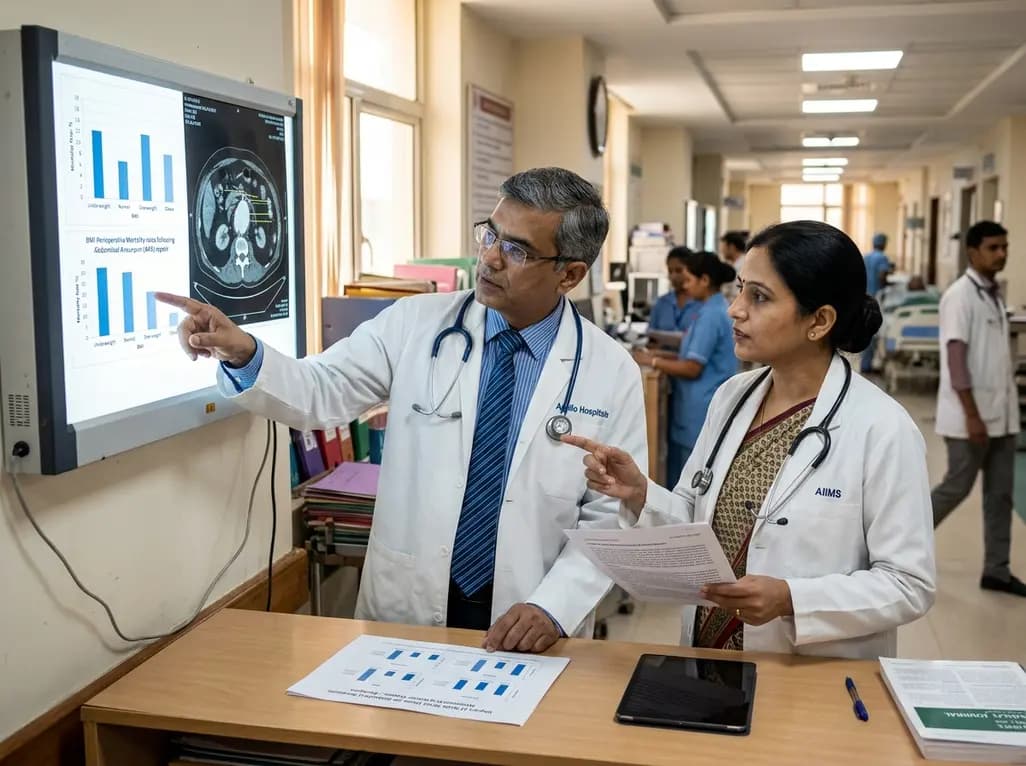
A comprehensive meta-analysis evaluates the association between Body Mass Index and outcomes following abdominal aortic aneurysm repair. Discover how overweight and obesity correlate with lower mortality while underweight status confers heightened risk, challenging conventional preoperative risk stratification.
Today
The SOLARIO trial shows that a short course (≤7 days) of systemic antibiotic therapy is noninferior to long courses (≥4 weeks) in orthopedic infections treated with local antibiotic carriers, with significantly fewer adverse events.
Today
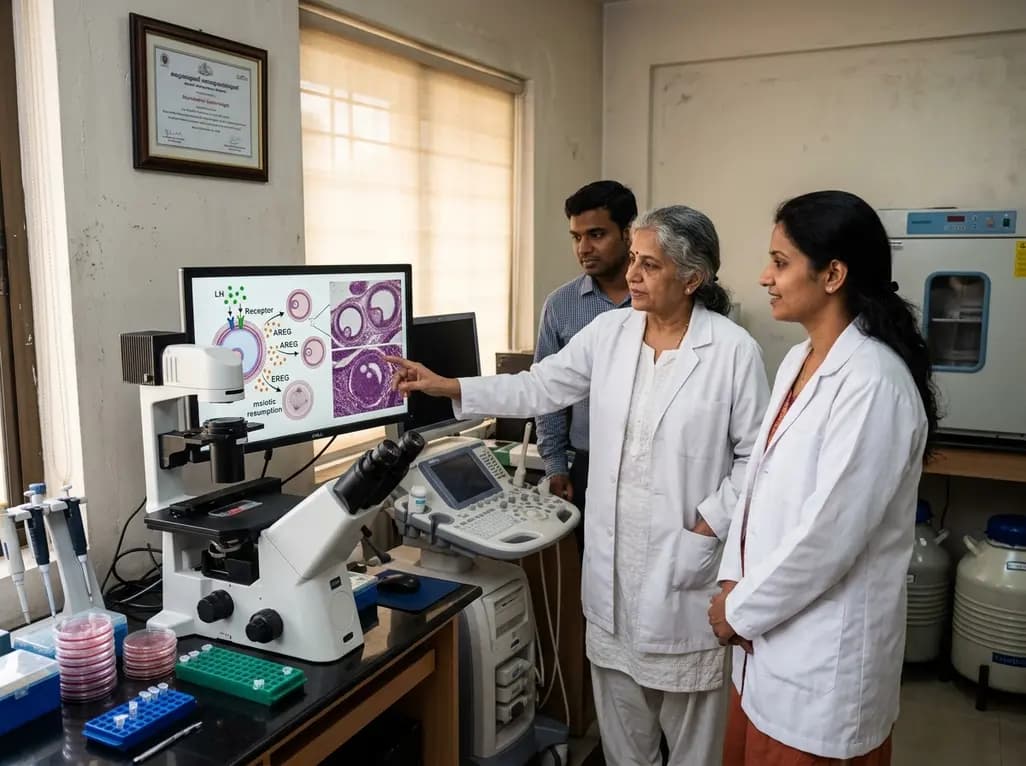
New research reveals that preovulatory follicles communicate via LH-induced paracrine signaling. Diffusible EGF ligands epiregulin and amphiregulin coordinate oocyte meiotic resumption across neighboring follicles, challenging traditional concepts of follicular autonomy.
Today
