.webp&w=384&q=75)

Loading, please wait...
Loading, please wait...

Human papillomavirus (HPV) causes significant morbidity globally, driving preventable cervical and anogenital malignancies. Although safe vaccines offer reliable protection, clinical uptake remains suboptimal due to persistent hesitancy and conservative social norms. Therefore, deploying culturally tailored HPV education represents an indispensable strategy to bridge critical knowledge gaps. When healthcare providers align clinical counseling with local traditions, patients make confident and informed preventive health decisions.
Furthermore, persistent misconceptions regarding reproductive health often inhibit vaccine acceptance in traditional communities. Consequently, clinicians need structured communication frameworks rather than passive informational handouts. Evaluating targeted educational models provides actionable insights for primary care practitioners worldwide.
Behavioral change theories offer practical blueprints for effective clinical communication. Specifically, the Information-Motivation-Behavioral Skills (IMB) model demonstrates substantial success across diverse preventative health initiatives. According to this framework, health-related actions require accurate scientific knowledge, robust personal motivation, and concrete navigation skills. However, generic biomedical lectures frequently fail to resonate with patients who navigate sensitive sociocultural boundaries.
Therefore, adapting clinical content to respect local beliefs substantially amplifies its effectiveness. A recent quasi-experimental study by Elsayed and colleagues tested this methodology in the Northern Border Region of Saudi Arabia. The researchers delivered a culturally adapted, 45-minute interactive group session within primary healthcare centers. Instead of reciting dry statistics, educators directly addressed family priorities, modesty concerns, and community expectations. In addition, the interactive format encouraged female participants to voice personal apprehensions comfortably. Consequently, this targeted architecture cultivated genuine motivation and strong self-efficacy among attendees.
The quantitative findings from the Saudi trial demonstrated clear improvements across multiple behavioral metrics. The investigation evaluated 380 female participants attending primary care centers, allocating them equally into intervention and control cohorts. Moreover, the study recorded an impressive 97.7% retention rate over a three-month follow-up schedule. This high adherence confirms that participants found the culturally grounded sessions both acceptable and clinically valuable.
At the three-month evaluation, intervention participants exhibited statistically significant, large effect-size gains compared with controls. Specifically, their knowledge scores increased markedly, demonstrating an adjusted regression coefficient of 0.84. Furthermore, participants showed substantial gains in viral awareness, positive immunization attitudes, and concrete vaccination intentions. Meanwhile, control subjects who received standard clinic exposure retained their baseline knowledge deficits. Thus, rigorous evidence proves that culturally sensitive group education fosters enduring behavioral intentions that standard encounters cannot replicate.
Vaccine hesitancy surrounding HPV often reflects deep-seated sociocultural concerns rather than simple medical skepticism. In many conservative communities, discussing sexually transmitted infections provokes acute personal and family discomfort. Consequently, patients or parents may fear that receiving the vaccine implies condoning premarital sexual behavior. Clinicians who overlook these sensitive cultural dynamics often face silent parental resistance and missed preventative opportunities.
To overcome this obstacle, physicians must deliberately present HPV immunization as a standard cancer-prevention measure. For instance, explaining that vaccination protects the cervix from cellular oncogenesis reframes the consultation around cancer defense. In addition, healthcare teams should welcome family members into health discussions to build broad domestic consensus. When clinicians respect community values while delivering unequivocal clinical recommendations, patient trust expands significantly. Therefore, empathetic communication serves as an essential clinical tool to convert vaccine hesitation into positive immunization uptake.
The findings from Saudi primary care offer vital lessons for cervical cancer control across India. Currently, India carries a heavy cervical cancer burden, recording tens of thousands of preventable deaths every year. Although domestic manufacturing has reduced vaccine prices, low health literacy and social taboo continue to restrict widespread uptake. Furthermore, unfounded rumors regarding adverse effects undermine parental confidence in adolescent immunization programs.
However, culturally aligned educational interventions can successfully dismantle these persistent barriers. Because India utilizes an extensive grassroots network of Accredited Social Health Activists, community-centered counseling can reach rural households effectively. Primary care doctors and community health workers can conduct concise, interactive workshops during routine maternal and child health sessions. Moreover, programs must actively engage fathers and community elders who guide domestic healthcare expenditures. As India prepares broad public vaccination rollouts, embedding structured behavioral models will determine long-term success.
Primary care physicians and gynecologists play a decisive role in eliminating vaccine-preventable malignancies. To optimize immunization rates, clinicians should evaluate HPV vaccination status during every adolescent and young adult encounter. For instance, physicians can introduce presumptive recommendations during routine school physicals, adolescent checkups, and wellness consultations. Stating clearly that a patient is due for routine cancer protection generates immediate parental confidence.
Additionally, clinics must equip nursing staff and paramedical teams to lead brief educational interactions. Providing culturally sensitive visual aids and vernacular pamphlets helps patients understand viral oncogenesis clearly. Furthermore, facilities should establish digital tracking systems and phone reminders to prevent missed doses in multidose regimens. By creating an open, culturally respectful clinical space, practitioners empower families to embrace life-saving HPV immunization without delay.
The Information-Motivation-Behavioral Skills framework addresses vaccine hesitancy by targeting three critical psychological dimensions. First, it supplies accurate biomedical knowledge regarding viral transmission and cancer etiology. Second, the model enhances personal and social motivation by framing vaccination as an act of familial protection. Finally, it builds behavioral skills, empowering individuals to navigate scheduling and overcome logistical barriers. Consequently, this holistic theory-driven strategy transforms passive awareness into decisive preventive action.
Clinicians can effectively diffuse stigma by consistently framing the HPV immunization as an essential cancer-prevention vaccine rather than a sexually transmitted disease shield. In addition, providers should explain that the virus is nearly ubiquitous among adults worldwide. By normalizing universal susceptibility and emphasizing safe cervical preservation, physicians eliminate unnecessary moral anxiety. Moreover, engaging key family decision-makers with culturally sensitive reassurances strengthens trust, encouraging hesitant patients to embrace proactive immunization.
India bears an enormous burden of cervical malignancy, losing over seventy thousand women to this preventable disease every single year. Fortunately, widespread immunization against high-risk viral genotypes provides robust primary protection before persistent infection leads to precancerous lesions. Therefore, scaling up vaccination alongside regular screening offers the most dependable pathway toward national disease elimination. By driving high community uptake, India can dramatically reduce morbidity, relieve domestic healthcare costs, and safeguard women's health across generations.
Disclaimer: This content is for informational and educational purposes only... Refer to the latest local and national guidelines for clinical practice.
References

Read summarized clinical updates, watch expert medical content, and earn CME certifications right from your smartphone.
Open your smartphone camera to scan and install.





A quasi-experimental study demonstrates that culturally tailored educational interventions significantly boost HPV knowledge and vaccination intentions. These findings provide actionable strategies for healthcare providers in India to overcome vaccine hesitancy and advance cervical cancer prevention.
Today
Esophageal cancer remains a global health challenge with low five-year survival. This review examines epidemiological shifts between adenocarcinoma and squamous cell carcinoma, updated staging, and modern multimodality treatment strategies.
Today
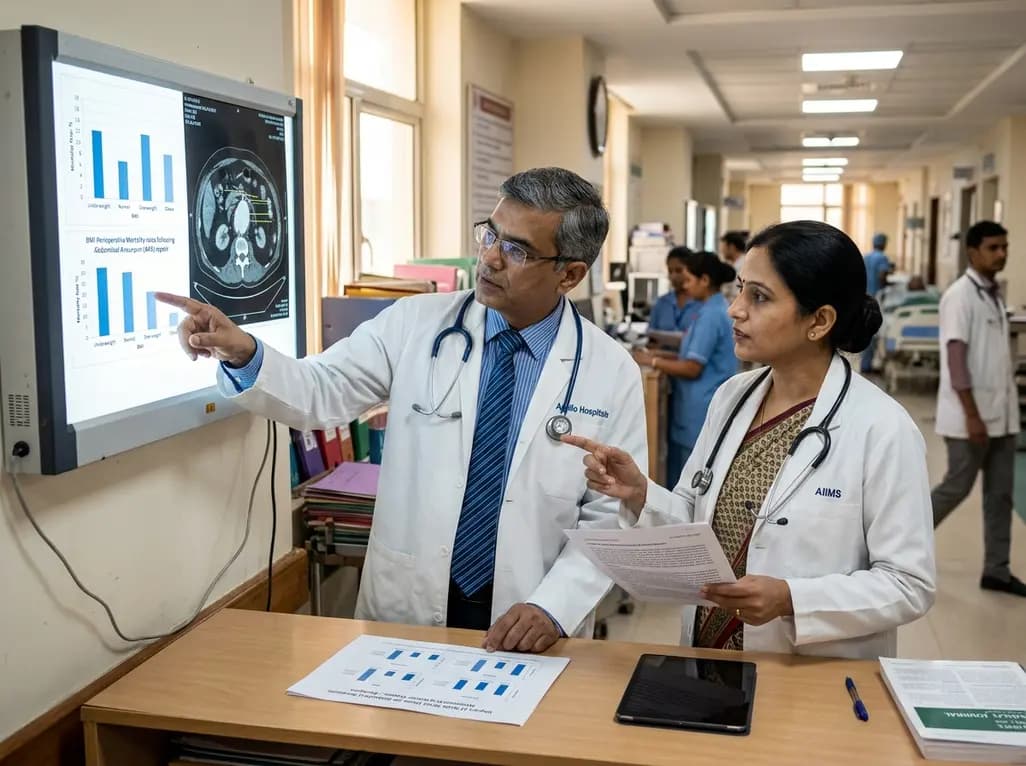
A comprehensive meta-analysis evaluates the association between Body Mass Index and outcomes following abdominal aortic aneurysm repair. Discover how overweight and obesity correlate with lower mortality while underweight status confers heightened risk, challenging conventional preoperative risk stratification.
Today
The SOLARIO trial shows that a short course (≤7 days) of systemic antibiotic therapy is noninferior to long courses (≥4 weeks) in orthopedic infections treated with local antibiotic carriers, with significantly fewer adverse events.
Today
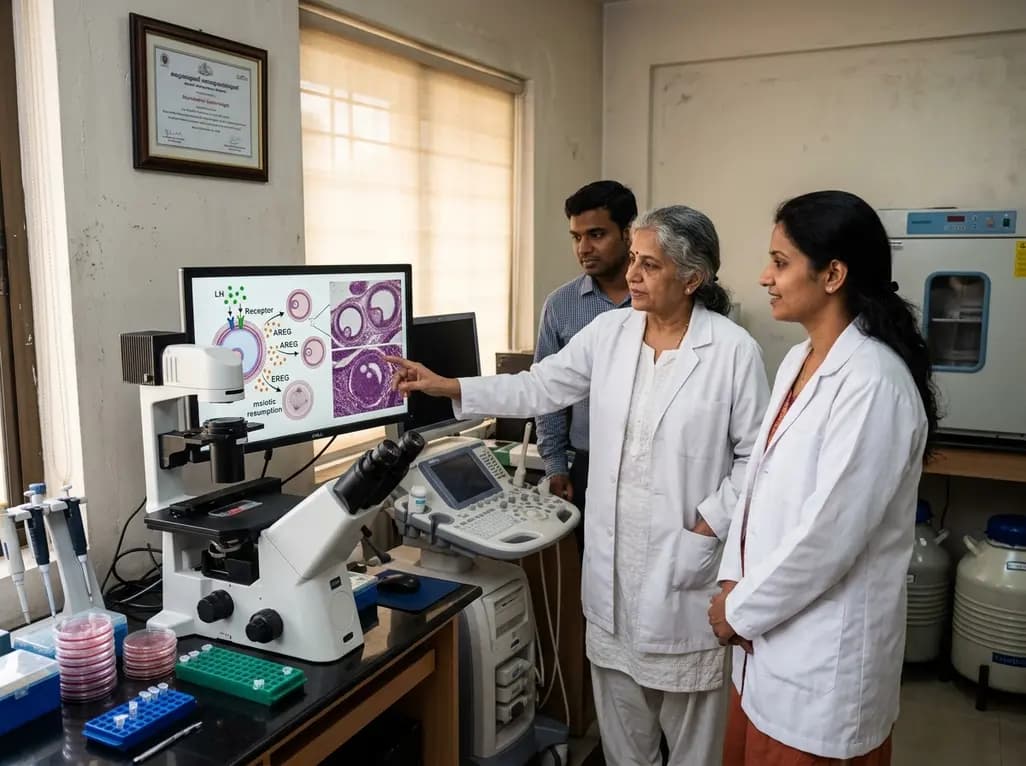
New research reveals that preovulatory follicles communicate via LH-induced paracrine signaling. Diffusible EGF ligands epiregulin and amphiregulin coordinate oocyte meiotic resumption across neighboring follicles, challenging traditional concepts of follicular autonomy.
Today
