

Loading, please wait...
Loading, please wait...

Cognitive impairment represents a core pathophysiological feature of psychotic disorders, frequently determining long-term functional recovery and vocational independence. Clinicians often observe diverse recovery paths among young individuals presenting with a first psychotic break. Understanding cognitive trajectories in psychosis provides indispensable clinical insights into disease evolution and rehabilitation potential. Recent evidence demonstrates that neurocognitive functioning remains remarkably stable over time, emphasizing the critical value of early neurocognitive evaluation.
Historically, clinicians debated whether cognitive deficits in schizophrenia spectrum disorders reflect an active neurodegenerative decline or an early neurodevelopmental impairment. When patients experience a first episode of psychosis, their functional capacity hinges heavily on cognitive processing, memory retention, and problem-solving abilities. Consequently, clarifying neurocognitive paths over the early post-onset period has emerged as a fundamental priority in psychiatric research.
Recent evidence confirms that cognitive performance follows heterogeneous paths rather than a uniform trajectory. Therefore, assessing both global intellect and domain-specific skills allows mental health teams to establish meaningful prognostic expectations. Longitudinal studies demonstrate that cognitive trajectories in psychosis remain predominantly stable across the initial two years following early intervention. Although patients demonstrate modest gains from targeted psychosocial care and modern pharmacotherapy, their developmental ranking relative to peers changes very little.
Furthermore, this stability highlights the importance of timely baseline evaluation. If post-onset decline does not aggressively worsen over two years, baseline capacity serves as the primary driver of distal functioning. Clinicians must recognize that early cognitive assessments offer immediate prognostic visibility, helping practitioners differentiate individuals who require intensive remediation from those who can maintain independent functioning.
To evaluate cognitive heterogeneity rigorously, researchers evaluated longitudinal data from the landmark Recovery After an Initial Schizophrenia Episode Early Treatment Program (RAISE-ETP). The cohort enrolled 404 participants aged 15 to 40 years across diverse clinical community sites. Investigators systematically administered the Brief Assessment of Cognition in Schizophrenia (BACS) battery at baseline, 12 months, and 24 months of coordinated specialty care.
The BACS battery evaluated six distinct cognitive domains alongside overall performance. These specific domains encompassed verbal memory, working memory, motor speed, verbal fluency, attention, and executive function. Subsequently, investigators applied data-driven latent growth modeling to uncover distinct trajectory classes across each neurocognitive domain.
Through this sophisticated statistical approach, the investigators moved beyond simple cohort averages. Conventional average-based analyses often obscure critical individual variability, masking subgroups of patients who follow divergent developmental courses. In contrast, latent growth mixture modeling successfully classified individuals according to their baseline performance and longitudinal rate of change. As a result, the findings provide a refined, clinically actionable perspective on cognitive heterogeneity during the critical early intervention window.
The statistical modeling demonstrated remarkable stability across global cognition and individual cognitive domains over the two-year observation period. Most participants exhibited minor, incremental improvements without experiencing dramatic cognitive deterioration. However, domain-specific analyses uncovered varying numbers of distinct developmental trajectories that global composite scores completely obscured.
Specifically, global cognition, verbal fluency, motor speed, and working memory segregated into two distinct trajectory classes. These classes represented consistently higher-performing and lower-performing groups. In contrast, executive functioning and processing speed separated into three discrete trajectory classes. Most strikingly, verbal memory revealed four distinct trajectory groups, demonstrating that memory consolidation exhibits the greatest underlying complexity among first-episode patients.
Consequently, relying exclusively on global cognitive metrics can mislead treating psychiatrists. A patient may present with an average global summary score while experiencing profound, isolated impairments in verbal memory or processing speed. These nuanced deficits directly impede academic reintegration and workplace success. Therefore, comprehensive neuropsychological batteries remain essential for capturing subtle domain differences that define individual recovery pathways.
Baseline educational attainment emerged as an exceptionally robust protective factor across all cognitive evaluations. Specifically, higher educational achievement significantly decreased the odds of belonging to more impaired cognitive classes for global cognition (odds ratio = 0.34) and across every domain. This association underscores the vital buffering capacity of cognitive reserve against illness-induced disability.
In addition, trajectory membership correlated strongly with real-world functional outcomes and overall symptom burden. Patients in less impaired cognitive trajectory classes reported significantly higher quality of life scores and fewer severe psychiatric symptoms at distal follow-up. These findings clearly validate the close relationship between cognitive integrity and successful community reintegration.
Interestingly, relationships between cognitive trajectories and depressive symptoms revealed unexpected, domain-specific heterogeneity. More severe depressive symptoms accompanied poorer trajectories in working memory and executive functioning. Conversely, higher depressive severity unexpectedly accompanied less impaired trajectories in verbal memory, motor speed, and verbal fluency. This paradoxical divergence suggests that affective distress in early psychosis interacts selectively with specific fronto-striatal circuits while sparing other neurocognitive networks.
These empirical insights carry direct implications for psychiatric practice and community mental health delivery. Because baseline cognitive performance primarily dictates two-year trajectory membership, clinicians must prioritize early neuropsychological screening immediately following stabilization of acute psychotic symptoms. Waiting for cognitive deficits to resolve spontaneously during maintenance therapy often delays vital rehabilitative opportunities.
Furthermore, clinicians should design personalized cognitive remediation therapy rather than applying generic rehabilitation protocols. Patients exhibiting preserved verbal memory but impaired executive function require vastly different behavioral strategies than those with motor slowing or working memory deficits. Combining tailored cognitive training with supported education and employment maximizes functional recovery during the critical early illness window.
Moreover, clinicians must carefully differentiate affective symptoms from primary cognitive deficits. Because depression correlates bidirectionally with specific cognitive domains, treating comorbid mood disorders may selectively improve executive control and working memory performance. Ultimately, integrating early domain-level cognitive profiling into standard psychiatric protocols empowers clinicians to optimize long-term independence, vocational success, and overall quality of life for young adults facing psychotic disorders.
Baseline neurocognitive assessment establishes an essential performance benchmark for first-episode psychosis. Because cognitive trajectories remain largely stable after illness onset, baseline scores predict functional outcomes and guide early intervention. Clinicians can identify vulnerable patients early, promptly delivering targeted cognitive remediation, educational support, and specialized rehabilitation to prevent long-term functional decline.
Global cognitive scores often obscure critical domain-level heterogeneity in psychotic disorders. Domain-specific evaluations reveal unique developmental paths, such as four distinct verbal memory trajectories versus two global trajectories. Moreover, specific domains like executive function and working memory correlate differently with depressive symptoms, enabling tailored remediation strategies that global metrics cannot adequately inform.
Educational attainment serves as a vital proxy for cognitive reserve in psychotic disorders. In longitudinal research, higher baseline education significantly lowered the odds of falling into more impaired trajectory groups across both global cognition and individual domains. Consequently, pre-existing cognitive reserve helps buffer against severe functional impairment and supports sustained clinical stability.
Disclaimer: This content is for informational and educational purposes only. It is not intended to provide medical advice or replace the judgment of a licensed healthcare professional. Healthcare providers should exercise clinical judgment and verify information with other authoritative medical resources. Refer to the latest local and national guidelines for clinical practice.
References

Read summarized clinical updates, watch expert medical content, and earn CME certifications right from your smartphone.
Open your smartphone camera to scan and install.





A 2-year RAISE-ETP study reveals that cognitive trajectories in first-episode psychosis are largely stable, with baseline performance defining long-term course. Domain-specific analysis demonstrates distinct trajectories, highlighting the necessity of early individual neurocognitive profiling and targeted rehabilitation.
Today

Ambient digital scribes promise effortless medical documentation, but a critical sociotechnical commentary reveals that AI alters rather than eliminates charting work. Discover how shifting cognitive burdens, oversight risks, and workflow redesign impact clinical safety and healthcare practice.
Today

A new comparative study demonstrates that intraoperative imprint cytology achieves 96.6% diagnostic accuracy in ovarian tumours, outperforming frozen section in sensitivity for borderline lesions and offering an accessible, rapid alternative for resource-constrained surgical centres.
Today

Thoracic aortic aneurysm lacks etiologic medical therapy. A new study reveals that targeting specific αV integrins with Cilengitide attenuates TGF-β and mechanotransduction pathways, effectively limiting pro-fibrotic remodeling and aortic bulb dilation in both syndromic and sporadic disease models.
Today
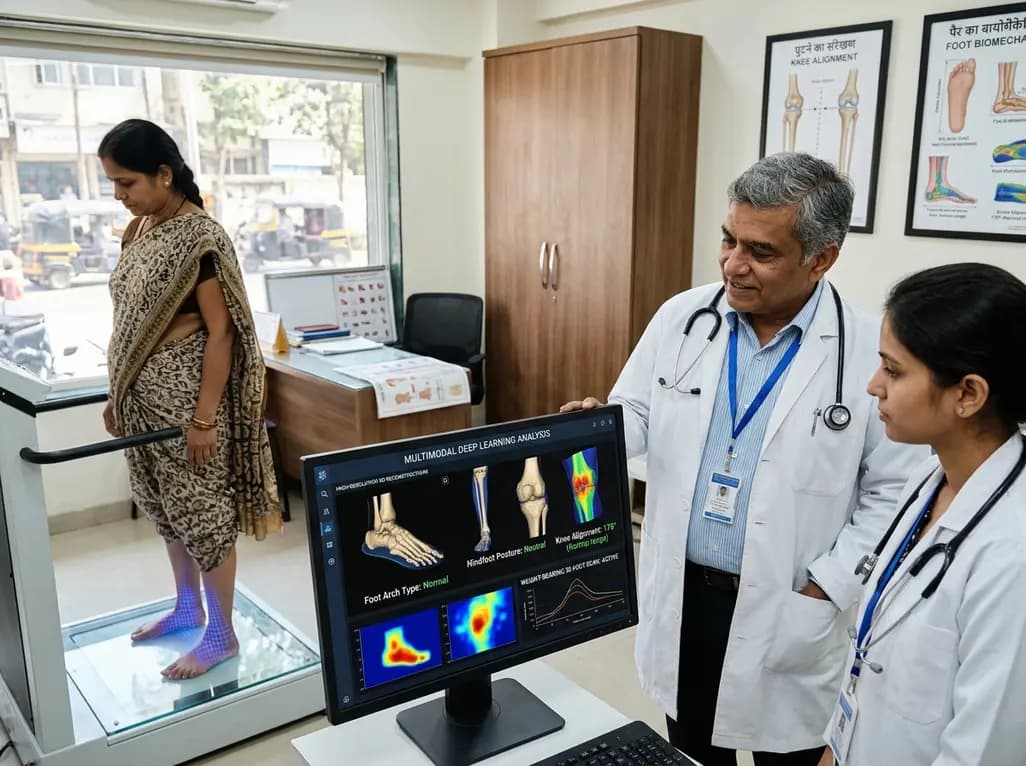
A multimodal deep learning framework utilizing weight-bearing 3D foot scans accurately screens lower-limb alignment, including arch type, hindfoot posture, and knee alignment, offering an accessible, radiation-free alternative to radiography for early biomechanical triage.
Today

A real-world retrospective study demonstrates that combining intravitreal ranibizumab with focal/grid macular laser significantly improves visual acuity and central macular thickness compared to laser monotherapy in patients with center-involved diabetic macular edema.
Today
