.webp&w=384&q=75)

Loading, please wait...
Loading, please wait...

Patients with symptomatic intracranial atherosclerotic disease (ICAD) often face severe and progressive cognitive decline. Maintaining stable cognitive status after revascularization is a critical goal for clinicians managing this high-risk population. Specifically, the ERSIAS-PC phase II trial recently demonstrated that surgical revascularization using encephaloduroarteriosynangiosis (EDAS) can reduce recurrent stroke risks. However, the factors that specifically protect cognitive function after such procedures remained largely unexplored until now.
Researchers conducted a post hoc analysis of the ERSIAS-PC trial to identify what helps preserve brain health. The study focused on 39 patients who completed at least one year of follow-up. They used the Montreal Cognitive Assessment (MoCA) to track changes in cognitive function from baseline. Furthermore, the team employed classification and regression tree (CART) analysis to evaluate variables like age, sex, stenosis levels, and compliance with medical treatments for chronic conditions.
Results from the analysis showed that 84.6% of patients either improved or maintained their cognitive function one year after surgery. Most importantly, the analysis revealed that compliance with diabetes mellitus (DM) treatment was the most significant predictor of success. Patients who strictly followed their DM protocols showed a 94.5% rate of cognitive preservation. In contrast, those who were non-compliant had a much lower success rate of 74.2%. Consequently, this finding highlights that surgical success alone is insufficient for long-term neurological health.
While the study also looked at hyperlipidemia treatment and the degree of arterial stenosis, these factors did not reach statistical significance. Therefore, intensive medical management must remain a priority even after a successful EDAS procedure. Clinicians should emphasize that controlling systemic risk factors is just as vital as the surgery itself. Managing blood glucose levels effectively helps mitigate the vascular damage that contributes to post-stroke cognitive impairment.
This study reinforces the idea that surgery is only one part of the treatment journey for ICAD. Compliance with diabetes medication significantly aids in protecting a patient\'s cognitive status after revascularization. Therefore, a multidisciplinary approach involving neurologists, surgeons, and endocrinologists is necessary to ensure the best possible outcomes for stroke survivors.
Encephaloduroarteriosynangiosis (EDAS) is an indirect surgical technique. It involves placing a scalp artery onto the surface of the brain to encourage the growth of new blood vessels, which improves blood flow in patients with narrowed intracranial arteries.
Diabetes can lead to chronic microvascular damage and inflammation. Poor glucose control hinders the brain\'s ability to recover from ischemic stress and can accelerate the decline of executive functions and memory.
The researchers used the Montreal Cognitive Assessment (MoCA), which is a widely validated screening tool for detecting mild cognitive impairment and tracking changes in neurological status over time.
Disclaimer: This content is for informational and educational purposes only... Refer to the latest local and national guidelines for clinical practice.
References
Aguilera-Pena MP et al. Factors affecting cognitive status in patients with intracranial atherosclerosis after surgical revascularization: a post hoc analysis of the ERSIAS-PC phase II trial. J Neurosurg. 2026 Mar 06. doi: 10.3171/2025.10.JNS251032. PMID: 41791115.
Lo J et al. Diabetes and Poststroke Cognitive Impairment. Stroke. 2020;51(6):1779-1786.
Gonzalez NR et al. Encephaloduroarteriosynangiosis (EDAS) revascularization for symptomatic intracranial atherosclerotic steno-occlusive (ERSIAS) Phase-II objective performance criterion trial. Eur Stroke J. 2021;6(1):86-95.
"
Read summarized clinical updates, watch expert medical content, and earn CME certifications right from your smartphone.
Open your smartphone camera to scan and install.





A post hoc analysis of the ERSIAS-PC trial finds that DM treatment compliance is key to preserving cognitive function after EDAS revascularization for ICAD....
7 months ago
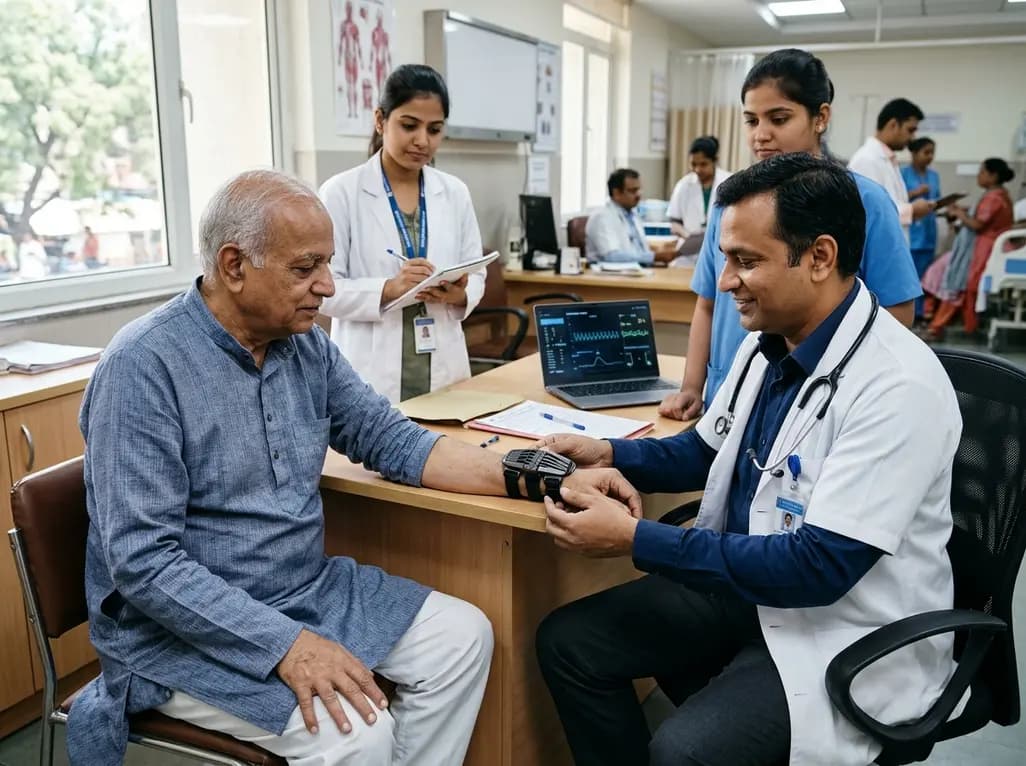
The TREM-AB open-label pilot study evaluated a wearable passive nonlinear vibration absorber for essential tremor. The Nonlinear Energy Sink bracelet reduced clinical Fahn-Tolosa-Marin tremor scores by 32.1% and electrophysiological tremor power by 49.2% with no adverse effects reported.
Today

A population-based study of 20,928 children reveals that small vulnerable newborns face sex-divergent mental capital outcomes at ages 6-7: term SGA girls show higher behavioral difficulties and lower resilience, while preterm non-SGA boys experience increased behavioral problems.
Today
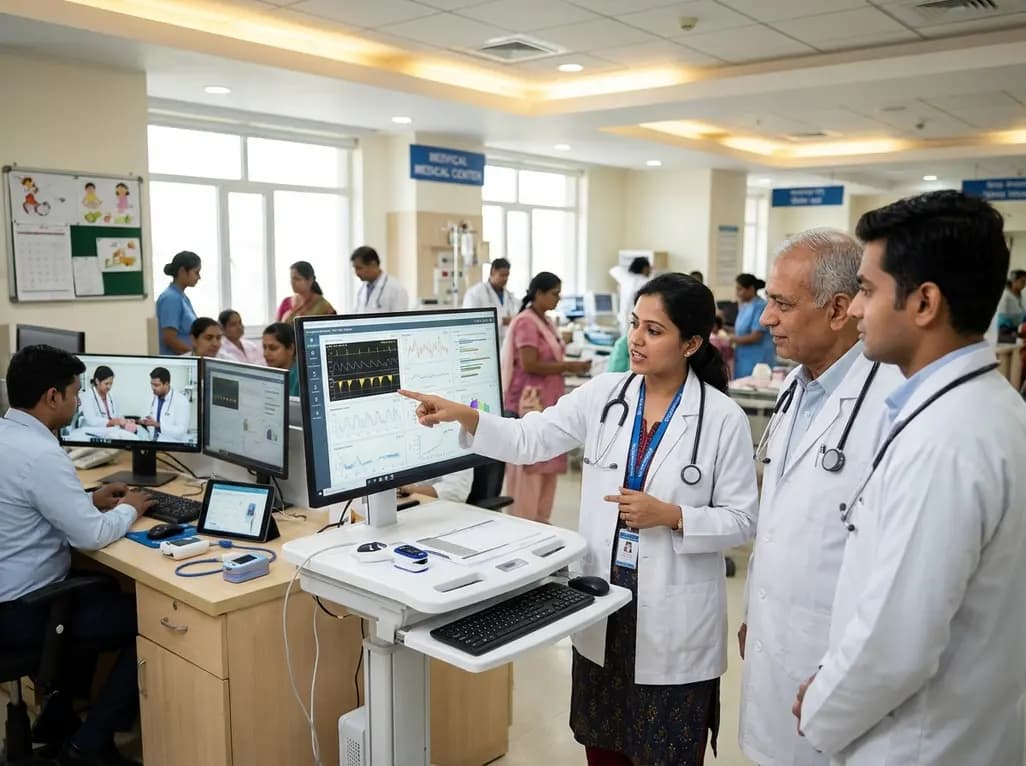
A landmark study details how an enterprise pediatric remote patient management model expanded from a single cardiology pilot to 16 diverse specialty programs by combining centralized digital operations with specialty clinical leadership.
Today

A comparative review of tension band wiring and intramedullary screw fixation in thumb metacarpophalangeal arthrodesis, evaluating union rates, hardware complications, and clinical outcomes.
Today

A breakthrough ultrathin multimodal sensor decouples physical hemodynamic monitoring from disposable electrochemical calibration, achieving long-term wearable glucose prediction with 81.36% accuracy and a 9.12% MARD. This offers a robust, drift-free solution for outpatient metabolic surveillance.
Today
