.webp&w=384&q=75)

Loading, please wait...
Loading, please wait...

Drug-resistant epilepsy poses a continuous clinical hurdle for physicians worldwide. When standard antiseizure medications fail to control seizures, neuromodulation provides an indispensable therapeutic alternative. Among modern bioelectric interventions, closed-loop vagus nerve stimulation has emerged as a major technological advancement over traditional open-loop devices. Rather than delivering intermittent electrical impulses on a fixed timer alone, modern responsive devices detect autonomic biosignals to interrupt seizure propagation early. Recent real-world data from a long-term clinical cohort now shed critical light on how these evolving technologies perform across distinct implantation eras.
Traditional neuromodulation for medically refractory epilepsy relied on conventional open-loop generators. These older units delivered programmed electric bursts at preset intervals regardless of immediate cortical activity. In contrast, advanced closed-loop vagus nerve stimulation incorporates cardiac-sensing algorithms that continuously monitor heart rate dynamics. Because over eighty percent of patients experience ictal tachycardia during seizure onset, detecting rapid heart rate surges enables prompt intervention. The device senses these autonomic shifts and rapidly delivers an extra burst of stimulation to terminate the ictal episode. Consequently, responsive stimulation targets the precise temporal window where therapeutic interruption is most effective. Furthermore, this dynamic capability preserves battery life and reduces continuous stimulation side effects. Patients also retain the ability to manually activate the device using an external magnet. Therefore, the combination of baseline duty cycles and responsive auto-stimulation offers a multifaceted mechanism to dampen epileptogenic synchrony across widespread neural networks.
A landmark retrospective study conducted at Xuanwu Hospital evaluated 131 consecutive patients with drug-resistant epilepsy treated between 2012 and 2024. Investigators analyzed 81 individuals who completed comprehensive follow-up, comparing open-loop Model 102 devices with closed-loop Model 106 units. The primary outcome measured monthly seizure frequency reduction, defining clinical responders by a fifty percent or greater seizure reduction. Notably, closed-loop vagus nerve stimulation achieved an overall responder rate of 75.7 percent, compared to only 43.2 percent in the open-loop cohort. This demonstrated an absolute responder difference of 33.8 percentage points and a number needed to treat of three. Even after adjusting for baseline age disparities using Quade rank ANCOVA, the closed-loop group exhibited significantly greater postoperative seizure reductions. Consequently, these findings confirm that cardiac-triggered responsive stimulation yields robust clinical gains in real-world cohorts suffering from refractory seizures.
Although these comparative outcomes strongly favor responsive systems, clinicians must interpret the findings with methodological caution. Specifically, the device models in this cohort aligned chronologically with separate implantation eras. Patients received open-loop systems during earlier calendar years, whereas surgeons implanted closed-loop hardware during more recent periods. As a result, temporal improvements in surgical precision, perioperative care, and antiseizure drug management may confound the observed benefits. Furthermore, differential patient attrition between historical cohorts and recently treated groups can introduce follow-up bias. The authors explicitly emphasize that the findings reflect comparative effectiveness across different practice eras rather than definitive causal superiority of the hardware alone. Moreover, gradual optimization of stimulation programming parameters over the last decade likely contributed to superior modern outcomes. Therefore, while responsive technology demonstrates clear clinical utility, prospective randomized studies remain essential to isolate the precise device effect from background medical evolution.
Identifying reliable preoperative biomarkers represents a critical objective in surgical epilepsy management. In exploratory analyses, the Xuanwu Hospital study revealed an intriguing correlation between clinical response and the patient age at initial seizure onset. Specifically, patients who developed epilepsy at an older age achieved higher rates of treatment responsiveness following implantation. Prolonged seizure burden that begins during early infancy frequently disrupts developing neural circuitry, creating highly intractable epileptogenic networks. Conversely, individuals with later-onset focal epilepsy may harbor more mature, circumscribed networks that remain receptive to vagal neuromodulation. However, clinicians must interpret this exploratory variable prudently because pediatric and adult subgroups experienced varying attrition and era-dependent follow-up intervals. Nevertheless, evaluating onset age alongside structural imaging and electrophysiological data can refine candidate selection and guide realistic caregiver expectations regarding long-term seizure control.
In India, managing drug-resistant epilepsy involves navigating significant socioeconomic diversity and variable access to specialized neuromodulation centers. Although resective brain surgery remains the definitive curative pathway for well-defined focal lesions, numerous patients present with non-resectable or multifocal foci. For these complex individuals, vagus nerve stimulation offers a minimally invasive, reversible treatment that does not require intracranial craniotomy. However, the higher financial expenditure associated with advanced closed-loop devices requires careful consideration in resource-sensitive healthcare environments. Clinicians must balance the upfront capital investment against long-term socioeconomic benefits, including fewer emergency admissions and reduced injury risks. Furthermore, successful implementation demands dedicated multidisciplinary teams capable of systematic outpatient programming and heart-rate threshold calibration. Consequently, Indian centers must develop structured post-implantation follow-up pathways to maximize therapy persistence and ensure cost-effective clinical care.
The field of bioelectric medicine continues to progress beyond isolated cardiac-sensing algorithms. Next-generation neurostimulators are integrating multi-modal biosensors that record respiratory patterns, electrodermal activity, and continuous intracranial electroencephalography. By combining peripheral autonomic signals with central neural signatures, future closed-loop algorithms will predict seizures with unprecedented accuracy. Additionally, artificial intelligence models will soon dynamically adjust current amplitude and frequency to prevent habituation. Meanwhile, ongoing registries continue to accumulate longitudinal data regarding quality-of-life parameters, cognitive preservation, and sudden unexpected death in epilepsy risk reduction. As battery technology improves and remote digital monitoring expands, neuromodulation will offer tailored therapeutic dosing for diverse patient populations. Ultimately, closed-loop vagus nerve stimulation marks an indispensable bridge toward highly personalized, automated epilepsy therapeutics.
Closed-loop systems continuously record the patient's cardiac rhythm through subcutaneous leads. Because rapid ictal tachycardia occurs in most seizures, proprietary algorithms detect heart rate surges above baseline. Upon detecting this threshold, the generator immediately delivers extra electrical pulses to the vagus nerve to abort seizure progression.
Closed-loop devices deliver stimulation on demand during impending seizures, rather than relying exclusively on fixed duty cycles. Clinical trials demonstrate higher responder rates, superior seizure frequency reductions, and shortened postictal recovery times. Additionally, responsive stimulation helps interrupt nocturnal seizures when manual magnet activation is impossible.
Exploratory evidence indicates that patients with later seizure onset often respond more favorably to neuromodulation. Early infantile onset frequently leads to widespread secondary epileptogenesis and structural reorganization. Consequently, more mature neural networks established before seizure onset may retain better functional responsiveness to vagal afferent stimulation pathways.
Disclaimer: This content is for informational and educational purposes only and should not be considered medical advice. Always consult a qualified healthcare professional regarding any medical condition or treatment. Refer to the latest local and national guidelines for clinical practice.
References
1. Wang X et al. Closed-loop versus open-loop vagus nerve stimulation in drug-resistant epilepsy: Real-world comparative effectiveness across eras and exploratory analyses of age at seizure onset. Clin Neurol Neurosurg. 2026 Oct. doi: 10.1016/j.clineuro.2026.109568. PMID: 42447815.
2. Winston GM, Jette N, Sriram S, et al. Closed-loop vagal nerve stimulation for intractable epilepsy: A single-center experience. Seizure. 2021;89:95-101. doi:10.1016/j.seizure.2021.03.030.
3. Fisher RS, Afra P, Macken M, et al. Automatic Vagus Nerve Stimulation Triggered by Ictal Tachycardia: Clinical Outcomes and Device Performance—The U.S. E-37 Trial. Neuromodulation. 2016;19(2):188-195. doi:10.1111/ner.12376.

Read summarized clinical updates, watch expert medical content, and earn CME certifications right from your smartphone.
Open your smartphone camera to scan and install.





A real-world comparative study reveals that closed-loop vagus nerve stimulation achieves higher responder rates than open-loop systems in drug-resistant epilepsy, while underscoring the influence of implantation eras and age at seizure onset.
Today

Left bundle branch pacing is an emerging physiological resynchronization strategy for heart failure. While observational data and some trials show benefits over biventricular pacing, divergent trial outcomes highlight the importance of confirmed conduction capture and specialized operator technique.
Today

A retrospective study of 86,012 pregnancies demonstrates that size-selective cfDNA enrichment boosts mean fetal fraction to 18.88% and achieves a 59.20% PPV for fetal copy number variants. However, 85.83% of CNVs showed size discrepancies, underscoring the mandatory role of confirmatory microarray testing.
Today
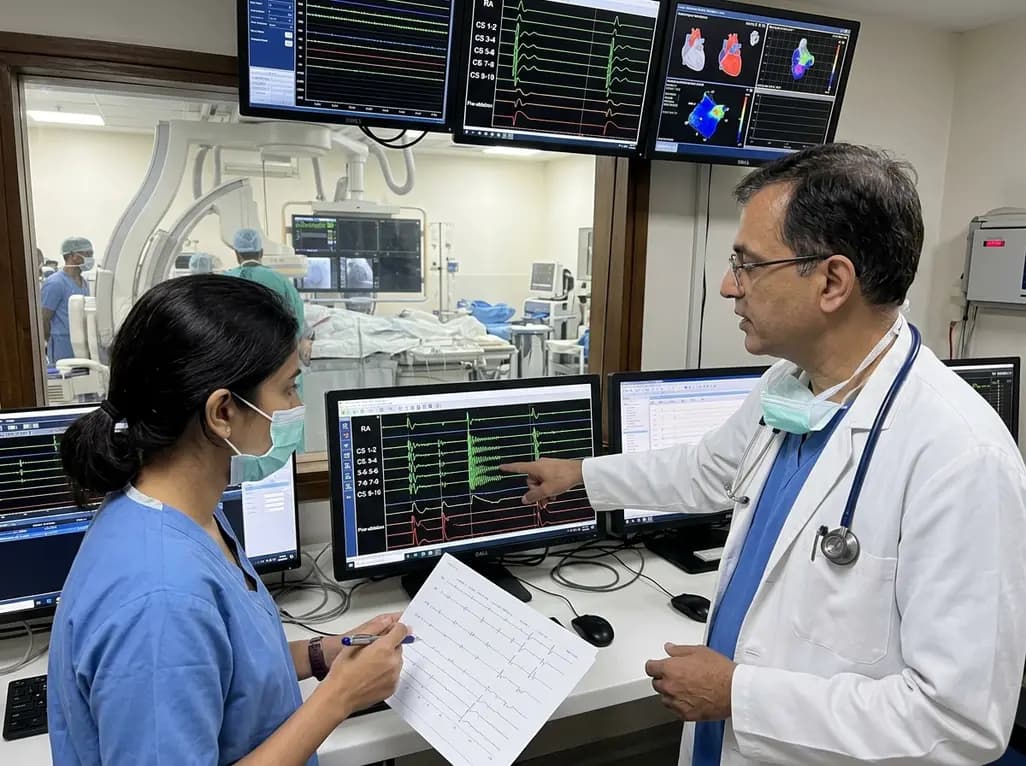
Radiofrequency catheter ablation of the cavotricuspid isthmus successfully terminates typical atrial flutter. This article reviews the mechanisms driving coronary sinus electrogram changes, wavefront activation pathways, and clinical criteria to verify bidirectional block during electrophysiology studies.
Today

A recent investigation examined load-dependent kinetic and kinematic profiles during two-way ballistic exercise across 30% to 80% 1-RM. Findings highlight load effects on velocity, impulse, and power, offering sports physicians objective guidance for neuromuscular conditioning and rehabilitation.
Today

A cross-sectional study demonstrates that increased BMI in adolescents significantly enhances mandibular length and alters salivary adipokines like adiponectin and resistin, providing novel insights into craniofacial growth and orthodontic planning.
Today
