

Loading, please wait...
Loading, please wait...

Modern healthcare delivery relies heavily on digital transformation to bridge gaps in patient access and lessen documentation burnout. In recent years, healthcare organizations have invested substantially in telehealth and ambient technologies to streamline virtual consultations and automate electronic medical record workflows. However, provider uptake remains variable across hospital networks and clinical specialties. Understanding what drives clinician acceptance is therefore vital for health system leaders aiming to design scalable digital programs.
The Unified Theory of Acceptance and Use of Technology provides a validated framework to explain how users adopt novel digital platforms. Specifically, the model evaluates four foundational constructs: performance expectancy, effort expectancy, social influence, and facilitating conditions. Researchers recently applied this framework in a large integrated healthcare system to assess clinicians' willingness to engage with virtual care and automated scribing tools. The study cohort included ninety participants comprising attending physicians, advanced practice providers, resident physicians, and medical students. Although prior research has often treated healthcare providers as a homogenous group, this cross-sectional investigation systematically stratified users across hierarchical training levels. The primary outcome focused on determining behavioral intention and self-reported weekly technology utilization. Interestingly, the investigation demonstrated an exceptionally high baseline behavioral intention score of 4.19 out of 5 across all professional categories. Trainees and veteran attendings exhibited remarkably comparable levels of enthusiasm for integrating modern virtual solutions. Consequently, this high baseline readiness demonstrates that reluctance does not stem from intrinsic provider resistance. Rather, downstream operational mechanisms dictate whether positive user mindsets successfully translate into sustained daily utilization within outpatient and inpatient environments.
Path model analysis revealed significant insights into the core mechanisms that guide technology acceptance among clinicians. Specifically, performance expectancy and social influence emerged as the two strongest independent predictors of behavioral intention. Performance expectancy reflects the clinician's belief that using the tool will produce tangible clinical productivity and improve care quality. In this cohort, providers who recognized tangible documentation relief and improved patient communication demonstrated substantially greater motivation to adopt digital workflows. Furthermore, social influence exerted an equally powerful effect on provider intention. When departmental leadership, respected colleagues, and clinical mentors actively endorse virtual tools, peers rapidly conform to shared professional norms. In contrast, effort expectancy, which measures perceived software complexity or ease of navigation, did not independently drive intention. Healthcare professionals routinely tolerate complex interfaces if they perceive clear diagnostic or administrative advantages. Thus, digital health initiatives fail when organizers emphasize technical features over observable workflow benefits. Health system leaders must therefore curate targeted demonstrations that highlight time savings and diagnostic support while enlisting influential clinical champions who model positive digital habits across clinical units.
A critical contribution of the investigation involves dissecting the disconnect between strong user intentions and documented weekly platform utilization. Although behavioral intention reached high levels universally, actual tool usage varied widely across clinical departments and staff grades. In many healthcare enterprises, administrative administrators allocate digital licenses and access credentials based strictly on formal employment roles. For instance, attending physicians and specialized nurse practitioners often receive full ambient documentation suites, whereas resident trainees and medical students frequently face restricted system privileges. Consequently, the research confirmed that facilitating conditions and organizational access direct actual tool usage rather than intention alone. Even the most technologically capable resident cannot leverage ambient documentation software if hospital enterprise firewalls or subscription tiers exclude trainees. In addition, inadequate technical support, lack of secondary monitor hardware, and unoptimized electronic record integrations hinder active clinician engagement. Healthcare systems must therefore align user permissions with clinical workflows to eliminate operational bottlenecks. Providing comprehensive technical onboarding and extending full software access to frontline trainees will transform theoretical willingness into routine digital practice.
The survey findings hold substantial ramifications for graduate medical education and long-term workforce well-being. Today's medical trainees experience severe cognitive overload and administrative strain early in their residency training. Because resident physicians handle an enormous volume of clinical notes, exposure to ambient AI tools can dramatically decrease documentation fatigue. Moreover, including residents and medical students in digital care protocols prepares tomorrow's consultants for an increasingly digitized medical landscape. When institutions restrict modern tools to senior staff, they unintentionally perpetuate antiquated charting habits among junior physicians. Therefore, academic medical centers must proactively integrate digital documentation training directly into residency curriculums. Furthermore, training programs should measure how early access to ambient technology affects documentation accuracy, diagnostic reasoning, and resident wellness. By fostering digital competence during formative training years, academic institutions can protect junior clinicians from burnout while instilling durable clinical communication skills. In doing so, healthcare leaders cultivate an agile, digitally proficient workforce equipped to handle future telemedicine demands.
These empirical insights provide vital guidance for healthcare institutions worldwide, including evolving public and private hospitals across India. Under the National Medical Commission Telemedicine Practice Guidelines and the Ayushman Bharat Digital Mission, Indian physicians are rapidly adopting virtual consultation networks. However, successfully scaling digital health infrastructure requires addressing local facilitating conditions and operational workflows. Healthcare administrators should not assume that providing an electronic platform guarantees widespread utilization among medical consultants. Instead, hospital directors must actively cultivate peer champions and demonstrate clear efficiency gains before mandating software transitions. In busy Indian outpatient departments, ambient artificial intelligence tools can alleviate immense documentation burdens and overcome language documentation barriers. Additionally, healthcare executives must ensure reliable high-speed broadband, robust data protection protocols, and localized clinical templates to support adoption. If organizations neglect basic facilitating factors, clinicians will inevitably revert to manual paper records to maintain daily patient throughput. Therefore, successful technology adoption requires combining user education, dependable hardware infrastructure, peer endorsement, and leadership support to achieve sustained digital transformation.
The Unified Theory of Acceptance and Use of Technology explains adoption by analyzing performance expectancy, effort expectancy, social influence, and facilitating conditions. In clinical settings, the model demonstrates that clinicians prioritize measurable diagnostic efficiency and peer endorsement over ease of use. Consequently, healthcare providers willingly adopt novel virtual care systems when they observe proven administrative time savings, reduced documentation fatigue, and strong institutional leadership support across their respective departments.
Clinicians generally expect healthcare software to present complex learning curves due to intricate regulatory documentation requirements. As a result, perceived system difficulty does not deter adoption if the technology delivers substantial clinical utility. When clinicians recognize that ambient documentation or telemedicine tools significantly decrease administrative burdens and enhance patient engagement, they readily invest effort to master the software. Hence, perceived functional benefit consistently overrides software complexity during clinician decision-making processes.
Healthcare institutions must first ensure equitable software access across all clinician roles, including residents and advanced practice providers. Furthermore, leadership should appoint respected peer champions to demonstrate practical workflow advantages in daily clinical practice. Organizations must also optimize electronic health record integrations, provide continuous technical support, and ensure adequate computing hardware. Removing systemic administrative hurdles allows clinicians to translate positive behavioral intentions into consistent, productive daily technological utilization.
Disclaimer: This content is for informational and educational purposes only and should not be taken as professional medical advice. Always consult a qualified healthcare provider for personal health concerns or treatment options. Refer to the latest local and national guidelines for clinical practice.
References

Read summarized clinical updates, watch expert medical content, and earn CME certifications right from your smartphone.
Open your smartphone camera to scan and install.





A cross-sectional UTAUT survey reveals that clinician adoption of telehealth and ambient technologies is primarily propelled by performance expectancy and social influence, while actual platform usage depends heavily on organizational facilitating conditions and role-based technology access.
Today

Oropouche fever is an emerging arboviral disease expanding beyond South America. With competent Culicoides biting midge vectors widely present across India, clinicians and public health authorities must recognize symptoms, avoid misclassification with dengue, and enhance national One Health surveillance frameworks.
Today

A landmark 15-year follow-up study in rural Bangladesh evaluates the long-term impact of community-based participatory women's groups on maternal survival, offspring mortality, and adolescent physical growth, offering vital insights for maternal-child health policy in South Asia.
Today

Discover how structured coaching, mentoring, and sponsorship frameworks sustain congenital cardiologists across their careers, enhancing technical competence, well-being, and equity.
Today
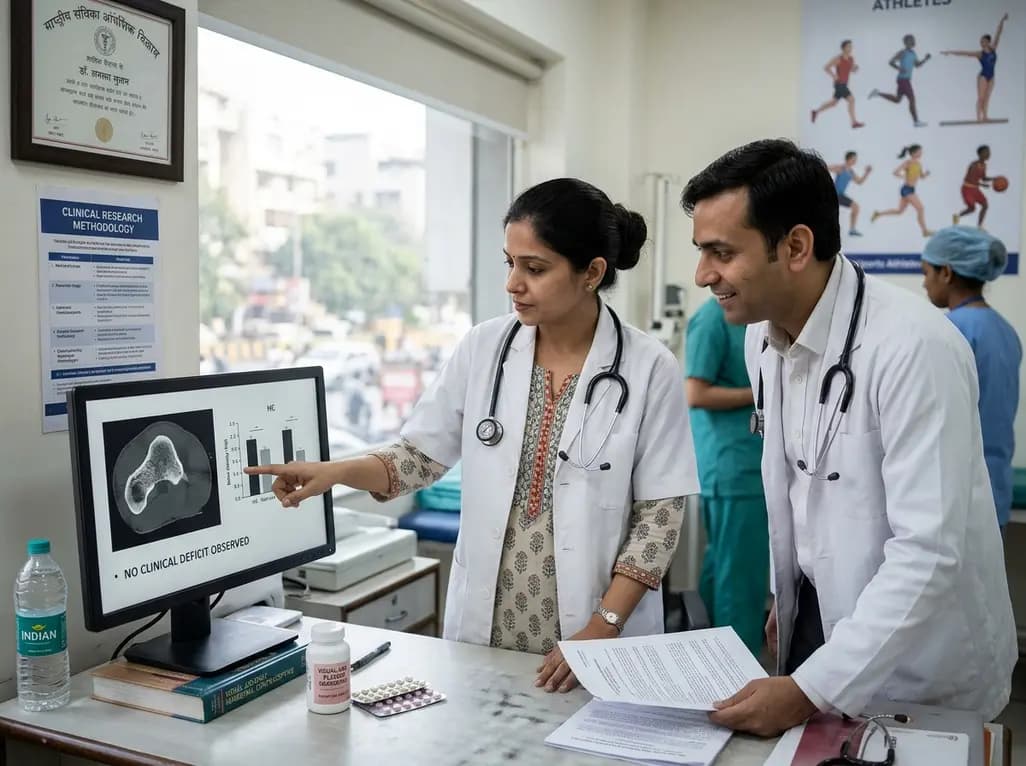
A recent Canadian study evaluates the relationship between hormonal contraceptive use, sport discipline, and volumetric bone density in elite female athletes. Using HR-pQCT, researchers found no clinically meaningful deficits, offering reassuring evidence for sports medicine and gynecology clinicians.
Today
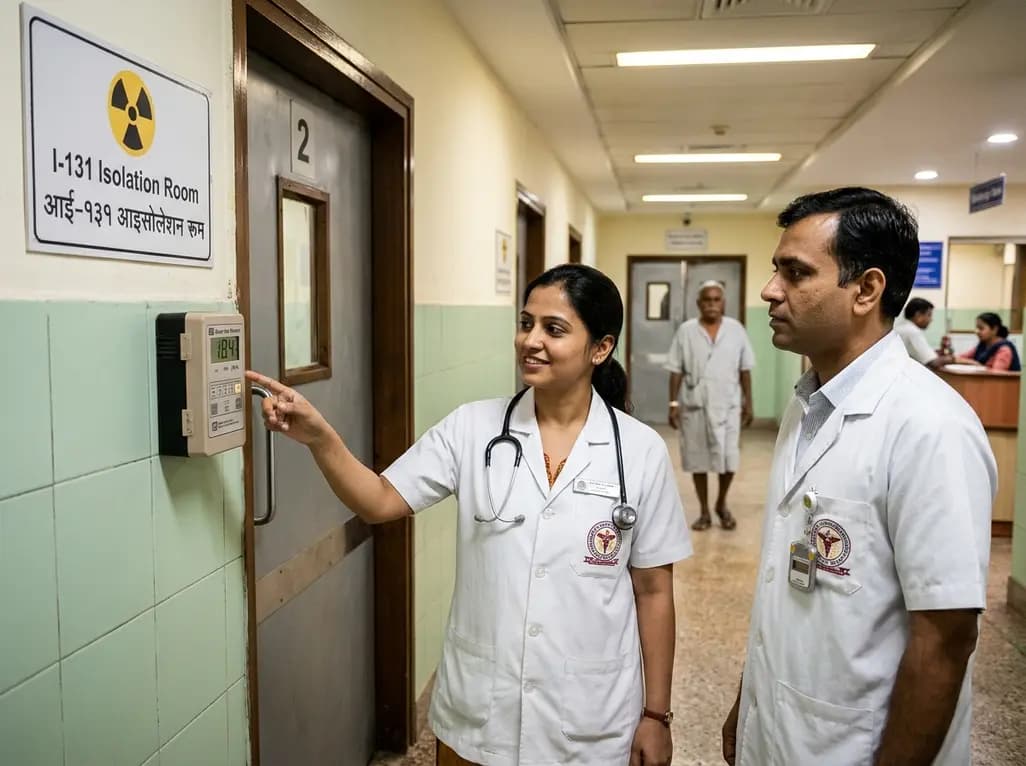
A landmark study establishes cut-offs for administered I-131 activity and day-1 external dose rates to accurately predict isolation duration in differentiated thyroid cancer, improving discharge planning and radiation safety.
Today
