

Loading, please wait...
Loading, please wait...

Managing differentiated thyroid cancer often requires radioactive iodine administration following surgical thyroidectomy. However, determining the precise duration of radioiodine therapy isolation remains a substantial challenge for clinical oncology teams. Nuclear medicine units isolate patients in lead-shielded rooms to prevent excess radiation exposure to hospital personnel and the public. Historically, clinicians relied on fixed hospitalization periods or arbitrary empirical discharge rules. Consequently, hospital beds remained occupied longer than necessary, driving up medical expenses and causing unnecessary psychological distress for patients. A recent milestone investigation examined whether clinicians can reliably forecast inpatient length of stay using baseline treatment parameters. Specifically, the study evaluated administered iodine-131 activity alongside day-1 external radiation dose rates at one meter. By evaluating these dynamic factors early in therapy, physicians streamline bed management and reduce caregiver uncertainty. Therefore, establishing validated mathematical cut-offs provides an objective clinical framework for radioactive iodine therapy. In this review, we explore the utility of early dosimetric measurements in contemporary practice.
The investigated retrospective cohort analyzed 448 patients with differentiated thyroid cancer who received radioactive iodine. All participating subjects underwent levothyroxine withdrawal for at least three weeks to achieve adequate thyroid-stimulating hormone elevation. The minimum administered activity was 1110 megabecquerels, while the overall cohort received a median activity of 3700 megabecquerels. Furthermore, female patients comprised 83.7 percent of the study cohort, reflecting common disease demographics. Radiation safety personnel recorded external dose rates daily at exactly one meter from each patient's mid-trunk. In addition, the researchers evaluated three widely recognized international release thresholds: 25, 50, and 70 microsieverts per hour. Because radiation safety authorities across countries mandate disparate release limits, comparing these distinct cut-offs remains highly relevant. The researchers employed receiver operating characteristic analyses and Youden index calculations to establish optimal threshold values. Moreover, the team identified safety-oriented cut-offs targeting at least 95 percent sensitivity. Finally, they conducted 2000 bootstrap resamples to ensure robust internal statistical validation.
The trial demonstrated a strong linear relationship between administered radioiodine activity and day-1 external dose rates. Specifically, the Spearman correlation coefficient reached 0.827 with statistical significance below 0.001. Investigating physicians evaluated 448 patients on day 1 and 318 patients on day 2. Consequently, these robust data points allowed investigators to map whole-body clearance dynamics across diverse treatment tiers. Notably, patients receiving higher therapeutic activities consistently exhibited elevated external radiation rates after 24 hours. However, renal clearance rates and residual thyroid volume introduced individual variability into the biological clearance curves. Although administered activity established the baseline biological burden, the day-1 dose rate accurately reflected the patient-specific effective half-life. Therefore, combining both metrics yielded superior diagnostic accuracy compared to evaluating initial administered activity alone. As a result, clinicians gain a dependable mathematical surrogate to predict patient discharge within 24 to 48 hours.
Determining precise cut-offs allows nuclear medicine departments to maintain strict radiation protection standards. Under the stringent 25 microsieverts per hour discharge limit, patient discharge at 24 hours required significantly lower initial activity and day-1 dose rates. In contrast, institutions applying the 50 or 70 microsieverts per hour criteria safely released patients much earlier. Furthermore, ROC curve analyses pinpointed specific numerical thresholds that separated rapid clearers from delayed clearers with high accuracy. The investigators prioritized safety-oriented cut-offs with greater than 95 percent sensitivity to prevent premature, hazardous outpatient releases. Consequently, patients displaying day-1 dose rates beneath these calculated safety thresholds can safely transition home without violating regulatory standards. In addition, internal bootstrap validation confirmed the stability and reproducibility of these mathematical boundaries across 2000 resamples. Thus, clinical teams can apply these verified cut-off values confidently during routine daily ward rounds.
Radiation protection protocols in oncology centers must balance stringent public safety rules with pragmatic patient care. In many countries, national regulatory bodies establish statutory dose rate thresholds that dictate patient isolation timelines. For instance, Indian regulatory frameworks administered by the Atomic Energy Regulatory Board mandate strict adherence to permissible release boundaries. Therefore, deploying validated cut-off values empowers nuclear medicine specialists to tailor patient counseling before admission. Furthermore, physicians can accurately inform patients and family members regarding the anticipated length of hospital stay. If a patient exhibits a day-1 dose rate well above the safety threshold, staff can plan for extended isolation immediately. Conversely, favorable day-1 dosimetric indicators allow early discharge planning and seamless post-discharge transport coordination. Additionally, this quantitative methodology reduces unnecessary occupational radiation exposure among nursing personnel by limiting repeated manual surveys.
Hospital isolation rooms equipped with dedicated plumbing and lead shielding represent scarce resources in cancer hospitals. Consequently, prolonged inpatient stays create substantial administrative bottlenecks and delay treatment for waiting cancer patients. By adopting predictive dosimetric cut-offs, departments can optimize bed scheduling and reduce turnover intervals between therapeutic admissions. Moreover, predicting discharge timing improves patient comfort and diminishes the acute psychological distress associated with prolonged sensory isolation. Patients often struggle with loneliness and anxiety while confined inside lead-lined isolation rooms. Therefore, receiving clear, data-driven updates regarding their discharge timing provides meaningful emotional reassurance. In addition, hospitals can reduce overall treatment costs for families and health systems by eliminating superfluous hospital days. Thus, integrating day-1 dose rate predictive models transforms radioiodine management into an efficient, patient-centered clinical workflow.
The day-1 external dose rate measures gamma radiation emitted from the patient at one meter after 24 hours. Because radioiodine clears primarily through renal excretion, this early measurement reflects individual biological clearance kinetics. Clinicians compare this value against validated mathematical cut-offs to forecast whether the patient will satisfy statutory release criteria within 48 hours. Consequently, teams can schedule safe discharge without unnecessary inpatient delays.
Radiation protection authorities across nations establish discharge criteria based on varying public exposure dose limits. Some jurisdictions enforce conservative discharge limits such as 25 microsieverts per hour to minimize radiation exposure to household contacts. In contrast, other regulatory frameworks allow release at 50 or 70 microsieverts per hour combined with strict home isolation rules. Therefore, clinicians must interpret predictive dosimetric cut-offs according to their applicable national regulatory guidelines.
Aggressive oral hydration and frequent bladder voiding significantly accelerate the physical elimination of unabsorbed radioiodine during the initial 24 hours. Additionally, administering mild laxatives prevents bowel retention of radioactive excretions, reducing whole-body dose rates. Adequate preparation through levothyroxine withdrawal or recombinant TSH ensures optimal thyroid uptake without delaying renal clearance. Consequently, standardized patient hydration protocols directly shorten the required duration of radiation isolation.
Disclaimer: This content is for informational and educational purposes only and does not constitute medical advice, diagnosis, or treatment regimens. Healthcare professionals must exercise independent clinical judgment and verify institutional radiation safety protocols. Refer to the latest local and national guidelines for clinical practice.
References
Wijaya RR et al. Can administered I-131 activity and day-1 external dose rate predict isolation duration after radioiodine therapy? Identifying optimal cut-offs. Nucl Med Commun. 2026 Nov 24. doi: 10.1097/MNM.0000000000002272. PMID: 43080207.
Willegaignon J, Stabin MG, Guimarães MI, Malvestiti LF, Sapienza MT, Buchpiguel CA. Evaluation of radiation dose rates and safe release criteria in differentiated thyroid cancer patients receiving high-dose radioiodine therapy. Radiat Prot Dosimetry. 2017;174(3):366-372.
Atomic Energy Regulatory Board. Radiation Safety in Nuclear Medicine. AERB Safety Code No. AERB/RF-MED/SC-2 (Rev. 2). Mumbai: AERB; 2011.

Read summarized clinical updates, watch expert medical content, and earn CME certifications right from your smartphone.
Open your smartphone camera to scan and install.





A landmark study establishes cut-offs for administered I-131 activity and day-1 external dose rates to accurately predict isolation duration in differentiated thyroid cancer, improving discharge planning and radiation safety.
Today

Researchers have engineered dual adenosine-modulating nanoparticles that systematically deliver CD73 and FTO inhibitors. This nanomedicine platform dismantles extracellular adenosine and intracellular m6A checkpoints, restoring cytotoxic CD8+ T cell immunity and preventing post-surgical cancer metastasis.
Today

A landmark 15-year follow-up study in rural Bangladesh evaluates the long-term impact of community-based participatory women's groups on maternal survival, offspring mortality, and adolescent physical growth, offering vital insights for maternal-child health policy in South Asia.
Today

Discover how structured coaching, mentoring, and sponsorship frameworks sustain congenital cardiologists across their careers, enhancing technical competence, well-being, and equity.
Today
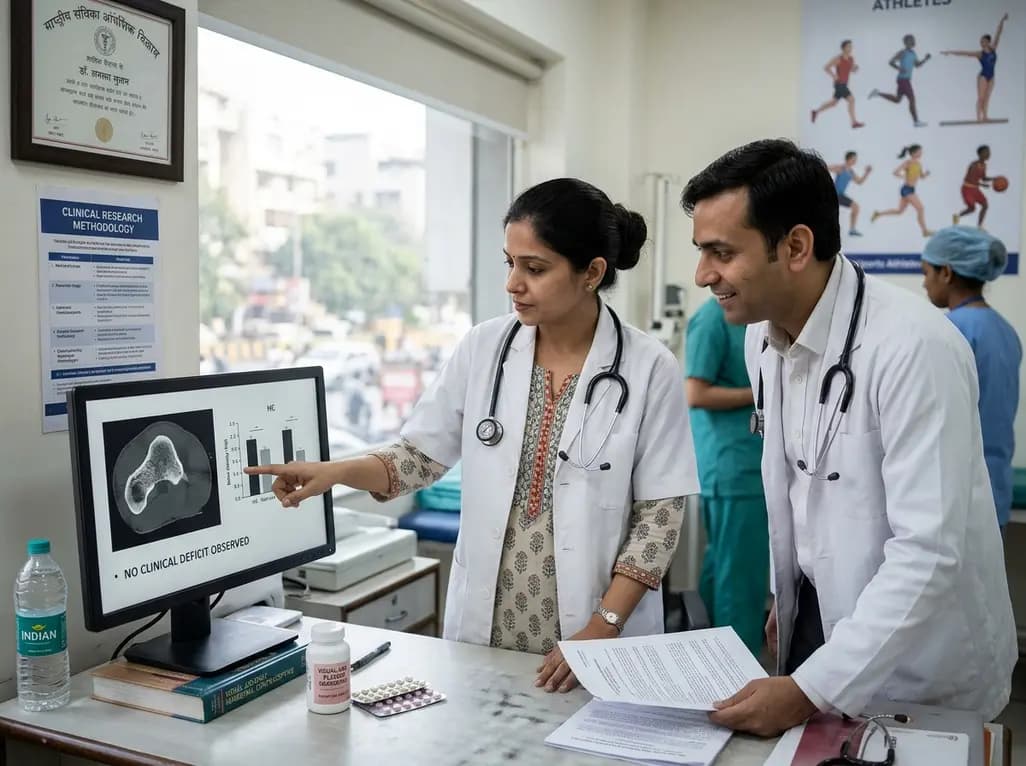
A recent Canadian study evaluates the relationship between hormonal contraceptive use, sport discipline, and volumetric bone density in elite female athletes. Using HR-pQCT, researchers found no clinically meaningful deficits, offering reassuring evidence for sports medicine and gynecology clinicians.
Today
