.webp&w=384&q=75)

Loading, please wait...
Loading, please wait...

Unstructured electronic health records contain vital prognostic indicators that conventional risk stratification models frequently overlook. Recently, clinical sentiment analysis has emerged as an innovative method to evaluate subjective emotional polarity across longitudinal patient narratives. While legacy natural language processing tools measure overall chart tone, patient and provider viewpoints often diverge significantly. A landmark retrospective cohort study examined over 16,000 clinical notes to capture these distinct perspectives across psychiatric admissions. Consequently, tracking patient-centered emotional shifts offers clinicians actionable insights into clinical trajectories and vulnerable transition periods.
Clinical documentation serves as a multidimensional communication channel reflecting varied viewpoints during acute psychiatric care. Historically, computational tools treated hospital progress notes as monolithic blocks of text. However, this generalized approach obscures critical nuances between provider assessments and patient-reported symptoms. In this landmark cohort investigation, researchers categorized narrative expressions into three distinct perspectives: patient, physician, and general tone. Interestingly, physician and general sentiments remained predominantly neutral across hospitalizations. Clinicians inherently maintain professional, objective neutrality when describing diagnostic workups, pharmacotherapy, and behavioral interventions. In contrast, patient-perspective sentiment exhibited a much more balanced distribution between positive and negative valences. Patients convey vivid emotional experiences, acute distress, interpersonal conflicts, and recovery milestones. Therefore, isolating patient-centered sentiment prevents dilution from standardized clinical jargon. Furthermore, distinguishing these viewpoints allows psychiatric teams to capture genuine therapeutic alliances and perceived recovery barriers. When teams recognize divergent sentiments early, they can tailor discharge plans and communication strategies. Ultimately, recognizing these subjective narrative markers supports person-centered mental healthcare.
To extract narrative sentiments accurately, researchers compared modern generative large language models against established lexicon-based algorithms. Specifically, the study benchmarked DeepSeek-7B and Mistral-7B against ClinSent-lexicon, TextBlob, and VADER. Traditional lexicon tools depend entirely on static dictionaries containing pre-assigned emotional polarities. Consequently, lexicon approaches frequently falter when interpreting complex psychiatric narratives, medical negations, and ambiguous clinical phrasing. For instance, a dictionary might classify symptom denial as negative despite representing clinical improvement. In contrast, modern large language models process extensive context, syntactic nuances, and medical idioms with superior contextual awareness. On a manually annotated test subset, both open-source models demonstrated superior alignment with human evaluators. Moreover, the generative architectures captured patient-centered emotional shifts that rule-based systems completely missed. Nevertheless, the authors observed that even advanced models exhibit performance ceilings in clinical environments. Medical documentation contains idiosyncratic shorthand, fragmented syntax, and conflicting behavioral observations. Therefore, while modern generative models outperform classical dictionary methods, healthcare systems still require domain-specific fine-tuning before deploying automated sentiment engines.
Clinical narratives change substantially across different sections of a hospital electronic health record. In this investigation, researchers analyzed both Brief Hospital Course summaries and Discharge Instructions across multiple psychiatric admissions. Interestingly, temporal sentiment trajectories revealed significant directional changes among patients with repeated hospitalizations. Furthermore, the analysis demonstrated much greater emotional fluctuations within Discharge Instructions than within Brief Hospital Course documentation. Hospital course summaries prioritize objective physiological parameters, medication titrations, and daily diagnostic tests. Consequently, these sections maintain a uniform, dispassionate tone throughout the patient stay. Conversely, discharge instructions directly reflect functional transitions, patient education, self-management capabilities, and immediate post-acute expectations. When patients struggle with discharge readiness, documentation in this section captures heightened anxiety, functional impairment, and unresolved psychosocial stressors. Similarly, Kendall tau rank correlation metrics confirmed distinct trajectory shifts across recurrent hospital encounters. These findings emphasize that sentiment analysis must account for specific clinical document types rather than evaluating charts uniformly. Hospital teams should therefore monitor discharge documentation closely as a sensitive barometer of patient stability.
The most compelling finding connects narrative emotional trajectories directly to objective clinical outcomes. Specifically, discharge-note sentiment trajectories were significantly more negative among psychiatric patients who died within 30 to 90 days following discharge compared to survivors. Researchers confirmed these statistically robust associations across both language model architectures using independent-samples Welch t-tests. When patients experience worsening clinical trajectories, discharge instructions capture implicit signs of progressive decompensation, treatment resistance, and severe caregiver strain. In many instances, clinicians document escalating social vulnerability and physical decline without formally calculating predictive mortality risk scores. Consequently, automated sentiment extraction acts as an early warning mechanism, identifying hidden vulnerabilities that structured diagnostic codes routinely omit. Moreover, this correlation underscores the vital link between psychological distress, comorbid medical fragility, and out-of-hospital survival. By systematically monitoring negative trajectory slopes, healthcare systems can trigger targeted postdischarge interventions before preventable catastrophic events occur. Outpatient psychiatrists and case managers can prioritize intensive follow-up for patients displaying persistently negative narrative patterns. Ultimately, computational sentiment tracking transforms routine discharge documentation into an actionable prognostic safety net.
Integrating automated sentiment analysis into electronic health records offers immense potential for modern psychiatric practice. Currently, overburdened clinicians spend excessive hours reviewing dense, unstructured notes across fragmented historical admissions. However, an automated sentiment dashboard could synthesize longitudinal emotional trajectories instantly. In Indian healthcare systems, where tertiary psychiatric centers manage massive patient loads, such tools could optimize triage and resource distribution. Furthermore, hospital administrators can deploy sentiment algorithms to identify high-risk psychiatric cohorts requiring specialized community support, home visits, or tele-mental health check-ins. Nevertheless, clinical leaders must address substantial ethical and operational hurdles before broad clinical adoption. Language models occasionally misinterpret cultural expressions of distress, somatization patterns, and local colloquialisms common in diverse populations. Therefore, developers must fine-tune algorithms on regionally representative healthcare datasets to prevent algorithmic bias. Additionally, sentiment tracking must supplement, rather than replace, direct clinician-patient interactions and comprehensive psychiatric assessments. When implemented responsibly as clinical decision support, temporal sentiment analysis empowers multidisciplinary teams to detect clinical deterioration early.
Traditional electronic health record risk scoring relies predominantly on structured data points, such as laboratory values, vital signs, and diagnostic billing codes. In contrast, clinical sentiment analysis uses natural language processing to extract subjective emotional polarity and behavioral context from unstructured narrative notes. This computational technique captures subtle nuances, therapeutic alliances, and psychosocial distress that structured numerical indicators routinely overlook, providing deeper longitudinal insight into overall patient trajectories.
Physicians maintain a formal, objective, and standardized tone when drafting clinical notes, which keeps provider-perspective sentiment predominantly neutral across hospitalizations. Conversely, patient-centered narratives reflect vivid personal experiences, acute emotional turmoil, subjective recovery milestones, and intermittent treatment frustrations. Consequently, patient-perspective sentiment shows a balanced distribution between positive and negative valences, exhibiting pronounced directional fluctuations across consecutive admissions that accurately mirror fluctuating mental health conditions over time.
Recent cohort studies demonstrate that negative sentiment trajectories in hospital discharge notes correlate significantly with 30-day and 90-day postdischarge mortality among psychiatric patients. Negative trajectories often reflect undocumented physiological decline, severe psychosocial distress, and persistent treatment resistance. Although current language models provide valuable prognostic signals, they cannot replace comprehensive clinical evaluations. Instead, they serve as automated surveillance tools to help multidisciplinary teams prioritize high-risk patients for intensive outpatient follow-up.
Disclaimer: This content is for informational and educational purposes only and should not be considered medical advice or substituted for professional clinical judgment. Refer to the latest local and national guidelines for clinical practice.
References

Read summarized clinical updates, watch expert medical content, and earn CME certifications right from your smartphone.
Open your smartphone camera to scan and install.





A retrospective study of over 16,000 clinical notes reveals that patient-centered sentiment trajectories in discharge instructions correlate with 30- to 90-day postdischarge mortality in psychiatric care, demonstrating the prognostic power of large language models over traditional lexicons.
Today

A new scoping review protocol systematically maps global evidence on how climatic shifts, ambient heat, and pollution impact human fertility. Discover key physiological mechanisms, clinical preconception strategies, and critical public health alignments under Sustainable Development Goals 3 and 13.
Today
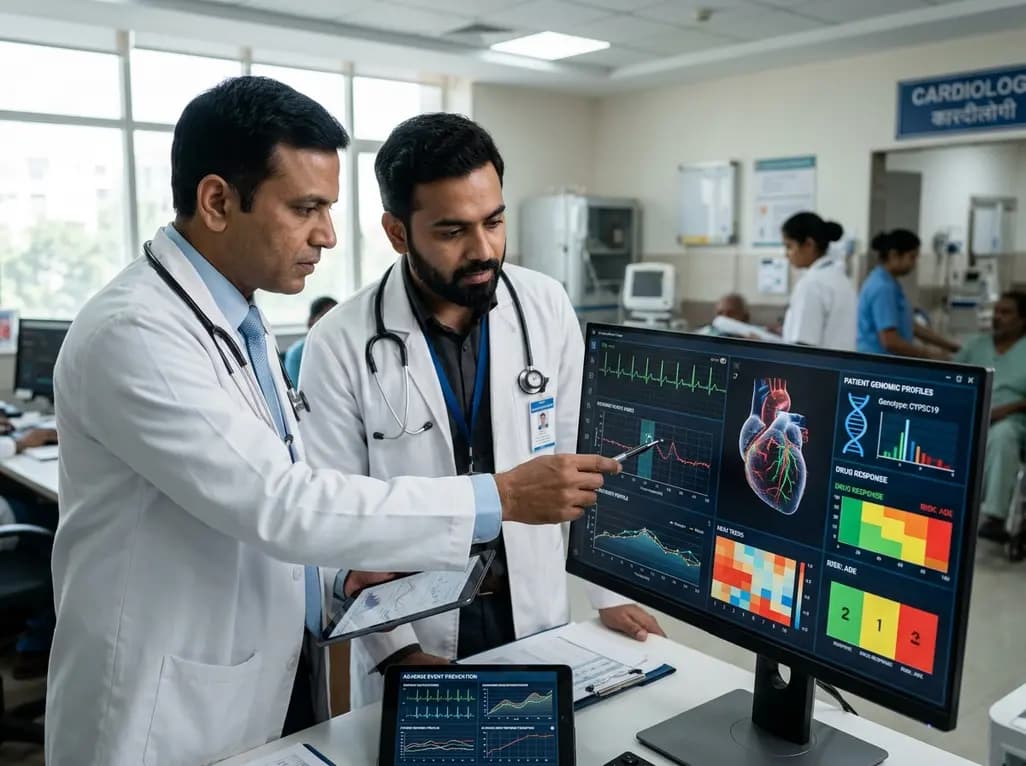
Pharmacogenomics and artificial intelligence are revolutionizing cardiology by tailoring therapies to individual genetic profiles and clinical data, reducing adverse drug events, and improving cardiovascular patient outcomes.
Today
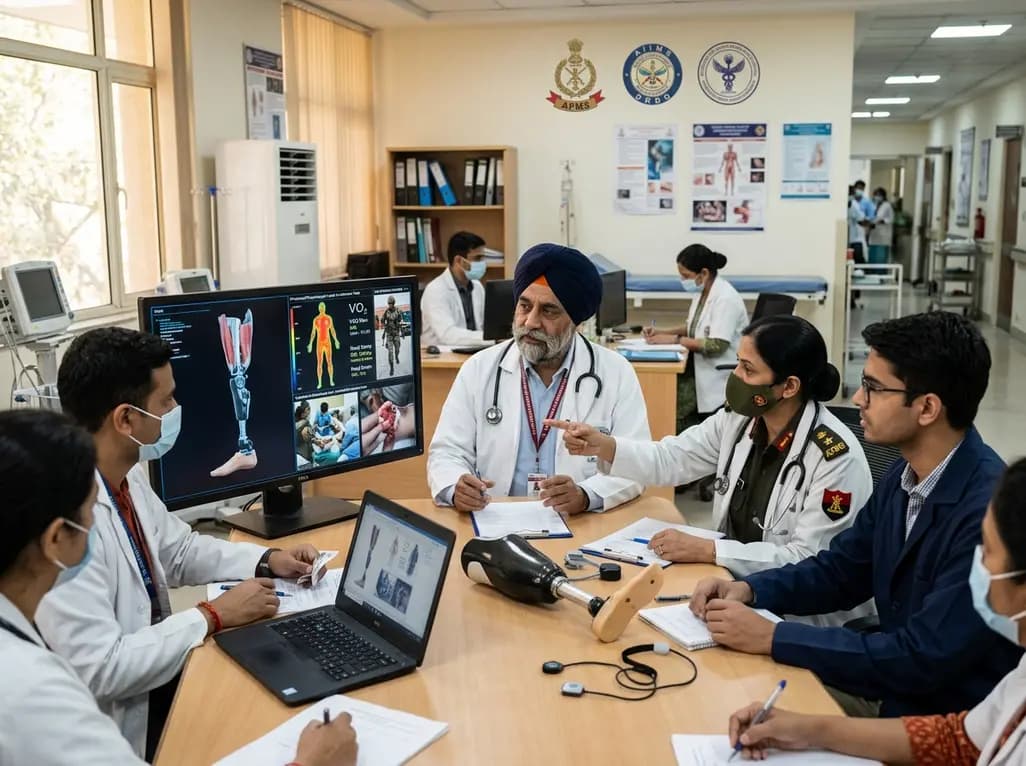
India's premier scientific bodies have joined the Armed Forces Medical Services to solve unique physiological and operational challenges faced by soldiers. The national collaboration covers combat casualty care, artificial intelligence diagnostics, bionic prosthetics, and extreme-environment physiological resilience.
Today
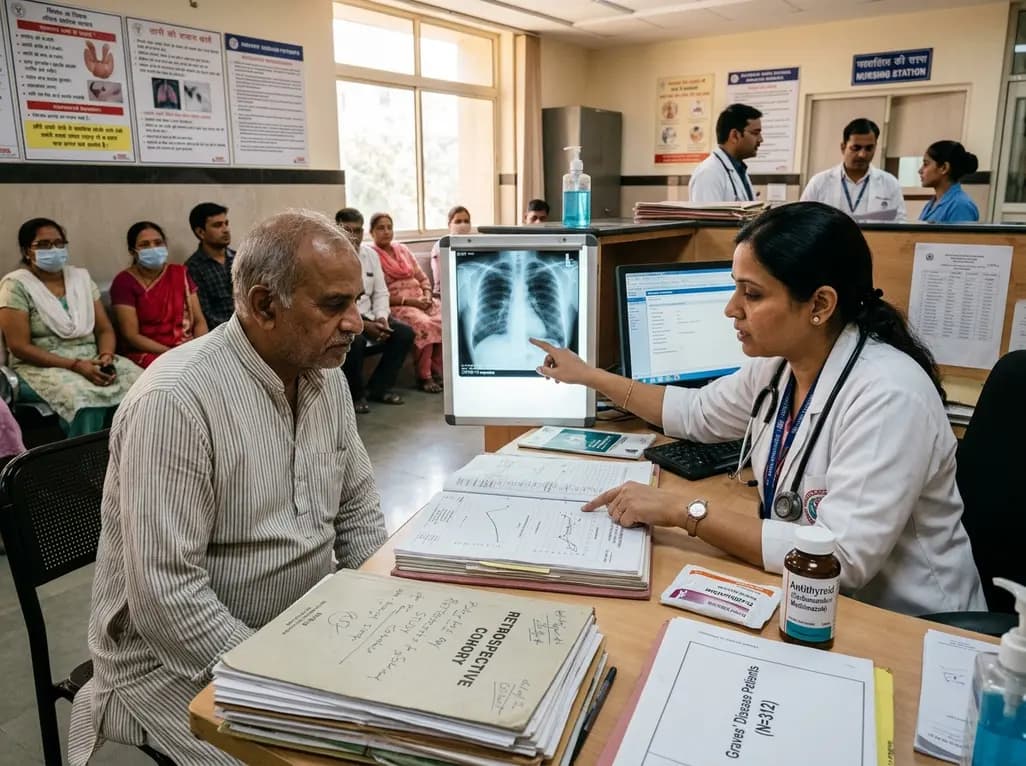
A retrospective cohort study evaluates the short- and long-term impacts of SARS-CoV-2 infection on patients with Graves' disease receiving antithyroid drug therapy, highlighting thyroid status destabilization, clinical symptom exacerbations, and post-viral sequelae.
Today
