.webp&w=384&q=75)

Loading, please wait...
Loading, please wait...

Contrast sensitivity plays a pivotal role in maintaining independence among the elderly population. Specifically, a recent longitudinal study has established a definitive contrast sensitivity threshold of 1.55 logCS for identifying functional visual disability. While standard eye exams often focus on visual acuity, this research highlights how contrast deficits directly impact daily tasks such as face recognition and reading. Furthermore, the findings suggest that clinicians can use this specific metric to better predict risks of falls and cognitive decline in aging patients.
The study analyzed data from 4,475 participants in the National Health and Aging Trends Study (NHATS). Researchers found that individuals falling below the 1.55 logCS threshold were significantly more likely to report difficulty with essential activities. For instance, these patients struggle to differentiate objects from their background in low-light conditions. Consequently, this contrast sensitivity threshold serves as a more sensitive marker for functional impairment than traditional Snellen charts. Because of this, integrating contrast testing into routine geriatric assessments could improve patient safety outcomes. Additionally, the study noted that logCS scores provide a quantifiable measure that correlates with a patient\'s perceived quality of life.
Moreover, the results emphasize that a patient may maintain 20/20 visual acuity while still suffering from profound contrast loss. Therefore, relying solely on letter charts may cause physicians to overlook significant visual morbidity. Implementing Pelli-Robson or digital contrast charts in clinics allows for the early detection of \"hidden\" vision loss. In addition, addressing these deficits through environmental modifications or cataract surgery can reduce the population-attributable fraction of dementia. While earlier studies suggested various boundaries, this 1.55 logCS value provides a functionally relevant standard for US and international medical practices. Similarly, identifying this impairment early enables timely interventions that preserve cognitive and physical health.
A score of 1.55 logCS is the primary threshold where older adults begin to experience significant difficulty with daily tasks like recognizing faces or navigating steps safely.
Yes, many patients maintain high-contrast visual acuity while losing the ability to detect subtle luminance differences, a condition often called \"hidden vision loss.\"
Geriatricians and ophthalmologists should consider contrast testing annually, especially for patients with a history of falls or those experiencing cognitive changes.
Disclaimer: This content is for informational and educational purposes only and does not constitute medical advice. Refer to the latest local and national guidelines for clinical practice.
References
1. Xu S et al. A Clinically Relevant Threshold of Impaired Contrast Sensitivity Among Older US Adults. JAMA Ophthalmol. 2026 May 28. doi: 10.1001/jamaophthalmol.2026.1570. PMID: 42207527.
2. Kumar N et al. Contrast Sensitivity Impairment is Associated with Limitations of Physical Functioning and Activities of Daily Living Among Older Adults. Invest Ophthalmol Vis Sci. 2025;66(8):4596.
3. American Academy of Ophthalmology. Eye Health Information for Adults Over 65: Loss of Contrast Sensitivity. Published July 2025.

Read summarized clinical updates, watch expert medical content, and earn CME certifications right from your smartphone.
Open your smartphone camera to scan and install.





Researchers establish 1.55 logCS as a clinically relevant threshold for impaired contrast sensitivity linked to functional disability in older adults....
3 months ago

A new study reveals that over half of individuals living with HIV and alcohol use disorder experience missed ART doses, strongly linked to condomless sex under the influence and concurrent syphilis infection. Integrated addiction and sexual health care are urgently needed.
Today

A multicentre RCT in China shows that the PAICS AI system significantly boosts sonographer sensitivity in detecting fetal intracranial malformations by 8.7% without compromising specificity, offering promising diagnostic support for prenatal neurosonography.
Today

A recent study highlights the utility of two-dimensional speckle tracking echocardiography in assessing right atrial mechanics in OSAHS. Progressive reductions in reservoir and conduit strain, coupled with elevated contraction strain, signal early right heart remodeling correlated with apnea severity.
Today
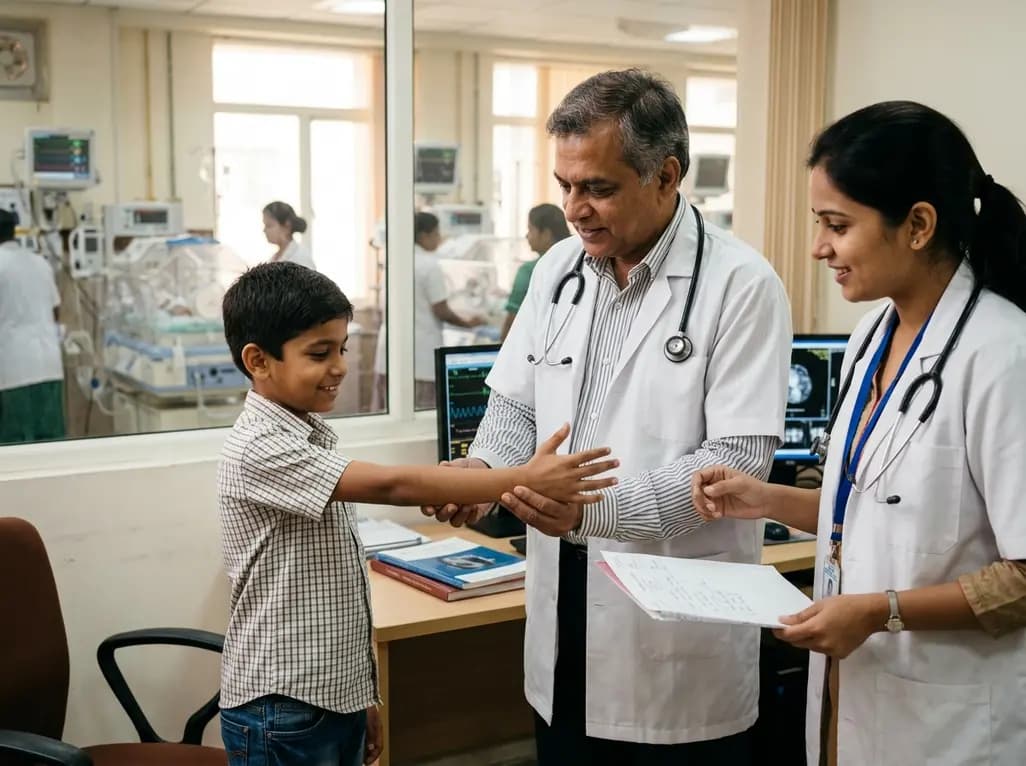
A premature neonate developed upper limb compartment syndrome after uterine rupture extruded the arm through a scar defect. Conservative management with continuous monitoring yielded complete functional recovery and normal limb growth at 10-year follow-up, highlighting non-operative safety in selected cases.
Yesterday

The Supreme Court questioned FSSAI's phased warning approach, urging single-phase implementation for foods exceeding limits in any nutrient of concern. Backed by ICMR-NIN recommendations, the proposed red hexagonal warnings target added sugar, salt, and fat to combat India's escalating chronic disease epidemic.
Today
