.webp&w=384&q=75)

Loading, please wait...
Loading, please wait...

Global environmental degradation poses profound challenges to modern mental health, especially among young adults entering tertiary education. Recent clinical research highlights how climate anxiety substance use patterns emerge among college cohorts who encounter severe environmental disruptions. As extreme weather events, erratic heatwaves, and ecological degradation intensify globally, healthcare professionals observe escalating rates of eco-distress. Rather than remaining an abstract philosophical concern, ecological distress actively alters health behaviors and daily emotional functioning. When emerging adults face direct environmental disruption, their emotional coping mechanisms can rapidly become overwhelmed. Consequently, clinicians must recognize how environmental distress intersects with addictive behaviors to deliver effective, empathetic psychological care.
Climate anxiety represents a persistent, emotionally distressing reaction to the escalating threats of ecological collapse and severe weather disruptions. While mild apprehension can occasionally drive constructive pro-environmental action, severe distress frequently paralyzes emotional regulation. Young adults in tertiary education face unique developmental vulnerabilities, including academic pressures, financial instability, and shifting social support networks. Consequently, exposure to acute environmental stressors creates intense psychological strain that demands robust coping resources. When adaptive emotional strategies prove insufficient, individuals often turn toward chemical self-medication to numb persistent feelings of helplessness, guilt, and environmental doom.
Furthermore, clinicians frequently encounter patients who report profound grief regarding ecological loss and future uncertainty. This existential burden can significantly degrade executive cognitive control and heighten impulsive tendencies. Without adequate psychosocial support systems, young adults may utilize alcohol, cannabis, or illicit substances to temporarily attenuate intrusive environmental worries. Therefore, medical professionals must view addictive tendencies through a broader lens that incorporates external ecological trauma and underlying affective distress.
A recent investigation evaluated how climate change anxiety moderates the direct relationship between personal environmental exposure and risky substance consumption. Investigators assessed a cohort of 184 undergraduate students enrolled at an urban university within the Mountain West region of the United States. Participants completed comprehensive self-report inventories measuring perceived direct encounters with climate events, subjective levels of climate anxiety, and detailed substance use patterns. Through multiple linear regression analysis, researchers regressed a composite substance use metric onto direct environmental exposures while testing climate anxiety as an interactive moderator.
The empirical results revealed a statistically significant interaction between direct climate exposure and climate anxiety regarding riskier substance use behaviors. Specifically, the statistical model demonstrated a positive moderation effect, indicating that students who experienced heightened climate anxiety alongside direct environmental impacts engaged in markedly riskier substance use. Conversely, individuals experiencing environmental disruption without elevated climate anxiety demonstrated lower propensities toward problematic substance consumption. These robust findings emphasize that subjective cognitive appraisal and emotional vulnerability substantially dictate behavioral outcomes following climate disruptions.
Understanding the interaction between environmental perception and addictive behaviors requires dissecting the psychological pathways connecting climate trauma to behavioral dysfunction. Direct environmental trauma—such as enduring wildfires, hazardous air quality, or extreme flooding—inflicts immediate somatic and cognitive stress. However, the subjective emotional reaction to these events determines long-term behavioral trajectories. When high climate anxiety accompanies physical environmental impacts, it creates a compounding stress response that overwhelms baseline resilience.
Moreover, individuals who experience severe eco-distress frequently perceive environmental degradation as an unavoidable existential crisis. This acute sense of foreshortened future fosters fatalistic belief systems, which frequently lower perceived risks regarding substance abuse. When young adults perceive their broader environment as fundamentally destabilized, standard health-protective motivations lose their perceived utility. Consequently, risky substance consumption becomes a maladaptive mechanism to escape pervasive existential dread. Identifying these moderation dynamics allows clinicians to differentiate between routine transitional stress and severe, eco-driven substance vulnerability across vulnerable young populations.
The neurobiological underpinnings of chronic climate anxiety share notable commonalities with generalized stress disorders and post-traumatic stress pathways. Continuous exposure to distressing environmental stimuli triggers sustained activation of the hypothalamic-pituitary-adrenal axis, elevating baseline cortisol production and circulating inflammatory cytokines. Over extended intervals, chronic neuroendocrine dysregulation impairs prefrontal cortical control while hyperactivating amygdalar threat-detection circuitry. This neurobiological shift diminishes impulse control and amplifies reward-seeking behaviors, making substances of abuse significantly more appealing.
Simultaneously, psychosocial isolation amplifies these biological vulnerabilities among college students. Many emerging adults experience pervasive feelings of institutional betrayal when governmental and societal bodies fail to mitigate environmental degradation adequately. This perceived institutional indifference cultivates profound cynicism and moral injury, isolating students from conventional coping structures. When young individuals feel alienated from broader community support, they face an elevated likelihood of turning toward chemical substances for distress tolerance. Therefore, clinical assessments must evaluate both physiological dysregulation and social alienation when managing climate-related substance use disorders.
Medical practitioners in psychiatric, primary care, and collegiate health clinics must proactively screen for environmental distress during routine substance use assessments. Physicians should incorporate targeted questions regarding ecological worry, direct disaster exposure, and subsequent coping styles into standard psychiatric interviews. Rather than pathologizing normal environmental grief as a purely endogenous psychiatric disorder, clinicians should validate these valid concerns while correcting harmful self-medication strategies.
Additionally, medical doctors must deliver evidence-based interventions that emphasize healthy cognitive reframing and emotional regulation. Cognitive behavioral therapy tailored for climate distress can help patients identify catastrophic thought patterns, while acceptance and commitment therapy encourages meaningful action aligned with personal core values. Clinicians should also connect vulnerable students with campus counseling resources, community support circles, and nature-based therapeutic modalities. By addressing both the underlying affective distress and the manifest substance misuse concurrently, healthcare teams can prevent progression into severe substance use disorders.
Addressing the dual challenges of eco-distress and substance misuse demands comprehensive public health strategies that extend beyond individual clinical consultations. Educational institutions must establish proactive mental health programming that equips young adults with resilient distress-tolerance mechanisms before crisis points occur. Universities can organize peer-led support groups focused on climate resilience, providing safe spaces for students to process environmental grief collaboratively. Furthermore, institutions should integrate green campus initiatives and collective advocacy programs, transforming passive eco-paralysis into constructive community engagement.
Simultaneously, primary care systems require expanded clinician education on environmental determinants of mental health. Healthcare curricula must incorporate training modules on recognizing climate-induced affective disorders, eco-grief, and associated addiction vulnerabilities. Integrating routine behavioral screening within college health clinics enables early identification of high-risk students before substance patterns escalate into chronic morbidity. Through unified efforts spanning clinical care, collegiate administration, and community health networks, healthcare providers can build robust protective frameworks that safeguard youth well-being amidst evolving environmental realities.
Climate anxiety involves persistent emotional and somatic distress specifically centered around environmental degradation, ecological catastrophes, and climate change uncertainty. While generalized anxiety disorder features diffuse, excessive worry across multiple unrelated daily domains, climate anxiety represents a rational yet distressing reaction to an authentic existential threat. However, when eco-anxiety impairs social, academic, or occupational functioning and prompts maladaptive behaviors like substance abuse, it requires dedicated clinical intervention.
College students experience significant neurodevelopmental plasticity, transitioning into independence amidst considerable academic, social, and economic pressures. When confronted with direct environmental disruptions or acute climate anxiety, their emerging coping mechanisms can become quickly overwhelmed. Furthermore, collegiate environments frequently offer easy access to alcohol and recreational substances. Consequently, students experiencing profound existential dread or perceived helplessness may use substances as an immediate chemical coping strategy to numb psychological pain.
Healthcare practitioners can utilize validated assessment instruments such as the Climate Change Anxiety Scale alongside standard screening tools like the GAD-7 and AUDIT. Clinicians should explicitly ask patients about environmental stressors, disaster exposures, and coping patterns during routine intakes. Therapeutic strategies including cognitive behavioral therapy, acceptance and commitment therapy, and eco-psychological group interventions help patients build resilience, manage distress constructively, and avoid maladaptive substance consumption.
Disclaimer: This content is for informational and educational purposes only and does not constitute medical advice, diagnosis, or treatment. Healthcare professionals should exercise their independent clinical judgment. Refer to the latest local and national guidelines for clinical practice.
References

Read summarized clinical updates, watch expert medical content, and earn CME certifications right from your smartphone.
Open your smartphone camera to scan and install.





A recent study demonstrates that climate anxiety moderates the link between direct climate experiences and riskier substance use in college students, underscoring the urgent need for targeted psychological screening and youth-focused mental health interventions.
4 weeks back
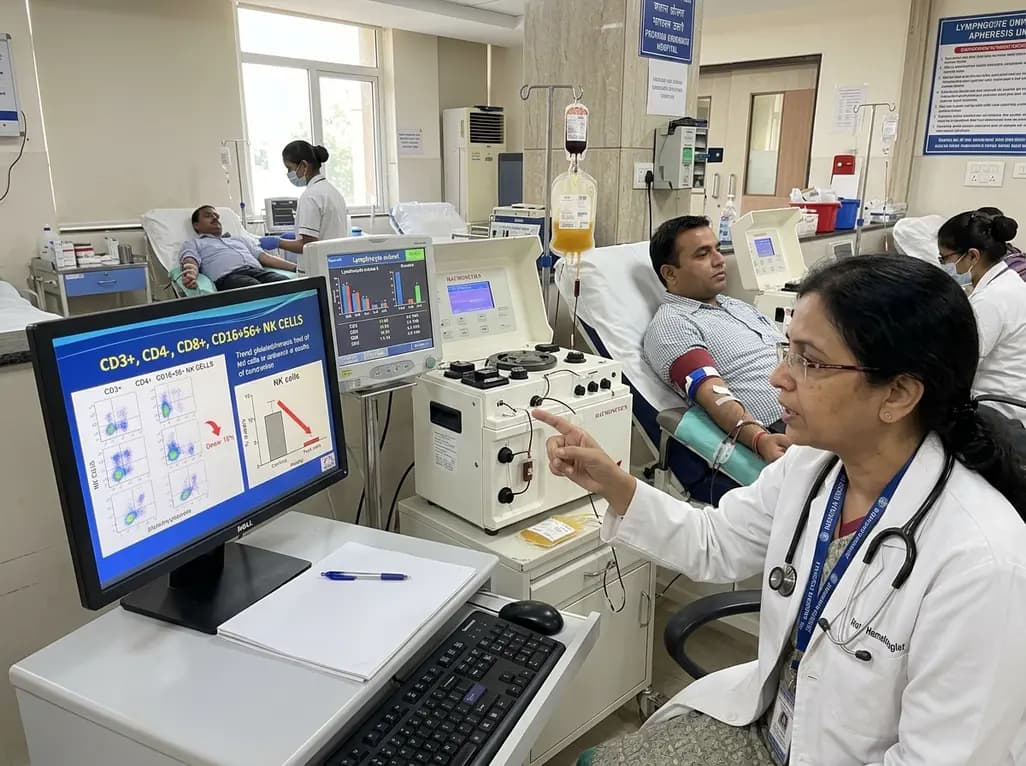
A landmark study assesses how frequent plateletpheresis alters peripheral immune profiles. Regular donors demonstrate notable reductions in circulating natural killer cells, emphasizing the critical need for routine lymphocyte subset surveillance in long-term blood donor safety programs.
Today

Fetal foramen ovale restriction typically emerges in the third trimester with right heart enlargement. Evidence demonstrates it does not independently mandate cesarean delivery, and over 93% of postnatal cardiac findings resolve spontaneously within one year, supporting conservative obstetric management.
Today

The latest WHO Global Health Estimates highlight India's life expectancy reaching 71 years alongside a healthy lifespan of 60.6 years. While longevity rebounds post-pandemic, non-communicable conditions now account for three-quarters of top mortalities, underscoring urgent clinical shifts in routine primary care.
Today

New biomechanical research reveals that foot-strike angle significantly influences knee energy absorption during cutting tasks in female soccer players. Understanding these kinematic patterns offers clinicians valuable pathways for targeted ACL injury prevention and athletic retraining.
Today

A comprehensive review analyzes periconceptional GLP-1 receptor agonist exposure, revealing reassuring data on congenital anomalies and adverse perinatal outcomes while emphasizing the need for cautious patient counseling.
Today
