.webp&w=384&q=75)

Loading, please wait...
Loading, please wait...

Orthodontic clinicians increasingly rely on aesthetic transparent appliances to achieve precise third-order tooth corrections. However, predictable clinical outcomes depend fundamentally on understanding clear aligner torque behavior and material kinetics. While commercial systems utilize proprietary multilayer polymers, many dental practices now manufacture in-house appliances using polyethylene terephthalate glycol sheets. Therefore, assessing how polymer chemistry and thermoforming affect mechanical moments remains essential for predictable orthodontic tooth movement.
Orthodontists define torque as a mechanical moment that controls buccolingual root inclination during active treatment. Consequently, achieving accurate root expression represents one of the most demanding biomechanical challenges in aligner orthodontics. A recent in vitro investigation compared a commercial multilayer thermoplastic polyurethane system, Invisalign, against two vacuum-formed polyethylene terephthalate glycol systems, BioArt and Forestadent. Researchers manufactured a standardized three-dimensional printed maxillary model derived from a patient digital scan to evaluate single-tooth displacement. Specifically, the test apparatus produced a calibrated zero-point-three millimeter displacement of the maxillary right central incisor. The investigators then recorded experimental torque continuously over three minutes to track immediate load delivery and early relaxation kinetics. Furthermore, they conducted an exploratory seven-day assessment under dry ambient conditions to simulate extended wear intervals. This controlled setup allowed direct comparison of momentary force transmission across different polymer compositions. Clinicians must recognize that torque generation does not remain static once an aligner seats onto the dental arch. Instead, rapid structural changes alter initial force levels within minutes. Therefore, understanding baseline moment generation provides vital insights into clinical performance and appliance prescription.
Material composition directly dictates how clear aligners store and release mechanical energy during treatment. To verify chemical identities, researchers performed attenuated total reflectance Fourier-transform infrared spectroscopy on all tested samples. This spectroscopic evaluation confirmed distinct thermoplastic polyurethane signatures for the commercial multilayer aligner. In contrast, the analysis revealed classic polyethylene terephthalate glycol molecular fingerprints for both BioArt and Forestadent materials. Thermoplastic polyurethane features alternating hard and soft segments within its elastomer backbone. Because of this molecular architecture, polyurethane exhibits superior elasticity and greater resilience during cyclic seating. Polyethylene terephthalate glycol, however, consists of an amorphous polyester that provides notable structural rigidity and immediate tensile resistance. These chemical distinctions heavily influence how each polymer responds to localized deformation. In addition, polymer chains undergo rapid rearrangement when clinicians stretch an aligner over an irregular crown. This fundamental phenomenon explains why different brands behave uniquely despite sharing similar visual transparency. As a result, dental practitioners cannot assume that generic in-house sheets replicate proprietary commercial biomechanics. Material selection ultimately governs both force delivery and patient comfort throughout orthodontic care.
Orthodontic laboratories routinely manufacture aligners by heating plastic disks and drawing them over dental arches using positive pressure or vacuum machines. However, the thermoforming process inevitably induces significant plastic deformation and thinning across steep dental contours. In this study, scanning electron microscopy quantified local cross-sectional thickness and surface morphology after thermoforming on the central incisor. The measurements revealed substantial localized thinning at tooth eleven in both in-house materials. Specifically, BioArt experienced a pronounced thickness reduction of fifty-eight point six percent compared to its raw sheet dimension. Similarly, Forestadent demonstrated a forty-five point eight percent decrease in local post-forming thickness. This differential thinning stems from differences in polymer drawability and thermal flow characteristics during heating. Consequently, an aligner with nominal zero-point-seven-five millimeter thickness may present with less than zero-point-four millimeters at crucial incisal edges. Because mechanical moment directly correlates with the cube of material thickness, localized thinning dramatically attenuates torque capacity. Moreover, uneven wall thickness alters stress distribution patterns across the tooth crown during engagement. Practitioners must therefore consider geometry alterations when fabricating clear aligners in office settings.
The magnitude of initial torque determines whether an appliance can stimulate cellular remodeling within the periodontal ligament. In the study, Invisalign and Forestadent generated significantly higher experimental torque at baseline and three minutes compared to BioArt. This observation aligns with the higher residual thickness and material stiffness observed in Forestadent and the engineered multilayer construction of Invisalign. However, the materials displayed markedly divergent stress relaxation behaviors during the initial three-minute testing window. Both Invisalign and Forestadent underwent statistically significant torque loss almost immediately following displacement. In contrast, BioArt demonstrated no significant short-term torque reduction during those initial three minutes. Nevertheless, BioArt delivered substantially lower absolute moment values from the beginning. Thus, its apparent short-term force stability offered limited clinical benefit for root movement. High initial moments that decay rapidly reflect typical viscoelastic stress relaxation in polymeric appliances. Clinicians often observe that patients experience acute pressure during insertion, which subsides within hours. Furthermore, early relaxation protects the periodontal ligament from persistent excessive loads that could trigger external apical root resorption. Clinicians should balance adequate initial force against rapid decay when programming aligner staging.
Patients typically wear each clear aligner stage for seven to fourteen days before advancing to the next tray. Consequently, sustained force retention over several days plays a critical role in complete expression of prescribed movements. In the exploratory seven-day assessment, all three materials demonstrated progressive moment degradation under dry, room-temperature conditions. Specifically, Invisalign exhibited a twelve point three percent torque loss over seven days. Forestadent showed a comparable thirteen point six percent reduction over the same evaluation period. In contrast, BioArt displayed a greater torque decay of twenty point two percent by day seven. These findings demonstrate that material selection influences both short-term relaxation and weekly force retention. Nevertheless, practitioners must interpret these exploratory seven-day observations cautiously because dry benchtop conditions do not replicate the dynamic oral environment. Intraoral humidity, enzymatic salivary degradation, and continuous masticatory loads accelerate polymer aging substantially. Furthermore, when aligners lose rigidity, teeth may tip rather than translate with controlled root torque. Therefore, clinicians must incorporate appropriate overcorrection, auxiliaries, or power ridges when planning challenging torque movements. Routine clinical monitoring ensures that tooth movement tracks faithfully with virtual treatment projections.
Thermoforming significantly reduces the cross-sectional thickness of aligner sheets, particularly over sharp incisal edges and anatomical undercuts. Because torque delivery correlates directly with polymer thickness, substantial localized thinning noticeably weakens moment generation during tooth movement. Consequently, even if a clinician selects a rigid sheet, severe thinning during vacuum adaptation compromises the appliance's capacity to deliver planned root torque, requiring careful digital compensation and optimized heating protocols.
Polyurethane aligners feature an elastomeric copolymer structure that provides superior elastic recovery, whereas PETG materials possess an amorphous polyester structure characterized by higher initial stiffness. Although PETG delivers firm initial force, it often undergoes greater prolonged relaxation or brittleness. In contrast, multilayer polyurethane polymers maintain more consistent, physiological force levels over extended wear cycles, thereby facilitating predictable orthodontic movement and improved patient comfort during challenging root repositioning.
Orthodontists can counteract torque loss by incorporating specific clinical auxiliaries, including bonded resin attachments and horizontal power ridges, into the digital treatment setup. Additionally, clinicians frequently program planned overcorrection into the digital tooth staging to overcome viscoelastic stress relaxation. Prescribing adequate wear compliance and utilizing pressure thermoforming rather than vacuum adaptation also preserves aligner thickness, ensuring that delivered moments remain sufficient to achieve desired biological tooth movement.
Disclaimer: This content is for informational and educational purposes only and should not be considered medical advice. Always consult a qualified healthcare professional regarding any medical condition or treatment. Refer to the latest local and national guidelines for clinical practice.
References

Read summarized clinical updates, watch expert medical content, and earn CME certifications right from your smartphone.
Open your smartphone camera to scan and install.





A comparative in vitro evaluation reveals that commercial TPU and in-house PETG orthodontic aligners exhibit distinct experimental torque behavior, localized thermoforming thickness loss, and mechanical relaxation rates, providing crucial insights for biomechanical predictability in clear aligner therapy.
Today
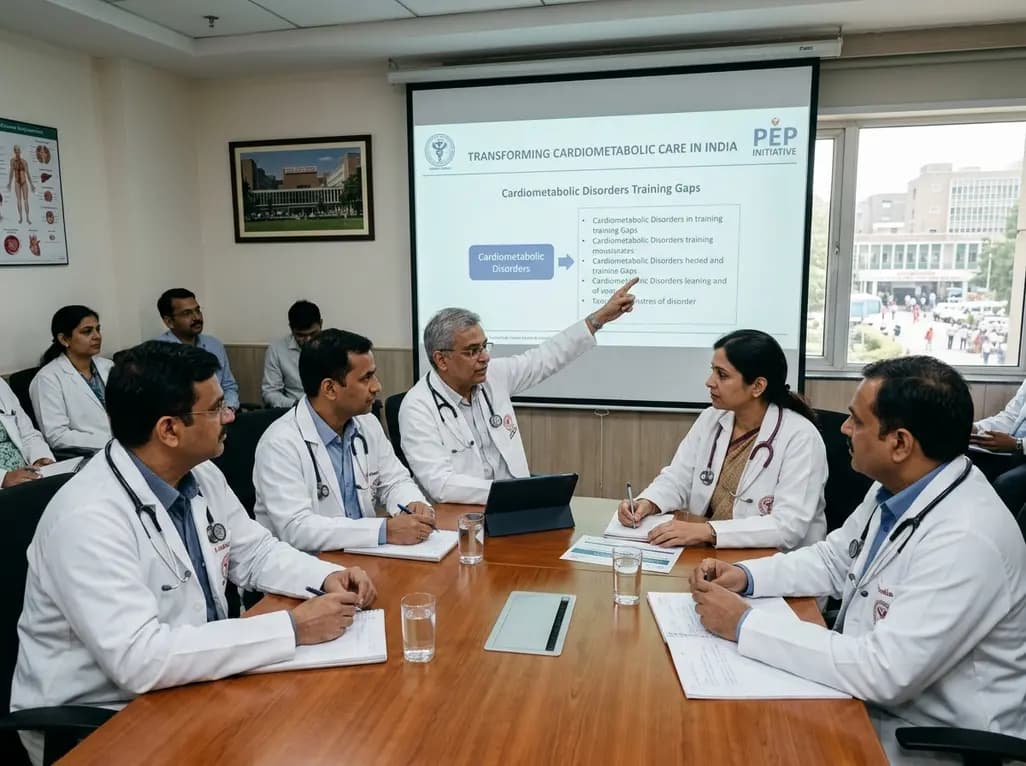
The All India Institute of Medical Sciences has convened national health experts, policymakers, and state nodal officers to transform medical training for cardiometabolic disorders. This collaborative effort under the PEP initiative addresses training gaps to elevate chronic disease care across Indian healthcare.
Today

A recent qualitative study examines how college students seek digital sexual health information under persistent uncertainty. Discover the concept of functional trust, the clinical hazards of search abandonment, and evidence-based approaches clinicians can adopt to guide youth toward verified reproductive healthcare.
Today
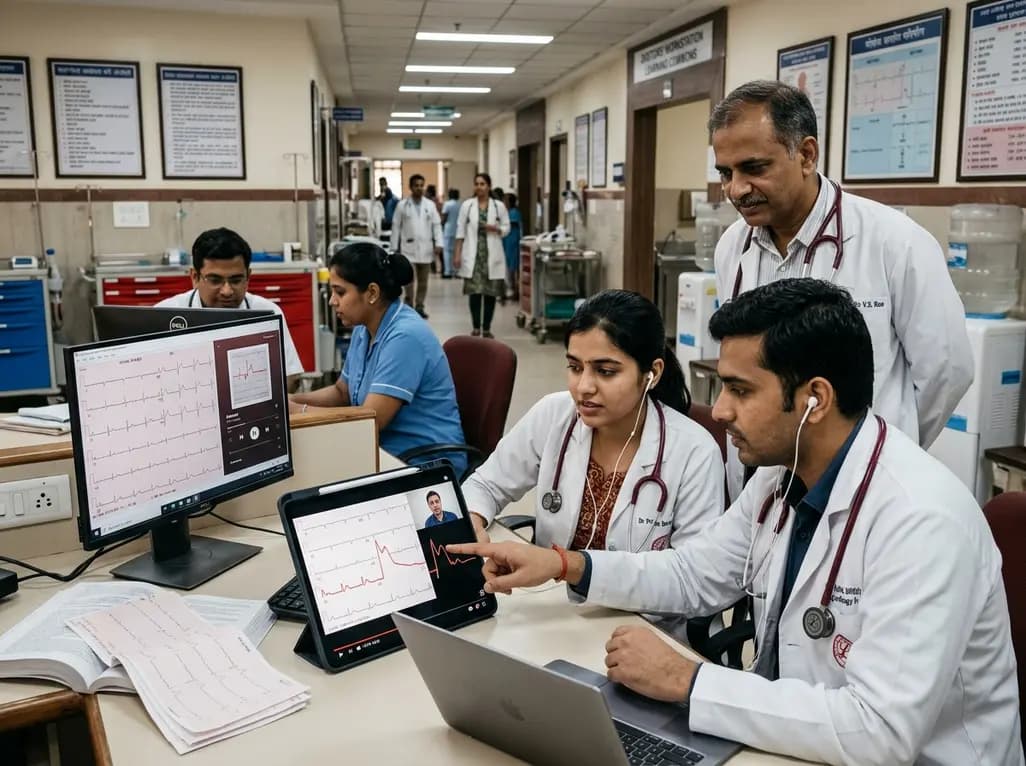
A randomized controlled trial demonstrates that curated FOAMed videos and podcasts produce superior gains in high-risk ECG interpretation and acute coronary syndrome clinical decision-making compared with print-based materials among interprofessional emergency care teams.
Today
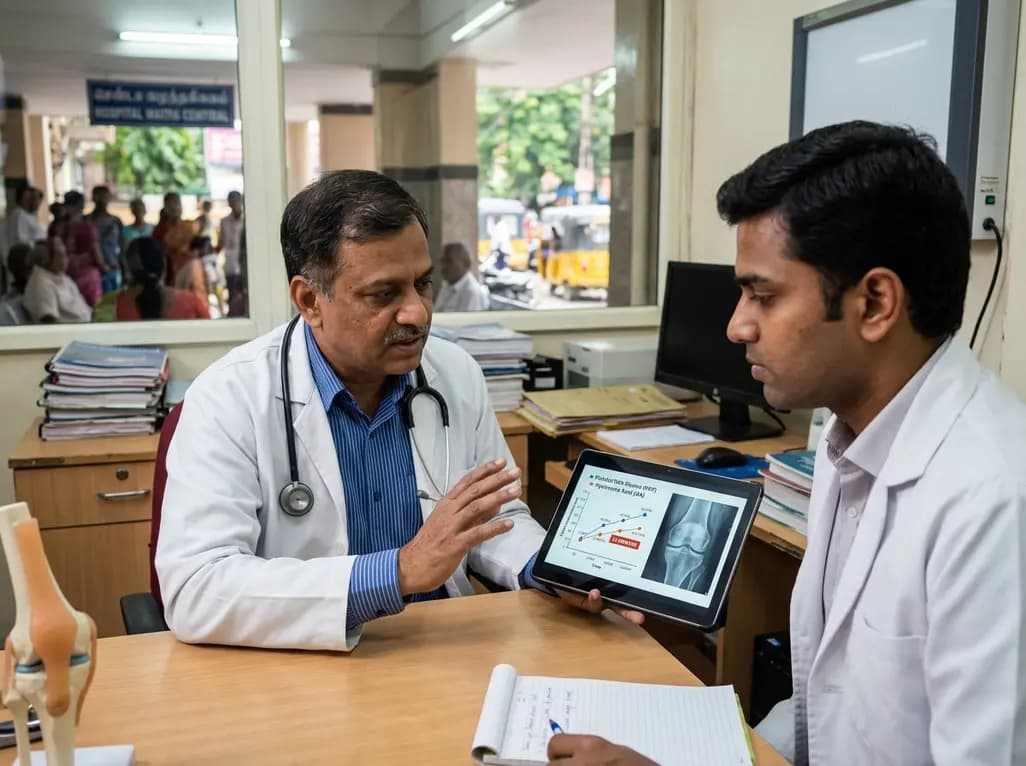
A systematic review and meta-analysis of 21 RCTs reveals that platelet-rich plasma provides small but statistically superior pain relief and functional improvements compared to hyaluronic acid at 12 months in knee osteoarthritis, influenced by platelet concentration and leukocyte enrichment.
Today

A multicenter real-world prospective study in Taiwan demonstrates that liraglutide effectively reduces body weight and BMI standard deviation score in adolescents with obesity. The therapy shows a favorable safety profile with mild gastrointestinal adverse events and zero treatment discontinuations due to intolerance.
Today
