.webp&w=384&q=75)

Loading, please wait...
Loading, please wait...

Recent research highlights the unexpected presence of CLCA1 in joint health, identifying its expression within synoviocytes and articular chondrocytes. Traditionally, scientists recognized this chloride channel regulator primarily for its role in mucus-producing cells of the respiratory and digestive tracts. However, new evidence confirms its existence in diarthrodial joints across multiple species, including humans, mice, and pigs.
The CLCA1 molecule functions as a multifunctional secreted glycoprotein that modulates anion channels and maintains tissue homeostasis. In the articular environment, researchers found CLCA1 specifically in fibroblast-like synoviocytes and chondrocytes located in the superficial and intermediate zones. Furthermore, the expression levels appear remarkably stable during both inflammatory and degenerative joint conditions. Consequently, this suggests that the protein plays a fundamental, continuous role in maintaining the joint's structural integrity regardless of the disease state.
Specifically, CLCA1 likely influences articular anion conductance and proteoglycan balance within the joint matrix. Its presence in synoviocytes suggests a significant contribution to the regulatory environment of the synovial fluid. Moreover, the conservation of this expression pattern across different mammals underscores its biological importance. While the medical community traditionally linked CLCA1 to airway immunity, its role in joint inflammation could offer entirely new pathways for therapeutic intervention in orthopedic medicine. Therefore, future studies should investigate how modulating this chloride channel regulator might affect the progression of arthritis.
CLCA1 is predominantly expressed in goblet cells and other mucus-producing cells within the respiratory, alimentary, and urogenital tracts. However, recent research has expanded this map to include specific cells within articular joints, such as synoviocytes and chondrocytes.
In the joints, CLCA1 is believed to regulate anion conductance and proteoglycan homeostasis. It is expressed in both synoviocytes and chondrocytes, suggesting a multifunctional role in maintaining joint health and responding to inflammation across various species.
Disclaimer: This content is for informational and educational purposes only. It does not constitute medical advice, diagnosis, or treatment. Always seek the advice of a qualified healthcare provider with any questions regarding a medical condition. Refer to the latest local and national guidelines for clinical practice.
References
Bushe J et al. The Chloride Channel Regulator, Calcium-Activated-1 Is Expressed in Synoviocytes and Articular Chondrocytes in Health and Disease. J Histochem Cytochem. 2026 Mar 15. doi: 10.1369/00221554261423720. PMID: 41832897.
Plog S, et al. CLCA1 and its role in pulmonary mucus production. Cell Tissue Res. 2017;367(2):229-237.
Gruber AD, et al. The CLCA gene family: a review of structure, function, and expression in health and disease. Physiol Rev. 2018;98(4):101-135.

Read summarized clinical updates, watch expert medical content, and earn CME certifications right from your smartphone.
Open your smartphone camera to scan and install.





A novel study identifies CLCA1 expression in synoviocytes and articular chondrocytes, suggesting roles in anion conductance and proteoglycan homeostasis....
7 months ago

Following regulatory scrutiny from FSSAI regarding promotional representations and lean muscle preservation claims, Dr. Reddy's Laboratories and Nestlé Health Science are currently reviewing the branding and marketing strategy for their joint nutritional supplement Celevida GLP+.
Today

A comprehensive scoping review synthesises evidence linking prenatal maternal mental health to long-term offspring neurodevelopment, evaluating neuroendocrine, inflammatory, and epigenetic pathways while highlighting clinical screening and future research priorities.
Today

The Directorate General of Health Services directs Indian states to halt the hazardous reuse and reprocessing of single-use medical devices. Discover regulatory implications under the Drugs and Cosmetics Act, critical infection risks, legal liabilities, and operational changes required across clinical specialties.
Today
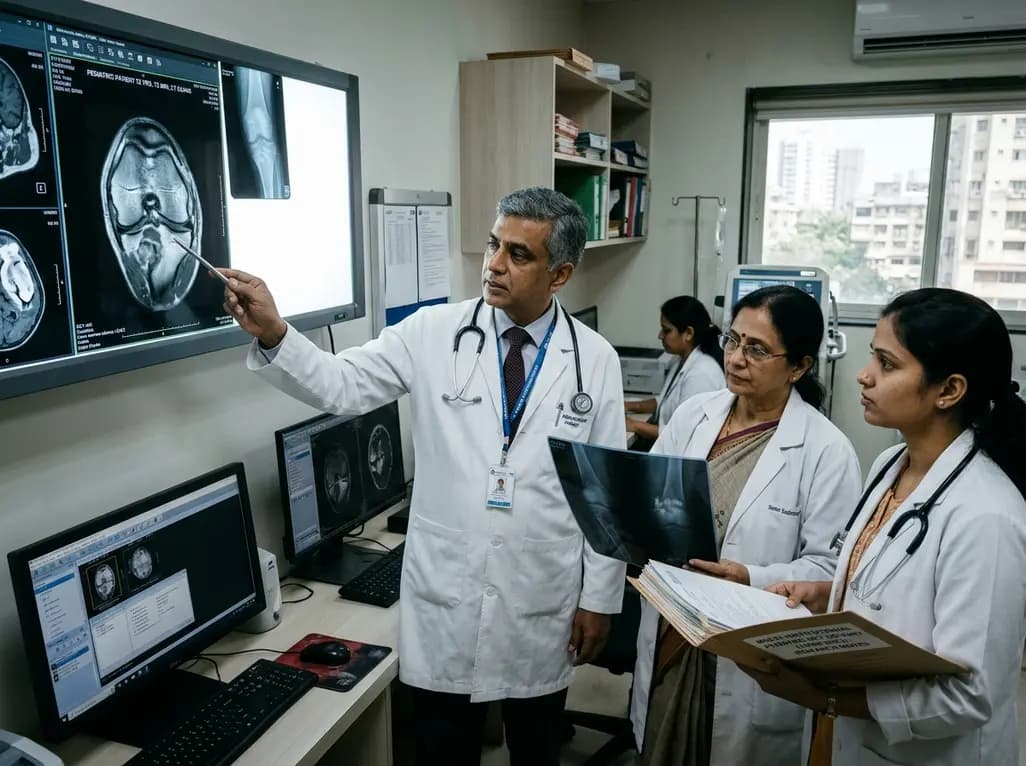
A 25-year multi-institutional cohort reveals high recurrence rates in pediatric giant cell tumor of bone, particularly in patients with open physes and bone marrow edema on preoperative MRI. Early surveillance and careful balance between growth plate preservation and tumor clearance are essential.
Today

India is advancing preventive healthcare by integrating genomics, artificial intelligence, and quantum technologies. With the SANGAM programme sequencing one million Indian genomes, clinicians can unlock personalized therapies, detect cardiometabolic risks early, and curb the burden of diabetes and heart disease.
Today
