.webp&w=384&q=75)

Loading, please wait...
Loading, please wait...

Advanced cancer patients often experience severe pain that remains difficult to manage with standard protocols. Recent clinical reviews suggest that Circadian Cancer Pain Management provides a biologically plausible framework to enhance analgesic efficacy. By aligning treatments with the body's natural 24-hour internal clock, clinicians may potentially overcome current barriers in palliative care. This approach, known as chronotherapy, considers how physiological rhythms influence both pain perception and drug metabolism.
Circadian rhythms regulate essential processes including sleep-wake patterns, hormone secretion, and immune function. However, cancer patients frequently suffer from circadian disruption due to psychological distress, treatment side effects, and heavy disease burden. This desynchronization often exacerbates pain sensitivity. Research indicates that while population-level pain peaks vary, many patients report breakthrough pain in the late morning. Consequently, understanding these individual cycles allows for more precise intervention strategies. Furthermore, the molecular clock genes directly influence nociceptive signaling, making chronobiology a critical factor in modern oncology.
Opioid pharmacokinetics and pharmacodynamics exhibit significant circadian variation. Specifically, the body metabolizes medications differently depending on the time of day. Therefore, aligning opioid dosing with individual pain peaks and metabolic patterns might theoretically enhance relief. Although prospective evidence is still growing, clinicians can already integrate circadian-supportive measures into existing plans. For example, morning light exposure and structured physical activity help stabilize the internal clock. Similarly, strict sleep hygiene serves as a safe, non-pharmacological foundation for better pain control. These strategies support the patient’s overall quality of life while researchers validate objective biomarkers for future phase III trials.
The endocannabinoid system also shows inherent rhythmicity. Because of this, some researchers explore medical cannabis as a tool for both pain and sleep regulation. However, robust clinical trial data currently remain absent. Most international guidelines maintain a cautious stance on its use within a chronotherapy framework. Therefore, doctors should prioritize established pharmacological and behavioral interventions while waiting for higher-level evidence. Future research must focus on how timed administration of various agents can minimize toxicity and maximize patient comfort.
Circadian biology offers a promising path for optimizing cancer pain relief. While we await large-scale randomized trials, incorporating circadian stability through lifestyle and timing remains a practical step. This evolution in care moves the field closer to truly personalized palliative medicine.
Chronotherapy involves timing the administration of analgesics to match the body's natural circadian rhythms. This method aims to maximize drug efficacy and minimize side effects by accounting for daily fluctuations in pain sensitivity and drug metabolism.
Interventions such as morning light therapy and structured exercise help realign a patient's disrupted internal clock. A stable circadian rhythm can improve sleep quality and lower overall pain perception, providing a safer adjunct to traditional medications.
Disclaimer: This content is for informational and educational purposes only and does not constitute medical advice, diagnosis, or treatment. Always seek the advice of a qualified healthcare provider with any questions regarding a medical condition. Refer to the latest local and national guidelines for clinical practice.
References
1. Marelli D et al. The interplay of circadian rhythms and cancer pain: a narrative review. J Anesth Analg Crit Care. 2026 May 15. doi: 10.1186/s44158-026-00407-6. PMID: 42141492.
2. Citron ML, et al. Circadian variation in self-controlled morphine in cancer patients. Cancer. 1992;69(12):3041-3043.
3. Auvil-Novak SE, et al. Circadian rhythmicity of morphine self-administration in the human. Annu Rev Chronopharmacol. 1990;7:169-172.
"
Read summarized clinical updates, watch expert medical content, and earn CME certifications right from your smartphone.
Open your smartphone camera to scan and install.





A review of chronobiology in cancer pain management, exploring timed opioid dosing and non-pharmacological circadian support to improve patient outcomes....
5 months ago

Following regulatory scrutiny from FSSAI regarding promotional representations and lean muscle preservation claims, Dr. Reddy's Laboratories and Nestlé Health Science are currently reviewing the branding and marketing strategy for their joint nutritional supplement Celevida GLP+.
Today

A comprehensive scoping review synthesises evidence linking prenatal maternal mental health to long-term offspring neurodevelopment, evaluating neuroendocrine, inflammatory, and epigenetic pathways while highlighting clinical screening and future research priorities.
Today

The Directorate General of Health Services directs Indian states to halt the hazardous reuse and reprocessing of single-use medical devices. Discover regulatory implications under the Drugs and Cosmetics Act, critical infection risks, legal liabilities, and operational changes required across clinical specialties.
Today
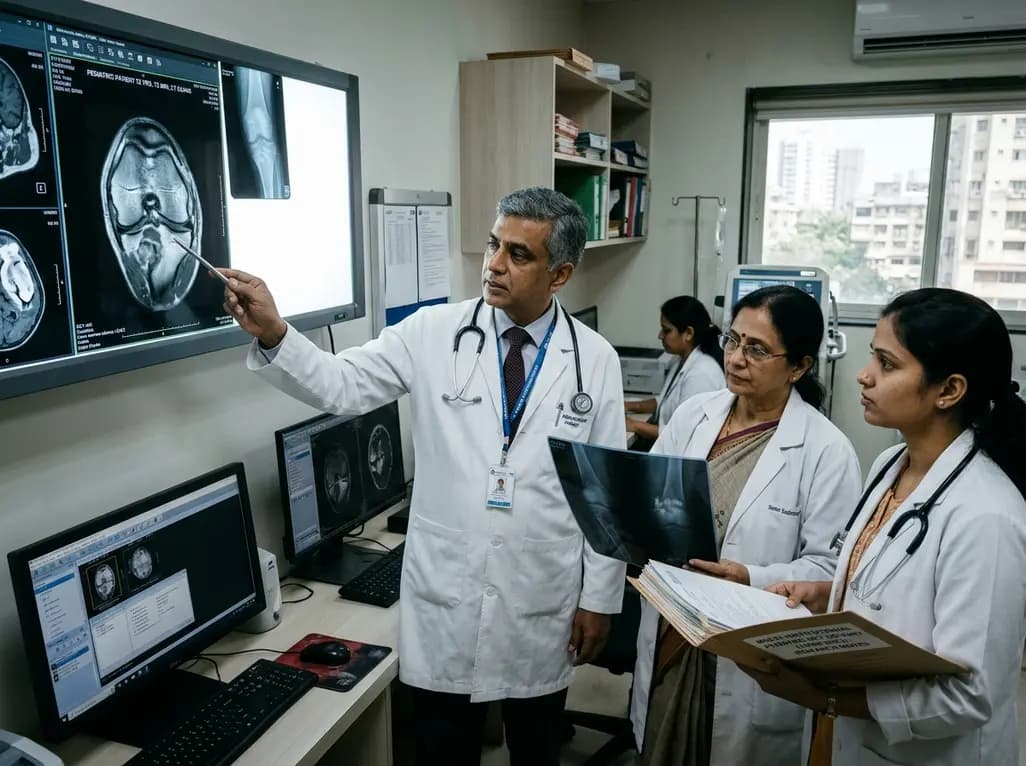
A 25-year multi-institutional cohort reveals high recurrence rates in pediatric giant cell tumor of bone, particularly in patients with open physes and bone marrow edema on preoperative MRI. Early surveillance and careful balance between growth plate preservation and tumor clearance are essential.
Today

India is advancing preventive healthcare by integrating genomics, artificial intelligence, and quantum technologies. With the SANGAM programme sequencing one million Indian genomes, clinicians can unlock personalized therapies, detect cardiometabolic risks early, and curb the burden of diabetes and heart disease.
Today
