

Loading, please wait...
Loading, please wait...

Adult diffuse gliomas present formidable therapeutic challenges across neuro-oncology. Specifically, IDH-wildtype glioblastoma represents the most aggressive primary malignant brain tumor in adults. Despite maximal surgical resection followed by chemoradiotherapy, patient survival remains poor. Currently, O6-methylguanine-DNA methyltransferase promoter methylation serves as the primary clinical biomarker for predicting temozolomide responsiveness. However, clinicians still struggle to anticipate disparate survival trajectories among molecularly uniform cohorts. Therefore, identifying novel genomic alterations has become an urgent clinical necessity. Recent genomic investigations focus heavily on recurrent arm-level chromosomal deletions. In particular, chromosome 14q loss has emerged as a crucial genomic event in neuro-oncological biology. This chromosomal arm harbors several putative tumor suppressor genes that regulate vital cell cycle checkpoints. When deletions alter these critical loci, neoplastic cells frequently acquire aggressive invasive characteristics. Consequently, evaluating chromosome 14q alterations provides deeper mechanistic clarity into disease progression. Understanding these genomic aberrations will help neuro-oncologists refine patient prognostication. Furthermore, precise risk categorization supports more informed clinical decisions during postoperative therapy planning.
To evaluate this chromosomal alteration, researchers developed an innovative computational strategy. They inferred arm-level copy number alterations directly from coordinated transcriptomic expression patterns. Specifically, the study evaluated bulk RNA sequencing profiles from a discovery cohort of 215 Japanese patients with IDH-wildtype glioblastoma. The investigative team applied a sophisticated Gaussian-mixture model to assess arm-level 14q expression shifts. To establish technical validity, researchers verified the computational calls against gold-standard DNA methylation-array copy number profiling in 42 paired cases. Remarkably, the transcriptomic algorithm achieved high concordance, agreeing with array-based copy numbers in 40 of 42 cases. This yielded an impressive Cohen’s kappa coefficient of 0.90. Thus, coordinated gene expression serves as a dependable surrogate for structural cytogenetic loss. Within the discovery cohort, researchers detected chromosome 14q loss in 40.5 percent of cases. Furthermore, investigators validated this classification threshold across large international cohorts. Specifically, they evaluated 74 samples from the Chinese Glioma Genome Atlas and 139 cases from The Cancer Genome Atlas. Consequently, these robust analytical comparisons confirm that RNA-based detection reliably identifies arm-level deletions in routine molecular pathology workflows.
The presence of chromosome 14q loss carries substantial clinical ramifications for patient outcomes. In the primary cohort, patients harboring this arm-level deletion experienced significantly inferior overall survival and progression-free survival. Specifically, overall survival showed marked divergence with a p-value of 0.0053, while progression-free survival yielded a p-value of 0.0175. Furthermore, multivariable Cox proportional hazards modeling confirmed that this deletion serves as an independent prognostic factor. Even after adjusting for patient age, performance status, and resection extent, the hazard ratio reached 1.44. In addition, researchers uncovered vital prognostic synergy between chromosome 14q loss and MGMT promoter status. While MGMT promoter hypermethylation typically predicts favorable survival, concurrent 14q deletion significantly attenuates this benefit. Conversely, tumors displaying both 14q loss and unmethylated MGMT promoters exhibited the most dismal clinical trajectory. Therefore, integrating both biomarkers establishes four clearly defined risk strata. As a result, clinicians gain a more nuanced framework than MGMT assessment alone provides. This combinatorial stratification allows oncology multidisciplinary teams to counsel families with greater accuracy regarding anticipated treatment trajectories and disease recurrence timelines.
Beyond raw survival statistics, chromosome 14q loss drives a distinctive and aggressive transcriptional phenotype. The long arm of chromosome 14 houses multiple critical regulatory genes. For example, loci on 14q encode essential proteins involved in cell senescence, DNA repair pathways, and cellular differentiation. Consequently, arm-level deletion disrupts these coordinated gene networks across the neoplastic parenchyma. Gene set enrichment analyses reveal that tumors with 14q loss exhibit heightened cell cycle progression, elevated proliferative signaling, and robust immune microenvironment remodelling. In contrast, tumors retaining both 14q arms demonstrate stable baseline expression of homeostatic regulatory proteins. In addition, the loss of specific tumor suppressors appears to promote metabolic plasticity in glioma cells. This cellular adaptation shields tumor cells from radiotherapy-induced oxidative stress and alkylating chemotherapy. Furthermore, transcriptomic profiling indicates that these altered tumors upregulate pathways associated with mesenchymal transition and diffuse tissue invasion. Thus, the deletion is not merely an incidental genomic bystander. Instead, it actively shapes an aggressive tumor biology that undermines standard therapeutic modalities. Recognizing this transcriptional rewiring helps scientists identify novel druggable targets for high-risk patient subsets.
These molecular insights hold substantial implications for clinical practice in India and worldwide. Currently, molecular testing for gliomas often relies on targeted gene panels or focused methylation assays. However, comprehensive profiling through RNA sequencing is becoming increasingly accessible across Indian tertiary cancer centers. By leveraging existing transcriptomic workflows, pathology laboratories can extract arm-level copy number alterations without requiring additional specialized cytogenetic assays. Consequently, this computational efficiency optimizes financial resources while providing critical biological insights. Moreover, incorporating chromosome 14q status into prospective clinical trials will refine participant stratification. For instance, novel immunotherapies or targeted pathway inhibitors can be tested specifically in patients with high-risk genomic features. In daily clinical care, identifying 14q loss alerts neuro-oncologists to potentially aggressive tumor recurrence. As a result, clinicians might schedule closer neuroimaging surveillance or consider early enrollment into experimental clinical protocols. Ultimately, integrating multi-omic markers into neuro-oncology advances personalized medicine. By moving beyond isolated markers toward comprehensive genomic stratification, clinicians can better navigate the complex management of IDH-wildtype glioblastoma.
Chromosome 14q loss denotes an arm-level cytogenetic deletion harboring crucial tumor suppressor genes in IDH-wildtype glioblastoma. Its presence indicates an aggressive transcriptional phenotype. Clinically, this alteration correlates with significantly shorter progression-free and overall survival, serving as an independent prognostic factor beyond standard clinical variables.
Chromosome 14q loss acts complementarily with MGMT promoter methylation status. While MGMT methylation predicts improved temozolomide response, concurrent 14q loss weakens this protective advantage. Patients harboring both unmethylated MGMT and 14q loss face the poorest clinical prognosis, establishing refined four-tier survival risk groups.
Yes, coordinated transcriptomic expression models accurately infer arm-level chromosomal deletions from bulk RNA sequencing. In validation studies, Gaussian-mixture computational models demonstrated 90 percent concordance with gold-standard DNA methylation-array copy number assays, confirming RNA sequencing as a viable tool for structural cytogenetic profiling.
Disclaimer: This content is for informational and educational purposes only. It is not intended to substitute for professional medical advice, diagnosis, or treatment. Always seek the advice of your physician or other qualified health provider with any questions you may have regarding a medical condition. Never disregard professional medical advice or delay in seeking it because of something you have read on this website. Refer to the latest local and national guidelines for clinical practice.
References

Read summarized clinical updates, watch expert medical content, and earn CME certifications right from your smartphone.
Open your smartphone camera to scan and install.





A study demonstrates that chromosome 14q loss is an independent predictor of adverse survival in IDH-wildtype glioblastoma. Complementing MGMT methylation status, this genomic marker reveals a distinct transcriptional phenotype that aids clinical risk stratification and therapeutic planning.
Today

Ambient digital scribes promise effortless medical documentation, but a critical sociotechnical commentary reveals that AI alters rather than eliminates charting work. Discover how shifting cognitive burdens, oversight risks, and workflow redesign impact clinical safety and healthcare practice.
Today

A new comparative study demonstrates that intraoperative imprint cytology achieves 96.6% diagnostic accuracy in ovarian tumours, outperforming frozen section in sensitivity for borderline lesions and offering an accessible, rapid alternative for resource-constrained surgical centres.
Today

Thoracic aortic aneurysm lacks etiologic medical therapy. A new study reveals that targeting specific αV integrins with Cilengitide attenuates TGF-β and mechanotransduction pathways, effectively limiting pro-fibrotic remodeling and aortic bulb dilation in both syndromic and sporadic disease models.
Today
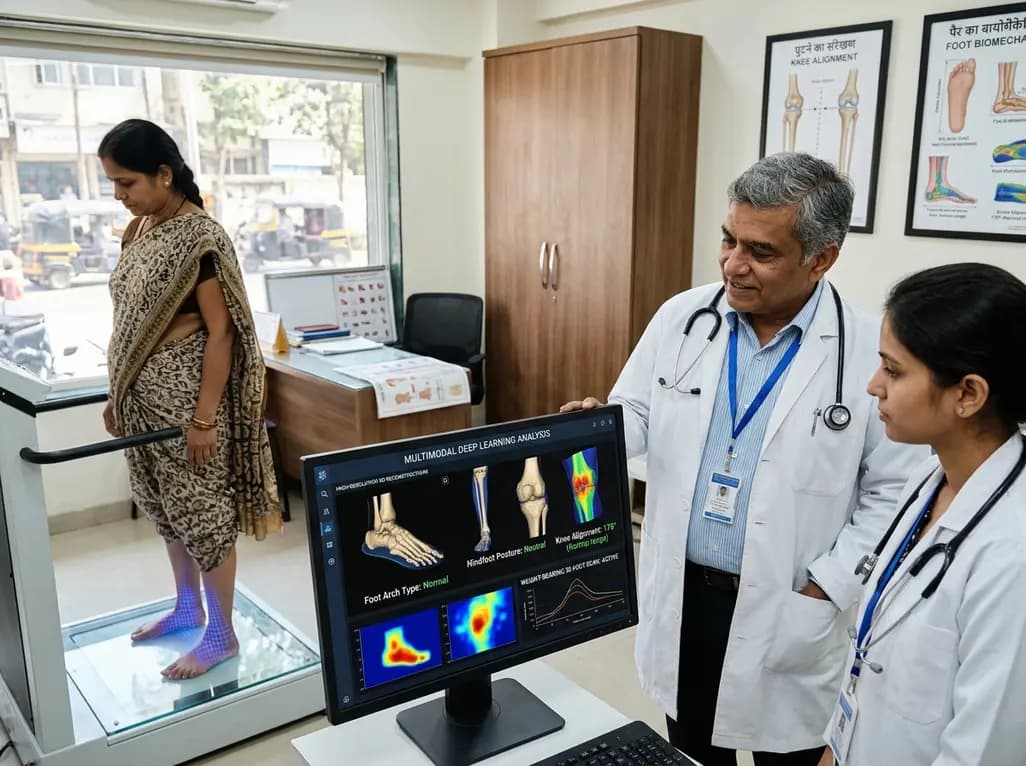
A multimodal deep learning framework utilizing weight-bearing 3D foot scans accurately screens lower-limb alignment, including arch type, hindfoot posture, and knee alignment, offering an accessible, radiation-free alternative to radiography for early biomechanical triage.
Today

A real-world retrospective study demonstrates that combining intravitreal ranibizumab with focal/grid macular laser significantly improves visual acuity and central macular thickness compared to laser monotherapy in patients with center-involved diabetic macular edema.
Today
