.webp&w=384&q=75)

Loading, please wait...
Loading, please wait...

Modern hematology relies on cytogenetic profiling to guide clinical decisions. Consequently, chromosomal abnormalities serve as vital biomarkers defining disease biology and outcomes. Clinicians observe that specific structural rearrangements alter how malignant clones respond. In addition, genomic alterations actively shape both drug sensitivity and therapeutic resistance. Therefore, integrating cytogenetic data into routine practice optimizes precision medicine. Moreover, understanding genomic vulnerabilities allows clinicians to anticipate resistance patterns and modify treatment proactively.
For decades, clinicians classified hematological disorders primarily through morphological examination and immunophenotyping. However, cytogenetic discoveries have fundamentally revolutionized this diagnostic paradigm over recent years. Today, specific chromosomal abnormalities directly determine whether a patient receives targeted therapy or conventional chemotherapy. For example, discovering the Philadelphia chromosome transformed chronic myeloid leukemia into a manageable chronic disorder. Similarly, identifying PML::RARA translocations in acute promyelocytic leukemia dictates immediate therapy with targeted differentiation agents. In contrast, complex karyotypes containing multiple structural lesions consistently predict poor response to standard induction regimens. Consequently, hematologists rely on cytogenetics to assess baseline risk and tailor therapeutic intensity. Furthermore, cytogenomic profiling helps clinicians select candidates for upfront allogeneic stem cell transplantation. In addition, baseline karyotyping prevents the administration of ineffective cytotoxic regimens to resistant clones. Therefore, routine chromosomal analysis provides indispensable prognostic and predictive guidance across diverse leukemia subtypes. Ultimately, these targeted treatment strategies spare patients from unnecessary toxicities while maximizing clinical remission rates. Moreover, contemporary clinical algorithms integrate these cytogenetic findings directly into international management guidelines. As a result, therapeutic selection becomes a personalized process driven by distinct genomic vulnerabilities. Specifically, risk-adapted protocols significantly improve survival across diverse patient populations. Additionally, standardized cytogenomic nomenclature facilitates clear communication among laboratory specialists and treating clinicians.
Historically, oncologists designed therapeutic protocols around rigid organ-specific classifications. However, contemporary oncology increasingly embraces alteration-driven therapy targeting shared molecular anomalies across different disease entities. For example, tyrosine kinase inhibitors effectively suppress neoplastic proliferation in both myeloid and lymphoid malignancies harboring BCR::ABL1 fusions. Similarly, receptor tyrosine kinase rearrangements involving PDGFRA, PDGFRB, and FGFR1 define distinct subsets across eosinophilic and myeloid neoplasms. In these unique cases, targeted kinase inhibitors induce profound hematologic remissions regardless of traditional disease morphology. Furthermore, clinicians utilize selective FGFR inhibitors when managing aggressive neoplasms driven by 8p11 translocations. In addition, secondary kinase domain mutations frequently emerge during sustained targeted therapy, causing acquired therapeutic resistance. Consequently, oncologists perform serial molecular monitoring to identify resistant sub-clones before overt clinical relapse occurs. When clinicians detect secondary gatekeeper mutations, they promptly transition patients to next-generation kinase inhibitors. Therefore, understanding specific chromosomal rearrangements empowers doctors to overcome emergent resistance mechanisms. Ultimately, this alteration-driven approach represents a profound paradigm shift toward mechanism-based hematological care. Moreover, cross-entity drug applications expand treatment opportunities for patients with rare and refractory conditions. Additionally, early genomic identification prevents costly diagnostic delays in complex clinical presentations.
BCL2 overexpression represents a common survival mechanism across several mature and immature hematological malignancies. Consequently, venetoclax has emerged as a cornerstone oral agent that selectively inhibits BCL2 to trigger apoptotic death. In chronic lymphocytic leukemia, the presence of specific cytogenetic lesions strongly influences initial drug responsiveness. For example, patients with isolated deletions of 13q generally demonstrate exceptional sensitivity to venetoclax-based combinations. Conversely, abnormalities involving chromosome 17p and TP53 inactivation often exhibit shorter progression-free survival despite initial responses. Furthermore, malignant cells frequently develop acquired resistance by acquiring secondary mutations or shifting dependency to alternative anti-apoptotic proteins. Specifically, clonal upregulation of MCL1 or BCL2A1 allows malignant cells to evade venetoclax-induced apoptosis effectively. In multiple myeloma, the translocation t(11;14) creates strong intrinsic dependency on BCL2, predicting high sensitivity to targeted therapy. In contrast, myeloma patients lacking this specific translocation rarely benefit from single-agent BCL2 inhibition. Therefore, cytogenetic testing provides essential predictive clues that help clinicians identify optimal candidates for venetoclax regimens. Moreover, tracking cytogenetic evolution during therapy enables early detection of resistant clones and rational combination planning. Additionally, combining venetoclax with hypomethylating agents significantly improves outcomes in elderly acute myeloid leukemia cohorts. In fact, prospective cytogenetic evaluation prevents ineffective treatment courses and unnecessary pharmacological exposure.
Epigenetic dysregulation plays a pivotal role in maintaining blast survival in acute myeloid leukemia and acute lymphoblastic leukemia. Notably, rearrangements of the KMT2A gene on chromosome 11q23 induce aberrant transcriptional programs driving aggressive leukemogenesis. Similarly, mutations in the NPM1 gene confer an epigenetic state that closely resembles KMT2A-rearranged acute leukemias. Historically, these cytogenetic and molecular subgroups carried an unfavorable prognosis under conventional intensive chemotherapy regimens. However, recent scientific advances have unveiled the critical interaction between KMT2A fusion complexes and the chromatin regulator menin. Consequently, novel small-molecule menin inhibitors disrupt this protein interaction, inducing blast differentiation and apoptotic cell death. Clinical trials demonstrate remarkable single-agent activity and durable remissions in patients with relapsed KMT2A-rearranged leukemias. Furthermore, menin inhibitors show comparable therapeutic efficacy in NPM1-mutated malignancies, exemplifying successful alteration-driven intervention. Nevertheless, selective pressure from targeted menin inhibition occasionally prompts the emergence of somatic MEN1 gatekeeper mutations. In addition, secondary signaling mutations in FLT3 or RAS pathways can mediate rapid bypass resistance mechanisms. Therefore, baseline cytogenetic identification followed by longitudinal molecular surveillance remains indispensable for optimizing menin-directed therapies. Ultimately, these innovative epigenetic agents offer transformative therapeutic potential for traditionally refractory hematological cohorts. In summary, combining menin inhibitors with targeted kinase or epigenetic agents may prevent the selection of resistant clones.
While some chromosomal anomalies enable broad therapies across diseases, other aberrations dictate highly specific management strategies. For example, gastric mucosa-associated lymphoid tissue lymphoma presents a distinct clinical paradigm influenced by cytogenetic status. Patients harboring the t(11;18)(q21;q21) translocation leading to BAPI2::MALT1 fusion exhibit persistent resistance to Helicobacter pylori eradication therapy. Consequently, these individuals require immediate systemic therapy or localized radiotherapy rather than prolonged antibiotic courses. In contrast, cases lacking this specific translocation frequently achieve complete durable remission following simple antimicrobial eradication. Similarly, in mantle cell lymphoma, the defining t(11;14) translocation causes cyclin D1 overexpression and dictates targeted clinical pathways. Furthermore, secondary abnormalities such as deletions in 17p or TP53 mutations markedly diminish the efficacy of standard immunochemotherapy. In plasma cell myeloma, high-risk translocations including t(4;14) and t(14;16) predict poor response to conventional treatments. Consequently, hematologists utilize quadruplet regimens incorporating proteasome inhibitors, immunomodulatory drugs, and monoclonal antibodies for these profiles. Therefore, comprehensive cytogenetic evaluation remains crucial to avoid ineffective interventions in disease-specific lymphoma and myeloma subtypes. Ultimately, these findings underscore how individualized cytogenomic data reshape modern lymphoma management protocols. Additionally, detecting these alterations prevents unnecessary delays in initiating definitive, life-saving oncology protocols.
Specific chromosomal abnormalities alter intracellular signaling cascades and cellular dependency, creating distinct therapeutic vulnerabilities. For example, balanced translocations like BCR::ABL1 produce oncogenic fusion kinases that respond selectively to tyrosine kinase inhibitors. Similarly, promyelocytic leukemia translocations direct sensitivity toward targeted differentiation therapies. Consequently, identifying these structural variants at baseline enables clinicians to choose precise alteration-driven agents rather than empirical chemotherapy. Therefore, baseline cytogenetic screening directly determines the most effective personalized regimen while minimizing severe adverse effects.
Malignant hematological clones frequently evade venetoclax inhibition through clonal evolution and acquired cellular adaptations. Specifically, treated cells acquire secondary point mutations in the BCL2 gene, which directly impair drug binding. Furthermore, neoplastic clones can upregulate compensatory anti-apoptotic proteins such as MCL1 and BCL2A1, effectively bypassing BCL2 dependence. Consequently, these adaptive mechanisms restore cell survival pathways and diminish therapeutic efficacy over time. Therefore, clinicians must monitor cytogenetic and molecular shifts sequentially to modify therapeutic regimens appropriately.
Chromosomal rearrangements involving the KMT2A gene rely directly on menin binding to sustain leukemogenic gene expression. Consequently, oral menin inhibitors selectively disrupt this vital interaction, downregulating oncogenic drivers like HOXA9 and MEIS1. This targeted disruption halts leukemia blast proliferation and promotes terminal myeloid differentiation effectively. Furthermore, clinical trials show significant therapeutic responses across refractory KMT2A-rearranged and NPM1-mutated leukemias. Therefore, menin inhibitors represent a transformative alteration-driven breakthrough for biologically aggressive leukemic subtypes.
Disclaimer: This content is for informational and educational purposes only... Refer to the latest local and national guidelines for clinical practice.
References

Read summarized clinical updates, watch expert medical content, and earn CME certifications right from your smartphone.
Open your smartphone camera to scan and install.





The Francophone Group of Hematological Cytogenetics reviews the role of chromosomal abnormalities in determining drug sensitivity and resistance in hematological malignancies, emphasizing alteration-driven therapies including tyrosine kinase inhibitors, menin inhibitors, and venetoclax across varied hematologic neoplasms.
Today
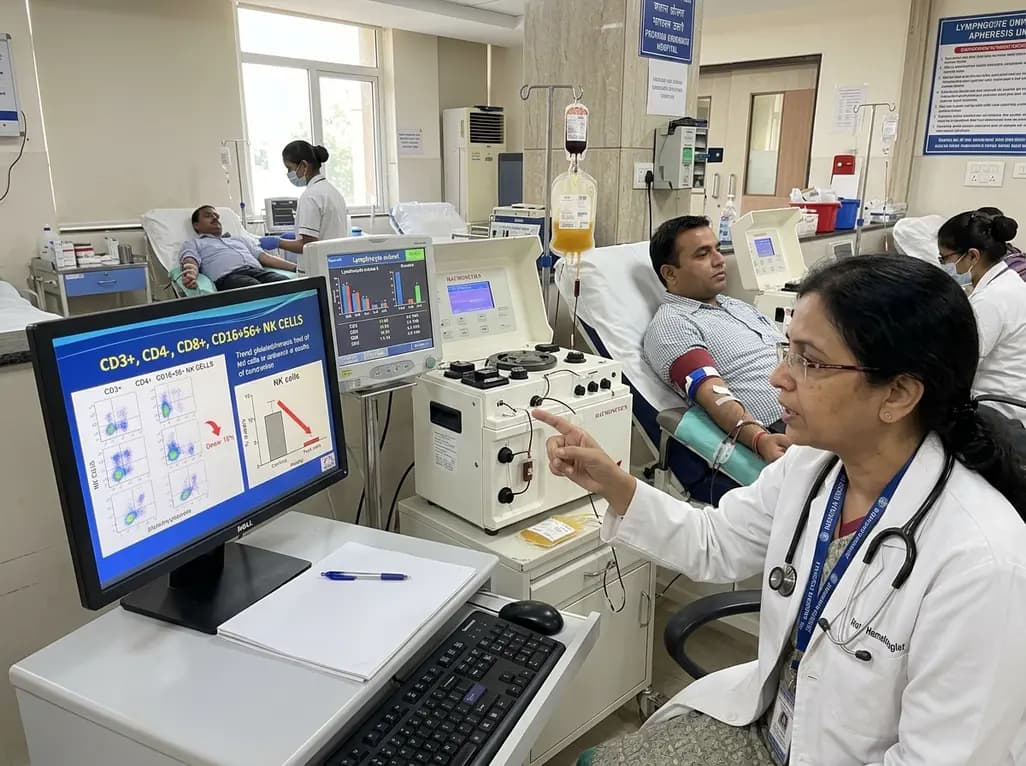
A landmark study assesses how frequent plateletpheresis alters peripheral immune profiles. Regular donors demonstrate notable reductions in circulating natural killer cells, emphasizing the critical need for routine lymphocyte subset surveillance in long-term blood donor safety programs.
Today

Fetal foramen ovale restriction typically emerges in the third trimester with right heart enlargement. Evidence demonstrates it does not independently mandate cesarean delivery, and over 93% of postnatal cardiac findings resolve spontaneously within one year, supporting conservative obstetric management.
Today

The latest WHO Global Health Estimates highlight India's life expectancy reaching 71 years alongside a healthy lifespan of 60.6 years. While longevity rebounds post-pandemic, non-communicable conditions now account for three-quarters of top mortalities, underscoring urgent clinical shifts in routine primary care.
Today

New biomechanical research reveals that foot-strike angle significantly influences knee energy absorption during cutting tasks in female soccer players. Understanding these kinematic patterns offers clinicians valuable pathways for targeted ACL injury prevention and athletic retraining.
Today

A comprehensive review analyzes periconceptional GLP-1 receptor agonist exposure, revealing reassuring data on congenital anomalies and adverse perinatal outcomes while emphasizing the need for cautious patient counseling.
Today
