.webp&w=384&q=75)

Loading, please wait...
Loading, please wait...

Chirality remains a fundamental property in modern pharmacology, as mirror-image enantiomers often exhibit vastly different biological activities. Consequently, achieving precise chiral drug enantioseparation is a critical technical hurdle for the pharmaceutical industry. This recent review chronicles the development of interfacial super-assembled hetero-structured chiral nanochannel membranes, representing a transformative shift in separation science.
Researchers are now constructing hierarchical membranes from zero- to three-dimensional building blocks. By employing a versatile toolbox of interfacial assembly strategies like phase inversion and electrospinning, they can create complex architectures. These design principles, such as pore-in-pore and multichannel configurations, are specifically engineered to break the conventional permeability-selectivity trade-off. Furthermore, these structures provide the high surface area necessary for sensitive molecular recognition.
The core of these membranes lies in their advanced transport mechanisms. Traditional diffusion-selective and adsorption-selective pathways are now being supplemented by recently proposed couple-accelerated-selective transport. This mechanism significantly enhances the speed and accuracy of separation. Representative material systems, including metal-organic frameworks (MOFs) and molecularly imprinted polymers (MIPs), have shown exceptional promise in mimicking biological channels for high-throughput applications.
While the potential is vast, several persistent challenges remain. Scalability and long-term stability under industrial conditions are primary concerns for developers. However, the integration of artificial intelligence (AI)-assisted design is set to optimize these membranes rapidly. Moreover, bioinspired dynamic membranes offer a forward-looking perspective on creating responsive technologies that could adapt to different enantiomeric mixtures in real-time.
Enantioseparation is vital because one enantiomer of a drug may provide the therapeutic benefit while the other could be inactive or even toxic. Ensuring high enantiomeric purity is essential for patient safety and meeting stringent regulatory guidelines from agencies like the FDA.
Nanochannel membranes provide specialized pathways that can distinguish between molecules based on their spatial arrangement. These membranes utilize hierarchical structures to allow high flow rates (permeability) without sacrificing the accuracy of the separation (selectivity).
The future involves using AI to design more efficient membrane structures and developing bioinspired systems that can change their properties dynamically. These advancements will help overcome current issues with membrane stability and manufacturing scale-up.
Disclaimer: This content is for informational and educational purposes only and does not constitute medical or pharmaceutical advice. The technologies described are in research and development stages. Refer to the latest local and national guidelines for clinical practice and pharmaceutical manufacturing standards.
References
Huang Y et al. Interfacial Super-Assembled Hetero-Structured Chiral Nanochannels for Enantioseparation Applications. Adv Mater. 2026 Apr 10. doi: 10.1002/adma.202523689. PMID: 41960631.
Auerbach M. Chiral Separation and Enantiomeric Analysis: Critical Importance in Pharmaceutical Development. American Pharmaceutical Review. 2025 Jun 01.
Recent Advances in Enantiorecognition and Enantioseparation Techniques of Chiral Molecules in the Pharmaceutical Field. PubMed. 2025 Feb 15. PMID: 38356124.

Read summarized clinical updates, watch expert medical content, and earn CME certifications right from your smartphone.
Open your smartphone camera to scan and install.





A review of interfacial super-assembled hetero-structured nanochannels for efficient enantioseparation, highlighting new mechanisms and AI-assisted design....
6 months ago

Co-administering antiseizure medications and DOACs frequently causes pharmacokinetic interactions, subtherapeutic drug levels, and thromboembolic failures. This review highlights enzyme induction risks, unpredictable outcomes with levetiracetam, and the vital role of therapeutic drug monitoring.
Today

Demanding exhaustive hormonal profiling can inadvertently discourage clinical studies involving females. Methodological standards must align with the specific scientific question to expand, not restrict, equitable evidence for women.
Today
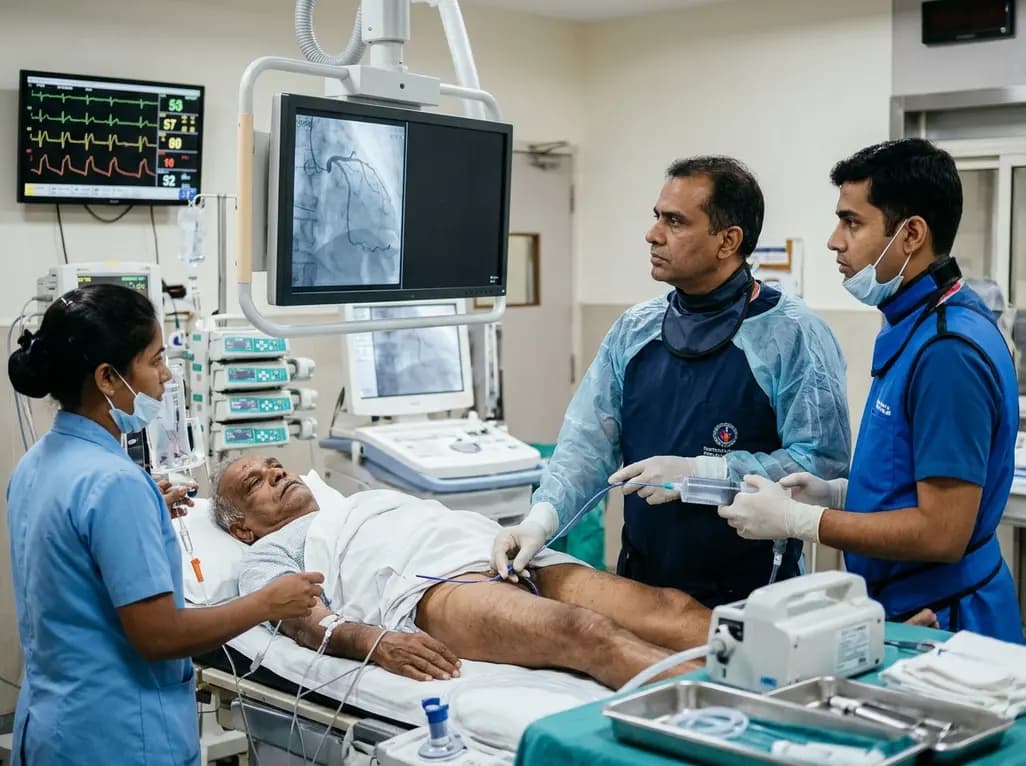
An elderly man with partially repaired Tetralogy of Fallot presented with STEMI caused by coronary embolism rather than atherosclerosis. Successful treatment with sustained mechanical aspiration thrombectomy underscores the vital need for high clinical vigilance in adult congenital heart disease.
Today
A comparative review of tension band wiring and intramedullary screw fixation in thumb metacarpophalangeal arthrodesis, evaluating union rates, hardware complications, and clinical outcomes.
Today
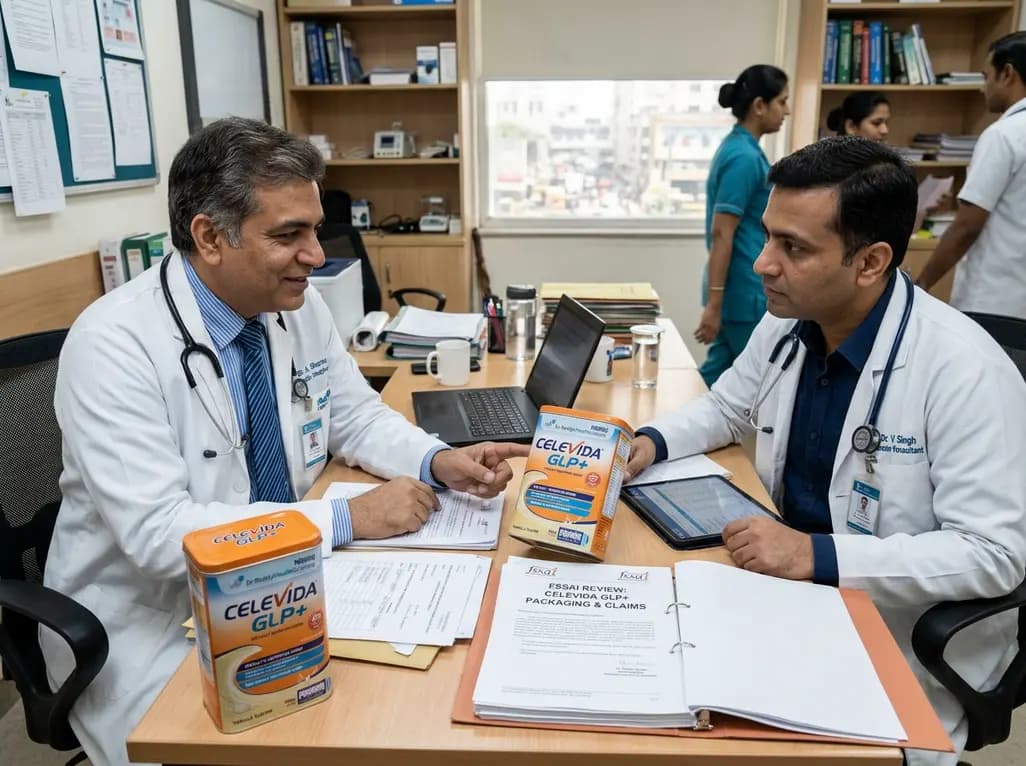
Following regulatory scrutiny from FSSAI regarding promotional representations and lean muscle preservation claims, Dr. Reddy's Laboratories and Nestlé Health Science are currently reviewing the branding and marketing strategy for their joint nutritional supplement Celevida GLP+.
Today
