.webp&w=384&q=75)

Loading, please wait...
Loading, please wait...

Researchers have pioneered a robust strategy for chiral amino acid analysis using MALDI-TIMS-MS. Chiral amino acids (AAs) act as critical bioactive compounds in various physiological processes. Specifically, scientists now recognize the relative enantiomeric ratio as a vital indicator of disease progression. This study introduces an ultrahigh-resolution method to identify 19 pairs of proteinogenic AAs. Consequently, this advancement helps clinicians understand metabolic shifts in real-time.
The research team employed a chiral derivatization process using S-NIFE. Furthermore, they stabilized the soft chain of the reagent by adding bimetal ions. This immobilization technique successfully achieved high-resolution separation without the need for complex optimization. Moreover, this method proves remarkably efficient in determining enantiomeric ratios. It extends its applicability to real sample analysis in clinical settings. Thus, it bridges the gap between basic research and diagnostic utility.
Chiral molecules often reflect the health status of humans. For instance, abnormal ratios frequently occur in cancer, kidney disease, and neurological disorders. Additionally, improved analytical methods facilitate earlier diagnosis of these conditions. This technology offers speed and sensitivity for complex biological matrices. Therefore, clinicians can monitor disease severity more accurately. In fact, the precision of chiral amino acid analysis could redefine personalized medicine protocols.
Many biological molecules exist as enantiomers, which are non-superimposable mirror images. While one form may support health, the other might indicate disease or have different pharmacological effects. Precise separation allows doctors to identify specific biomarkers for conditions like Alzheimer's or chronic kidney disease.
This method provides ultrahigh resolution and high sensitivity. It allows for the simultaneous analysis of many amino acid pairs in complex biological samples. Unlike older techniques, this approach uses bimetallic immobilization to stabilize the separation process, ensuring more reliable results.
Disclaimer: This content is for informational and educational purposes only. It does not constitute medical advice or professional services. Readers should not use this information to diagnose or treat a health problem. Always seek the advice of a physician or other qualified health provider regarding a medical condition. Refer to the latest local and national guidelines for clinical practice.
References

Read summarized clinical updates, watch expert medical content, and earn CME certifications right from your smartphone.
Open your smartphone camera to scan and install.





New MALDI-TIMS-MS method achieves ultrahigh-resolution chiral separation of 19 amino acid pairs, offering a breakthrough in disease biomarker identification...
8 months ago

A breakthrough ultrathin multimodal sensor decouples physical hemodynamic monitoring from disposable electrochemical calibration, achieving long-term wearable glucose prediction with 81.36% accuracy and a 9.12% MARD. This offers a robust, drift-free solution for outpatient metabolic surveillance.
Today

Demanding exhaustive hormonal profiling can inadvertently discourage clinical studies involving females. Methodological standards must align with the specific scientific question to expand, not restrict, equitable evidence for women.
Today

Co-administering antiseizure medications and DOACs frequently causes pharmacokinetic interactions, subtherapeutic drug levels, and thromboembolic failures. This review highlights enzyme induction risks, unpredictable outcomes with levetiracetam, and the vital role of therapeutic drug monitoring.
Today
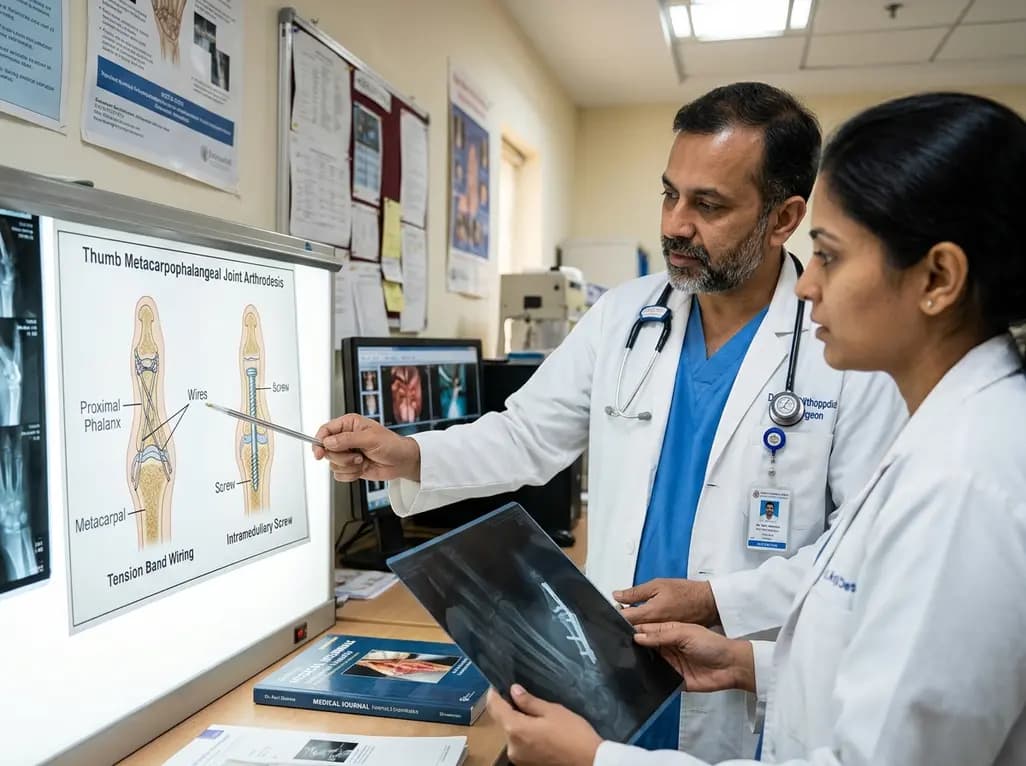
A comparative review of tension band wiring and intramedullary screw fixation in thumb metacarpophalangeal arthrodesis, evaluating union rates, hardware complications, and clinical outcomes.
Today

Following regulatory scrutiny from FSSAI regarding promotional representations and lean muscle preservation claims, Dr. Reddy's Laboratories and Nestlé Health Science are currently reviewing the branding and marketing strategy for their joint nutritional supplement Celevida GLP+.
Today
