.webp&w=384&q=75)

Loading, please wait...
Loading, please wait...
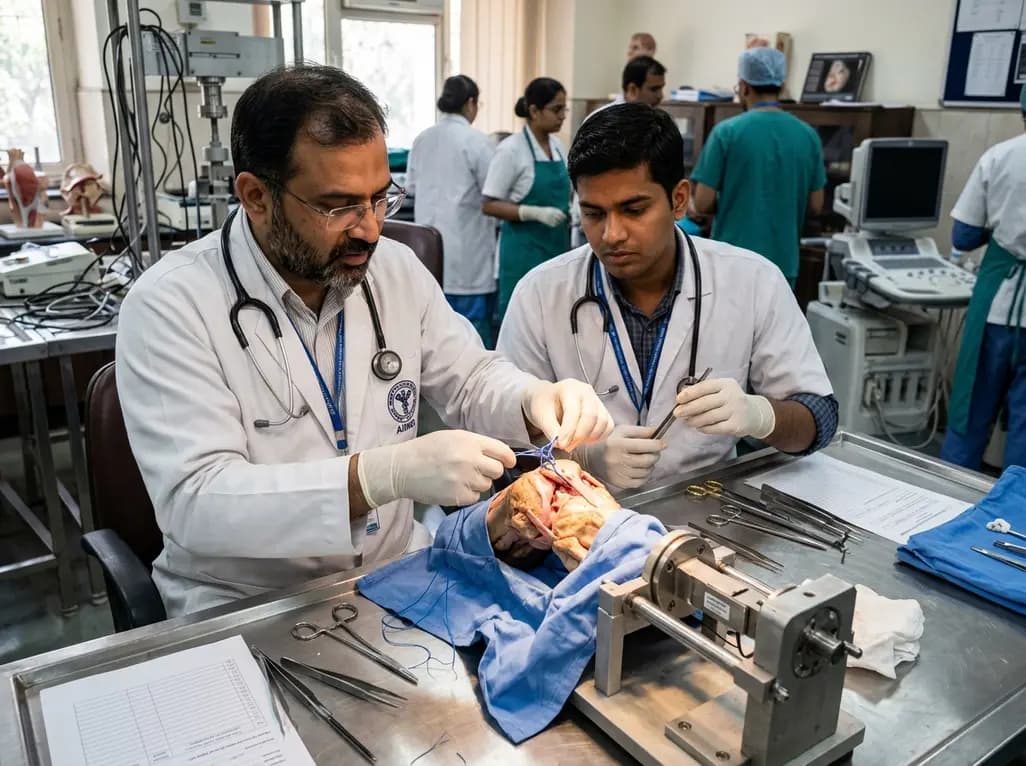
Posterior cruciate ligament reconstruction presents unique technical challenges for orthopedic surgeons aiming to restore physiological knee stability and prevent secondary joint degeneration. Graft strain, progressive stretching, and fixation failure often compromise long-term surgical success. Recently, the Chinese knotting technique has emerged as a promising internal tension-relieving suture strategy designed to enhance kinematic stability and reduce post-operative graft laxity. Biomechanical evidence now validates its clinical superiority over standard reconstruction protocols.
In posterior cruciate ligament injuries, surgical failure frequently stems from persistent posterior tibial translation. Standard fixation methods may struggle under repetitive mechanical loads during early mobilization. Consequently, surgeons require augmented techniques that can withstand biomechanical forces without damaging adjacent tissues. The internal tension-relieving mechanism provides structured mechanical reinforcement along the graft construct. Furthermore, early dynamic testing shows improved stress distribution across the entire ligament complex. By integrating tension-relieving sutures directly into the construct, surgeons achieve superior initial mechanical stability. Therefore, understanding these biomechanical advantages is essential for refining surgical protocols in complex knee reconstructions.
The posterior cruciate ligament serves as the primary restraint against posterior displacement of the tibia relative to the femur. Additionally, it contributes significantly to rotational control and joint equilibrium. When this ligament sustains severe injury, surgical reconstruction becomes mandatory to prevent chronic joint laxity, altered gait patterns, and accelerated articular cartilage wear. Traditional surgical repair techniques typically employ single-bundle or double-bundle graft constructs anchored with interference screws or suspensory buttons.
However, traditional construct configurations frequently experience structural relaxation and gradual lengthening under cyclic physiological loads. This progressive stretching can lead to recurrent joint instability and functional deficits in active patients. The biomechanical stress concentrated at the graft-fixation interface creates a vulnerable site for micro-displacement. Consequently, orthopedic researchers have sought innovative suture augmentation methods to shield the healing graft from peak mechanical loads during early rehabilitation. Tension-relieving suture architectures aim to absorb excessive tension, thereby maintaining structural integrity across cyclic motion cycles for patients undergoing ligamentous knee surgery.
To evaluate the biomechanical performance of this surgical innovation, researchers conducted a rigorous cadaveric study comparing it directly against conventional posterior cruciate ligament reconstruction. Ten fresh-frozen adult human knee joint specimens were randomly divided into two equal groups: conventional reconstruction and augmented reconstruction utilizing the tension-relieving suture method. Donor demographics, including age, gender distribution, and specimen side, were carefully matched across both cohorts to eliminate baseline structural confounding factors.
Initially, all native posterior cruciate ligaments underwent standardized cyclic fatigue testing to establish baseline mechanical parameters, including stiffness, elastic modulus, and relaxation length. Subsequently, the native ligaments were transected and reconstructed using standardized graft fixation methods. Biomechanical evaluation measured maximum failure load, structural stiffness, elastic modulus, and post-testing relaxation length. Crucially, all cadaveric specimens successfully completed testing without structural tissue damage or fixation abnormalities. This standardized environment provided robust objective data regarding construct resistance to tensile forces and mechanical stretch.
The quantitative results from the cadaveric testing demonstrated clear mechanical advantages for the Chinese knotting technique compared with standard reconstruction methods. While baseline structural parameters such as construct stiffness and elastic modulus showed no statistically significant differences between groups, peak load capacity showed dramatic divergence. Specifically, the augmented reconstruction group demonstrated a significantly higher maximum failure load of over six hundred Newtons compared to approximately four hundred forty Newtons in the conventional group.
In addition to superior ultimate load capacity, the augmented construct exhibited significantly lower relaxation length following cyclic mechanical testing. The mean relaxation length dropped from nearly two and a half millimeters in conventional reconstruction to just one and a half millimeters in the augmented group. This substantial reduction in stress relaxation directly translates to reduced graft stretching and minimal post-operative joint laxity. Furthermore, preserved stiffness ensured that natural joint kinematics remained intact without inducing excessive rigidity during simulated weight-bearing conditions.
The superior load-bearing capacity and reduced relaxation length observed in this study hold major clinical significance for orthopedic surgeons and sports medicine specialists. Persistent graft elongation remains one of the primary reasons for functional failure following posterior cruciate ligament reconstruction. By reducing cyclic graft stretch, internal tension-relieving suture techniques preserve graft tightness and maintain joint congruity throughout the post-operative recovery phase.
Moreover, enhanced construct strength allows for safer, more aggressive post-operative rehabilitation protocols. Early mobilization is often limited by concerns over graft stretching and construct attenuation. With higher baseline failure thresholds, surgeons can confidently initiate earlier physical therapy, thereby reducing joint stiffness and accelerating functional recovery. Furthermore, the absence of tissue damage or fixation complications during testing underscores the safety and technical feasibility of this approach, potentially reducing long-term revision rates in active patients.
Achieving optimal clinical outcomes with advanced suture augmentation requires precise surgical execution and meticulous intraoperative tensioning. Orthopedic surgeons must ensure appropriate graft positioning, accurate tunnel placement, and balanced suture tensioning to maximize the protective benefits of the internal construct. Inappropriate tensioning could theoretically lead to over-constraint of the knee joint or localized stress concentrations. Thus, specialized surgical training and familiarity with knotting geometry are essential for safe clinical implementation.
Future clinical research must build upon these cadaveric biomechanical findings through prospective clinical trials. Long-term follow-up studies comparing patient satisfaction, objective stability measurements, and arthroscopic evaluations will clarify whether these biomechanical advantages translate directly into lower long-term failure rates. Additionally, investigating this tension-relieving concept in multi-ligament knee injuries could broaden its therapeutic scope. As surgical techniques continue to evolve, biomechanically validated innovations offer valuable opportunities to refine knee reconstruction algorithms globally.
The primary biomechanical advantage lies in its ability to significantly increase the maximum load capacity of the reconstructed ligament while decreasing relaxation length after cyclic loading. By incorporating internal tension-relieving sutures, this approach shields the healing graft construct from excessive mechanical stress. Consequently, it minimizes post-operative graft stretching, maintains structural integrity under physiological forces, and provides superior early joint stability compared to standard reconstruction protocols.
Experimental cadaveric data show that the internal tension-relieving suture technique does not significantly alter graft stiffness or elastic modulus compared to standard conventional reconstruction methods. This means the technique successfully enhances ultimate load resistance and reduces elongation without creating an excessively stiff construct. Maintaining normal elastic properties is essential because it allows the reconstructed ligament to restore physiological knee kinematics naturally while offering higher structural protection against acute mechanical failure.
Reduced relaxation length means the reconstructed graft undergoes significantly less post-operative stretching during repetitive movement and rehabilitation. Minimizing structural relaxation helps preserve joint tightness, prevents recurrent posterior tibial displacement, and reduces the risk of long-term functional instability. Consequently, surgeons can implement earlier, more confident rehabilitation programs. This leads to accelerated functional recovery, reduced post-operative joint stiffness, lower revision rates, and improved overall clinical outcomes for patients undergoing ligament reconstruction.
Disclaimer: This content is for informational and educational purposes only and does not constitute medical advice, diagnosis, or treatment. Always seek the advice of a qualified healthcare provider with any questions regarding a medical condition. Refer to the latest local and national guidelines for clinical practice.
References

Read summarized clinical updates, watch expert medical content, and earn CME certifications right from your smartphone.
Open your smartphone camera to scan and install.





A cadaveric study demonstrates that the Chinese knotting technique significantly improves maximum load capacity and reduces graft relaxation length in posterior cruciate ligament reconstruction, offering superior biomechanical stability compared to conventional reconstruction methods without altering stiffness.
last month

A breakthrough study demonstrates that BAP31 protects against acute lung injury by inhibiting ferroptosis in alveolar epithelial cells. Through activating the AKT/GSK3β/Nrf2 pathway and upregulating GPX4 and HMOX1, BAP31 preserves the alveolar-capillary barrier, offering novel avenues for critical care management.
Today
A recent longitudinal study evaluated the link between prenatal loss of control eating and cardiovascular health using Life's Essential 8 frameworks. While direct associations across pregnancy were non-significant, the high prevalence of dysregulated eating highlights critical implications for obstetric practice.
Today
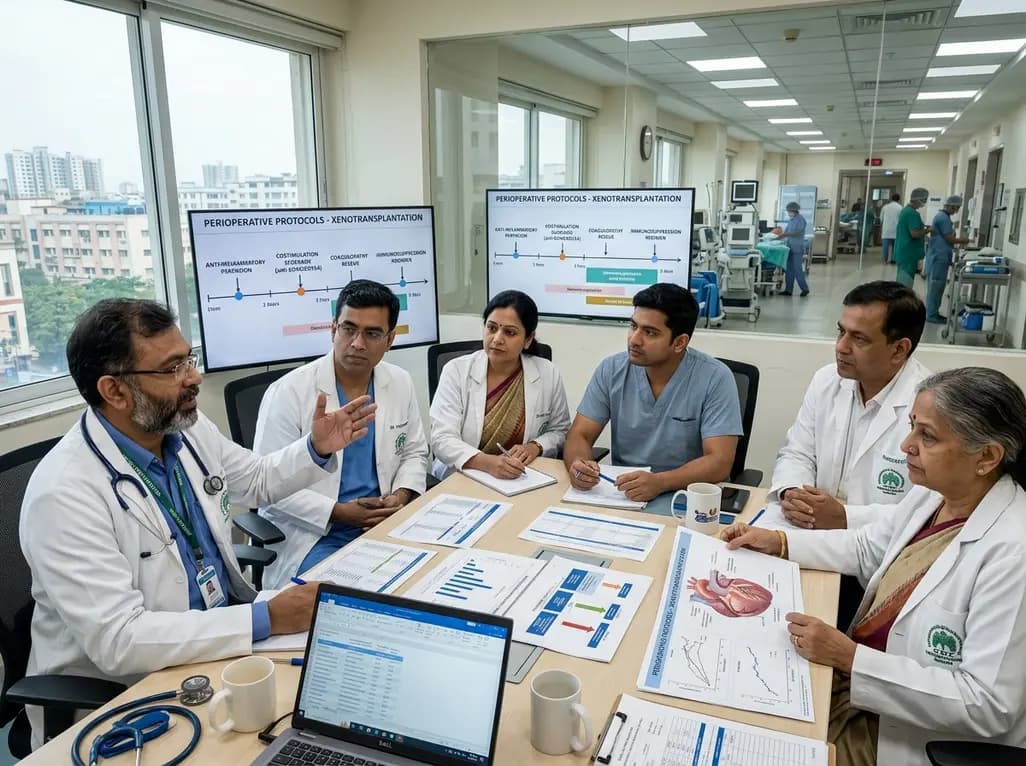
Explore modern perioperative management protocols for clinical xenotransplantation. Learn how costimulation blockade, anti-inflammatory perfusion, and coagulopathy rescue overcome interspecies hurdles.
Today
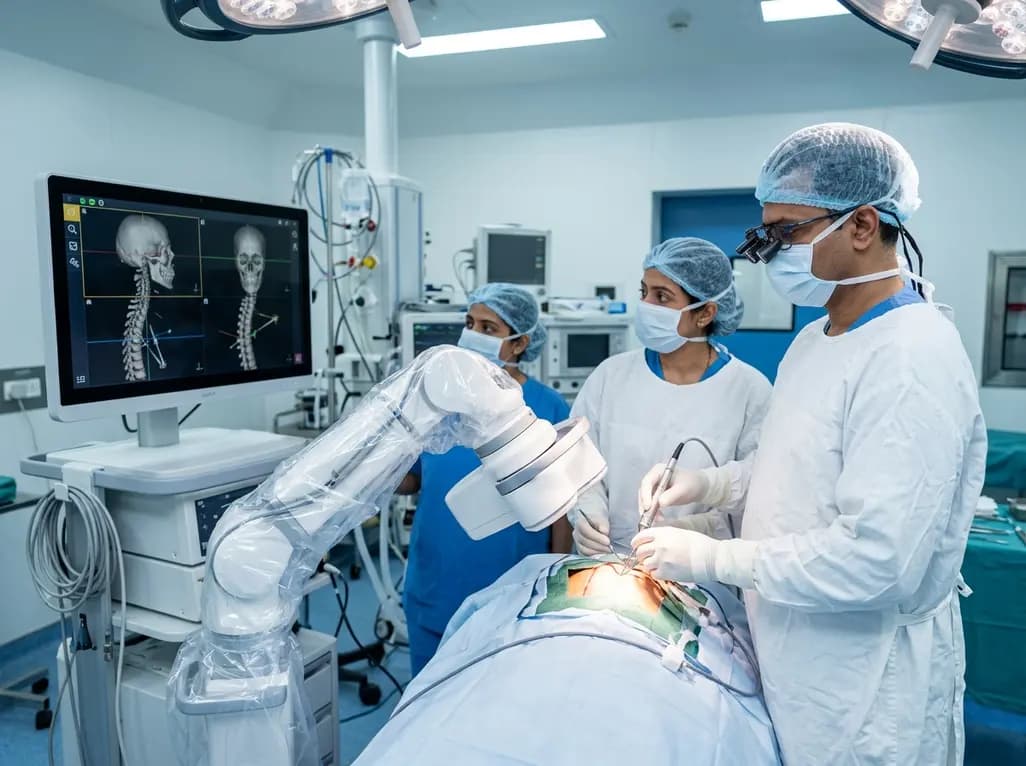
North India's first Centre of Excellence for Brain and Spine at Amrita Hospital Faridabad integrates Brainlab's Loop-X mobile robot. This landmark facility combines cone-beam computed tomography with surgical navigation to elevate precision, optimize operative workflows, and enhance specialized clinician training.
Today
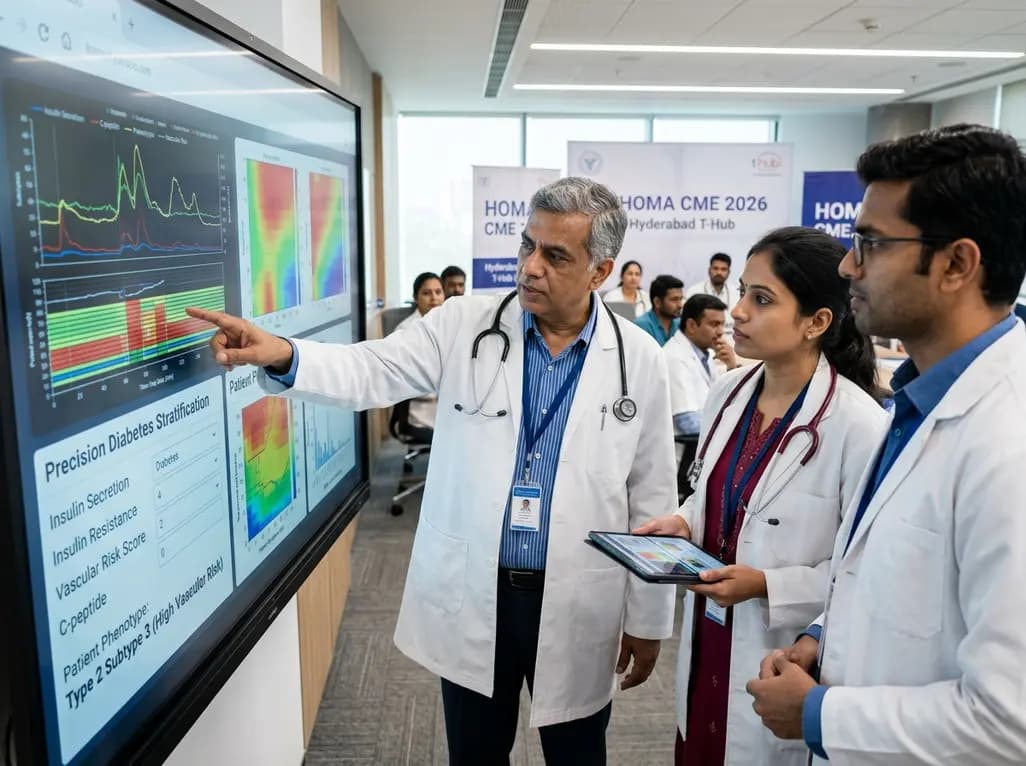
At Homa CME 2026 at Hyderabad's T-Hub, healthcare leaders emphasized moving beyond routine metrics through digital calculators and precision stratification. Discover why characterizing individual insulin secretion, resistance patterns, and vascular risks transforms chronic metabolic care in India.
Today
