.webp&w=384&q=75)

Loading, please wait...
Loading, please wait...

Childhood stunting risk remains a major public health concern in low- and middle-income countries. It reflects chronic undernutrition and has long-term consequences for a child's cognitive and physical development. Recent research highlights that monitoring dietary diversity and food insecurity is essential to mitigate this risk. In marginalized peri-urban areas, socioeconomic disparities often limit access to the nutrient-dense foods required for healthy growth. Consequently, children from lower-income households frequently face a higher burden of growth retardation.
Dietary diversity serves as a vital proxy for nutrient adequacy. When children consume various food groups, they receive a broader range of essential micronutrients. However, many households struggle to provide a diverse diet due to financial constraints. Specifically, the lack of animal-source proteins and fresh produce directly contributes to height-for-age deficits. Therefore, improving food security is not just about calorie intake; it is about the quality of those calories. This study emphasizes that even within marginalized communities, wealth gradients significantly affect a child's nutritional outcomes.
Wealth status often dictates the availability of diverse food items in the home. In the examined cohort of South African primary school children, researchers identified a clear link between household socioeconomic status and the prevalence of stunting. Children from the poorest households were significantly more likely to be food insecure. This economic barrier limits the consumption of specific food groups, such as dairy and eggs, which are critical for linear growth. Furthermore, food insecurity creates a cycle of malnutrition that is difficult to break without targeted interventions.
The implications of these findings are particularly relevant for clinicians in India. According to recent national health surveys, India continues to grapple with one of the world's highest burdens of malnutrition. Similar to the South African context, Indian children face varying degrees of childhood stunting risk based on their family's wealth quintile and maternal education. Addressing these disparities requires a multisectoral approach that combines economic support with nutrition education. By focusing on dietary diversity, healthcare providers can help families optimize available resources to support better growth trajectories.
Effective intervention strategies must prioritize the diversification of school-age diets. Schools provide a unique platform for nutritional monitoring and supplementation. Moreover, educating parents about the importance of including various food groups can lead to better household choices. While economic growth is important, it must be paired with specific nutrition-sensitive programs to ensure that children reach their full genetic potential. Healthcare professionals should routinely screen for growth faltering and provide counseling on affordable, nutrient-dense local foods to reduce the overall childhood stunting risk.
Stunting is defined as a height-for-age value that is more than two standard deviations below the World Health Organization (WHO) Child Growth Standards median. It indicates chronic or recurrent undernutrition.
Dietary diversity is a measure of the number of different food groups consumed. A higher score typically indicates better micronutrient adequacy, which is essential for bone growth, immune function, and overall physical development.
While the first 1,000 days of life are the most critical window, nutritional interventions in school-age children can still support catch-up growth and improve cognitive outcomes, although earlier intervention is always more effective.
Disclaimer: This content is for informational and educational purposes only. It is not intended as a substitute for professional medical advice, diagnosis, or treatment. Always seek the advice of your physician or other qualified health provider with any questions you may have regarding a medical condition. Refer to the latest local and national guidelines for clinical practice.
References
Beckmann J et al. Household socioeconomic status, dietary diversity, and risk of stunting among South African primary school children. J Health Popul Nutr. 2026 May 24. doi: 10.1186/s41043-026-01335-5. PMID: 42178596.
National Family Health Survey (NFHS-5), 2019–21. Ministry of Health and Family Welfare, Government of India.
World Health Organization. Global Nutrition Targets 2025: Stunting Policy Brief. Geneva: World Health Organization; 2014.

Read summarized clinical updates, watch expert medical content, and earn CME certifications right from your smartphone.
Open your smartphone camera to scan and install.





A study explores how household wealth and dietary diversity significantly influence the risk of stunting and food insecurity among primary school children....
4 months ago

A secondary analysis of an HIV cure-related trial in South Africa highlights the acceptability and safety of serial excisional lymph node and gut biopsies among young women. Clear communication, empathetic care, and altruistic motives helped mitigate initial apprehension and sustain longitudinal trial engagement.
Today
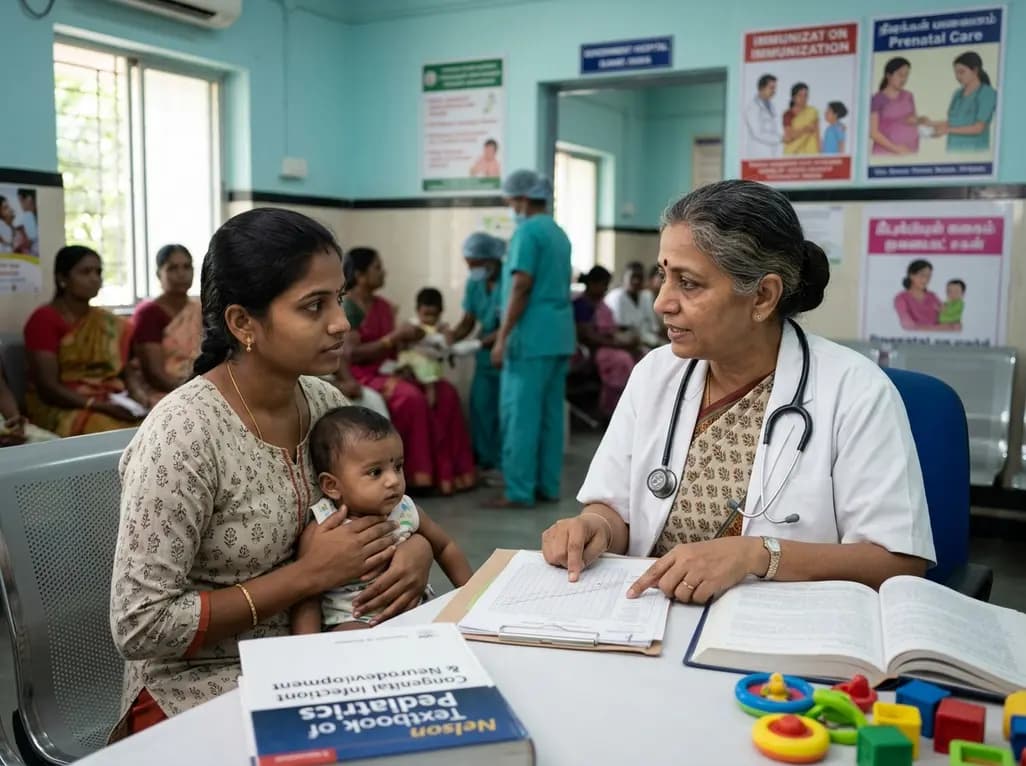
A nationwide study covering 3.7 million Swedish births reveals that prenatal exposure to TORCH pathogens significantly elevates long-term risks of intellectual disability and autism. Healthcare providers must recognize clinical indicators, promote prenatal prevention, and track early pediatric neurodevelopment.
Today

Under India's PLI initiative, domestic production of 57 critical medical devices has commenced, including MRI and CT scanners, cath labs, and heart valves. Global partnerships and local investments are expanding high-end technology, curbing import reliance, and strengthening clinical accessibility nationwide.
Today

A longitudinal study reveals that patients undergoing staged bilateral hip arthroscopy experience progressive contralateral labral deterioration during surgical intervals. However, structural degradation does not compromise 2-year postoperative clinical outcomes or patient-reported satisfaction scores.
Today
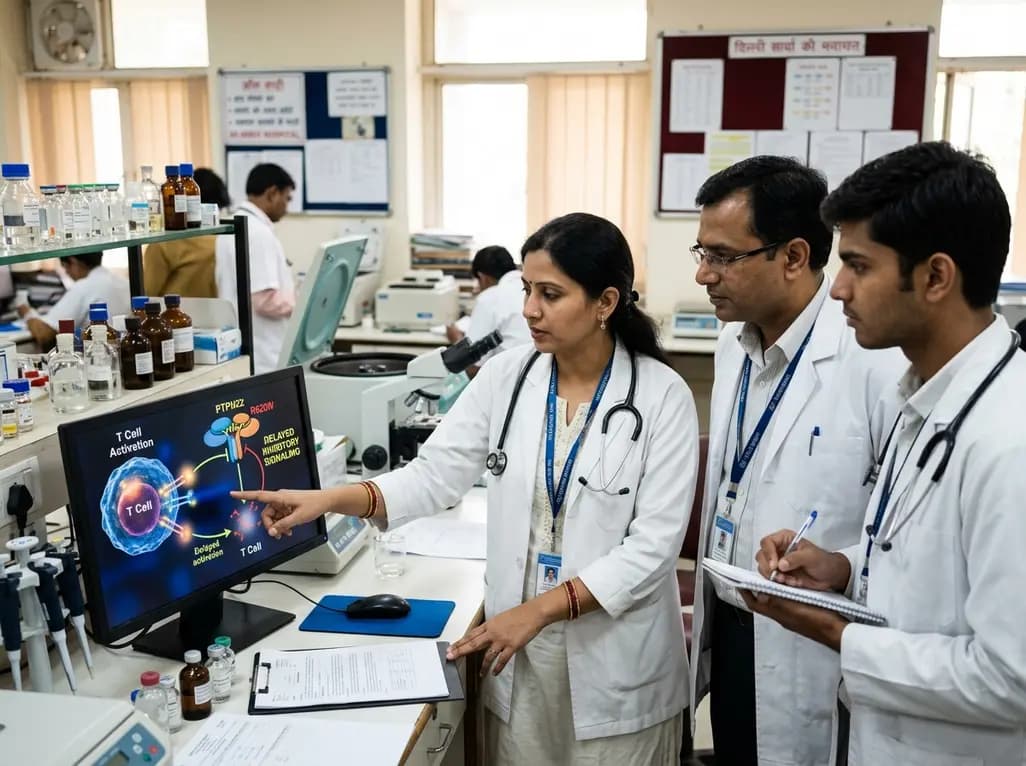
New immunological research reveals how PTPN22 forms a delayed inhibitory signaling complex to restrain T cell activation, explaining how the autoimmune-linked R620W variant disrupts feedback control and promotes persistent inflammation in conditions like rheumatoid arthritis and type 1 diabetes.
Today
