.webp&w=384&q=75)

Loading, please wait...
Loading, please wait...

Childhood aggressive behavior is often a normal developmental phase, yet its persistence into the preschool years can signal long-term social and health complications. A recent longitudinal study from Brazil investigated how social information processing (SIP) affects these behavioral trajectories. By analyzing a cohort of over 3,500 children, researchers identified specific cognitive patterns that predict future aggression. This research provides critical insights for clinicians managing early developmental challenges.
Social Information Processing involves how children interpret social cues and decide how to react. In this study, aggressive response generation emerged as the strongest predictor of later childhood aggressive behavior. While hostile attribution bias and competent assessment scores initially appeared relevant, their impact diminished after adjusting for environmental variables. Consequently, clinicians should focus on how children generate solutions to social conflicts during early screenings. This cognitive step remains a significant longitudinal marker for future conduct issues.
Multiple environmental factors play a significant role in shaping behavioral outcomes. These include community violence, maternal education levels, and family income. Furthermore, parental antisocial behavior and coercive parenting styles exacerbate the risk of persistent aggression. Language development also serves as a crucial child-level factor in determining behavioral stability. Because these factors are often intertwined, a holistic approach to child assessment is necessary.
Ultimately, the study highlights that while cognitive processing is vital, it does not exist in a vacuum. Most associations between SIP and aggression were confounded by psychosocial stressors. Therefore, early preventive interventions must target both the child’s cognitive processing and the broader family environment to effectively manage childhood aggressive behavior. Addressing socioeconomic and domestic stressors may be as vital as individual behavioral therapy.
Social information processing refers to the mental steps a child takes to interpret social interactions and formulate a response, which can be either prosocial or aggressive.
Factors like maternal depression, family income, and community violence create a stressful environment that can hinder a child’s social development and lead to persistent aggressive behavior.
In this Brazilian cohort, aggressive response generation—the ability to only think of aggressive solutions to social problems—was the most consistent predictor of future aggression.
Disclaimer: This content is for informational and educational purposes only. It is not intended as medical advice or a substitute for professional healthcare guidance. Refer to the latest local and national guidelines for clinical practice.
References
Perrone L et al. Social Information Processing and Aggressive Behavior in Early Childhood: A Brazilian Birth Cohort Study. J Interpers Violence. 2026 Apr 22. doi: 10.1177/08862605251412358. PMID: 42017342.
Crick NR, Dodge KA. A review and reformulation of social information-processing mechanisms in children's social adjustment. Psychol Bull. 1994;115(1):74-101.
Tremblay RE. Developmental origins of disruptive behaviour problems: the transition from early childhood to the elementary school years. J Abnorm Child Psychol. 2010;38(6):743-751.

Read summarized clinical updates, watch expert medical content, and earn CME certifications right from your smartphone.
Open your smartphone camera to scan and install.





A longitudinal study in Brazil explores how social information processing and environmental factors influence aggressive behavior in children aged 4 to 7....
6 months ago

An observational study from the NIH All of Us Research Program reveals that adding a multi-ancestry polygenic risk score to machine learning models provides only modest improvements in predicting adult weight gain, underscoring the enduring significance of routine clinical and lifestyle factors.
Today

A study in JAMIA Open shows lightweight open-source reasoning LLMs achieve up to 95% sensitivity and accelerate evidence synthesis screening by nearly twentyfold, presenting a cost-effective, scalable AI solution for biomedical research and systematic reviews.
Today
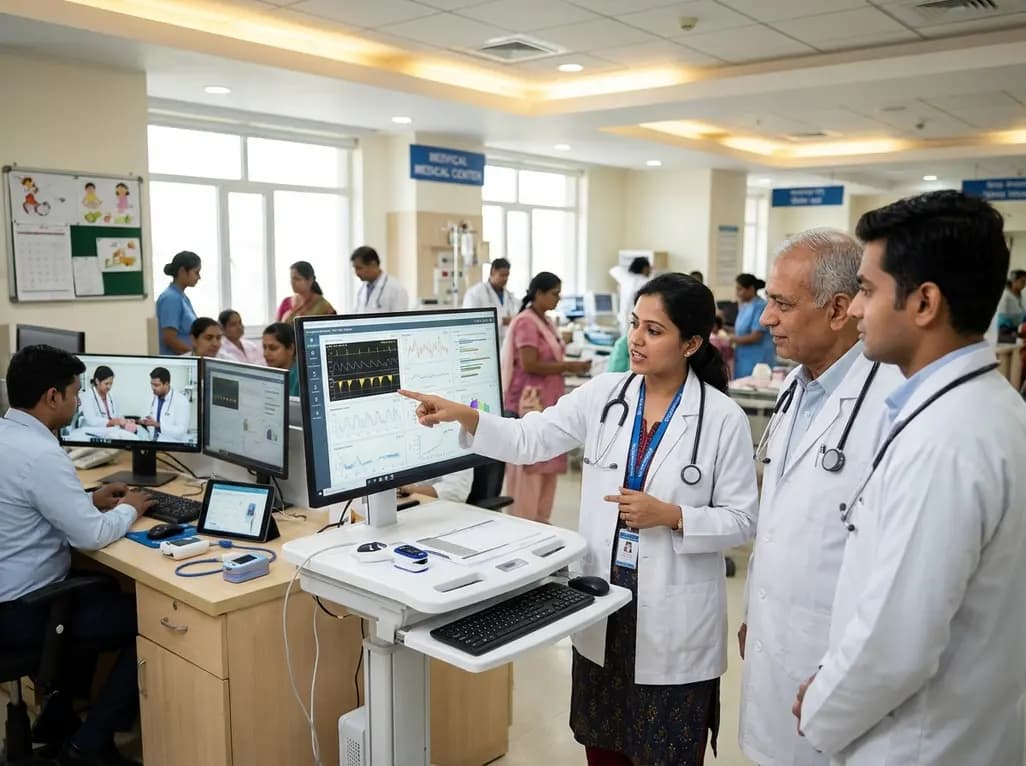
A landmark study details how an enterprise pediatric remote patient management model expanded from a single cardiology pilot to 16 diverse specialty programs by combining centralized digital operations with specialty clinical leadership.
Today

A comparative review of tension band wiring and intramedullary screw fixation in thumb metacarpophalangeal arthrodesis, evaluating union rates, hardware complications, and clinical outcomes.
Yesterday

A breakthrough ultrathin multimodal sensor decouples physical hemodynamic monitoring from disposable electrochemical calibration, achieving long-term wearable glucose prediction with 81.36% accuracy and a 9.12% MARD. This offers a robust, drift-free solution for outpatient metabolic surveillance.
Yesterday
