.webp&w=384&q=75)

Loading, please wait...
Loading, please wait...
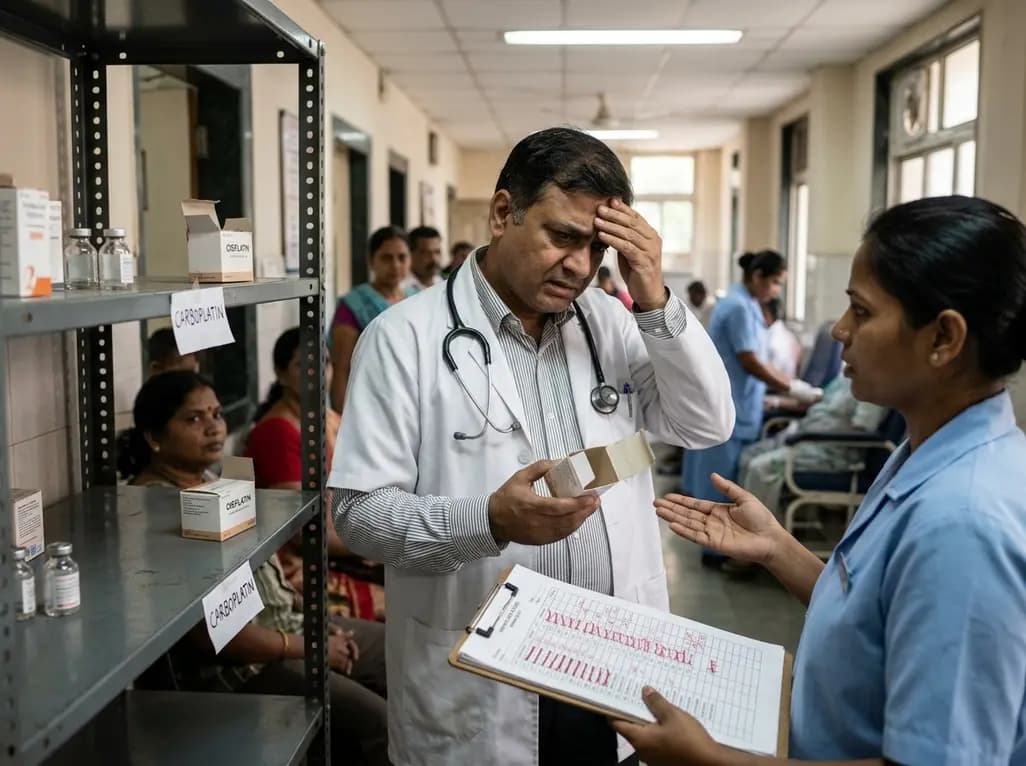
India is currently facing a critical chemotherapy drug shortage that has disrupted oncological care across multiple states. Specifically, supplies of essential platinum-based agents like Cisplatin and Carboplatin have dwindled rapidly. Consequently, hospitals are running out of critical stocks, and patients are struggling to find life-saving medications. Meanwhile, leading medical institutions, including AIIMS Delhi and private oncology networks, have raised urgent alarms. Therefore, clinical teams must immediately adapt to these unforeseen logistical challenges. Additionally, these agents form the backbone of curative regimens for diverse malignancies.
Industry experts attribute this manufacturing shortfall directly to escalating geopolitical tensions and rising global input costs. Moreover, because these drugs are under strict price controls, companies cannot adjust retail pricing. As a result, manufacturers are incurring losses and have reduced their overall production volumes. Furthermore, the skyrocketing price of raw platinum has squeezed profit margins to unsustainable levels. Some manufacturers have even diverted domestic production to export markets to maintain commercial viability. However, this has left Indian pharmacies and hospitals in a precarious clinical situation.
Oncologists emphasize that these chemotherapy agents are virtually irreplaceable in multiple solid tumor protocols. In particular, they are essential for treating lung, ovarian, cervical, breast, and gastrointestinal cancers. Therefore, delays in administering these medications can severely compromise survival rates and increase disease recurrence. Furthermore, finding true therapeutic substitutes for platinum-based compounds remains a major clinical challenge. Physicians must explore alternative second-line regimens which might yield suboptimal clinical outcomes. Thus, resolving this supply chain bottleneck remains an urgent priority for Indian healthcare providers.
Q1: Why is there a sudden shortage of Cisplatin and Carboplatin in India?
The shortage is primarily driven by rising raw material costs, particularly for platinum. Additionally, domestic price-control caps make production financially unviable for local manufacturers.
Q2: What types of cancers are most affected by this chemotherapy drug shortage?
Common solid tumors including lung, ovarian, and breast cancers are heavily affected. This is because these platinum-based drugs form the backbone of their treatment protocols.
Q3: Can doctors easily substitute these drugs with alternative therapies?
Unfortunately, there are no true direct substitutes for these agents in curative regimens. Therefore, supply disruptions can easily compromise clinical outcomes.
Disclaimer: This content is for informational and educational purposes only. It does not constitute medical advice or replace professional judgment. Refer to the latest local and national guidelines for clinical practice.
References

Read summarized clinical updates, watch expert medical content, and earn CME certifications right from your smartphone.
Open your smartphone camera to scan and install.





Oncologists across India raise alarms as price caps and rising raw material costs lead to an acute supply crisis of essential platinum-based chemotherapy dr...
4 months ago

Review how tailored exercise programs benefit frail older patients with heart failure. Explore pathophysiological mechanisms, individualized training prescriptions, and strategies to overcome adherence barriers in clinical practice.
Today

Leucine Rich Bio has introduced South Asia's first comprehensive vaginal microbiome test, BugSpeaks. By profiling microbial dysbiosis, pathogens, and antimicrobial resistance, this next-generation diagnostic platform provides clinicians with deeper insights into recurrent infections, fertility, and reproductive health.
Today

In high-risk pulmonary embolism complicated by severe anemia and active uterine bleeding, systemic thrombolysis is contraindicated. Large-bore aspiration thrombectomy provides rapid hemodynamic rescue without fibrinolysis, supported by inferior vena cava filter placement and multidisciplinary critical care.
Today

This comparative study evaluates posterior labral tears with and without glenohumeral instability, highlighting distinct demographic patterns, MRI underestimation in stable shoulders, and successful arthroscopic repair outcomes.
Today

A clinical study demonstrates that early intervention with tocilizumab, either as monotherapy or bridged with corticosteroids, achieves significant proptosis reduction and resolves active inflammation in treatment-naive thyroid eye disease.
Today
