.webp&w=384&q=75)

Loading, please wait...
Loading, please wait...
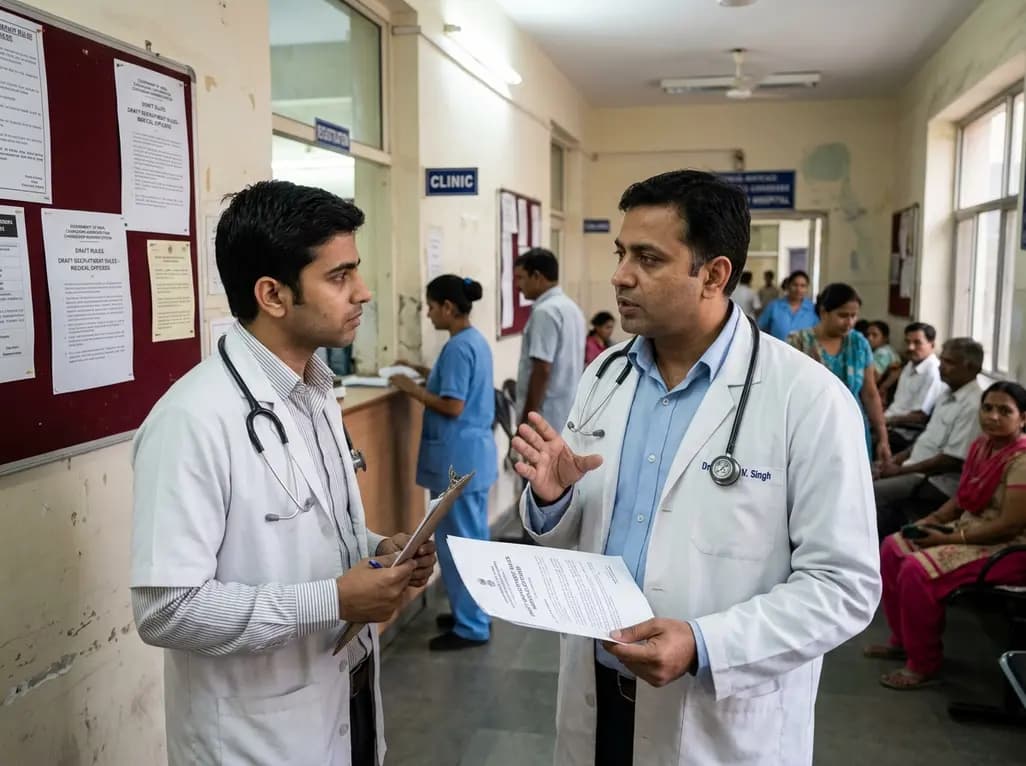
The Chandigarh administration recently unveiled a transformative regulatory proposal governing medical officers across civil healthcare facilities. Specifically, the proposed Chandigarh health service rules establish stringent operational requirements for doctors serving within public hospitals. These structural amendments redefine recruitment pathways, career progression timelines, and national defence obligations. Consequently, healthcare practitioners across northern India are closely reviewing these sweeping governance reforms.
The proposed governance document, titled The UT Chandigarh Health Service Rules, 2026, overhauls service conditions across public hospitals. Specifically, the framework governs medical staff attached to Government Multi-Specialty Hospital in Sector 16 and all allied civil dispensaries. Following the administrative announcement, authorities granted a thirty-day window for public stakeholders and medical associations to submit formal feedback. Therefore, physicians and health unions have actively evaluated the implications of every statutory clause.
Historically, the Union Territory maintained staffing structures reliant on regional administrative arrangements. However, this statutory overhaul introduces clear recruitment methodologies, formal discipline protocols, and standardized promotion tracks. Furthermore, the framework fixes the total sanctioned strength at 186 permanent posts across primary and secondary healthcare centres. Officials emphasize that modernising hospital administration requires codified guidelines that eliminate operational ambiguities. Thus, the draft rules establish accountability mechanisms while delineating explicit administrative hierarchies for municipal medical professionals.
The most unprecedented feature within the draft framework involves mandatory armed services liability. Under the new policy, the administration can mandate medical officers to serve in the Indian Defence Services for four years. Alternatively, authorities may deploy eligible doctors to strategic defense-related research and operational projects for identical durations. However, this deployment condition strictly applies to officers under 45 years of age during their initial ten years of service.
Consequently, civilian doctors entering the municipal service must prepare for dual military and public duties. Healthcare planners believe this stipulation bridges the operational gap between civilian healthcare networks and national defence preparedness. Furthermore, military postings expose government doctors to advanced disaster management, trauma protocols, and field logistics. Therefore, the administration views this clause as a vital patriotic contribution toward sovereign resilience. Nevertheless, medical associations have expressed apprehension regarding personal displacement, operational disruption, and family logistics during sudden tactical reassignments.
The draft policy systematically restructures the entry-level hiring pipeline for public medical officers. Specifically, the guidelines allocate 60 percent of ground-level Medical Officer vacancies (Pay Level-10) to deputation candidates. These positions draw personnel from central government cadres, state services, or other Union Territories across India. Subsequently, direct competitive examination through the Union Public Service Commission fills the remaining 40 percent of vacancies.
However, if direct recruitment yields inadequate candidates, authorities will fill those remaining seats through secondary deputation channels. Meanwhile, top-tier administrative posts, including director of administration and additional director, remain reserved exclusively for senior deputation officers. To qualify for these senior roles, candidates must present two decades of total service or six years in top pay brackets. Consequently, this hiring balance has triggered debates among local medical unions regarding career stagnation for internal medical recruits.
To balance rigid entry requirements, the administration incorporates the Dynamic Assured Career Progression scheme into promotion pathways. Under this mechanism, eligible medical officers achieve sequential promotions without waiting for specific post vacancies to emerge. Therefore, advancement occurs automatically once a medical officer satisfies specified tenure milestones and annual performance benchmarks. For instance, promotion from entry-level Medical Officer to Senior Medical Officer requires eight continuous years of regular service.
Additionally, elevating from Senior Medical Officer to Chief Medical Officer mandates five years of exemplary clinical performance. The framework stipulates a performance benchmark rating of Good for initial elevation and Very Good for subsequent leadership transitions. Furthermore, qualifying Chief Medical Officers can advance to hospital directorship after four years of distinguished service. Thus, the career ladder shields dedicated physicians from systemic administrative bottlenecks and erratic cadre stagnation.
Alongside assured promotion tracks, the updated draft enforces non-negotiable professional boundaries regarding external employment. Specifically, appointed physicians face a strict, comprehensive ban on private clinical consultations, independent nursing homes, and commercial diagnostic laboratories. Consequently, any violation of this mandate invites immediate disciplinary inquiry, pay suspension, or dismissal from administrative service. Authorities maintain that public doctors must dedicate their entire clinical bandwidth to municipal hospital patients.
In return for this clinical exclusivity, the administration provides official compensatory allowances alongside standard pay scales. Qualified practitioners receive structured Non-Practicing Allowances alongside specialized Post Graduate Allowances. Furthermore, municipal leaders argue that competitive compensation packages offset potential earnings from outside consulting activities. Ultimately, these measures seek to eradicate conflicts of interest, reduce patient exploitation, and reinforce institutional trust across public hospitals.
Q1: What is the primary focus of the new healthcare regulations in Chandigarh?
The draft framework establishes comprehensive service rules for medical officers serving in Chandigarh civil healthcare facilities. It restructures recruitment quotas, introduces mandatory defence deployment, provides time-bound promotions under the DACP scheme, and bans outside private practice. These measures aim to enhance patient care standards and align civic health infrastructure with national emergency preparedness priorities.
Q2: Who is liable for mandatory defence service under the new rules?
The mandatory military requirement applies to regularly appointed medical officers who are under forty-five years of age. Furthermore, doctors must fall within their first ten years of government service to remain eligible for defence deployment. Selected officers must serve at least four years within the Indian Defence Services or on designated national defence projects.
Q3: How do the draft rules govern private practice for government medical officers?
The regulations impose a complete prohibition on all forms of private clinical practice, diagnostic operations, and external consultations. Doctors cannot operate private clinics or partner with private diagnostic laboratories. In place of private practice revenue, the government grants standard Non-Practicing Allowances and specialized Post Graduate Allowances combined with base pay.
Disclaimer: This content is for informational and educational purposes only. It does not constitute medical advice or replace professional judgment. Refer to the latest local and national guidelines for clinical practice.
References

Read summarized clinical updates, watch expert medical content, and earn CME certifications right from your smartphone.
Open your smartphone camera to scan and install.





The UT administration has published draft recruitment regulations for government medical officers across civil hospitals and dispensaries. The framework introduces compulsory defence deployment, formalises time-bound career advancement through DACP, prioritises deputation hiring, and bans private clinical practice.
Today
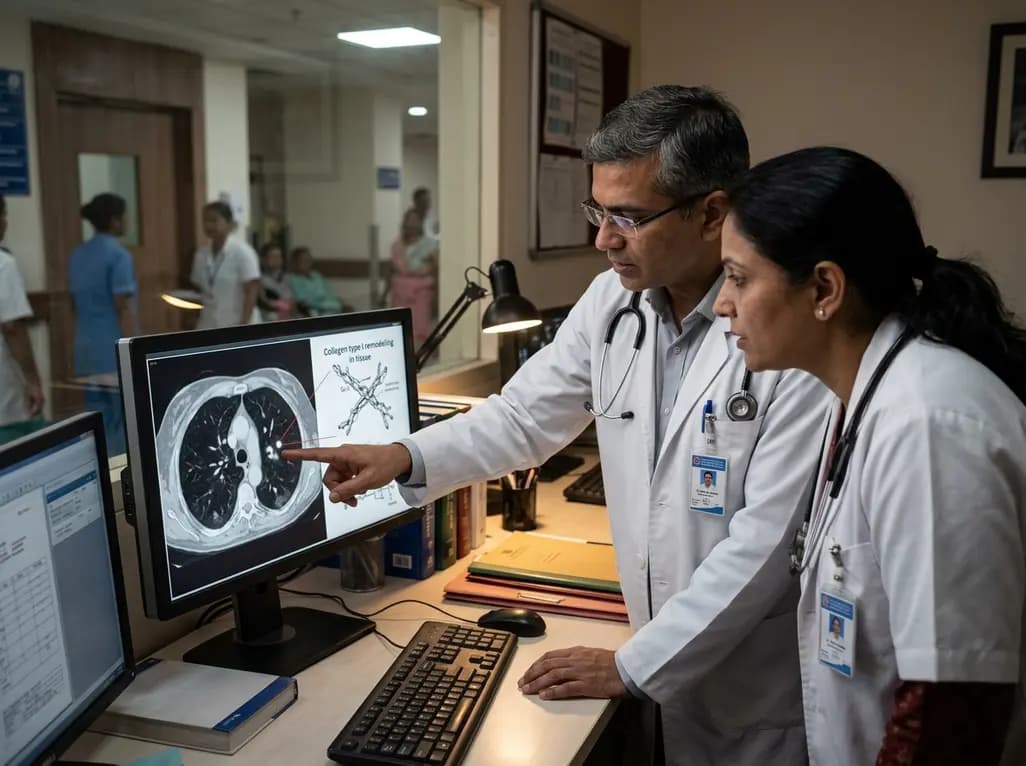
Preclinical findings demonstrate that hProCA32.Collagen, an innovative protein-based contrast agent, detects micro-metastases and aggressive lung adenocarcinomas down to 1 mm on MRI. By targeting collagen type I remodeling, this technology provides radiation-free diagnostic and prognostic evaluation for clinicians.
Today
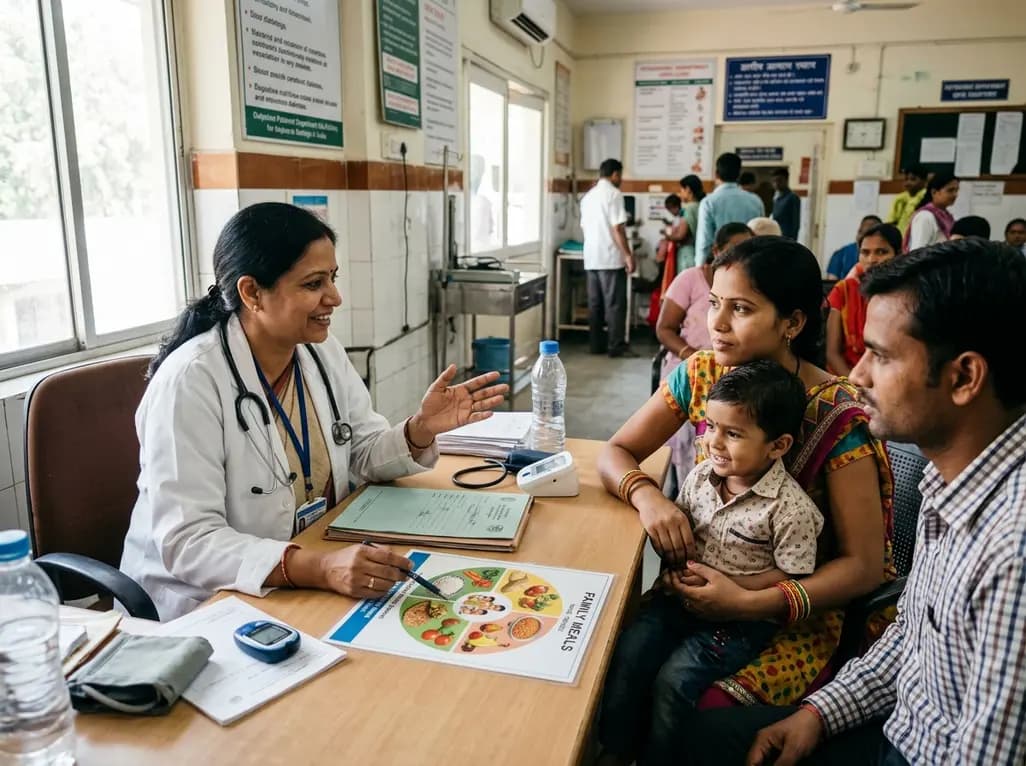
Gestational diabetes doubles the future risk of type 2 diabetes for mothers and offspring. Adopting a life-course approach centered on family meals and brief, supportive nutrition messaging empowers households to reduce metabolic risks and establish sustainable dietary habits across generations.
Today

A comprehensive meta-analysis evaluates the association between Body Mass Index and outcomes following abdominal aortic aneurysm repair. Discover how overweight and obesity correlate with lower mortality while underweight status confers heightened risk, challenging conventional preoperative risk stratification.
Today

The SOLARIO trial shows that a short course (≤7 days) of systemic antibiotic therapy is noninferior to long courses (≥4 weeks) in orthopedic infections treated with local antibiotic carriers, with significantly fewer adverse events.
Today

New research reveals that preovulatory follicles communicate via LH-induced paracrine signaling. Diffusible EGF ligands epiregulin and amphiregulin coordinate oocyte meiotic resumption across neighboring follicles, challenging traditional concepts of follicular autonomy.
Today
