

Loading, please wait...
Loading, please wait...
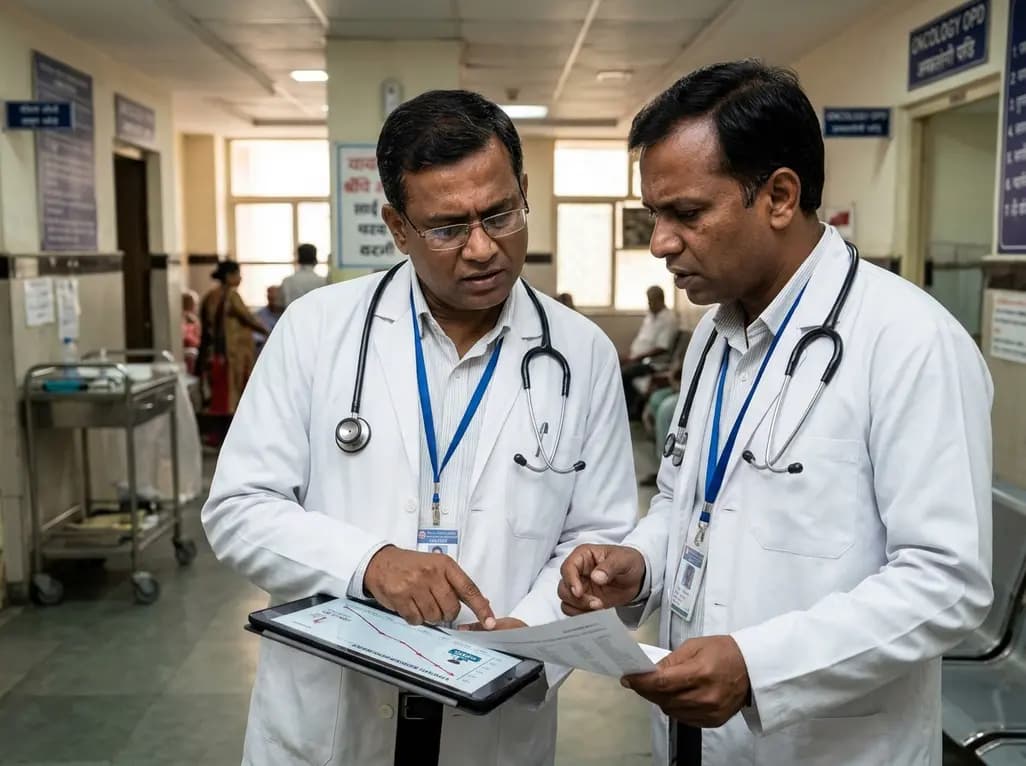
The landscape of institutional oncology care in India faces major systemic disruption. Recent policy revisions concerning CGHS cancer drug reimbursement forced large hospital networks to adjust their operational models. Consequently, major healthcare providers stopped dispensing select high-value chemotherapy drugs to government beneficiaries. This shift reduced oncology inpatient revenue across leading hospital systems. Furthermore, clinical leaders and administrative executives continue to debate the long-term impact on patient outcomes. This article examines hospital revenue dynamics, clinical protocols, and evolving healthcare policy.
Financial reports from major private healthcare networks highlight recent structural shifts in institutional care. Specifically, Max Healthcare reported that oncology accounted for 21 percent of its inpatient revenue in the second quarter. This figure represents a noticeable drop from 26 percent recorded during the same quarter last year. Hospital leadership attributed this contraction directly to the discontinuation of select high-value chemotherapy drugs for institutional patients.
However, the broader operational performance of the hospital network remained exceptionally positive. Excluding the oncology service line, gross revenue grew by 25 percent year on year across other clinical disciplines. In addition, average revenue per inpatient increased by 11 percent during the same reporting period. These healthy figures demonstrate that procedural demand and surgical volumes sustained network growth.
Nevertheless, the deliberate contraction in institutional oncology highlights a serious structural issue. Hospital administrators chose to reduce exposure to unviable institutional pharmaceutical transactions to safeguard institutional operating margins. Consequently, available bed capacity shifted toward alternative high-acuity specialties such as orthopedics and neurosciences. This commercial realignment underscores how pricing regulations rapidly alter hospital specialty resource allocation across private healthcare centers.
At the heart of this disruption lies a restrictive reimbursement formula for advanced medications. Specifically, government guidelines cap hospital payments at 70 percent of the Maximum Retail Price for expensive antineoplastic drugs. Private hospitals procure these patented therapeutic substances with slim commercial margins of only 10 to 15 percent. Therefore, absorbing an unpaid 30 percent gap on each infusion generates immediate institutional losses.
Furthermore, hospital administrations encounter substantial legal barriers when navigating official procurement guidelines. Most healthcare organizations purchase patented biologics under confidential contracts with global pharmaceutical manufacturers. These commercial agreements strictly forbid disclosing negotiated net prices to government agencies or third-party payers. Consequently, submitting raw purchase invoices could breach binding nondisclosure agreements, risking immediate supply cutoffs.
Additionally, administering modern antineoplastic therapies incurs extensive operational costs beyond basic drug acquisition. Hospitals maintain sterile compounding infrastructure, employ certified chemotherapy nurses, and monitor complex infusion reactions. Because the 70 percent reimbursement cap ignores these institutional costs, providing these medicines becomes financially unviable. Ultimately, these severe financial pressures force private hospital groups to halt direct drug supply.
The discontinuation of high-value chemotherapy drugs disproportionately harms patients who require novel targeted therapies. For instance, hospital associations identified several vital medications affected by the pricing restriction, including pembrolizumab, nivolumab, and trastuzumab deruxtecan. These innovative agents represent the clinical standard of care for many advanced and metastatic malignancies. Consequently, restricted access to these essential drugs threatens overall survival outcomes for cancer patients.
Furthermore, medical oncologists cannot easily substitute these targeted therapies with older cytotoxic formulations. When official policies render patented therapies inaccessible, clinicians face restricted therapeutic choices. Oncologists must either interrupt ongoing cycles or switch to less effective conventional chemotherapy agents. Therefore, administrative reimbursement caps compromise clinical care pathways established by international oncology guidelines.
In addition, institutional beneficiaries who lack personal wealth cannot easily finance these expensive therapies independently. Many retired government personnel rely entirely on statutory healthcare coverage to manage catastrophic illnesses. When empanelled hospitals withdraw these essential pharmaceuticals, vulnerable patients experience severe emotional and clinical distress. As a result, treating physicians report substantial ethical distress when institutional policies prevent the administration of optimal therapies.
To navigate reimbursement deficits, current administrative rules permit patients to purchase specialized cancer medications externally. However, experienced clinicians and hospital pharmacists strongly advise against this external sourcing model. Most advanced oncological biologics require strict temperature maintenance between two and eight degrees Celsius. If patients transport these fragile vials without verified refrigeration, catastrophic temperature excursions often occur.
Consequently, heat exposure denatures sensitive protein structures and neutralizes therapeutic efficacy. Even worse, denatured biological molecules can provoke severe immune responses and life-threatening anaphylactic shock upon infusion. Because hospital teams cannot confirm external storage integrity, doctors hesitate to administer patient-supplied biological treatments. Therefore, external sourcing introduces major medical liability and jeopardizes patient safety during routine administration.
Moreover, obtaining these specialized cancer drugs from public dispensaries creates substantial administrative delays. Scheme beneficiaries frequently encounter regional inventory shortages and complicated paperwork requirements. Meanwhile, malignant tumors continue to spread while patients wait weeks for bureaucratic approvals. Thus, fragmented distribution systems disrupt scheduled treatment intervals, allowing disease progression during critical therapeutic windows.
Resolving this growing crisis requires prompt policy adjustments and collaborative problem-solving among key stakeholders. Recognizing these urgent issues, the Association of Healthcare Providers India submitted formal representations to the health ministry. Specifically, industry leaders urged health authorities to reimburse hospitals at full retail value for patented oncology drugs. Alternatively, the government could establish direct centralized procurement agreements with drug manufacturers.
In addition, health policy experts recommend decoupling drug procurement costs from institutional service charges. Providing chemotherapy requires specialized facilities, toxic waste disposal systems, and intensive clinical monitoring. Therefore, revising the reimbursement framework to include separate administration fees would ease hospital financial burdens. This dual approach ensures institutional sustainability while maintaining rigorous safety standards for complex clinical infusions.
Furthermore, healthcare leaders emphasize that national healthcare schemes must maintain patient access to modern medical innovations. Establishing transparent and sustainable reimbursement models encourages accredited private hospitals to expand institutional cancer care. Ultimately, collaborative policy reform protects clinical continuity and preserves fiscal balance across public and private healthcare sectors. Sustainable pricing models ensure that cancer patients receive optimal care without unnecessary administrative delays.
Q1: Why did private hospitals stop dispensing select chemotherapy drugs to government beneficiaries?
Private hospital systems suspended dispensing select patented chemotherapy medications because current reimbursement rules created severe operating deficits. Specifically, government guidelines restrict payments to seventy percent of maximum retail prices for high-cost therapies. Because healthcare providers acquire these patented drugs at thin margins, absorbing the remaining thirty percent loss is financially impossible. Consequently, administrators stopped internal dispensing of these specific pharmaceuticals to safeguard the financial viability of their broader clinical services.
Q2: What clinical risks arise when cancer patients procure oncology drugs externally?
External medicine procurement introduces substantial risks to clinical safety, particularly regarding strict cold-chain preservation. Most modern biological therapies require uninterrupted storage between two and eight degrees Celsius to prevent chemical degradation. When patients handle transport without specialized refrigeration equipment, dangerous temperature fluctuations frequently occur. Consequently, denatured proteins lose therapeutic efficacy and can trigger severe allergic reactions upon infusion. Therefore, oncologists hesitate to administer unverified medicines that may compromise treatment safety.
Q3: How can regulatory agencies resolve the current reimbursement impasse effectively?
Health authorities can resolve this deadlock by restructuring reimbursement policies for patented oncology drugs. Specifically, healthcare associations recommend reimbursing hospitals at full maximum retail prices or establishing central government procurement agreements directly with pharmaceutical manufacturers. Furthermore, authorities should separate drug costs from institutional administration fees to cover hazardous handling and clinical monitoring. These policy adjustments would ensure uninterrupted access to life-saving therapies while protecting the financial health of empanelled hospital systems.
Disclaimer: This content is for informational and educational purposes only. It does not constitute medical advice or replace professional judgment. Refer to the latest local and national guidelines for clinical practice.
References

Read summarized clinical updates, watch expert medical content, and earn CME certifications right from your smartphone.
Open your smartphone camera to scan and install.





Recent pricing revisions under the Central Government Health Scheme capping chemotherapy reimbursements at seventy percent of retail prices have disrupted oncology services. Major hospital networks report drops in institutional care revenue, raising critical questions about therapy continuity and financial viability.
Today

New qualitative research explores stakeholder views across human and animal health to contextualize appropriate antimicrobial use. Defining clear, practical stewardship standards across sectors is critical to combat global antimicrobial resistance and improve prescribing practices.
Today

A major ABCD study analysis reveals that prenatal co-exposure to cannabis and tobacco significantly impairs fluid cognitive abilities in middle childhood, whereas crystallized intelligence remains unaffected. The findings highlight urgent needs for targeted antenatal screening and intervention.
Today
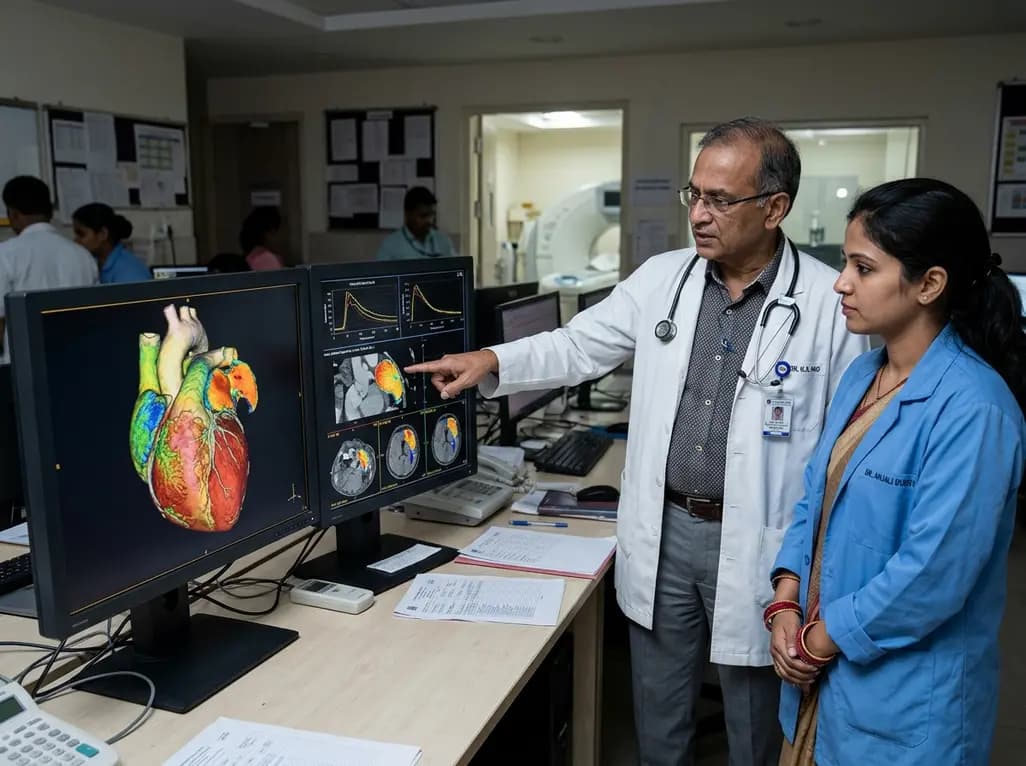
Dynamic contrast 4DCT enables precise mapping of left atrial appendage blood transport in atrial fibrillation. By quantifying regional stasis, wash-in kinetics, and residence time, this imaging advance offers clinician-tailored thromboembolic risk stratification beyond standard clinical scores.
Today

A systematic review and meta-analysis highlights the substantial impact of plyometric jump training on jump performance, reactive strength, and landing kinematics in female team-sport athletes, providing evidence-based programming guidelines for sports medicine and orthopedics.
Today

India is poised to transform chronic disease management through wearable health technology. Discover how continuous remote monitoring and predictive algorithms empower clinicians to detect early cardiovascular signals, personalize metabolic interventions, and deliver equitable preventive care across populations.
Today
