

Loading, please wait...
Loading, please wait...

Objective voice evaluation plays an indispensable role in contemporary laryngology and speech-language therapy. Historically, clinicians relied on traditional perturbation metrics like jitter and shimmer to identify laryngeal pathology. However, these time-based acoustic parameters frequently fail when evaluating severely dysphonic voices. In modern voice laboratories, cepstral peak prominence has emerged as the most reliable objective acoustic measure of vocal quality. A comprehensive study evaluated acoustic profiles across 630 Hebrew speakers to establish robust clinical reference values. Furthermore, this research examined how acoustic metrics interact with reading tasks, sustained vowels, and auditory-perceptual ratings. Consequently, these findings offer crucial insights for standardizing clinical acoustic protocols across diverse healthcare environments.
For decades, clinical voice evaluation depended heavily on acoustic perturbation measures and harmonic-to-noise ratios. Although these metrics provided valuable initial data, they required precise cycle-by-cycle fundamental frequency tracking. When severe dysphonia disrupts vocal fold vibration, automated tracking algorithms fail completely. Therefore, pitch extraction errors produce invalid acoustic scores precisely when clinical precision is most urgent. In contrast, cepstral analysis eliminates the need for fundamental frequency tracking. By applying a Fourier transform to the logarithmic power spectrum, the algorithm creates a cepstrum. Within this domain, dominant harmonic periodicity appears as a prominent cepstral peak projecting above the regression noise floor. Consequently, cepstral peak prominence quantifies the relative harmonic strength of vocal fold vibration. Higher decibel values reflect stable glottic closure and periodic phonation. Conversely, reduced decibel values indicate vocal turbulence, breathiness, or significant tissue stiffness. Because cepstral processing functions independently of pitch boundaries, clinicians can assess connected speech as well as sustained vowels. In addition, international voice consensus panels now recommend cepstral analysis as the primary acoustic metric for clinical practice. Furthermore, these normative advances strengthen clinical decision-making during preoperative planning.
The investigation evaluated 630 adult Hebrew speakers to establish clear acoustic benchmarks between normal and dysphonic voices. Specifically, the cohort included 311 dysphonic patients, comprising 128 men and 183 women between 18 and 88 years of age. Additionally, the researchers recruited 319 vocally healthy controls, comprising 138 men and 181 women between 18 and 87 years. Every participant performed two standardized phonatory tasks: a sustained vowel /a/ and a continuous reading passage. The research team recorded vocal signals under controlled acoustic conditions and extracted acoustic metrics using open-source Praat software. Furthermore, an experienced speech-language pathologist graded each recording using the five-item GRBAS auditory-perceptual scale. This rigorous design enabled direct comparison between objective acoustic data and perceptual impressions. Dysphonic participants demonstrated significantly lower cepstral peak values compared to vocally healthy individuals across both speech tasks. Moreover, the extensive sample size allowed investigators to analyze biological sex and chronological age influences thoroughly. As a result, the study delivers robust reference data for Hebrew speakers while providing methodological blueprints for phoniatric clinics globally. Consequently, these normative benchmarks empower clinicians to identify subtle acoustic deviations earlier.
A primary technical goal of this investigation was examining the role of Voice Activity Detection during acoustic extraction. Connected speech naturally contains voiceless consonants, silent pauses, and respiratory intervals. Consequently, some voice specialists utilize automated Voice Activity Detection algorithms to isolate voiced phonation before running spectral analysis. Interestingly, the researchers discovered extremely strong correlations between cepstral values extracted with Voice Activity Detection and those extracted without it. Correlation coefficients ranged between 0.97 and 0.99 across all participants. Therefore, automated silence removal does not meaningfully alter diagnostic performance in clinical voice assessment. Furthermore, the authors observed strong correlations between sustained vowel productions and connected reading passages, with coefficients between 0.76 and 0.84. Although running speech introduces phonetic variability, both phonatory tasks separated dysphonic voices from healthy controls with remarkable precision. However, sustained vowels produced higher raw decibel values than continuous discourse because sustained vowels maintain uninterrupted vocal fold vibration. Clinicians must therefore avoid applying identical diagnostic thresholds across different vocal tasks. In addition, maintaining uniform task protocols remains vital for consistent longitudinal patient tracking. Moreover, these methodological insights simplify clinical recording protocols without sacrificing diagnostic accuracy.
Auditory-perceptual evaluation represents the traditional gold standard against which instrumental voice measurements are validated. In this study, investigators correlated cepstral metrics with all five components of the GRBAS scale: Grade, Roughness, Breathiness, Asthenia, and Strain. The analysis demonstrated significant negative correlations between acoustic peak values and perceptual dysphonia severity. Specifically, lower decibel peaks corresponded reliably to worse perceptual ratings. Among the five parameters, overall Grade and Breathiness exhibited the strongest statistical correlations with acoustic metrics. This correlation reflects sound biomechanical principles, because glottic gap leakage produces aerodynamic turbulence that directly degrades spectral harmonics. Conversely, vocal Strain and Asthenia demonstrated weaker associations with cepstral metrics. Strain typically reflects supraglottic hyperfunction and elevated muscular effort, which may alter laryngeal mechanics without destroying fundamental periodic energy. Therefore, objective acoustic metrics cannot completely replace human perceptual evaluation. Instead, objective acoustic analysis and perceptual rating scales serve complementary clinical roles. Clinicians should consequently integrate both modalities to obtain a comprehensive assessment of laryngeal function. Thus, multimodal evaluations ensure precise monitoring during targeted voice therapy interventions.
These findings offer exceptional practical value for otolaryngologists and speech-language pathologists practicing in India. Voice disorders represent a major clinical burden across India, heavily impacting teachers, religious speakers, call centre workers, and street hawkers. Indian clinics routinely evaluate diverse voice pathologies, including vocal nodules, cysts, sulcus vocalis, and vocal fold paralysis. However, many resource-constrained centers still lack access to expensive proprietary acoustic hardware. Because this investigation utilized Praat, an accessible open-source program, Indian clinicians can implement state-of-the-art acoustic assessments at minimal cost. Furthermore, India features extraordinary linguistic diversity, spanning hundreds of regional languages across distinct linguistic families. Just as this study established population-specific normative data for Hebrew speakers, Indian researchers must establish normative baselines for Hindi, Bengali, Tamil, and Telugu. Additionally, objective cepstral measures support remote tele-laryngology initiatives, facilitating accurate remote follow-ups across rural territories. Consequently, adopting standardized cepstral voice analysis in Indian tertiary institutions will enhance diagnostic accuracy, facilitate surgical outcome tracking, and elevate voice rehabilitation standards nationwide. Ultimately, open-source acoustic protocols bridge critical diagnostic gaps across diverse clinical practices.
Traditional perturbation measures, including jitter and shimmer, require precise cycle-to-cycle pitch tracking, which inevitably fails in severely dysphonic voices. In contrast, cepstral peak prominence evaluates the overall harmonic organization of the acoustic signal using Fourier transform principles without tracking individual pitch periods. Consequently, this measure reliably assesses severe dysphonia and connected speech, providing clinicians with objective, reproducible diagnostic data across all degrees of vocal pathology.
Voice Activity Detection identifies and isolates voiced speech segments while discarding voiceless consonants and natural conversational pauses during connected speech tasks. Clinicians evaluate this process to determine whether silent intervals distort acoustic quality measurements. However, recent evidence confirms that cepstral peak prominence calculations performed with or without Voice Activity Detection correlate almost perfectly, demonstrating that silence removal is not mandatory for reliable clinical voice assessment.
Auditory-perceptual scales like GRBAS evaluate subjective vocal qualities such as overall grade, roughness, and breathiness on structured numerical scales. Acoustic measures correlate strongly with these clinical impressions, particularly for overall dysphonia severity and breathiness, because glottic air leakage directly disrupts harmonic periodicity. However, because acoustic metrics reflect physical waveforms rather than subjective human perception, combining instrumental analysis with auditory-perceptual evaluation ensures optimal diagnostic accuracy.
Disclaimer: This content is for informational and educational purposes only... Refer to the latest local and national guidelines for clinical practice.
References
Noam G et al. Cepstral Peak Prominence (CPP) Values in Dysphonic and Nondysphonic Hebrew Speakers. J Voice. 2026 Nov 10. doi: undefined. PMID: 43009415.
Patel RR, Awan SN, Barkmeier-Kraemer J, et al. Recommended protocols for instrumental assessment of voice: American Speech-Language-Hearing Association expert panel to develop a protocol for instrumental assessment of vocal function. Am J Speech Lang Pathol. 2018;27(3):887-905.
Murton O, Hillman R, Mehta D. Cepstral peak prominence values for clinical voice evaluation. Am J Speech Lang Pathol. 2020;29(3):1596-1607.
Maryn Y, De Bodt M, Barsties B, Roy N. The Acoustic Voice Quality Index (AVQI) in the measurement of voice quality: A review. J Voice. 2014;28(1):84-98.

Read summarized clinical updates, watch expert medical content, and earn CME certifications right from your smartphone.
Open your smartphone camera to scan and install.





A study of 630 Hebrew speakers demonstrates that cepstral peak prominence reliably distinguishes dysphonic from nondysphonic voices across vowel and reading tasks, correlating strongly with GRBAS perceptual scales and offering open-source acoustic diagnostic value for Indian laryngology clinics.
Today

The $900 Temple wearable launched by Deepinder Goyal promises real-time tracking of cerebral blood flow and metabolic entropy. However, prominent clinicians warn that optical scalp sensors merely reflect superficial arterial circulation rather than intracranial hemodynamics, raising major regulatory concerns.
Today
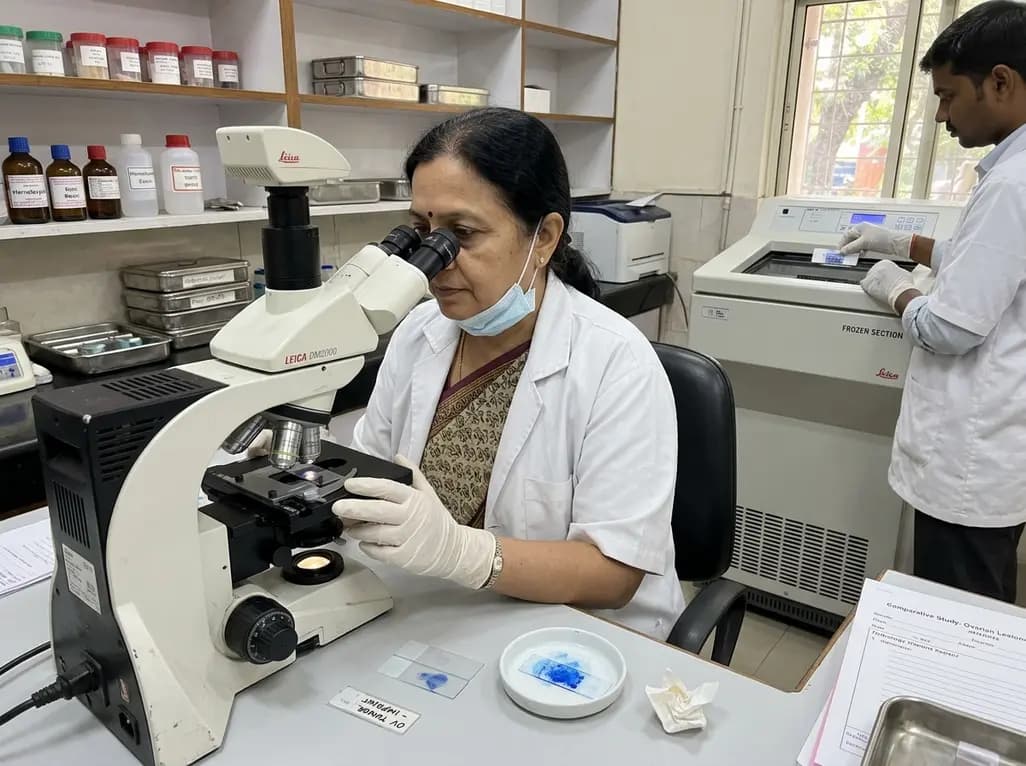
A new comparative study demonstrates that intraoperative imprint cytology achieves 96.6% diagnostic accuracy in ovarian tumours, outperforming frozen section in sensitivity for borderline lesions and offering an accessible, rapid alternative for resource-constrained surgical centres.
Today

A study reveals that extracellular vesicle-derived miR-144-5p is a highly predictive diagnostic biomarker for carotid artery plaques (AUC 0.907). Correlating with IL-1β and TNF-α, it opens new avenues for liquid biopsy-based stroke risk assessment and vascular monitoring.
Today
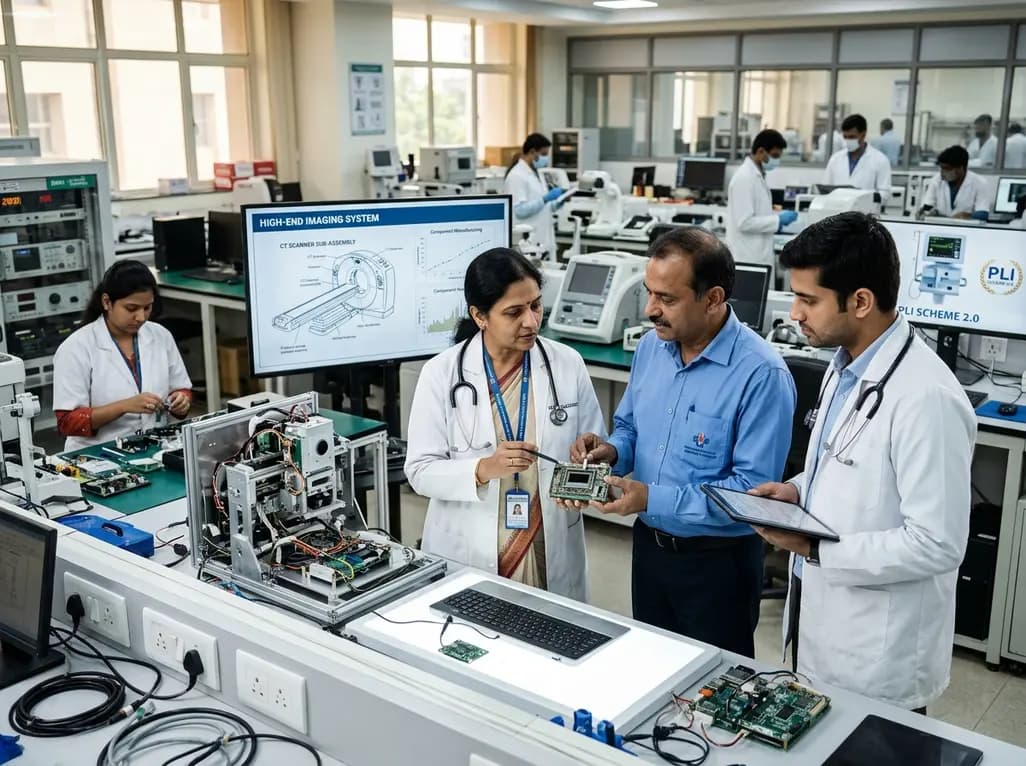
The Department of Pharmaceuticals has extended the medical devices PLI scheme to 2035-36 with a Rs 2,700 crore outlay. Featuring relaxed investment barriers and eliminated sales thresholds, the revised framework targets deep manufacturing, high-end diagnostics, critical MedTech components, and supply resilience.
Today

A systematic review evaluates psychological interventions for smoking cessation in diabetes, showing short-term success but highlighting challenges in long-term abstinence.
Yesterday
