

Loading, please wait...
Loading, please wait...
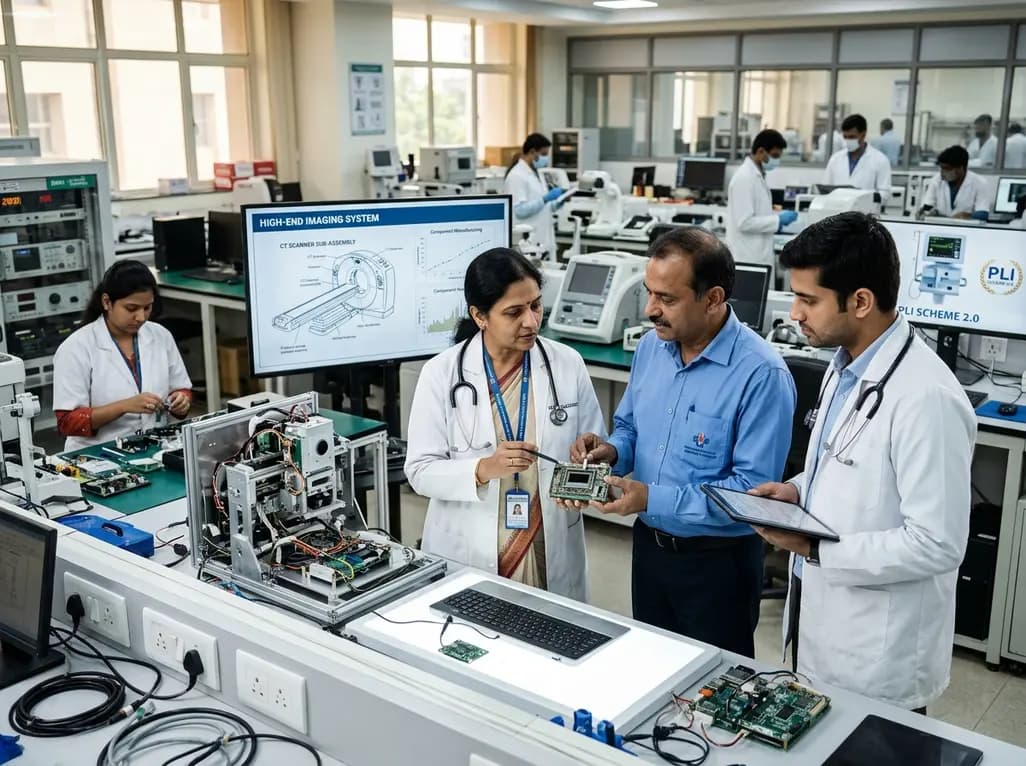
The Union Government has announced a substantial extension of the medical device PLI scheme through financial year 2035–36. Consequently, this policy intervention allocates an available financial outlay of approximately Rs 2,700 crore to domestic manufacturers. Moreover, the Department of Pharmaceuticals has dismantled previous entry barriers to accelerate indigenous medical technology. This decisive move directly impacts the availability, affordability, and quality of vital diagnostic and therapeutic equipment across Indian healthcare institutions.
The Production Linked Incentive Scheme for Promoting Domestic Manufacturing of Medical Devices was initially introduced in 2020–2021. Since its inception, the initiative has stimulated domestic production exceeding ₹16,000 crore. Furthermore, the first phase catalyzed the local manufacturing of over 60 high-end medical technologies and complex assemblies. These devices include 1.5T magnetic resonance imaging units, linear accelerators, computed tomography scanners, mammography equipment, and catheterization laboratories. In addition, domestic plants manufactured orthopaedic implants, cardiac stents, and dialyzers at scale.
However, the Department of Pharmaceuticals recognized that nearly 79 percent of the initial financial outlay remained undisbursed. Many prospective manufacturers struggled with rigid qualifying benchmarks under earlier guidelines. Therefore, authorities restructured the program into PLI-MD 2.0 to ensure broader industry participation. The revised framework extends the operational timeline by eight years, granting enterprises three complete years to set up production units. Additionally, the online application portal will become operational within ten days of the notification. Consequently, Indian medtech firms gain predictable horizons to build complex engineering infrastructure without bureaucratic impediments. Ultimately, the long-term tenure aligns national industrial capabilities with comprehensive public healthcare requirements.
To enhance the ease of doing business, the central government eliminated several rigid legacy conditions. First, policymakers completely discontinued the minimum sales threshold requirement for claiming financial incentives. Under previous rules, companies faced severe penalties if market uptake lagged behind theoretical projections. Thus, removing this rigid criteria allows innovative manufacturers to claim incentives based on verifiable output. Moreover, the ministry substantially trimmed the baseline investment threshold from earlier prohibitive marks. This modification allows agile small and medium enterprises to access substantial central funding.
Additionally, manufacturers can now submit multiple independent applications across diverse target segments. The government also pledged to maintain an open application window over an extended duration. For example, medical equipment builders can progressively submit new proposals as their technical facilities mature. Consequently, capital allocation becomes far more flexible and responsive to emerging clinical needs. Industry leaders have widely praised these procedural simplifications as genuine structural reforms. By removing arbitrary financial barriers, the revised policy shifts primary attention toward manufacturing excellence and supply continuity. As a result, healthcare technology startups can deploy capital directly into precision engineering and automated quality testing.
The restructured framework organizes financial assistance into four clear, distinct target segments. Target Segment 1 covers basic medical consumables, disposables, and surgical implants. These essential hospital commodities receive an average financial incentive of approximately five percent. Furthermore, Target Segment 2 focuses exclusively on critical components and assemblies. This crucial segment provides an attractive incentive averaging nearly nine percent. Similarly, Target Segment 3 targets high-end medical devices currently lingering in nascent domestic manufacturing stages. Manufacturers operating in this sophisticated tier also receive an average incentive rate of nine percent.
Finally, Target Segment 4 addresses high-end medical systems that facilities currently only assemble in India. Companies in this category will receive an average incentive rate of six percent. Notably, these incentive rates follow a tapered distribution across the scheme lifecycle. In doing so, the policy deliberately encourages manufacturers to prioritize critical MedTech sub-components. Components represent the fundamental backbone of precision imaging and surgical hardware. Therefore, building local component capacity shields healthcare providers from volatile foreign currency fluctuations and shipping delays. Through tiered financial rewards, the administration fosters sustainable vertical integration across the entire medical equipment supply chain.
India currently imports more than seventy percent of its sophisticated medical hardware. Consequently, tertiary hospitals face substantial capital expenditures when procuring advanced diagnostic systems. The revised policy specifically addresses these critical technological voids across clinical environments. In particular, the scheme incentivizes the domestic production of 3T MRI systems, PET-CT scanners, and advanced ultrasound consoles. Additionally, the guidelines foster indigenous fabrication of high-throughput in vitro diagnostic analyzers. Clinicians routinely rely on these advanced diagnostic instruments for early tumor identification, cardiological workups, and complex neurological evaluations.
Moreover, domestic production significantly shortens equipment maintenance turnaround times. In many regional Indian hospitals, broken imported scanners often remain idle for weeks waiting for overseas spare parts. By producing critical components locally, regional service engineers can procure replacement sensors, tubes, and boards immediately. Furthermore, reduced reliance on imported components directly lowers operational maintenance contracts for clinical departments. Therefore, radiology and cardiology centers can maintain uninterrupted clinical services while preserving valuable diagnostic precision. Consequently, clinicians gain reliable access to modern technology without incurring exorbitant service expenses. Ultimately, expanded domestic capabilities empower tertiary centers and district hospitals to provide cutting-edge healthcare to underserved patient demographics.
The extension of this incentive program carries profound implications for daily medical practice across India. As domestic manufacturing scales up, the production costs of critical implants and capital machinery will drop. Consequently, hospitals can deliver advanced surgical procedures and radiological screenings at substantially lower charges. For instance, reduced manufacturing expenses for cardiac stents, orthopaedic joints, and dialyzers immediately alleviate catastrophic out-of-pocket patient expenditures. Furthermore, public health insurance schemes such as Ayushman Bharat can expand diagnostic coverage at sustainable reimbursement tariffs.
In addition, indigenous manufacturing enhances device customization for unique Indian patient demographics. Historically, imported anatomical implants and surgical consumables were engineered based entirely on Western anthropometric databases. Through local innovation, domestic medtech engineers can collaborate directly with Indian surgeons to optimize device ergonomics and anatomical sizes. Therefore, healthcare providers can achieve better procedural accuracy, reduced tissue trauma, and fewer perioperative complications. Meanwhile, local supply chain security protects critical hospital workflows against sudden geopolitical disruptions or global logistics freezes. In summary, the expanded scheme provides clinicians with affordable, reliable, and ergonomically tailored tools to optimize patient outcomes nationwide.
Q1: Why did the government extend the medical device PLI scheme until 2036?
The government extended the scheme by eight years because approximately 79 percent of the original financial outlay remained unutilized. Earlier eligibility criteria, such as mandatory sales thresholds and steep minimum investment limits, prevented many manufacturers from qualifying. Furthermore, medical technology requires extensive gestation periods for research, development, and regulatory approvals. By extending the operational deadline to 2036 and easing entry rules, the government allows companies sufficient time to establish sustainable, high-technology domestic manufacturing plants.
Q2: Which medical devices are newly prioritized under the revised guidelines?
The revised policy specifically prioritizes high-end diagnostic and therapeutic devices that India currently imports. These advanced technologies include 3T magnetic resonance imaging machines, PET-CT systems, ultrasound probes and consoles, and high-throughput automated in vitro diagnostic analyzers. Additionally, the guidelines place heavy emphasis on critical sub-components and assemblies. Supporting these complex components enables deep value-chain integration, reduces import vulnerabilities, and empowers local manufacturers to construct sophisticated medical devices from scratch within India.
Q3: How does this extended scheme directly benefit practicing doctors and their patients?
Practicing clinicians will benefit from improved access to high-quality, domestically manufactured diagnostic imaging systems, orthopaedic implants, and surgical consumables. Local manufacturing lowers capital procurement and maintenance costs, allowing hospitals to provide advanced medical procedures at affordable rates. Furthermore, ready domestic availability of spare parts minimizes equipment downtime in critical care environments. Patients experience reduced out-of-pocket healthcare expenses and receive timely interventions through reliably equipped local and regional medical centers.
Disclaimer: This content is for informational and educational purposes only. It does not constitute medical advice or replace professional judgment. Refer to the latest local and national guidelines for clinical practice.
References

Read summarized clinical updates, watch expert medical content, and earn CME certifications right from your smartphone.
Open your smartphone camera to scan and install.





The Department of Pharmaceuticals has extended the medical devices PLI scheme to 2035-36 with a Rs 2,700 crore outlay. Featuring relaxed investment barriers and eliminated sales thresholds, the revised framework targets deep manufacturing, high-end diagnostics, critical MedTech components, and supply resilience.
Today

A large retrospective cohort study demonstrates that explainable machine learning models, notably XGBoost, accurately predict hospital admission at emergency triage. By analyzing routine triage parameters, hospitals can streamline bed allocation, decrease boarding times, and alleviate acute care overcrowding.
Today
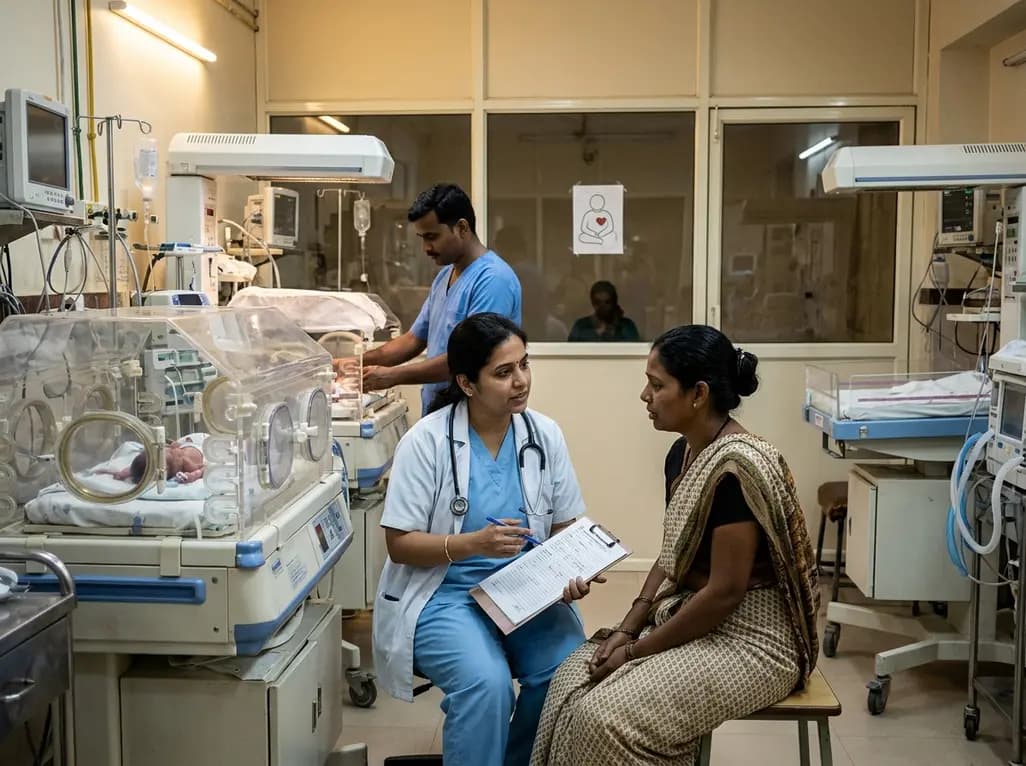
A new quality-improvement initiative reveals that universal maternal mental health screening in the NICU increased screening rates from 29.5% to 95.0%, with nearly 60% of screened mothers requiring psychosocial referrals, highlighting the urgent need for embedded mental health resources.
Today
A metabolomic study reveals that aging delays glutathione synthesis and gamma-glutamylcysteine accumulation following muscle injury. Although precursor supplementation targets this enzymatic bottleneck, in vitro tests show no immediate effect on myogenesis, highlighting the complexity of muscle repair in older adults.
Today

A systematic review evaluates psychological interventions for smoking cessation in diabetes, showing short-term success but highlighting challenges in long-term abstinence.
Today
