

Loading, please wait...
Loading, please wait...
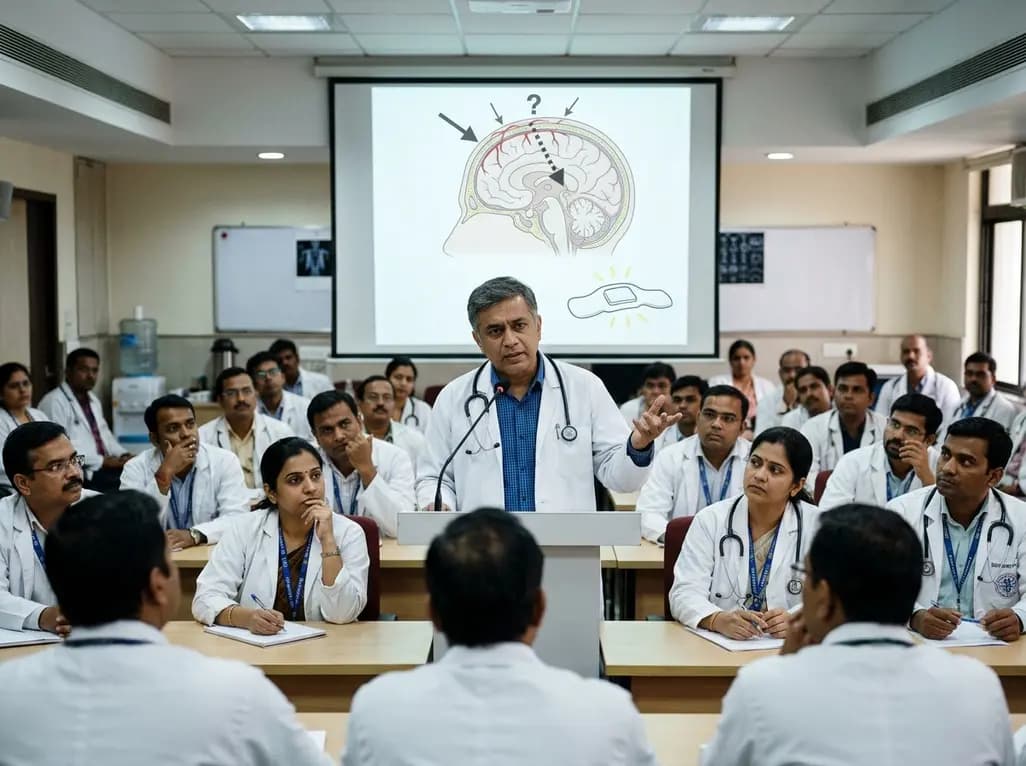
The consumer digital health landscape recently witnessed considerable turbulence following the debut of the Temple wearable. Engineered by tech entrepreneur Deepinder Goyal, this miniature forehead sensor claims to capture continuous physiological data. However, top Indian physicians have voiced significant skepticism regarding its marketed biological capabilities. Specifically, clinicians dispute whether a forehead gadget can accurately measure real-time cerebral hemodynamics.
The developer markets the adhesive forehead pod as a revolutionary personal wellness companion. Weighing under two grams, the device attaches near the temporal bone between the eyebrow and ear. Furthermore, corporate marketing heavily promotes two proprietary metrics termed BrainFlow and Entropy. According to company literature, BrainFlow indicates how efficiently blood nourishes brain tissue during daily activities. In addition, the Entropy metric purports to quantify how hard the human body works to dissipate heat. Promotional materials also assert that the device analyzes digestive, immune, emotional, and cognitive performance. Consequently, proponents argue that continuous monitoring unlocks personal stress resilience and optimizes daily physical performance. Prominent Indian sports stars, including cricketer Shubman Gill and badminton champion P.V. Sindhu, have publicly showcased the gadget. Furthermore, healthcare providers must evaluate whether these automated algorithmic scores deliver genuine actionable benefits for user recovery. Nevertheless, clinical specialists highlight that these expansive health metrics lack published validation in peer-reviewed scientific journals. Because consumers invest significant money into these gadgets, medical professionals insist that companies prove their technological claims through rigorous experimental protocols.
The scientific controversy centers on whether skin photoplethysmography can accurately evaluate deep intracranial hemodynamics. Medical experts argue that regional vascular anatomy fundamentally contradicts the product's primary diagnostic claim. For instance, Dr. Jason Philip noted that skin sensors on the temple interrogate the superficial temporal artery. Importantly, this vessel represents a terminal branch of the external carotid artery supplying the face and scalp. In contrast, cerebral neural tissue receives circulation via the internal carotid and vertebral arterial systems. The dense human cranium and muscular layers separate surface dermal flow from intracranial cerebrovascular circulation. Consequently, changes in cutaneous perfusion during physical exercise or thermal stress do not correlate reliably with internal cerebral blood flow. While cerebral blood flow remains strictly regulated by intrinsic autoregulatory mechanisms, superficial dermal circulation shifts continuously to regulate body temperature. Thus, physiologists warn that conflating superficial temporal artery signals with cerebral perfusion creates a misleading picture of brain physiology. Additionally, localized perspiration and movement artifacts at the temple skin interface can easily distort delicate optical waveforms. Therefore, clinicians stress that surface optical sensors cannot overcome the anatomical barrier without extensive clinical calibration.
Medical practitioners across India have raised serious alarms regarding the scientific validity and marketing transparency of the product. Specifically, prominent hepatologist Dr. Cyriac Abby Philips publicly criticized the marketing campaign as an unverified wellness gimmick. Similarly, senior pediatrician and nephrologist Dr. Sanjeev Bagai emphasized that health devices making physiological claims require rigorous validation. He observed on television broadcasts that the technology currently lacks formal clearance from statutory medical regulators. In response, Goyal maintained that the apparatus functions solely as a fitness and lifestyle monitor rather than a diagnostic medical device. However, clinicians counter that marketing physiological insights directly affects vulnerable patients seeking health solutions. When hardware purports to track immune function and cerebral blood flow, lay consumers frequently confuse wellness claims with validated clinical diagnoses. Furthermore, doctors stress that misleading wellness metrics might cause individuals to ignore critical neurological or cardiovascular symptoms. Therefore, healthcare leaders urge central authorities like the Central Drugs Standard Control Organisation to intervene and establish definitive regulatory boundaries. In addition, medical associations advocate for mandatory peer-reviewed validation before startups promote clinical-sounding claims to the general public. Consequently, establishing clear boundaries protects both consumer safety and technological innovation.
This ongoing Indian debate reflects an escalating international dilemma surrounding consumer wearable technologies. Around the globe, regulatory bodies actively scrutinize health gadgets that venture into clinical diagnostic territory. For example, the United States Food and Drug Administration issued explicit warning letters to Whoop regarding blood-pressure monitoring claims. In contrast, Apple achieved formal de novo clearance for select Apple Watch features, including atrial fibrillation notifications and hypertension algorithms. Medical software converting raw photoplethysmography signals into diagnostic metrics generally triggers strict statutory oversight. Consequently, global watchdogs distinguish between benign activity tracking and algorithmically derived physiological diagnostic claims. If an entrepreneur promises clinical insights regarding organ perfusion, regulatory frameworks usually demand extensive randomized clinical trials. Temple representatives acknowledged to media outlets that several proprietary metrics represent emerging science requiring further investigation. Additionally, the company conceded that certain predictive features might eventually necessitate formal clearance before broader commercial deployment. Thus, the startup must navigate a treacherous regulatory terrain that balances technological disruption with patient safety. Meanwhile, international regulators continue tightening compliance standards for biometric algorithms that influence personal healthcare decisions. Accordingly, device manufacturers face rising legal and reputational risks.
The proliferation of direct-to-consumer health gadgets creates unique diagnostic and communicative challenges for practicing physicians. Patients increasingly present to outpatient clinics with abnormal readings from unverified consumer gadgets. In such scenarios, clinicians must carefully distinguish between validated medical instruments and consumer wellness proxies. Transcranial Doppler ultrasonography and time-domain near-infrared spectroscopy remain the clinical benchmarks for noninvasive cerebral perfusion assessment. Conversely, skin adhesive patches measuring temporal dermal pulses cannot substitute for hospital-grade intracranial hemodynamics monitoring. Therefore, physicians should counsel eager patients regarding the biological differences between scalp perfusion and genuine cerebral autoregulation. Moreover, doctors must caution consumers against making pharmaceutical adjustments based on arbitrary proprietary algorithms. While lifestyle trackers encourage healthy daily physical activity, self-diagnosis via unvalidated metrics carries genuine clinical risks. Ultimately, the medical community must continue demanding rigorous peer-reviewed evidence before endorsing novel physiological monitoring claims. By educating patients on evidence-based health technology, clinicians safeguard public health against speculative commercial health trends. Furthermore, doctors should encourage individuals to prioritize established cardiovascular risk factors over unproven digital scores. In doing so, practitioners ensure that consumer enthusiasm does not compromise evidence-based clinical standards. Consequently, shared clinical decision-making remains vital for patient safety.
Q1: Why do medical experts question the brain blood flow claims of the Temple wearable?
Physicians emphasize that the Temple sensor sits over the superficial temporal artery, which supplies cutaneous tissue across the face and scalp. However, cerebral circulation travels through internal carotid and vertebral pathways deep beneath the skull. Consequently, optical dermal signals primarily capture superficial capillary perfusion rather than actual intracranial brain perfusion. Furthermore, the company has not published peer-reviewed human validation data verifying correlation with cerebral blood flow.
Q2: Is the Temple wearable classified as a medical device or a wellness gadget?
Founder Deepinder Goyal explicitly classifies the device as an artificial intelligence fitness tracker and general wellness tool rather than an approved medical device. Therefore, the company has not secured formal regulatory clearance from the CDSCO or the US FDA. Nevertheless, medical specialists argue that claiming to track cerebral hemodynamics, immune function, and digestive efficiency crosses into medical territory, demanding clinical oversight to prevent deceptive consumer marketing.
Q3: How do clinical specialists accurately measure cerebral blood flow in hospital practice?
In standard medical settings, physicians utilize advanced diagnostic modalities like Transcranial Doppler ultrasonography, functional magnetic resonance imaging, and time-domain near-infrared spectroscopy. These clinical tools penetrate the cranial vault to assess intracranial vascular resistance and cerebral perfusion directly. In contrast, superficial optical trackers capture dermal microcirculation. Thus, clinicians caution that consumer head stickers cannot serve as clinically reliable proxies for intracranial neurological or cerebrovascular health.
Disclaimer: This content is for informational and educational purposes only. It does not constitute medical advice or replace professional judgment. Refer to the latest local and national guidelines for clinical practice.
References

Read summarized clinical updates, watch expert medical content, and earn CME certifications right from your smartphone.
Open your smartphone camera to scan and install.





The $900 Temple wearable launched by Deepinder Goyal promises real-time tracking of cerebral blood flow and metabolic entropy. However, prominent clinicians warn that optical scalp sensors merely reflect superficial arterial circulation rather than intracranial hemodynamics, raising major regulatory concerns.
Today

A new comparative study demonstrates that intraoperative imprint cytology achieves 96.6% diagnostic accuracy in ovarian tumours, outperforming frozen section in sensitivity for borderline lesions and offering an accessible, rapid alternative for resource-constrained surgical centres.
Today

A study reveals that extracellular vesicle-derived miR-144-5p is a highly predictive diagnostic biomarker for carotid artery plaques (AUC 0.907). Correlating with IL-1β and TNF-α, it opens new avenues for liquid biopsy-based stroke risk assessment and vascular monitoring.
Today
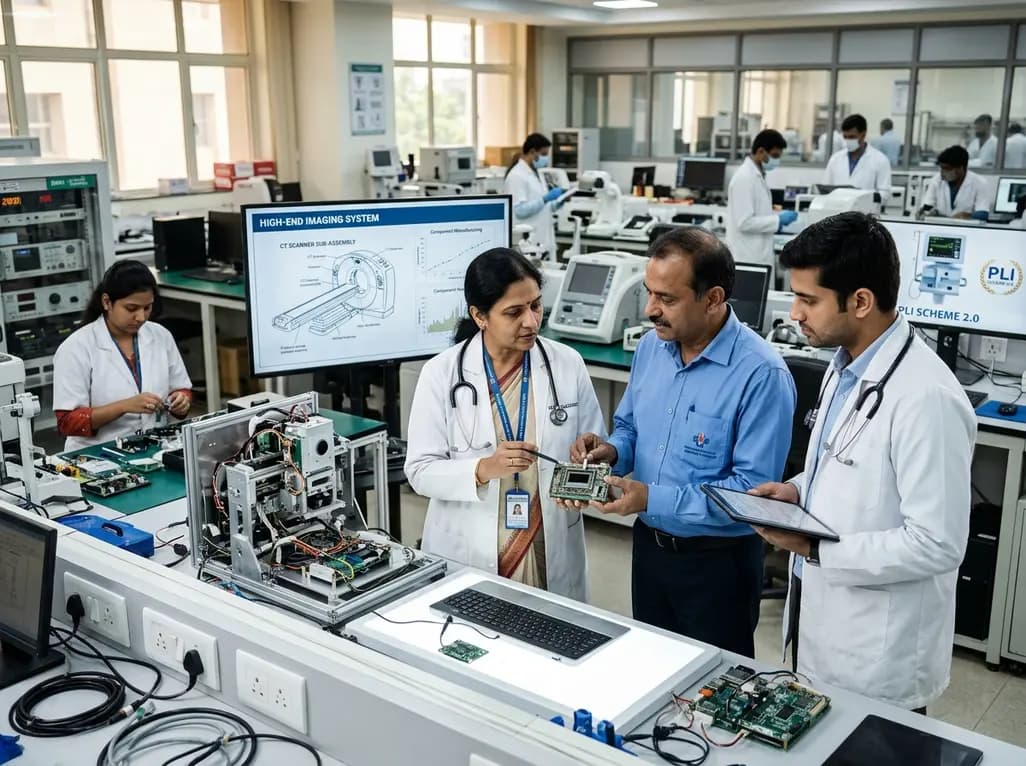
The Department of Pharmaceuticals has extended the medical devices PLI scheme to 2035-36 with a Rs 2,700 crore outlay. Featuring relaxed investment barriers and eliminated sales thresholds, the revised framework targets deep manufacturing, high-end diagnostics, critical MedTech components, and supply resilience.
Today

A systematic review evaluates psychological interventions for smoking cessation in diabetes, showing short-term success but highlighting challenges in long-term abstinence.
Today
