

Loading, please wait...
Loading, please wait...

Atherosclerotic cardiovascular disease remains a leading driver of global vascular morbidity, particularly through the development of unstable carotid artery plaques. Although duplex ultrasonography and advanced neuroimaging reliably identify luminal narrowing, conventional modalities frequently miss early biological changes and microstructural instability. Consequently, clinicians urgently require noninvasive molecular indicators to quantify subclinical inflammation and structural vulnerability before catastrophic ischemic events occur. Extracellular vesicles have emerged as crucial mediators of intercellular communication across the vascular tree. Because these microvesicles carry cell-derived nucleic acids, vesicle-associated microRNAs provide a window into real-time vascular pathology. A breakthrough study by Shao and colleagues offers compelling insight into extracellular vesicle-derived miR-144-5p, highlighting its potential to transform contemporary vascular risk stratification.
Atherosclerosis represents a chronic inflammatory cascade characterized by lipid accumulation, leukocyte infiltration, and vascular smooth muscle cell phenotypic switching. Throughout this pathological progression, vascular endothelial cells, macrophages, and smooth muscle cells continuously shed extracellular vesicles into the circulation. These membrane-bound nanoparticles transport active regulatory cargoes, including functional microRNAs that profoundly modulate gene transcription in target recipient cells. Consequently, circulating microRNAs reflect ongoing vascular remodeling and local tissue stress far more sensitively than standard plasma proteins.
Furthermore, extracellular vesicles shield their encapsulated microRNAs from systemic enzymatic degradation by circulating ribonucleases. Therefore, these vesicle-protected microRNAs exhibit remarkable biological stability in peripheral blood samples, establishing them as ideal liquid biopsy candidates. In carotid atherosclerosis, local molecular interactions determine whether a plaque remains quiescent or progresses toward catastrophic fibrous cap thinning and rupture. By examining specific vesicle profiles, investigators can decipher subtle inflammatory shifts within the vessel wall long before macroscopic luminal stenosis develops. This molecular approach offers clinicians a powerful diagnostic paradigm for detecting silent vascular pathology.
To identify reliable diagnostic molecules, the investigators evaluated comprehensive sequencing datasets from human carotid plaque specimens and adjacent marginal tissues. They initially analyzed 801 differentially expressed microRNAs across tissue compartments using robust computational workflows. Subsequently, the researchers implemented weighted gene co-expression network analysis alongside least absolute shrinkage and selection operator regression. This sophisticated analytical strategy enabled the rigorous isolation of key molecular drivers while eliminating confounding regulatory background noise.
Remarkably, hsa-miR-144-5p emerged as the solitary predictive candidate possessing exceptional diagnostic capacity. Receiver operating characteristic analysis demonstrated an impressive area under the curve of 0.907, confirming its superior discriminative power for carotid artery plaques. In addition, functional pathway enrichment analyses, including Gene Ontology and Kyoto Encyclopedia of Genes and Genomes, mapped the downstream targets of miR-144-5p. The predicted target genes exhibited dense clustering within pathways governing leukocyte cell adhesion, transendothelial migration, chronic inflammation, and adverse vascular remodeling. Thus, bioinformatic modeling established that miR-144-5p directly intersects with pivotal cellular cascades responsible for plaque initiation and progression.
Following extensive in silico screening, the investigators validated their bioinformatic conclusions using well-characterized preclinical animal models. Specifically, they established atherosclerosis in apolipoprotein E-deficient mice through perivascular carotid collar placement combined with high-fat dietary feeding. This surgical and nutritional intervention induces hemodynamic shear stress changes that closely mirror human plaque vulnerability and localized vascular inflammation.
Subsequently, quantitative reverse transcription polymerase chain reaction assays measured microRNA abundance within the harvested carotid arterial segments. The laboratory results confirmed significant upregulation of miR-144-5p within murine carotid plaques compared to normal vessel controls. Furthermore, enzyme-linked immunosorbent assays evaluated systemic inflammatory mediators, focusing specifically on interleukin-1 beta and tumor necrosis factor-alpha. Correlation analysis revealed that tissue levels of miR-144-5p exhibited strong positive associations with both circulating inflammatory cytokines. Therefore, these robust experimental findings substantiate that elevated miR-144-5p expression directly mirrors local vascular wall inflammation and systemic inflammatory burden during active atherogenesis.
Carotid atherosclerosis presents significant clinical danger because plaque rupture directly precipitates embolic ischemic stroke. Fibrous cap thinning, intraplaque hemorrhage, and dense macrophage infiltration characterize vulnerable plaques. Because miR-144-5p regulates genes involved in cell adhesion and inflammatory signaling, its upregulation may accelerate extracellular matrix degradation and promote fibrous cap erosion.
Moreover, the positive correlation between miR-144-5p, interleukin-1 beta, and tumor necrosis factor-alpha underscores its role in sustaining vascular inflammatory tone. Chronic elevation of these pro-inflammatory cytokines drives endothelial activation and facilitates matrix metalloproteinase release. Consequently, vascular smooth muscle cells lose their contractile phenotype, which diminishes structural tensile strength across the fibrous cap. By driving these pathological events, extracellular vesicle-associated miR-144-5p serves not merely as an innocent bystander, but as an active mediator of vascular destabilization. Monitoring this molecular footprint could enable physicians to identify vulnerable plaques before clinical symptoms emerge.
In India, the burden of premature atherosclerotic vascular disease and ischemic stroke is escalating rapidly. Indian patients frequently present with accelerated vascular aging, widespread metabolic syndrome, and extensive subclinical atherosclerosis at younger ages compared to Western cohorts. Although conventional duplex ultrasound remains an accessible first-line screening tool, operator variability and acoustic limitations frequently hinder the detection of unstable, non-stenotic plaques.
Therefore, integrating blood-based liquid biopsies into routine preventive cardiology and neurology clinics could revolutionize early risk assessment across Indian healthcare centers. A quantitative assay targeting vesicle-derived miR-144-5p could identify high-risk individuals requiring intensive medical therapy, such as high-intensity statins or targeted anti-inflammatory regimens. Additionally, serial biomarker measurements could help clinicians monitor therapeutic response and plaque stabilization over time. As diagnostic laboratories across India expand molecular testing platforms, translating microRNA diagnostics into cost-effective clinical assays could significantly reduce stroke incidence nationwide.
Despite these encouraging findings, several technical hurdles must be resolved before extracellular vesicle microRNA testing enters routine clinical workflow. First, clinical laboratories require standardized, reproducible protocols for vesicle isolation and microRNA extraction from peripheral blood samples. Current isolation techniques, such as ultracentrifugation and size-exclusion chromatography, demand significant time and specialized equipment that may not suit high-throughput pathology laboratories.
Furthermore, prospective multi-center clinical trials must validate the diagnostic cutoffs of miR-144-5p across diverse patient populations. Investigators must assess whether comorbidities, such as poorly controlled diabetes mellitus or chronic kidney disease, influence baseline vesicle microRNA levels. Similarly, comparative studies should determine whether combining miR-144-5p with high-resolution magnetic resonance neuroimaging improves predictive accuracy over imaging alone. Ultimately, resolving these standardization challenges will pave the way toward precision vascular medicine, transforming how clinicians detect, track, and manage carotid artery disease.
Extracellular vesicle-derived miR-144-5p demonstrates high diagnostic precision with an area under the curve of 0.907. Furthermore, extracellular vesicles protect this microRNA from enzymatic degradation in the bloodstream, ensuring superior molecular stability. The marker correlates strongly with critical inflammatory mediators, including interleukin-1 beta and tumor necrosis factor-alpha. Consequently, measuring circulating miR-144-5p provides clinicians with reliable molecular insight into vascular remodeling, endothelial adhesion, and active plaque inflammation without invasive procedures.
Conventional imaging modalities, such as carotid duplex ultrasound and computed tomography angiography, evaluate structural stenosis and luminal narrowing. However, these radiological tools often fail to capture early biological inflammation and plaque vulnerability. In contrast, liquid biopsies assessing extracellular vesicle microRNAs quantify ongoing vascular cellular activity and endothelial activation. Therefore, integrating miR-144-5p testing alongside conventional carotid imaging enhances early risk stratification, enabling physicians to identify unstable plaques before catastrophic neurovascular complications develop.
Yes, identifying miR-144-5p as a central driver of plaque pathology highlights its value as a potential therapeutic target. Because this microRNA modulates vital pathways controlling cell migration, vascular remodeling, and cytokine signaling, pharmacological inhibition may suppress vascular inflammation. Experimental antagomirs or targeted antisense oligonucleotides could theoretically attenuate macrophage recruitment and reinforce fibrous cap integrity. Thus, therapeutic modulation of miR-144-5p represents an exciting translational strategy for stabilizing vulnerable atherosclerotic lesions in high-risk patients.
Disclaimer: This content is for informational and educational purposes only. It does not constitute medical advice, diagnosis, or treatment recommendations. Healthcare professionals must exercise their independent clinical judgment and verify information with primary medical literature. The clinical practices and therapeutic options discussed may not reflect regional regulatory approvals or standard clinical pathways. Refer to the latest local and national guidelines for clinical practice.
References

Read summarized clinical updates, watch expert medical content, and earn CME certifications right from your smartphone.
Open your smartphone camera to scan and install.





A study reveals that extracellular vesicle-derived miR-144-5p is a highly predictive diagnostic biomarker for carotid artery plaques (AUC 0.907). Correlating with IL-1β and TNF-α, it opens new avenues for liquid biopsy-based stroke risk assessment and vascular monitoring.
Today

A new quality-improvement initiative reveals that universal maternal mental health screening in the NICU increased screening rates from 29.5% to 95.0%, with nearly 60% of screened mothers requiring psychosocial referrals, highlighting the urgent need for embedded mental health resources.
Today
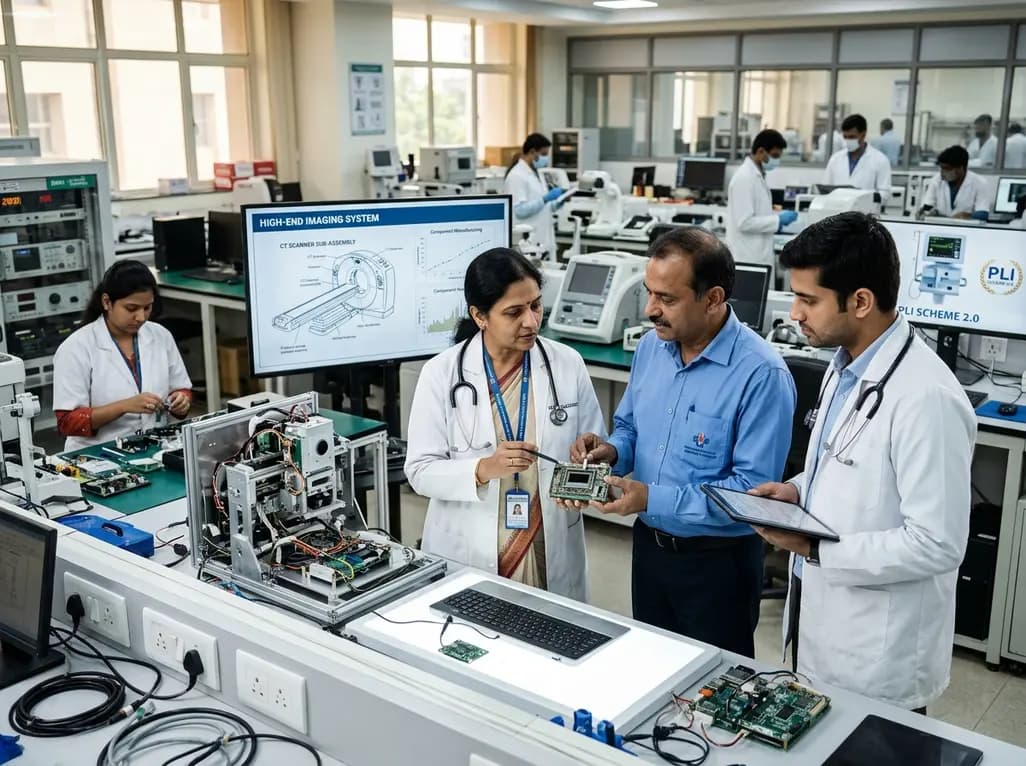
The Department of Pharmaceuticals has extended the medical devices PLI scheme to 2035-36 with a Rs 2,700 crore outlay. Featuring relaxed investment barriers and eliminated sales thresholds, the revised framework targets deep manufacturing, high-end diagnostics, critical MedTech components, and supply resilience.
Today

A metabolomic study reveals that aging delays glutathione synthesis and gamma-glutamylcysteine accumulation following muscle injury. Although precursor supplementation targets this enzymatic bottleneck, in vitro tests show no immediate effect on myogenesis, highlighting the complexity of muscle repair in older adults.
Today

A systematic review evaluates psychological interventions for smoking cessation in diabetes, showing short-term success but highlighting challenges in long-term abstinence.
Today
