.webp&w=384&q=75)

Loading, please wait...
Loading, please wait...
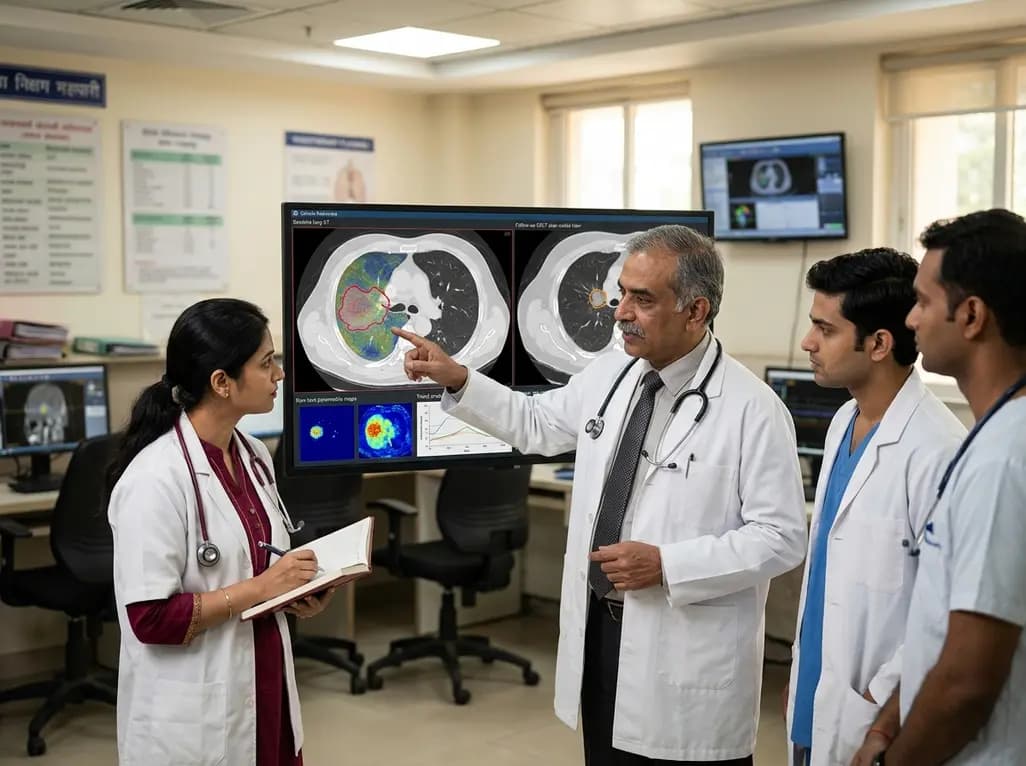
Radiotherapy plays a pivotal role in the management of non-small-cell lung cancer (NSCLC). However, clinicians often struggle to predict how tumors will respond during the course of treatment. Recent research into CBCT radiomics lung cancer applications suggests a breakthrough in monitoring these patients. By analyzing imaging data from daily cone-beam computed tomography (CBCT), doctors can now assess tumor regression volume more accurately. This approach allows for timely adjustments to treatment plans. Consequently, it improves the precision of radiation delivery to the affected area.
The study utilized two distinct patient datasets to validate the reliability of radiomics features. Initially, researchers extracted 34 robust features from planning CT and early CBCT scans. They specifically looked for reproducible "delta radiomics" features. These features represent the quantitative changes in the tumor’s appearance over time. Furthermore, the analysis identified sixteen delta features that remained consistent across different imaging modalities. Nine of these showed significant differences during the early phase of radiotherapy.
Ultimately, the researchers identified four specific delta radiomics features that predict tumor regression volume. They used a 30% threshold to classify these responses effectively. This finding is significant because it proves the feasibility of using existing CBCT data for advanced analysis. Moreover, these features help clinicians identify which patients might require adaptive treatment planning. Therefore, this novel strategy offers a reliable way to optimize outcomes. It ensures that therapy remains effective even as the tumor changes shape and size.
In conclusion, the study demonstrates that CBCT-based delta radiomics is a feasible tool for clinical use. Identifying reliable features helps build stronger predictive models. This technology marks a step forward in personalized oncology for lung cancer patients.
CBCT is routinely performed during radiotherapy for patient positioning. Using this existing data for radiomics provides a non-invasive way to monitor tumor volume without requiring additional diagnostic scans.
Traditional imaging often focuses on a single point in time. In contrast, delta radiomics tracks quantitative changes in image features over the course of treatment, offering a dynamic view of how the tumor responds.
Disclaimer: This content is for informational and educational purposes only. It does not constitute medical advice or a substitute for professional healthcare. Refer to the latest local and national guidelines for clinical practice.
References

Read summarized clinical updates, watch expert medical content, and earn CME certifications right from your smartphone.
Open your smartphone camera to scan and install.





Researchers identify delta radiomics features from CBCT scans to predict tumor regression in NSCLC patients undergoing radiotherapy for better outcomes....
4 months ago

Review how tailored exercise programs benefit frail older patients with heart failure. Explore pathophysiological mechanisms, individualized training prescriptions, and strategies to overcome adherence barriers in clinical practice.
Today

Leucine Rich Bio has introduced South Asia's first comprehensive vaginal microbiome test, BugSpeaks. By profiling microbial dysbiosis, pathogens, and antimicrobial resistance, this next-generation diagnostic platform provides clinicians with deeper insights into recurrent infections, fertility, and reproductive health.
Today

In high-risk pulmonary embolism complicated by severe anemia and active uterine bleeding, systemic thrombolysis is contraindicated. Large-bore aspiration thrombectomy provides rapid hemodynamic rescue without fibrinolysis, supported by inferior vena cava filter placement and multidisciplinary critical care.
Today

This comparative study evaluates posterior labral tears with and without glenohumeral instability, highlighting distinct demographic patterns, MRI underestimation in stable shoulders, and successful arthroscopic repair outcomes.
Today

A clinical study demonstrates that early intervention with tocilizumab, either as monotherapy or bridged with corticosteroids, achieves significant proptosis reduction and resolves active inflammation in treatment-naive thyroid eye disease.
Today
