.webp&w=384&q=75)

Loading, please wait...
Loading, please wait...
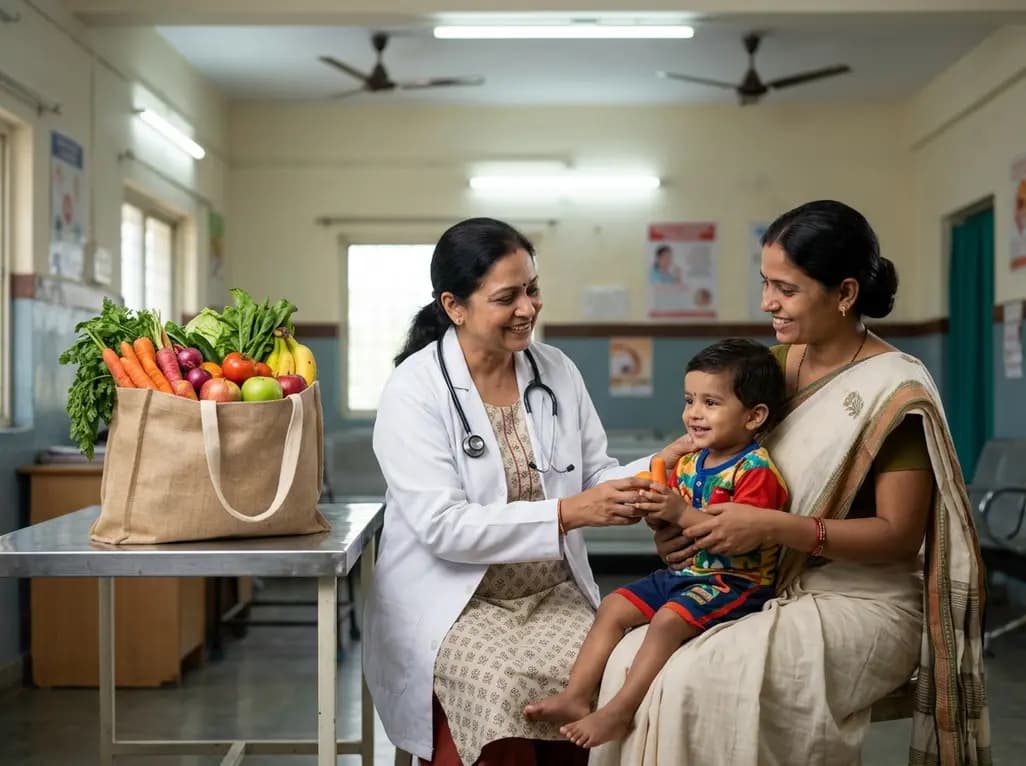
Low-income families often struggle with nutritional inequality, leading to higher rates of chronic disease among children. While many experts point to "food deserts" as the primary cause, new research suggests that financial liquidity may be a more significant factor. Specifically, cash transfers child nutrition benefits have been demonstrated in the Baby's First Years study, a rigorous randomized controlled trial (RCT) focused on poverty reduction.
The study followed 901 low-income families to evaluate how monthly cash gifts influenced dietary habits. Researchers compared a high-cash group receiving $333 per month to a control group receiving only $20 per month. Interestingly, the high-cash group showed a protective effect on fruit and vegetable consumption by the time children reached age 2. This finding underscores the potential for direct financial support to bridge the nutritional gap in early childhood.
A central question for policymakers is whether neighborhood surroundings limit the impact of extra income. To test this, researchers used inverse odds ratio weighting (IORW) to examine four environmental mediators: census-tract food deserts, SNAP outlet density, the Modified Retail Food Environment Index (mRFEI), and supermarket proximity. However, the data revealed that none of these factors significantly explained the positive dietary changes. Consequently, the food environment does not appear to block or facilitate the nutritional gains provided by extra cash.
These results indicate that families use additional funds to prioritize healthier foods even when living in challenging environments. Furthermore, the proportion of the total effect explained by these mediators was minimal, ranging only from 11% to 14%. Therefore, efforts to improve pediatric health may find more success through direct income support than through localized grocery store interventions alone. Physicians should recognize that economic stability is a fundamental determinant of dietary quality in their young patients.
Yes. This study demonstrates that providing unconditional cash transfers to low-income mothers significantly increases the consumption of fruits and vegetables in toddlers by age 2.
No. The research suggests that the nutritional benefits of cash transfers occur independently of the neighborhood food environment, including proximity to supermarkets or the presence of food deserts.
Families in the high-gift group received $333 per month, which proved effective in improving dietary behaviors compared to the group receiving $20 per month.
Disclaimer: This content is for informational and educational purposes only. It is not intended as a substitute for professional medical advice, diagnosis, or treatment. Refer to the latest local and national guidelines for clinical practice.
References

Read summarized clinical updates, watch expert medical content, and earn CME certifications right from your smartphone.
Open your smartphone camera to scan and install.





A major RCT reveals that unconditional cash transfers significantly improve fruit and vegetable consumption in low-income toddlers. Surprisingly, neighborhood food environments like food deserts do not explain these gains, suggesting that financial liquidity is the primary driver of nutritional improvements.
4 months ago

As monsoon seasons elevate arboviral disease threats, Tamil Nadu has initiated an ICMR-monitored evaluation of the tetravalent dengue vaccine in Tenkasi district. Clinicians emphasize clinical monitoring, public prevention, and high-quality early pediatric care to reduce disease morbidity across endemic regions.
Today

Leucine Rich Bio has introduced South Asia's first comprehensive vaginal microbiome test, BugSpeaks. By profiling microbial dysbiosis, pathogens, and antimicrobial resistance, this next-generation diagnostic platform provides clinicians with deeper insights into recurrent infections, fertility, and reproductive health.
Today

Review how tailored exercise programs benefit frail older patients with heart failure. Explore pathophysiological mechanisms, individualized training prescriptions, and strategies to overcome adherence barriers in clinical practice.
Today

This comparative study evaluates posterior labral tears with and without glenohumeral instability, highlighting distinct demographic patterns, MRI underestimation in stable shoulders, and successful arthroscopic repair outcomes.
Today

A clinical study demonstrates that early intervention with tocilizumab, either as monotherapy or bridged with corticosteroids, achieves significant proptosis reduction and resolves active inflammation in treatment-naive thyroid eye disease.
Today
