.webp&w=384&q=75)

Loading, please wait...
Loading, please wait...

Psychological flow is often described as a state of peak performance and total immersion. However, recent research explores the nuances of Cardiovascular Reactivity and Flow during extended cognitive demands. A study involving chess players utilized the Biopsychosocial Model of Challenge and Threat (BPS-CT) to monitor these changes over a two-hour period. While participants maintained a high level of subjective immersion, their physiological markers told a different story. This suggests a potential disconnect between how we feel mentally and how our bodies respond to prolonged stress.
The research team measured impedance cardiography, electrocardiography, and blood pressure in 32 chess players. Initially, the players exhibited a cardiovascular challenge pattern, characterized by increased cardiac output and efficient vascular response. Consequently, this initial phase aligned with the traditional view of a positive flow state. Furthermore, the participants were engaged in "mate in two" tasks, ensuring a balance between their skills and the task demands. Specifically, this balance is a core requirement for entering a flow state.
However, the physiological data shifted significantly after the first hour of performance. The researchers observed a cardiovascular threat pattern, marked by increased total peripheral resistance and indicators of motivational disengagement. Notably, this shift occurred even though the participants continued to report high levels of subjective flow and a perceived balance of skills and demands. Therefore, the internal physiological state may transition toward a stress-heavy "threat" response during prolonged tasks, even if the person remains psychologically motivated.
This study highlights the importance of the Biopsychosocial Model in assessing cognitive burnout. Additionally, it suggests that subjective reports of flow might not always reflect a healthy physiological state. For clinicians in India managing high-stress professionals or competitive athletes, understanding these autonomic shifts is vital. Prolonged exposure to "threat" patterns can lead to increased cardiovascular strain, even in activities traditionally considered sedentary, like chess. Future research must continue to bridge the gap between psychological experience and its long-term physiological implications.
A challenge pattern is characterized by higher cardiac output and lower vascular resistance, indicating efficient blood flow. In contrast, a threat pattern involves higher vascular resistance and lower cardiac output, which reflects physiological strain.
Interestingly, this study found that subjective flow is mostly unrelated to cardiovascular reactivity. This means a person can feel they are "in the zone" while their body is actually exhibiting signs of high stress and threat.
The shift likely occurred due to physiological fatigue and reduced motivational engagement. Even when the task remains balanced, the metabolic and psychological cost of maintaining peak performance over time can trigger a threat response.
Disclaimer: This content is for informational and educational purposes only. It is not intended as medical advice or a substitute for professional medical expertise. Refer to the latest local and national guidelines for clinical practice.
References
Stöckle D et al. When Challenge Turns into Threat at the Chessboard: Cardiovascular Reactivity and Flow Across Two Hours of Task Performance. Appl Psychophysiol Biofeedback. 2026 May 24. doi: 10.1007/s10484-026-09791-9. PMID: 42177736.
Seery MD. The Biopsychosocial Model of Challenge and Threat: Using the Heart to Measure the Mind. Social and Personality Psychology Compass. 2013;7(9):637-653. doi:10.1111/spc3.12052.
Blascovich J. The Biopsychosocial Model of Challenge and Threat. Oxford University Press; 2008.
"
Read summarized clinical updates, watch expert medical content, and earn CME certifications right from your smartphone.
Open your smartphone camera to scan and install.





A study on chess players reveals that prolonged cognitive tasks shift physiological responses from challenge to threat patterns after just one hour....
5 months ago

Co-administering antiseizure medications and DOACs frequently causes pharmacokinetic interactions, subtherapeutic drug levels, and thromboembolic failures. This review highlights enzyme induction risks, unpredictable outcomes with levetiracetam, and the vital role of therapeutic drug monitoring.
Today

Demanding exhaustive hormonal profiling can inadvertently discourage clinical studies involving females. Methodological standards must align with the specific scientific question to expand, not restrict, equitable evidence for women.
Today
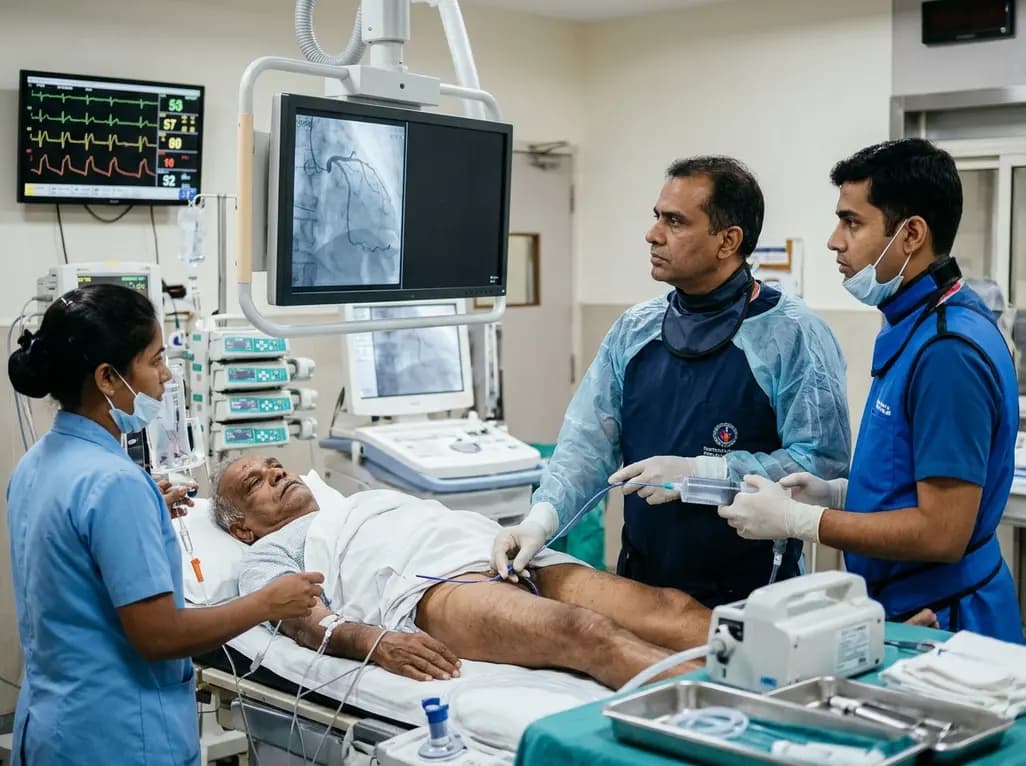
An elderly man with partially repaired Tetralogy of Fallot presented with STEMI caused by coronary embolism rather than atherosclerosis. Successful treatment with sustained mechanical aspiration thrombectomy underscores the vital need for high clinical vigilance in adult congenital heart disease.
Today

A comparative review of tension band wiring and intramedullary screw fixation in thumb metacarpophalangeal arthrodesis, evaluating union rates, hardware complications, and clinical outcomes.
Today

Following regulatory scrutiny from FSSAI regarding promotional representations and lean muscle preservation claims, Dr. Reddy's Laboratories and Nestlé Health Science are currently reviewing the branding and marketing strategy for their joint nutritional supplement Celevida GLP+.
Today
