.webp&w=384&q=75)

Loading, please wait...
Loading, please wait...
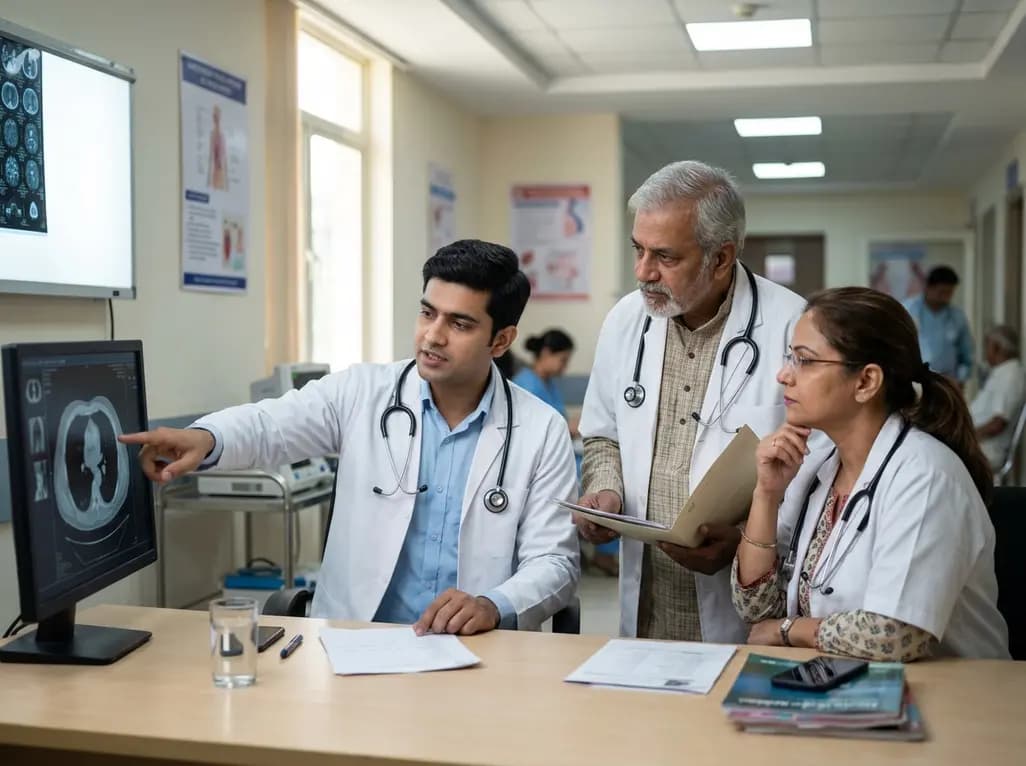
The emergence of cardiovascular digital twins represents a transformative leap in the field of precision medicine. Traditionally, clinicians have relied on episodic data and generalized guidelines to manage complex heart conditions. However, digital twins allow for a dynamic, predictive virtual representation of a patient's unique physiological state. By integrating real-time clinical data into computational models, healthcare providers can now achieve a level of personalization previously deemed impossible. This advancement is particularly relevant for managing chronic conditions where hemodynamics play a central role. Scientists are now moving beyond static models to develop systems that update continually as new patient information becomes available. Consequently, cardiovascular digital twins offer a window into the future of proactive healthcare, where interventions are tailored to the specific trajectory of the individual. This article explores how linear emulators and invasive pressure measurements are accelerating this evolution, providing clinicians with the tools they need to optimize patient outcomes. By bridging the gap between high-level engineering and bedside care, these models provide insights that traditional diagnostics often miss. Ultimately, the goal is to create a seamless feedback loop between the physical patient and their digital counterpart.
Cardiovascular digital twins are virtual replicas of a patient's heart and vascular system, meticulously designed to simulate hemodynamics and predict disease progression. These models are not merely static simulations; they evolve as clinicians acquire new data, providing a continuous loop of refined insights. In the context of pulmonary arterial hypertension (PAH), these twins can model the complex interactions between the right ventricle and the pulmonary circulation. This systemic approach is vital because PAH is a life-threatening condition where the narrowing of pulmonary arteries forces the heart to work harder. Eventually, this increased workload leads to right-sided heart failure. By personalizing these cardiovascular digital twins, clinicians can move from reactive treatments to proactive management. They can tailor therapies to the specific hemodynamic profile of the individual patient rather than relying on a broad population average. Moreover, the ability to simulate "what-if" scenarios allows doctors to test the impact of potential medications in a virtual environment before prescribing them. This reduces the risk of adverse reactions and ensures that the chosen treatment plan is the most effective one possible for that specific individual.
A significant challenge in creating effective cardiovascular digital twins is the nature of clinical data. Hospital information is often sparse, discrete, and subject to severe practical constraints. For instance, a single cardiac output measurement provides only a snapshot of a patient's state at one moment. However, modern research suggests that temporally rich data, such as continuous pressure waveforms, contains significantly more information for model calibration. Researchers have found that combining these waveforms with discrete clinical indices—like heart rate and mean arterial pressure—yields the most robust results. The choice of data representation is crucial because it directly influences which hemodynamic parameters scientists can accurately estimate. Inaccurate representations can lead to model "sloppiness," where multiple different parameter sets produce similar results, complicating the personalization process. Therefore, identifying the most informative data structures is a priority for medical educators and researchers. By leveraging principal components of pressure data, clinicians can capture the essential dynamics of the heart without being overwhelmed by noise. This methodology ensures that the digital twin remains a faithful representation of the patient's actual physiological condition, even when clinical resources are limited.
Real-time clinical application requires a level of computational efficiency that traditional physics-based models often cannot provide. To solve this dilemma, researchers are turning to linear emulators. These mathematical surrogates mimic the behavior of complex cardiovascular models but operate at a fraction of the computational cost. By using linear emulation, clinicians can perform Bayesian calibration of parameters almost instantaneously. This means that as soon as a new right ventricular pressure reading is taken, the digital twin can be updated to reflect the patient's current state. This speed is essential in critical care settings where physiological conditions can change rapidly. Consequently, linear emulators act as a vital bridge, making the vision of "real-time" cardiovascular digital twins a practical reality in modern hospital environments. Furthermore, these emulators minimize the computational burden on hospital hardware, allowing sophisticated modeling to occur on standard medical workstations. This accessibility is a major stepping stone toward the widespread adoption of digital twin technology across various healthcare specialties. As these tools become more refined, they will likely become standard components of the clinical decision-support ecosystem, providing rapid and reliable guidance to medical professionals.
A recent study demonstrates this framework using invasively measured right ventricular (RV) pressure in patients with pulmonary arterial hypertension. RV pressure is a critical biomarker in PAH, reflecting the high workload and pressure on the right side of the heart. By applying linear emulation to these invasive measurements, the researchers successfully personalized lumped-parameter cardiovascular digital twins in real-time. Interestingly, the study highlighted that using principal components of the pressure data provided superior information compared to simple discrete values. This approach not only refines the accuracy of the model but also provides deeper insights into the patient's unique hemodynamic resistance and compliance. These are parameters that are often difficult to measure directly using standard non-invasive techniques. Notably, the study proves that even with the inherent sloppiness of biological systems, identifiability issues can be managed with the right data representation. For doctors in India and globally, this means that existing invasive protocols, like right heart catheterization, can provide the foundation for advanced digital twin monitoring. This research marks a significant milestone in validating the clinical utility of real-time personalized models in complex cardiopulmonary diseases.
Despite the remarkable progress, issues regarding parameter identifiability remain a significant hurdle in the widespread deployment of cardiovascular digital twins. Model "sloppiness" occurs when certain parameters have very little impact on the observed clinical output, making them hard to pinpoint precisely. For example, some combinations of heart contractility and vascular resistance might result in nearly identical pressure curves. Addressing this requires sophisticated calibration frameworks that can distinguish between these variables. By understanding how different data representations affect parameter recovery, scientists can better design clinical protocols to capture the most informative data possible. Furthermore, as we refine these models, we move closer to a future where every patient has a "living" digital model that guides their treatment journey. This shift will significantly reduce the uncertainty often associated with chronic cardiovascular diseases and complex surgeries. Ultimately, the integration of AI-driven emulators and high-fidelity clinical data will ensure that cardiovascular digital twins are not just research tools, but essential instruments for everyday clinical practice. As we look forward, the focus will shift toward integrating these models with wearable sensors to provide continuous, out-of-hospital monitoring for patients worldwide.
Cardiovascular digital twins offer a proactive approach to managing PAH by simulating a patient's unique hemodynamics. Instead of relying on episodic clinic visits, these models provide a dynamic view of how the right ventricle interacts with the pulmonary system. This allows clinicians to predict potential worsening events and tailor vasodilator therapies more precisely. Consequently, the technology helps in reducing hospitalizations and improving the overall quality of life for patients facing this life-threatening condition.
Linear emulators are simplified mathematical models that replicate the outputs of complex, computationally heavy cardiovascular simulations. In a clinical setting, traditional models might take hours to process data, which is too slow for real-time decision-making. Emulators provide nearly instantaneous results, allowing for rapid Bayesian calibration of patient parameters. This efficiency ensures that the digital twin can be updated as soon as new clinical data, such as a pressure reading, becomes available for the doctor.
Invasively measured pressure waveforms are preferred because they offer a temporally rich dataset compared to discrete indices. While a single mean pressure value gives a basic overview, a full waveform captures the nuances of the cardiac cycle, including contractility and arterial compliance. By applying principal component analysis to these waveforms, researchers can extract more detailed information. This high-fidelity data is essential for accurately calibrating cardiovascular digital twins and overcoming the inherent sloppiness of simpler models.
Disclaimer: This content is for informational and educational purposes only... Refer to the latest local and national guidelines for clinical practice.
References
Frost F et al. Rapid personalisation of cardiovascular models using invasively measured right ventricular pressure. Comput Biol Med. 2026 Jul 01. doi: undefined. PMID: 42385309.
Niederer, S.A., et al. Digital twins for cardiopulmonary medicine: the case for pulmonary arterial hypertension. Oxford Academic, 2026.
Sánchez, J., et al. A personalized real-time virtual model of whole heart electrophysiology. Front Physiol, 2022.

Read summarized clinical updates, watch expert medical content, and earn CME certifications right from your smartphone.
Open your smartphone camera to scan and install.





Patient digital twins are revolutionizing cardiology by providing real-time, personalized insights into hemodynamic states. New research explores using invasively measured RV pressure and linear emulators to calibrate these models for PAH patients, overcoming traditional computational hurdles.
3 months ago

Following regulatory scrutiny from FSSAI regarding promotional representations and lean muscle preservation claims, Dr. Reddy's Laboratories and Nestlé Health Science are currently reviewing the branding and marketing strategy for their joint nutritional supplement Celevida GLP+.
Today
Demanding exhaustive hormonal profiling can inadvertently discourage clinical studies involving females. Methodological standards must align with the specific scientific question to expand, not restrict, equitable evidence for women.
Today

The Directorate General of Health Services directs Indian states to halt the hazardous reuse and reprocessing of single-use medical devices. Discover regulatory implications under the Drugs and Cosmetics Act, critical infection risks, legal liabilities, and operational changes required across clinical specialties.
Today

A novel calcium polyphosphate coacervate enables injectable bone implants with in situ hierarchical porosity via phase separation and gas foaming, significantly enhancing cell proliferation, energy metabolism, and osteogenic differentiation for minimally invasive bone defect repair.
Today

India is advancing preventive healthcare by integrating genomics, artificial intelligence, and quantum technologies. With the SANGAM programme sequencing one million Indian genomes, clinicians can unlock personalized therapies, detect cardiometabolic risks early, and curb the burden of diabetes and heart disease.
Today
