.webp&w=384&q=75)

Loading, please wait...
Loading, please wait...

Cardiac Diffusion Tensor Imaging (cDTI) represents a significant leap forward in assessing myocardial microstructure. However, this technique often faces hurdles due to physiological noise and signal corruption. These factors can lead to inaccuracies in diffusion measures, potentially affecting clinical decisions. Recent research introduces a robust method for uncertainty quantification (UQ) that utilizes existing datasets without requiring additional acquisitions.
The core of this advancement lies in repetition bootstrap methods. By employing whole-image resampling, clinicians can approximate the sampling distribution of diffusion measures more effectively. Furthermore, this approach allows for the calculation of uncertainty-weighted summary statistics. This is particularly beneficial when analyzing datasets from patients with hypertrophic cardiomyopathy (HCM). Consequently, weighting myocardial averages by uncertainty results in clearer group differences and more significant statistical values.
Moreover, uncertainty maps serve as a critical visual aid. They highlight specific regions where diffusion measures might be less trustworthy. For instance, the absolute sheetlet angle showed a notable difference in group medians when weighted by uncertainty. Therefore, this method helps identify outlier cases, ensuring that clinical results are reliable. It transforms cDTI from a purely research-oriented tool into a more dependable diagnostic asset for everyday practice.
In conclusion, the ability to quantify uncertainty within a standard dataset design simplifies the post-processing pipeline. It provides a clearer understanding of tissue architecture while maintaining high precision. As a result, cardiologists and radiologists can better differentiate between healthy tissue and diseased states.
Uncertainty quantification is vital because it identifies how noise and motion affect the reliability of diffusion measures. By understanding these errors, doctors can make more informed decisions regarding tissue health and disease progression.
Repetition bootstrapping resamples the available data to create a distribution of measures. This process helps determine the precision of the results without needing extra patient scan time, making it highly efficient for clinical use.
Disclaimer: This content is for informational and educational purposes only. It does not constitute medical advice or a professional endorsement. Always consult a qualified healthcare professional for diagnosis and treatment. Refer to the latest local and national guidelines for clinical practice.
References
Coveney S et al. Uncertainty Quantification for Cardiac Diffusion Tensor Imaging Without Additional Datasets. Magn Reson Med. 2026 May 10. doi: 10.1002/mrm.70414. PMID: 42108407.
Tunnicliffe EM et al. Optimising Cardiac Diffusion Tensor Imaging In Vivo: More Directions or Repetitions? Magn Reson Med. 2025 Sep 9. doi: 10.1002/mrm.26384.

Read summarized clinical updates, watch expert medical content, and earn CME certifications right from your smartphone.
Open your smartphone camera to scan and install.





New research highlights how uncertainty quantification in cardiac diffusion tensor imaging improves diagnostic accuracy for hypertrophic cardiomyopathy....
5 months ago

Following regulatory scrutiny from FSSAI regarding promotional representations and lean muscle preservation claims, Dr. Reddy's Laboratories and Nestlé Health Science are currently reviewing the branding and marketing strategy for their joint nutritional supplement Celevida GLP+.
Today

A comprehensive scoping review synthesises evidence linking prenatal maternal mental health to long-term offspring neurodevelopment, evaluating neuroendocrine, inflammatory, and epigenetic pathways while highlighting clinical screening and future research priorities.
Today

The Directorate General of Health Services directs Indian states to halt the hazardous reuse and reprocessing of single-use medical devices. Discover regulatory implications under the Drugs and Cosmetics Act, critical infection risks, legal liabilities, and operational changes required across clinical specialties.
Today
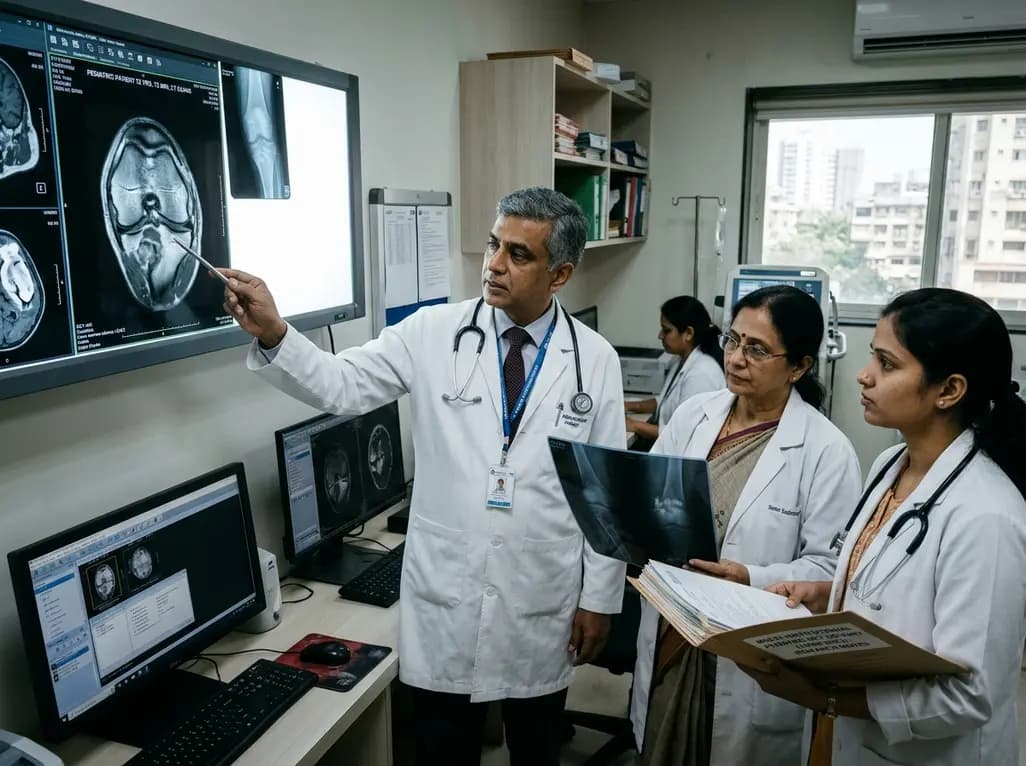
A 25-year multi-institutional cohort reveals high recurrence rates in pediatric giant cell tumor of bone, particularly in patients with open physes and bone marrow edema on preoperative MRI. Early surveillance and careful balance between growth plate preservation and tumor clearance are essential.
Today

India is advancing preventive healthcare by integrating genomics, artificial intelligence, and quantum technologies. With the SANGAM programme sequencing one million Indian genomes, clinicians can unlock personalized therapies, detect cardiometabolic risks early, and curb the burden of diabetes and heart disease.
Today
