.webp&w=384&q=75)

Loading, please wait...
Loading, please wait...

Cannabis remains one of the most widely consumed psychoactive substances across the globe. Mental health professionals recognize cannabis misuse as a major contributor to adverse psychiatric outcomes, including psychosis and affective dysregulation. However, the precise relationship between cannabis consumption and interpersonal aggression has sparked significant debate. A landmark systematic review and meta-analysis published in Psychological Medicine provides definitive evidence on cannabis and violence risk. By pooling findings across 63 peer-reviewed investigations representing 265,079 individuals, researchers clarified how cannabinoid exposure alters aggressive behavior. Furthermore, the findings highlight an urgent need for proactive screening in primary care and outpatient psychiatric clinics.
The investigators implemented rigorous PRISMA guidelines to examine how cannabis consumption influences behavioral aggression. Consequently, their random-effects models demonstrated that cannabis users experience a significantly heightened likelihood of committing physical violence. This association emerged clearly within the general community, yielding an odds ratio of 2.05. Meanwhile, psychiatric cohorts exhibited an even stronger vulnerability, demonstrating an odds ratio of 2.49. Therefore, clinical risk escalates markedly when underlying psychiatric illness combines with active cannabinoid exposure. In addition, the risk elevation persisted across varied epidemiological designs. Longitudinal studies revealed a pooled odds ratio of 1.17, while cross-sectional investigations demonstrated an odds ratio of 2.37. Thus, these data confirm that aggressive conduct is not merely an artifact of short-term confounding variables. Instead, regular cannabis exposure consistently tracks with disruptive inter-individual conflicts across diverse clinical and demographic environments.
The meta-analysis uncovered particularly alarming effects when assessing severe interpersonal violence that culminated in legal involvement. Specifically, cannabis use correlated with a fourfold increase in violent criminal convictions among psychiatric patients, yielding an odds ratio of 4.21. Similarly, individuals in the general population faced an odds ratio of 3.75 for criminal convictions linked to violent acts. These remarkable metrics demonstrate that cannabinoid-related behavioral disruption extends far beyond minor domestic arguments or transient irritability. Instead, heavy substance misuse frequently precipitates severe, legally actionable offenses. Neurobiological mechanisms likely explain this pronounced elevation in severe aggression. Tetrahydrocannabinol disrupts prefrontal cortical inhibition, impairs cognitive impulse control, and exacerbates underlying paranoid ideation. Furthermore, withdrawal states often induce marked agitation, dysphoria, and emotional lability. Consequently, intoxicated or withdrawing individuals may misinterpret neutral social signals, triggering intense, disproportioned violent reactions.
Importantly, the meta-analysis demonstrated that cannabis users do not solely act as perpetrators of aggression. Instead, consumers face a substantial danger of becoming victims of physical violence, showing an odds ratio of 1.49. Subgroup analyses revealed that this victimization vulnerability was especially pronounced among female users and mixed-gender cohorts. Several behavioral factors plausibly drive this concerning pattern. First, obtaining illicit substances often forces vulnerable people into dangerous, unregulated socioeconomic settings. Second, acute intoxication blunts environmental risk appraisal and slows protective motor reflexes. Third, severe substance use disorders frequently erode supportive social networks, leaving individuals isolated and defenseless. Consequently, clinicians must recognize that cannabis users experience dual hazards of behavioral perpetration and personal victimization. Comprehensive psychiatric care therefore requires practitioners to address both personal safety and external environmental dangers simultaneously.
These empirical findings demand a prompt shift in routine outpatient psychiatric and primary care practice. Healthcare providers frequently overlook cannabis consumption when assessing violence potential, focusing instead primarily on alcohol or illicit stimulants. However, the data show that cannabis carries comparable risks for violent behavior. Therefore, medical professionals must implement standardized screening instruments, such as the Cannabis Use Disorders Identification Test, during intake appointments. In addition, clinicians should actively investigate the potency of consumed products. Modern cannabis strains contain extraordinarily elevated concentrations of delta-9-tetrahydrocannabinol compared to historical formulations. High-potency formulations drastically heighten the probability of drug-induced paranoia, sudden psychotic decompensation, and subsequent behavioral dysregulation. Consequently, thorough documentation of consumption frequency, potency, and route of administration provides essential guidance for clinical risk stratification.
Addressing cannabis misuse directly offers mental health clinicians a vital opportunity to reduce interpersonal violence in the community. Evidence-based interventions, including motivational interviewing and cognitive behavioral therapy, effectively help individuals curtail heavy substance dependence. Furthermore, contingency management paradigms provide strong reinforcement for maintaining sobriety. Clinicians should educate patients and their families regarding the distinct link connecting cannabinoid exposure to irritability, affective instability, and aggressive impulses. When managing dual-diagnosis patients, optimizing antipsychotic or mood-stabilizing pharmacotherapy remains imperative. Moreover, integrated substance treatment programs must collaborate closely with community social services to protect vulnerable individuals from physical victimization. By prioritizing targeted addiction interventions, healthcare systems can reduce psychiatric hospitalizations, prevent legal consequences, and safeguard public safety.
Cannabis contains tetrahydrocannabinol, which alters frontal lobe function, impairs executive impulse control, and heightens paranoid reactivity. During acute intoxication or withdrawal, individuals frequently experience intense irritability and distorted social perceptions. Consequently, these neurological alterations reduce behavioral inhibitions, substantially elevating the risk of physical aggression and violent altercations.
Yes, individuals with pre-existing psychiatric disorders face a substantially higher likelihood of committing violent acts when using cannabis. The meta-analysis revealed an odds ratio of 2.49 for violence perpetration and 4.21 for violent criminal convictions in this population, indicating marked vulnerability to cannabinoid-induced behavioral destabilization.
Cannabis users experience heightened victimization because acute intoxication impairs situational awareness, slows defensive reactions, and blunts risk appraisal. Additionally, procuring drugs often places individuals in perilous environments. These cognitive impairments and vulnerable social settings significantly elevate their susceptibility to interpersonal abuse, physical assault, and exploitation.
Disclaimer: This content is for informational and educational purposes only. Healthcare professionals should exercise independent clinical judgment. Refer to the latest local and national guidelines for clinical practice.
References
Trotta G et al. Cannabis use is associated with increased risk of violence: A systematic review and meta-analysis. Psychol Med. 2026 Sep 24. doi: 10.1017/S0033291726105856. PMID: 42779465.
Dellazizzo L, Potvin S, Bahig Z, Dumais A. Association between the use of cannabis and physical violence in youths: a meta-analytical investigation. Am J Psychiatry. 2020;177(7):619-626.
Schoeler T, Theobald D, Pingault JB, et al. Continuity of cannabis use and violent offending over the life course. Psychol Med. 2016;46(8):1663-1677.
Marconi A, Di Forti M, Lewis CM, Murray RM, Vassos E. Meta-analysis of the association between the level of cannabis use and risk of psychosis. Schizophr Bull. 2016;42(5):1262-1269.

Read summarized clinical updates, watch expert medical content, and earn CME certifications right from your smartphone.
Open your smartphone camera to scan and install.





A comprehensive meta-analysis of 63 studies involving 265,079 individuals demonstrates that cannabis use significantly increases the risk of violent behavior and victimization across general and psychiatric populations. Clinicians must prioritize routine screening to mitigate harm.
Today
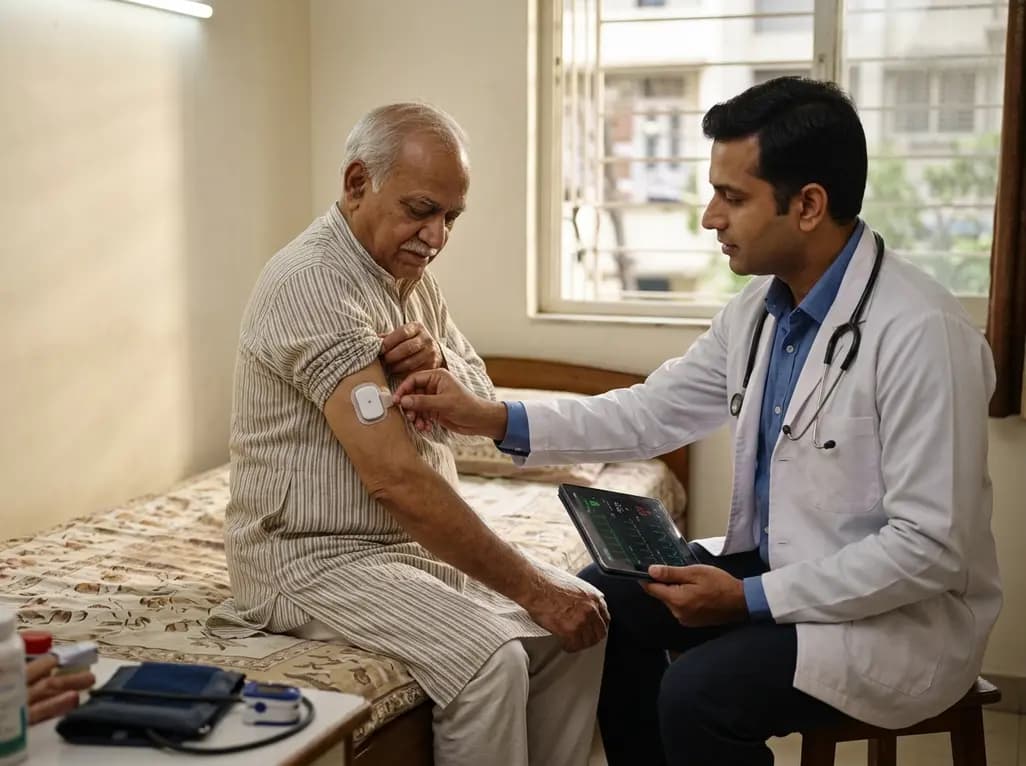
A feasibility study evaluates remote vital sign monitoring in acute hospital at home patients. Continuous wearable patches captured heart rate and respiratory rate with high adherence (89% and 75%), significantly exceeding manual spot checks for blood pressure, oxygen saturation, and temperature.
Today

A scoping review evaluates 116 studies on AI in women's reproductive health, finding that 83.6% carry high risk of bias. While ensemble models show promise, disparities and lack of validation hinder LMIC deployment.
Today

Differential oxygenation during peripheral TA-NRP can cause undetected coronary hypoxemia due to arch vessel clamping. A novel circuit with continuous aortic root monitoring detects desaturation early, facilitating left ventricular unloading and preventing allograft dysfunction and unnecessary heart discard.
Today

A longitudinal study reveals that patients undergoing staged bilateral hip arthroscopy experience progressive contralateral labral deterioration during surgical intervals. However, structural degradation does not compromise 2-year postoperative clinical outcomes or patient-reported satisfaction scores.
Today

A post hoc analysis of the PARM-T2D study shows pemafibrate exerts baseline-dependent effects on LDL-C and particle size in type 2 diabetes and hypertriglyceridemia. It lowers triglycerides and remnants while favorably remodeling atherogenic LDL particles based on initial lipid control status.
Today
