.webp&w=384&q=75)

Loading, please wait...
Loading, please wait...
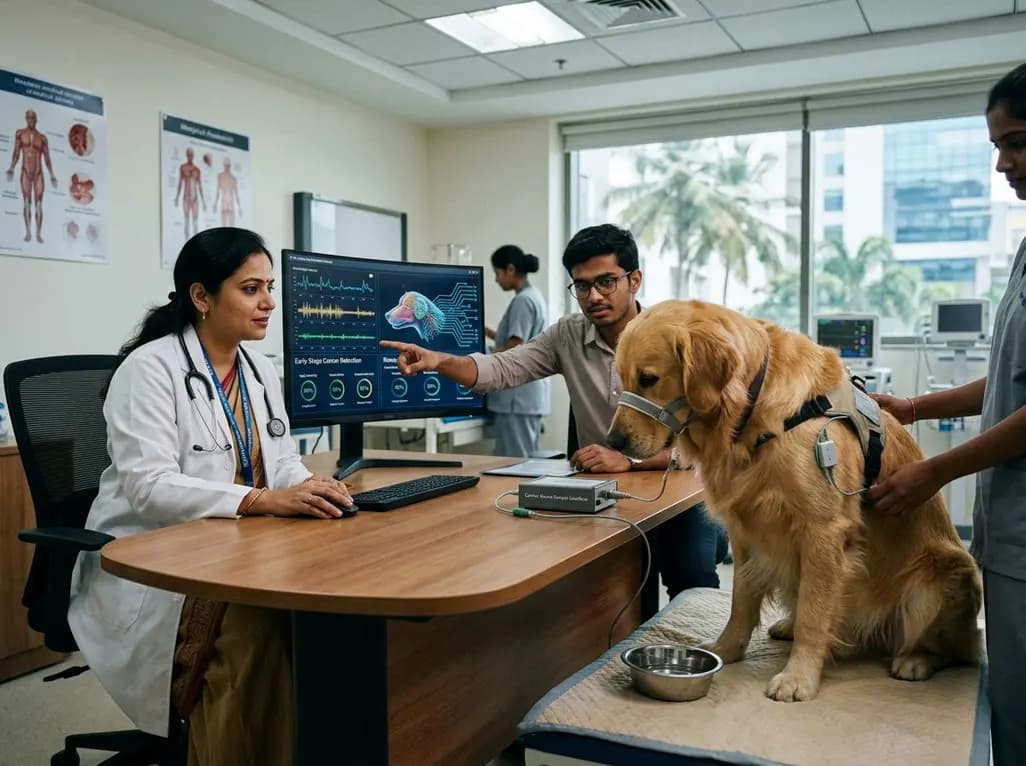
Early oncology intervention remains our most powerful weapon against malignant mortality, yet universal screening remains out of reach for millions. Canine cancer screening is emerging as an innovative, bio-hybrid approach that pairs the extraordinary olfactory acuity of trained dogs with artificial intelligence. This non-invasive diagnostic paradigm analyses exhaled human breath to detect microscopic tumour signatures long before macroscopic anatomical changes appear.
Malignant cells undergo distinct metabolic rewiring, which alters cellular respiration and membrane lipid peroxidation. Consequently, growing tumours shed distinct patterns of volatile organic compounds into the bloodstream, which then diffuse into exhaled breath. While gas chromatography and artificial electronic noses often struggle with ambient humidity and trace concentrations, canine olfactory biology provides an unmatched sensory detector. A dog's nasal cavity possesses over three hundred million olfactory receptor neurons, compared to roughly six million in humans. Therefore, trained canines can identify volatile organic compounds diluted to parts per trillion. Specifically, breeds such as beagles, labradors, and Dutch shepherds can effortlessly isolate complex signature bouquets secreted by diverse malignancies. Furthermore, their specialized dual-flow respiratory architecture allows continuous scent sampling without interrupting exhalation. However, biological detectors introduce natural behavioral variance into clinical workflows. Canine handlers historically relied on subjective physical cues, such as sitting or barking, which limited standardized diagnostic replication. By coupling these biological sensors with automated environmental containment pods, researchers can now preserve the delicate volatile organic compounds. As a result, this biological mechanism provides a reliable, reproducible foundation for broad population-level health screening initiatives.
Standardizing animal behavior for rigorous clinical pathology requires advanced biosensing and data processing. To eliminate subjective handler interpretation, modern bio-hybrid workstations combine non-invasive brain-computer interfaces with machine learning architectures. When a canine approaches a breath sample, multi-channel wearable electroencephalography headsets continuously record real-time neural signals and olfactory bulb activation. Simultaneously, synchronized optical sensors track subtle physical parameters, including sniffing velocity, pupil dilation, head hesitation, and spatial dwell time. Subsequently, deep learning models analyze this multi-modal biometric dataset to classify the animal's neurobehavioral response objectively. Therefore, the diagnostic output does not depend on whether a dog decides to sit or scratch. Instead, artificial intelligence converts subtle olfactory recognition patterns into a standardized risk score for clinicians. Furthermore, automated sample carousels present breath collection masks inside negative-pressure pods, which prevents cross-contamination and maintains sample integrity. This digital interpretation layer guarantees reproducibility across different testing facilities and operational shifts. Consequently, the technology bridges the historical divide between natural animal sensory abilities and modern clinical laboratory standards. Through this rigorous bio-AI synthesis, decentralized laboratories can reliably process thousands of breath samples each week with high fidelity.
Recent prospective multi-center investigations have yielded impressive data regarding this breath-based screening paradigm. In clinical trials evaluating multi-cancer early detection, the integrated canine-AI platform achieved approximately 90% sensitivity across early-stage malignancies. Specifically, the study analyzed samples across seven major organ systems representing more than twenty distinct histological cancer types. Notably, the test maintained high sensitivity for stages I and II disease, where conventional screening options are frequently limited. For example, the canine olfactory platform accurately identified localized breast, lung, colorectal, and oral cavity carcinomas before local invasion occurred. Furthermore, trained detection dogs demonstrated unexpected biological generalization during controlled validation trials. After trainers exposed the animals to ten specific cancer types, the canines successfully recognized an eleventh previously unencountered malignant scent profile. This discovery indicates that many solid tumours share conserved core volatile organic compound pathways driven by universal oncogenic metabolic shifts. Moreover, ongoing Phase 3 clinical trials across ten tertiary cancer centers aim to validate these results in ten thousand asymptomatic individuals. Consequently, these robust clinical trials provide the necessary empirical framework to validate bio-hybrid screening alongside conventional radiological and histopathological diagnostic pathways.
India currently faces a formidable oncology burden, recording over 1.5 million incident cancer cases and 900,000 deaths annually. However, routine population-level screening rates remain critically low across urban and rural demographics alike. For instance, national health surveys reveal that fewer than two percent of Indian women have ever undergone cervical or breast screening. Similarly, screening uptake for oral and colorectal malignancies remains negligible among high-risk adult cohorts. Consequently, most patients present with advanced stage III or IV disease, which drastically reduces therapeutic cure rates and escalates financial toxicity. Invasive diagnostic procedures, complex infrastructure requirements, high out-of-pocket costs, and severe social stigma all contribute to this pervasive deficit. An affordable, non-invasive breath collection mask offers a transformative solution to these entrenched systemic barriers. Patients simply breathe into a collection mask for ten minutes at home or at local primary health clinics. Afterward, standard logistics networks transport the stable samples to centralized olfactory processing facilities. Thus, by decentralizing sample collection and reducing consumer costs to a fraction of standard imaging, healthcare systems can expand preventive screening coverage dramatically. This scalable triage mechanism can effectively guide high-risk individuals toward timely definitive diagnostic workups.
Despite encouraging clinical trial data, integrating canine-assisted testing into mainstream clinical workflows involves distinct translational challenges. Foremost among these is clinician and patient skepticism regarding non-human diagnostic screening modalities. Therefore, extensive prospective trial data published in peer-reviewed journals will be essential to establish institutional confidence. Furthermore, oncologists emphasize that breath-based volatile organic compound analysis serves as a risk-stratification prescreening tool rather than a definitive tissue diagnosis. Consequently, patients who receive positive volatile organic compound risk scores must immediately undergo confirmatory diagnostic imaging, endoscopies, or tissue biopsies. Healthcare networks must establish clear, structured clinical referral pathways to prevent loss to follow-up among flagged patients. Additionally, operating high-volume canine biosensing facilities demands stringent operational protocols. Operators must maintain strict environmental controls, regular veterinary welfare standards, and continuous sensor calibration to prevent canine olfactory fatigue. Regulatory classification also requires careful alignment with national medical device oversight frameworks as testing expands globally. Nevertheless, when deployed as an adjunct to established screening guidelines, bio-hybrid olfactory platforms offer an exceptional opportunity to triage asymptomatic populations efficiently. As clinical validation deepens, this bio-hybrid methodology could permanently reshape early cancer detection strategies.
Q1: How does canine cancer screening detect tumours from a breath sample?
Growing malignant tumours alter normal cellular metabolism, leading to the production and release of distinctive volatile organic compounds. These trace chemical compounds circulate through the bloodstream and diffuse across alveolar membranes into exhaled breath. Trained detection dogs utilize their highly sensitive olfactory receptors to identify these minuscule chemical concentrations. Integrated artificial intelligence systems then measure the dog's neural and physiological responses to generate an objective risk score.
Q2: Does a positive breath test result provide a definitive cancer diagnosis?
No, a positive result from a breath screening test does not establish a definitive cancer diagnosis. Instead, the test functions strictly as a non-invasive prescreening and risk-stratification tool. When an individual receives an elevated volatile organic compound risk score, clinicians must promptly order standard confirmatory diagnostic procedures. These follow-up examinations typically include targeted radiological imaging, endoscopies, serum biomarker panels, or definitive tissue biopsies to verify malignancy.
Q3: How do researchers prevent animal fatigue and maintain consistent diagnostic accuracy?
Facilities implement strict animal welfare protocols that limit active scent detection sessions to thirty to sixty minutes daily per canine. Work sessions are structured as positive reinforcement games using food rewards to maintain focus. Furthermore, automated negative-pressure workstations present samples sequentially to prevent olfactory saturation. Multi-sensor artificial intelligence arrays continuously monitor canine neural signals and fatigue markers, ensuring only optimal detection trials enter the final clinical analysis.
Disclaimer: This content is for informational and educational purposes only. It does not constitute medical advice or replace professional judgment. Refer to the latest local and national guidelines for clinical practice.
References

Read summarized clinical updates, watch expert medical content, and earn CME certifications right from your smartphone.
Open your smartphone camera to scan and install.





A Bengaluru biotech venture combines canine olfactory biology with neuro-sensor artificial intelligence to create an affordable, non-invasive breath screening platform. With high sensitivity across multiple early-stage solid tumours, this innovative approach aims to overcome widespread screening deficits across India.
last month

Evaluating disagreement among Friedewald, Martin-Hopkins, and Sampson LDL-C equations reveals diagnostic uncertainty at statin cutoffs. An interpretable regime-aware calibration model rescues patient misclassifications without extra testing costs.
Today
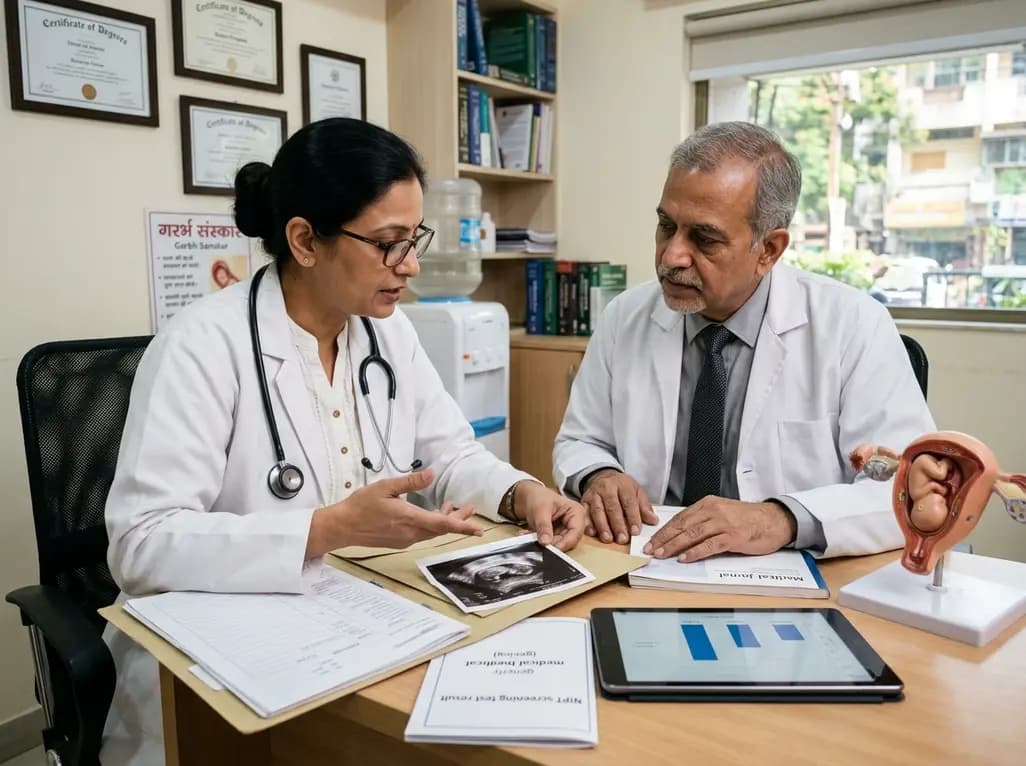
A large retrospective study evaluates the screening accuracy, positive predictive value, and test failure rates of noninvasive prenatal testing (NIPT) in assisted reproductive technology (ART) pregnancies compared to spontaneous conceptions, highlighting key considerations for pretest counseling.
Today
A comprehensive meta-analysis of over 40,000 patients reveals that vascular closure devices significantly reduce hematomas, bleeding, and recovery times in adult electrophysiology procedures compared to manual compression, improving overall lab throughput and bed turnaround.
Today
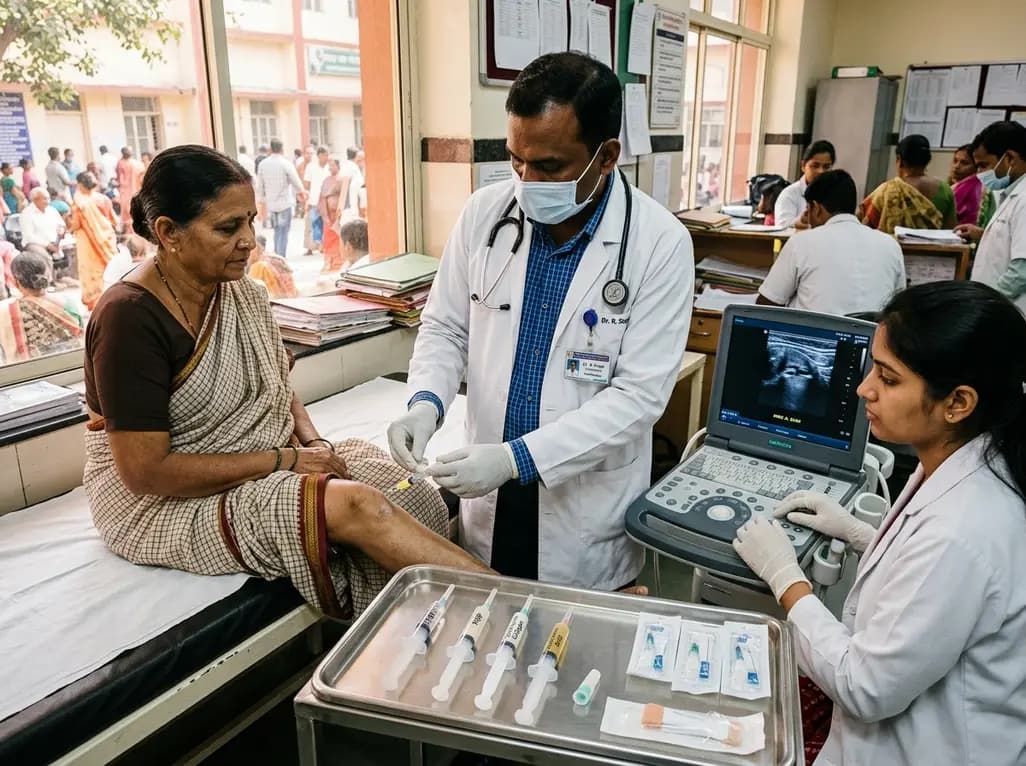
A randomized controlled trial compared ultrasound-guided intra-articular injections of PRP, hydrolyzed type I collagen, and hyaluronic acid in knee osteoarthritis. All therapies demonstrated significant improvements in WOMAC and pain scores at six months, supporting hydrolyzed collagen as a viable biological option.
Today
A groundbreaking review highlights mitochondrial quality control as a pivotal gating layer between metabolite signaling and regulated cell death, offering transformative therapeutic avenues across cardiology, oncology, and critical care.
Today
