.webp&w=384&q=75)

Loading, please wait...
Loading, please wait...
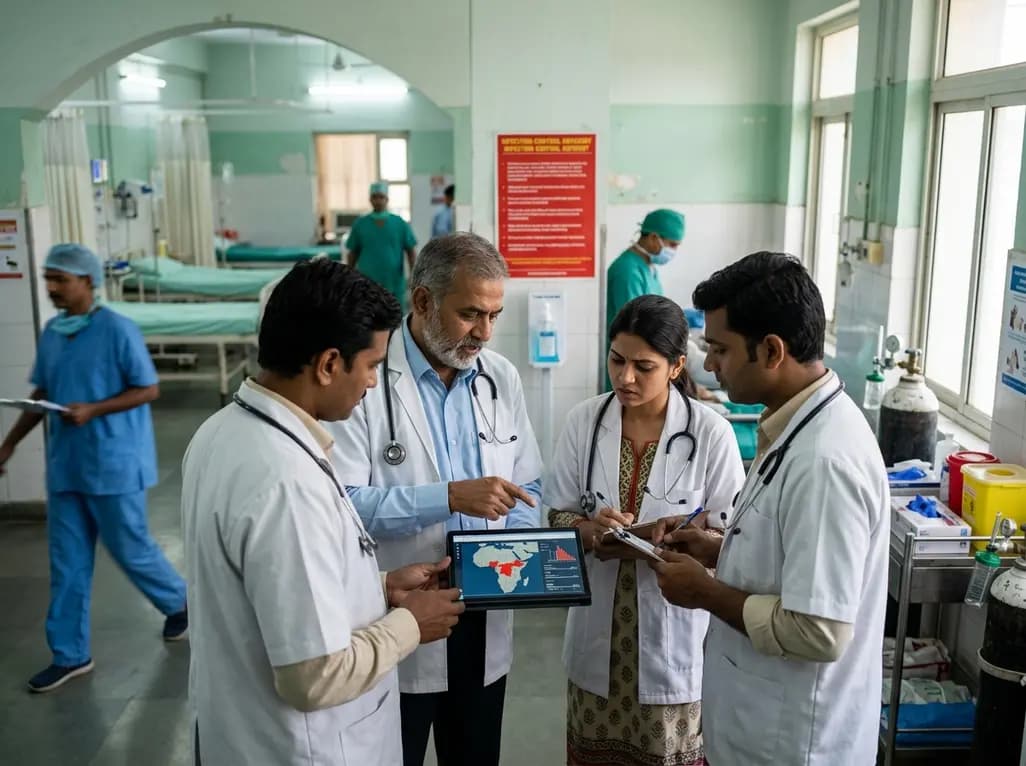
The ongoing Bundibugyo Ebola outbreak in the Democratic Republic of the Congo has officially crossed a grim historical threshold. Official government surveillance reports confirm that infections have exceeded 6,040 cases, resulting in more than 2,900 fatalities across several provinces. Consequently, this unprecedented surge represents the largest and fastest-moving filovirus epidemic in the nation's history. International health authorities are closely monitoring the emergency to assist frontline medical teams and prevent cross-border escalation.
The current epidemic has surpassed the scale of the protracted 2018 to 2020 outbreak in eastern Congo. Furthermore, the transmission dynamics show an unusually rapid acceleration across multiple health zones. The national communication ministry reported that active transmission clusters now involve six distinct administrative provinces. Specifically, health workers are confronting intense community transmission within Ituri, North Kivu, and Haut-Uele.
In addition, the outbreak maintains an alarming case fatality rate nearing fifty percent. Armed conflict and population displacement in northeastern regions severely complicate field surveillance and contact tracing. Consequently, unidentified chains of transmission continue to ignite new clusters in vulnerable communities. International health agencies emphasize that controlling the spread requires robust logistical resources and rapid epidemiological containment. Medical teams must maintain strict vigilance as cross-border mobility increases the risk of regional disease dissemination.
The genus Orthoebolavirus comprises several distinct viral species capable of causing severe hemorrhagic fever in humans. Among these pathogens, Bundibugyo ebolavirus represents a genetically distinct agent first identified in western Uganda in 2007. Structurally, the virus possesses a negative-sense single-stranded RNA genome encoding seven structural proteins. However, its antigenic profile differs significantly from the more common Zaire ebolavirus strain.
Importantly, the structural differences render existing monoclonal antibody therapies ineffective against this specific virus. Monoclonal cocktails such as Inmazeb and Ebanga target the Zaire glycoprotein and offer no neutralization against Bundibugyo isolates. Similarly, the licensed Ervebo vaccine does not provide established cross-protective immunity against this species. Therefore, clinicians cannot rely on standard targeted therapeutics during this crisis. Research consortia are currently accelerating phase three clinical trials to evaluate novel candidate vaccines and broad-spectrum antivirals under emergency protocols.
Clinicians must recognize that the incubation period for filovirus infection ranges between two and twenty-one days. Patients initially present with non-specific constitutional symptoms that mimic common tropical illnesses. Specifically, individuals develop sudden high-grade fever, severe fatigue, diffuse myalgia, and debilitating headaches. In addition, gastrointestinal symptoms frequently emerge within the first few days of symptom onset.
Patients rapidly develop profuse watery diarrhea, intractable vomiting, and severe abdominal cramping. As a result, profound dehydration and electrolyte derangements quickly precipitate hypovolemic shock. Later stages of disease may involve petechiae, mucosal bleeding, and visceral hemorrhage. Consequently, healthcare providers must obtain a detailed travel history for any patient presenting with acute febrile illness. Molecular confirmation requires reverse-transcription polymerase chain reaction assays performed under biosafety level four laboratory conditions. Clinicians must simultaneously evaluate and exclude malaria, dengue, leptospirosis, and other endemic acute infections.
Because approved species-specific antivirals remain unavailable, early and aggressive supportive intensive care forms the cornerstone of survival. Clinical evidence demonstrates that optimized supportive therapy significantly reduces overall mortality. First, clinicians must prioritize rapid intravascular volume resuscitation to counter massive gastrointestinal fluid losses. Intravenous balanced crystalloids should guide fluid resuscitation based on continuous hemodynamic assessment.
Furthermore, medical staff must perform frequent point-of-care laboratory monitoring. Correcting severe hypokalemia, hypomagnesemia, and metabolic acidosis prevents fatal cardiac arrhythmias. Additionally, healthcare providers should administer empirical broad-spectrum antimicrobials to treat potential bacterial translocation through compromised intestinal mucosa. Nutritional support and antiemetic medications also improve patient resilience throughout the acute viremic phase. Critical care teams must monitor for acute kidney injury and manage multi-organ failure with individualized physiological support.
Nosocomial amplification presents a critical danger during filovirus outbreaks. Medical facilities must institute rigorous infection prevention and control standards immediately upon triaging suspected cases. Pathogen transmission occurs through direct contact with infectious blood, body fluids, vomit, feces, and contaminated clinical surfaces. Therefore, healthcare institutions must enforce strict isolation protocols and designate controlled red-zone treatment wards.
Healthcare personnel must wear comprehensive personal protective equipment without exposing any skin surfaces. Essential protective gear includes fluid-resistant coveralls, dual-gloving systems, full-face shields, and particulate respirators. Furthermore, hospitals must establish supervised doffing zones with dedicated observers to prevent self-contamination during equipment removal. Environmental surfaces require regular decontamination using standard hospital-grade sodium hypochlorite solutions. Clinicians must also follow safe burial practices to curtail transmission during post-mortem care.
Rapid international travel means that localized viral hemorrhagic fever outbreaks represent a shared global concern. Although the current epicenters remain concentrated in Central Africa, imported infections remain an operational reality for international transport hubs. Medical practitioners worldwide must understand the essential clinical indicators of viral hemorrhagic fevers. Emergency departments should regularly review travel screening algorithms and isolation preparedness workflows.
In addition, national public health bodies must sustain active laboratory surveillance capabilities. Clinicians evaluating returning international travelers should maintain a high index of suspicion when encountering severe unexplained febrile syndromes. Prompt isolation of suspected patients prevents secondary healthcare-associated transmissions within domestic facilities. Ultimately, strengthening global health security relies on prompt reporting, rapid clinical identification, and transparent cross-border epidemiological collaboration.
Q1: Why are standard Ebola vaccines ineffective against the Bundibugyo strain?
Standard licensed vaccines, such as the recombinant vesicular stomatitis virus vector vaccine Ervebo, specifically target the glycoprotein surface spikes of Zaire ebolavirus. Because Bundibugyo ebolavirus exhibits substantial structural and antigenic divergence in its viral envelope proteins, Zaire-specific antibodies fail to provide adequate cross-neutralization. Consequently, public health agencies are conducting emergency clinical trials to evaluate candidate multi-strain and Bundibugyo-specific formulations to establish effective immune protection for frontline healthcare workers and high-risk contacts.
Q2: What is the primary difference between Bundibugyo and Zaire ebolavirus strains?
Both pathogens belong to the Orthoebolavirus genus and cause severe viral hemorrhagic fever with overlapping clinical manifestations. However, the historical case fatality rate for Bundibugyo virus infection typically ranges between thirty and fifty percent, whereas Zaire ebolavirus often exhibits mortality rates reaching seventy to ninety percent. Furthermore, the lack of approved targeted monoclonal therapeutics and licensed vaccines for the Bundibugyo species makes supportive physiological care the primary clinical intervention during current outbreaks.
Q3: How should emergency clinicians triage returning travelers with suspected viral hemorrhagic fever?
Emergency clinicians should immediately place any febrile patient with recent travel history to an outbreak zone into strict single-room isolation. Healthcare workers must avoid direct physical contact without wearing full personal protective equipment, including respirators, fluid-resistant gowns, and eye protection. In addition, teams must immediately alert institutional infection control officers and national public health authorities while conducting baseline diagnostic tests to rule out more common tropical illnesses like severe malaria and typhoid.
Disclaimer: This content is for informational and educational purposes only. It does not constitute medical advice or replace professional judgment. Refer to the latest local and national guidelines for clinical practice.
References

Read summarized clinical updates, watch expert medical content, and earn CME certifications right from your smartphone.
Open your smartphone camera to scan and install.





The DRC faces an unprecedented crisis as confirmed Ebola cases surpass 6,000 with nearly 3,000 deaths. Driven by the rare Bundibugyo strain lacking approved vaccines, this emergency highlights the urgent need for heightened triage vigilance, early supportive intensive care, and robust infection control protocols.
4 weeks back

Left bundle branch pacing is an emerging physiological resynchronization strategy for heart failure. While observational data and some trials show benefits over biventricular pacing, divergent trial outcomes highlight the importance of confirmed conduction capture and specialized operator technique.
Today
A retrospective study of 86,012 pregnancies demonstrates that size-selective cfDNA enrichment boosts mean fetal fraction to 18.88% and achieves a 59.20% PPV for fetal copy number variants. However, 85.83% of CNVs showed size discrepancies, underscoring the mandatory role of confirmatory microarray testing.
Today

Radiofrequency catheter ablation of the cavotricuspid isthmus successfully terminates typical atrial flutter. This article reviews the mechanisms driving coronary sinus electrogram changes, wavefront activation pathways, and clinical criteria to verify bidirectional block during electrophysiology studies.
Today
A 12-week within-subject trial compared incline and preacher dumbbell curls, finding incline curls elicited greater biceps brachii growth while preacher curls favored the brachialis and brachioradialis. Total elbow flexor hypertrophy and regional growth profiles remained comparable between the two exercises.
Today
A cross-sectional study demonstrates that increased BMI in adolescents significantly enhances mandibular length and alters salivary adipokines like adiponectin and resistin, providing novel insights into craniofacial growth and orthodontic planning.
Today
