.webp&w=384&q=75)

Loading, please wait...
Loading, please wait...

Cognitive neuroscience increasingly recognizes that cellular bioenergetics shapes the computational architecture of the central nervous system. Historically, classical cognitive models treated neural computation as abstract information processing detached from biological fuel consumption. However, contemporary investigations demonstrate that brain glucose metabolism serves as an active generative constraint on cognitive capacity. By uniting functional positron emission tomography with network neuroscience, clinicians and researchers can now observe dynamic metabolic resource allocation across functional neural assemblies.
The human brain comprises only two percent of total body mass, yet it consumes nearly twenty percent of resting metabolic energy. Synaptic transmission accounts for the largest fraction of this substantial energy budget. Specifically, the maintenance of resting membrane potentials and the reversal of ion fluxes during action potentials require continuous adenosine triphosphate replenishment. Consequently, brain glucose metabolism directly dictates the rate and reliability of neurotransmission across cortical synapses.
When neurons fire, sodium-potassium pumps work vigorously to restore ionic gradients. Astrocytes concurrently take up extracellular glutamate and stimulate localized aerobic glycolysis to supply lactate to active axons. Therefore, bioenergetic availability establishes physical boundaries for information transfer. When metabolic support diminishes, synaptic signaling falters, leading to impaired processing fidelity. By incorporating these biological costs into computational frameworks, investigators can bridge the gap between microscopic cellular expenditures and macroscopic cognitive phenomena.
Traditional static positron emission tomography provides valuable baseline measurements of regional cerebral glucose utilization. However, constant-infusion functional PET now enables high temporal resolution tracking of dynamic glucodynamics in real time. Because functional PET measures momentary shifts in tracer uptake during active mental tasks, clinicians can directly observe metabolic recruitment during complex cognitive operations.
Furthermore, these dynamic metabolic measurements expose how neural circuits redistribute glucose during task transitions. Rather than exhibiting uniform activation, brain networks demonstrate selective energetic prioritization to optimize computational throughput. For instance, high-demand executive tasks trigger rapid glucose shunting toward prefrontal and parietal hubs. Simultaneously, lower-priority sensory regions conserve metabolic resources. Consequently, dynamic glucodynamics reflects an ongoing evolutionary strategy designed to balance cognitive performance against strict metabolic limitations.
Network neuroscience models the human connectome as an interconnected web of anatomical pathways and functional interactions. Highly connected topological hubs facilitate global communication across distant cortical zones. However, maintaining these rich-club nodes requires disproportionately high metabolic investment. Therefore, metabolic network neuroscience evaluates how local glucose consumption sustains topological efficiency and network-level stability.
Moreover, temporal flexibility represents the capacity of neural networks to switch dynamically between integrated and segregated configurations. High temporal flexibility allows rapid behavioral adaptation during volatile environmental changes. Recent neuroenergetic models confirm that regions with robust metabolic reserves sustain greater dynamic reconfigurations without computational failure. Conversely, bioenergetic depletion restricts network modularity, thereby degrading operational flexibility. Thus, cerebral energy distribution preserves both structural cohesion and cognitive adaptability across distributed neural networks.
Integrating metabolic modeling into clinical practice offers immense diagnostic value for neurologists and radiologists encountering neurodegenerative conditions. Alzheimer's disease, frontotemporal lobar degeneration, and Lewy body dementia all display characteristic topographies of fluorodeoxyglucose hypometabolism. Notably, localized metabolic decline frequently precedes detectable structural atrophy by multiple years. Therefore, identifying bioenergetic deficits facilitates earlier and more targeted clinical interventions.
Furthermore, vascular cognitive impairment and small-vessel ischemic disease frequently impair microvascular substrate delivery. When microvascular blood flow diminishes, compromised capillary networks fail to deliver adequate glucose during cognitive challenges. As a result, affected individuals experience progressive mental fatigue, executive dysfunction, and memory consolidation deficits. Neuroenergetic modeling clarifies why metabolic failure produces widespread cognitive symptoms across distinct clinical populations, assisting physicians in risk stratification and therapeutic monitoring.
Advancements in simultaneous hybrid imaging platforms promise to transform clinical neuroenergetics. Combining functional magnetic resonance imaging with high-resolution functional PET allows simultaneous measurement of blood-oxygen-level-dependent signals and fluorodeoxyglucose kinetics. Consequently, neuroscientists can directly distinguish between hemodynamic neurovascular coupling and genuine glucose uptake during cognitive tasks.
Additionally, modern artificial intelligence models increasingly utilize metabolic constraints to enhance energy-efficient computing architectures. Biological neural networks achieve extraordinary computational output on minimal power budgets through sparse coding and metabolic gating. By deciphering these natural biological mechanisms, medical researchers can better understand resilience factors in normal cognitive aging. In the near future, metabolic biomarkers will guide personalized therapeutic regimens for patients facing neurodegenerative and neuropsychiatric disorders.
Standard static fluorodeoxyglucose PET measures cumulative radiotracer accumulation over an extended resting interval to generate baseline regional metabolic maps. In contrast, constant-infusion functional PET tracks dynamic, task-induced fluctuations in glucose consumption over short time scales. This higher temporal resolution allows clinicians to observe immediate glucodynamic shifts during active cognitive engagement, revealing task-specific metabolic resource allocation.
Synaptic transmission and post-synaptic ion restoration consume approximately eighty percent of cerebral energy expenditure. Because the brain cannot store excess glucose, metabolic delivery imposes absolute mathematical constraints on simultaneous neural firing rates. Therefore, energetic limitations dictate how many functional networks can activate concurrently, directly bounding human working memory capacity, processing speed, and sustained attention.
In clinical settings across India, early diagnosis of neurodegenerative disorders remains critical for effective long-term disease management. Neuroenergetic network modeling identifies regional hypometabolic changes before irreversible structural atrophy appears on anatomical magnetic resonance scans. Consequently, clinicians can differentiate Alzheimer's disease from frontotemporal dementia earlier, permitting timely lifestyle interventions, metabolic optimization, and targeted pharmacological therapies.
Disclaimer: This content is for informational and educational purposes only and should not be considered as medical advice. Healthcare professionals should make clinical decisions based on their independent clinical judgment and individual patient circumstances. Refer to the latest local and national guidelines for clinical practice.
References
Deery HA et al. Bridging metabolic-cognitive modelling: from synaptic cost to functional brain organisation. Behav Brain Sci. 2026 Oct 02. doi: 10.1017/S0140525X2610630X. PMID: 42825783.
Haueis P, Colaço DJ. Metabolic considerations for cognitive modeling. Behav Brain Sci. 2025;48:e1. doi: 10.1017/S0140525X25103956.
Jamadar SD, Ward PGD, Liang EX, et al. Metabolic connectome derived from functional [18F]FDG PET. Neuroimage. 2021;225:117496. doi: 10.1016/j.neuroimage.2020.117496.

Read summarized clinical updates, watch expert medical content, and earn CME certifications right from your smartphone.
Open your smartphone camera to scan and install.





Recent neuroscientific insights bridge metabolic and cognitive modeling by evaluating how brain glucose metabolism drives synaptic efficiency and functional neural organization. Functional PET and network neuroscience illuminate how neuroenergetics influences cognitive capacity and neurodegenerative disorders.
Today

With Delhi reporting nearly triple the vector-borne infections since August, healthcare practitioners face heightened diagnostic challenges. Timely differentiation between dengue and malaria, vigilant monitoring during the critical afebrile phase, and strict avoidance of NSAIDs remain vital for reducing morbidity.
Today

A scoping review reveals how pregnancy affects phonation through laryngeal edema and reduced phonation time rather than major acoustic pitch alterations. Learn how to identify, evaluate, and manage vocal symptoms in expectant mothers.
Today

According to WHO data, average lifespan reached 73.3 years in 2023, recovering from pandemic lows. However, healthy life expectancy lags at 62.8 years due to surging noncommunicable conditions like cardiovascular disease and dementia, demanding proactive primary screening and sustained chronic care.
Today
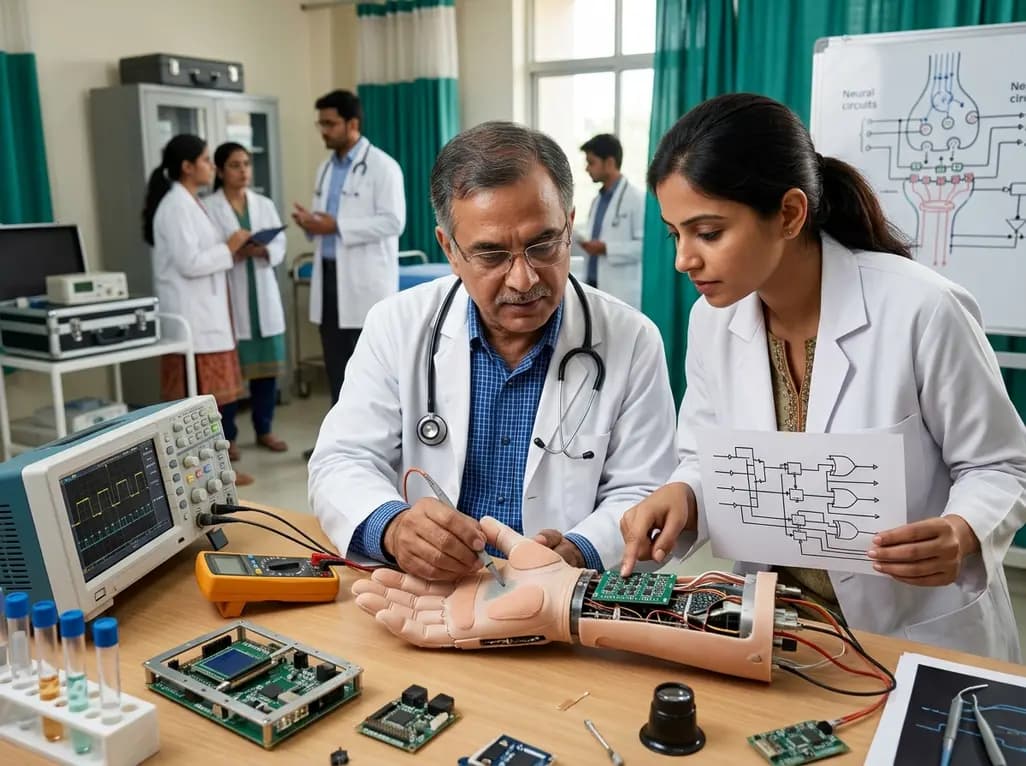
Researchers have engineered an artificial sensory-pain integrated receptor using a multi-threshold organic synaptic transistor. The system distinguishes benign touch from noxious stimuli, enabling safer, more responsive prosthetic limbs with built-in memory and simplified hardware architecture.
Today
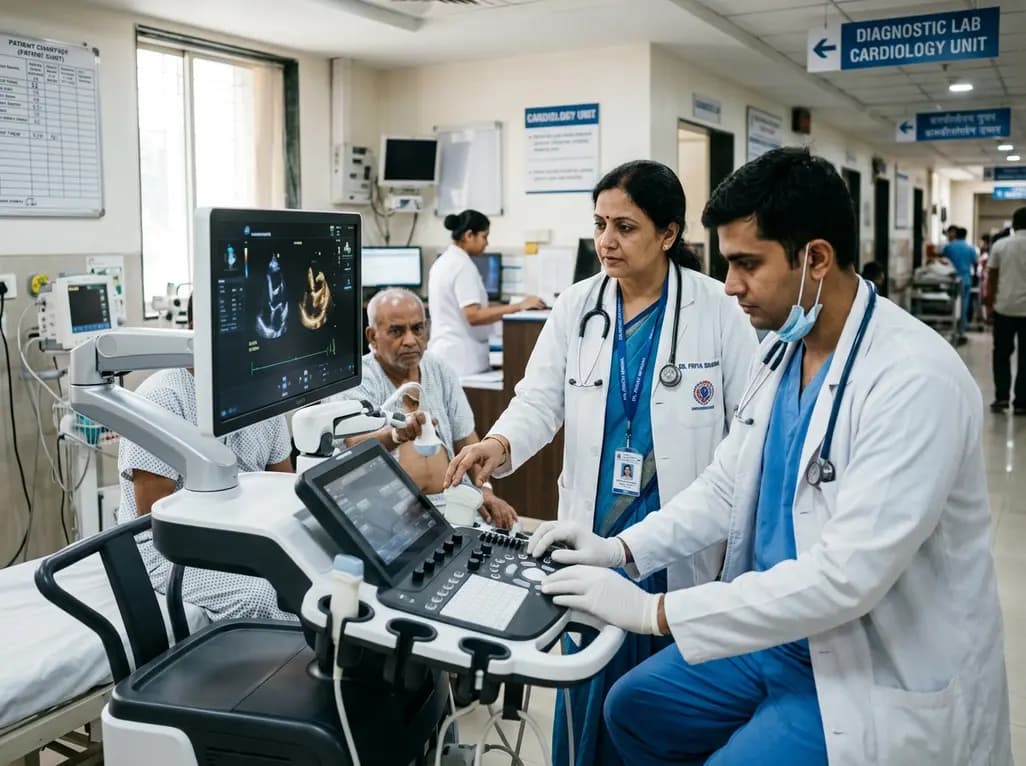
Medical robotics is transitioning beyond operative suites into diagnostics, cardiology, and endocrinology. Explore how innovations in tele-robotics, AI integration, and nanomedicine are overcoming geographical barriers and transforming precision healthcare delivery across India's evolving disease landscape.
Today
