.webp&w=384&q=75)

Loading, please wait...
Loading, please wait...
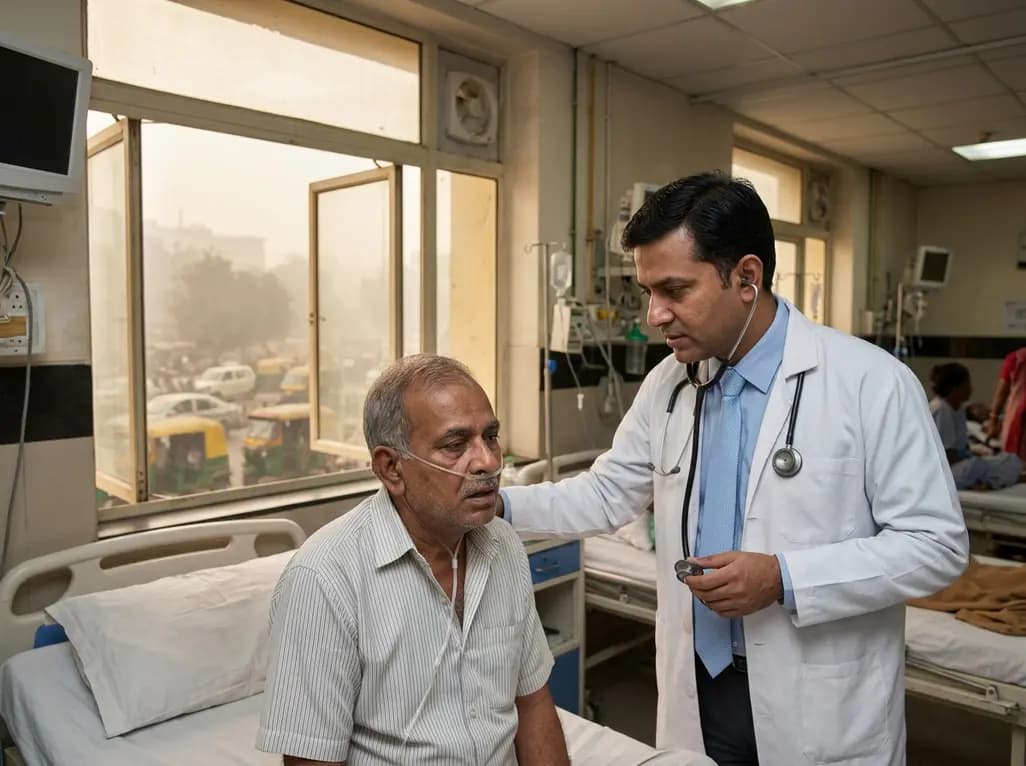
Currently, air quality remains a significant concern in India and black carbon is a major pollutant. Traditionally, scientists viewed it primarily as a climate-forcing agent, but new research reveals that black carbon oxidative potential is remarkably high. Specifically, the gas-liquid-solid interface of aerosols acts as a catalytic reactor because of strong interfacial electric fields. Consequently, these microdroplets drive the ultrafast production of hydroxyl radicals, so they significantly amplify the oxidative capacity of the atmosphere.
Furthermore, these localized electric fields induce a process called Field-Induced Carrier Separation. Similarly, this mechanism suppresses electron-hole recombination and accelerates redox cycling. Therefore, black carbon aerosols produce hydroxyl radicals at rates reaching up to 12 μmol s. Additionally, photoaging promotes surface defects so it establishes a positive feedback loop. In fact, this synergy allows black carbon to act as a potent, overlooked natural photocatalyst. Moreover, these findings are critical for clinical practice because rapid radical production leads to the formation of secondary aerosols.
Subsequently, the increased formation of secondary pollutants can trigger lung inflammation and worsen chronic respiratory diseases. For example, patients in highly polluted areas may experience more frequent exacerbations of asthma or COPD. Thus, clinicians should consider the high black carbon oxidative potential when assessing environmental health risks. In conclusion, black carbon aerosols are not merely climate agents but active chemical threats to public health.
Black carbon particles are small enough to penetrate deep into the lungs. They are associated with cardiovascular diseases, respiratory infections, and increased oxidative stress in human tissues.
Hydroxyl radicals are highly reactive and drive the formation of secondary organic aerosols. While they help break down some pollutants, their overproduction can increase the overall toxicity of the air we breathe.
India has some of the highest concentrations of black carbon globally due to biomass burning and vehicular emissions. This study explains why air pollution in these regions may be more chemically reactive than previously thought.
Disclaimer: This content is for informational and educational purposes only. It does not constitute medical advice or a professional opinion. Always seek the advice of a qualified healthcare provider with any questions you may have regarding a medical condition. Refer to the latest local and national guidelines for clinical practice.
References
Liu Y et al. Interfacial Electric Fields Drive Fast Hydroxyl Radical Production in Black-Carbon-Bearing Microdroplets. J Am Chem Soc. 2026 Jun 02. doi: 10.1021/jacs.6c04030. PMID: 42228377.
Janssen NAH et al. Black carbon as an additional indicator of the adverse health of airborne particles compared to PM10 and PM2.5. Environ Health Perspect. 2011;119(12):1691-1699. doi:10.1289/ehp.1003369.
World Health Organization. Health effects of black carbon. Copenhagen: WHO Regional Office for Europe; 2012.

Read summarized clinical updates, watch expert medical content, and earn CME certifications right from your smartphone.
Open your smartphone camera to scan and install.





Black carbon aerosols are more than climate agents; they are potent photocatalysts producing hydroxyl radicals, impacting air quality and respiratory health...
4 months ago

As monsoon seasons elevate arboviral disease threats, Tamil Nadu has initiated an ICMR-monitored evaluation of the tetravalent dengue vaccine in Tenkasi district. Clinicians emphasize clinical monitoring, public prevention, and high-quality early pediatric care to reduce disease morbidity across endemic regions.
Today

Leucine Rich Bio has introduced South Asia's first comprehensive vaginal microbiome test, BugSpeaks. By profiling microbial dysbiosis, pathogens, and antimicrobial resistance, this next-generation diagnostic platform provides clinicians with deeper insights into recurrent infections, fertility, and reproductive health.
Today

Review how tailored exercise programs benefit frail older patients with heart failure. Explore pathophysiological mechanisms, individualized training prescriptions, and strategies to overcome adherence barriers in clinical practice.
Today

This comparative study evaluates posterior labral tears with and without glenohumeral instability, highlighting distinct demographic patterns, MRI underestimation in stable shoulders, and successful arthroscopic repair outcomes.
Today

A clinical study demonstrates that early intervention with tocilizumab, either as monotherapy or bridged with corticosteroids, achieves significant proptosis reduction and resolves active inflammation in treatment-naive thyroid eye disease.
Today
