.webp&w=384&q=75)

Loading, please wait...
Loading, please wait...
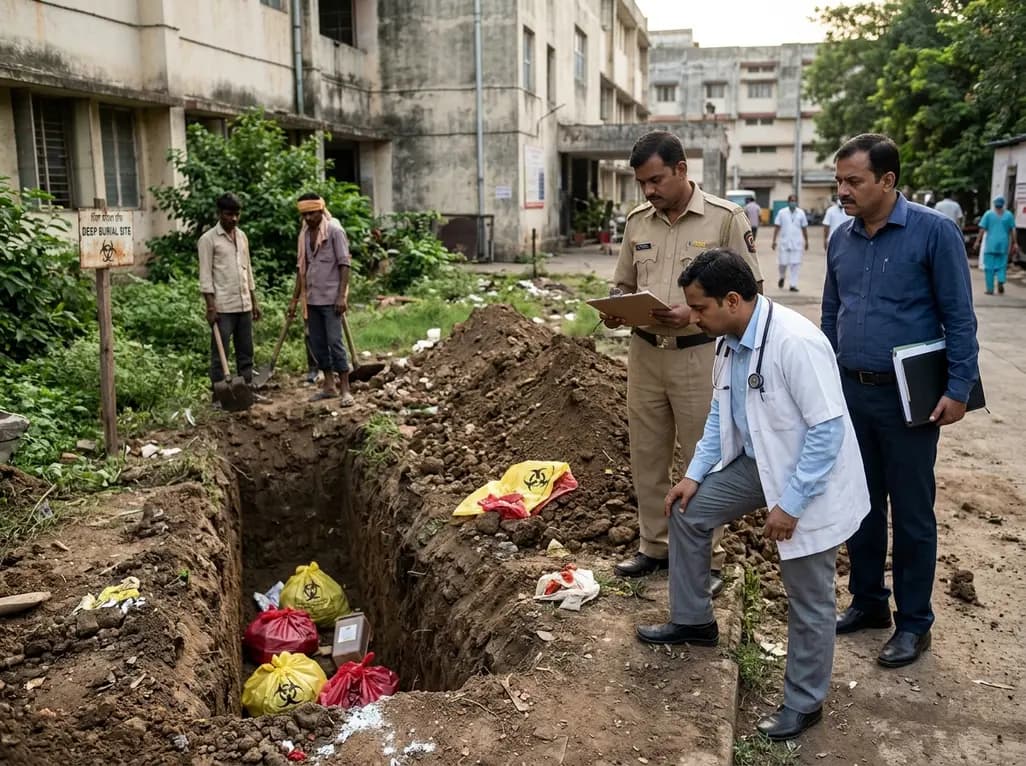
Healthcare facilities across India generate substantial volumes of clinical refuse daily, requiring safe and structured treatment to protect public health and ecological integrity. Proper management of clinical refuse prevents nosocomial infections and environmental contamination. Consequently, regulatory frameworks establish strict guidelines governing handling, treatment, and final disposal. Under the Bio-Medical Waste Management Rules, 2016, biomedical waste deep burial serves as a limited and conditional disposal method. Authorities permit this approach exclusively in rural or remote geographic regions where access to a Common Bio-Medical Waste Treatment Facility (CBWTF) is entirely unavailable. Furthermore, healthcare facilities cannot initiate deep burial independently; they must secure explicit prior authorization from prescribed state pollution control authorities.
The regulatory framework specifies rigid engineering parameters to prevent hazardous substances from leaching into surrounding ecosystems. For instance, burial pits must be constructed in designated areas away from human habitation and natural water bodies. Facility managers must maintain comprehensive operational records while securing the site against scavenger animals and unauthorized personnel. When facilities adhere to these strict provisions, deep burial minimizes biohazard risks in isolated regions. However, unauthorized adoption or improper execution of deep burial compromises environmental safety and public health, creating severe long-term contamination risks across local communities.
Recently, the Central Pollution Control Board (CPCB) submitted a comprehensive compliance evaluation to the National Green Tribunal (NGT) regarding waste management practices. The report revealed widespread operational lapses in biomedical waste deep burial across seventeen states and Union Territories. Out of 9,178 healthcare facilities utilizing deep burial practices, regulatory inspections confirmed that only 5,715 facilities complied fully with standard statutory provisions. Consequently, thousands of medical centers operate in direct breach of environmental safety standards.
The audit highlighted significant regional disparities and severe systemic compliance gaps. State-level data demonstrated complete non-compliance in specific regions, raising immediate alarms among environmental regulators. For instance, in Uttar Pradesh and Rajasthan, all inspected healthcare facilities—111 and 33 medical centers respectively—failed to satisfy basic regulatory requirements. Additionally, CPCB inspections revealed that 341 healthcare facilities conducted deep burial operations without obtaining mandatory authorization from prescribed state pollution control boards. These findings demonstrate widespread institutional negligence regarding clinical waste regulations. Therefore, regulatory authorities have initiated strict oversight measures to address administrative oversights and enforce uniform accountability across all clinical institutions nationally.
Improper disposal of infectious clinical waste poses severe threats to environmental health and local ecosystems. Non-compliant deep burial practices can contaminate surrounding soil, surface water bodies, and subterranean aquifers, facilitating the spread of pathogenic organisms and toxic chemicals. To prevent subterranean contamination, statutory rules mandate that burial pits maintain a minimum distance of six meters above the groundwater table. However, the CPCB report identified 477 healthcare facilities operating in direct violation of this crucial hydrological safety margin, exposing groundwater resources to dangerous biological pathogens.
When healthcare facilities execute deep burial near high water tables, percolating rainwater washes hazardous microorganisms into local water aquifers. Consequently, nearby communities face heightened exposure risks to waterborne diseases, pharmaceutical residues, and antibiotic-resistant bacteria. Furthermore, improperly secured burial pits attract insects, rodents, and stray animals, creating secondary vectors for disease transmission. Because environmental contamination directly impacts public health, medical administrators must prioritize environmental safety alongside clinical care. Implementing rigorous monitoring protocols ensures that waste management practices do not undermine community health standards or degrade local ecological systems.
In response to widespread statutory violations, the National Green Tribunal has ordered decisive regulatory interventions to enforce compliance. A judicial bench headed by NGT Chairperson Justice Prakash Shrivastava and expert member Dr. Afroz Ahmad evaluated the CPCB compliance report. Counsel for the CPCB confirmed that official communications have been issued to default State Pollution Control Boards and Pollution Control Committees. Regulators have granted violating states an eight-week ultimatum to rectify operational deficiencies and achieve full compliance with waste treatment protocols.
If non-compliant healthcare facilities fail to rectify deficiencies within the stipulated timeframe, the CPCB will issue binding enforcement directives under Section 5 of the Environment (Protection) Act, 1986. This statutory provision grants central authorities extensive powers to regulate, restrict, or completely prohibit non-compliant industrial and medical operations. Furthermore, regulatory agencies possess the legal authority to order the immediate closure of defaulting healthcare facilities and terminate vital utility services, including water and electricity supply. The tribunal directed the CPCB to submit a comprehensive progress report prior to the scheduled hearing on October 28, 2026, ensuring continuous judicial scrutiny.
Medical professionals and healthcare facility administrators hold legal and ethical responsibilities to ensure safe waste management within their practice environments. Clinical leaders must establish robust internal protocols for segregation, color-coded collection, and safe transport of infectious waste. While treatment facilities often manage final waste processing, institutional leaders remain accountable for maintaining statutory approvals and verifying that disposal practices conform strictly to legal standards. Therefore, healthcare administrators in rural settings must continuously evaluate their reliance on deep burial methods.
Healthcare facilities must prioritize transitioning from deep burial to modern, centralized waste treatment systems wherever feasible. Modern Common Bio-Medical Waste Treatment Facilities utilize advanced incineration, autoclaving, and shredding technologies to eliminate pathogens efficiently without subterranean disposal risks. Additionally, clinical staff require continuous training regarding waste management rules, segregation at source, and safety protocols. By fostering strong institutional compliance and collaborating with regional environmental authorities, medical leaders can safeguard public health, avoid legal penalties, and maintain exemplary standards of ecological stewardship across all clinical operations.
Q1: What is biomedical waste deep burial and when is it legally permitted in India?
Biomedical waste deep burial is a waste disposal method involving the underground burial of infectious healthcare waste in specially prepared pits. Under the Bio-Medical Waste Management Rules, 2016, this method is strictly permitted only in rural or remote areas where common treatment facilities are unavailable. Facilities must secure prior formal authorization from state pollution control boards and maintain specific environmental safeguards, including a mandatory six-meter depth above the groundwater table.
Q2: Why did the NGT and CPCB intervene regarding medical waste disposal practices?
The Central Pollution Control Board and National Green Tribunal intervened after discovering widespread non-compliance across 17 states and Union Territories. Out of 9,178 healthcare facilities using deep burial, over 3,400 violated regulatory standards. Primary violations included operating without state authorization and failing to maintain the mandatory six-meter clearance above groundwater levels. Authorities intervened to prevent severe environmental contamination, protect public health, and enforce statutory compliance under environmental protection laws.
Q3: What legal actions can healthcare facilities face for non-compliance with biomedical waste rules?
Healthcare facilities failing to comply with biomedical waste regulations face severe legal consequences under Section 5 of the Environment (Protection) Act, 1986. Regulatory authorities can issue binding directives requiring immediate rectification within an eight-week window. Continued non-compliance can result in mandatory closure of the medical facility, prohibition of operations, and the immediate disconnection of essential utility services such as electricity and water supplies, alongside potential criminal penalties.
Disclaimer: This content is for informational and educational purposes only. It does not constitute medical advice or replace professional judgment. Refer to the latest local and national guidelines for clinical practice.
References

Read summarized clinical updates, watch expert medical content, and earn CME certifications right from your smartphone.
Open your smartphone camera to scan and install.





The Central Pollution Control Board (CPCB) has reported widespread violations of biomedical waste deep burial regulations across 17 states and Union Territories to the National Green Tribunal (NGT). Healthcare facilities face strict enforcement under Section 5 of the Environment (Protection) Act, 1986.
Today
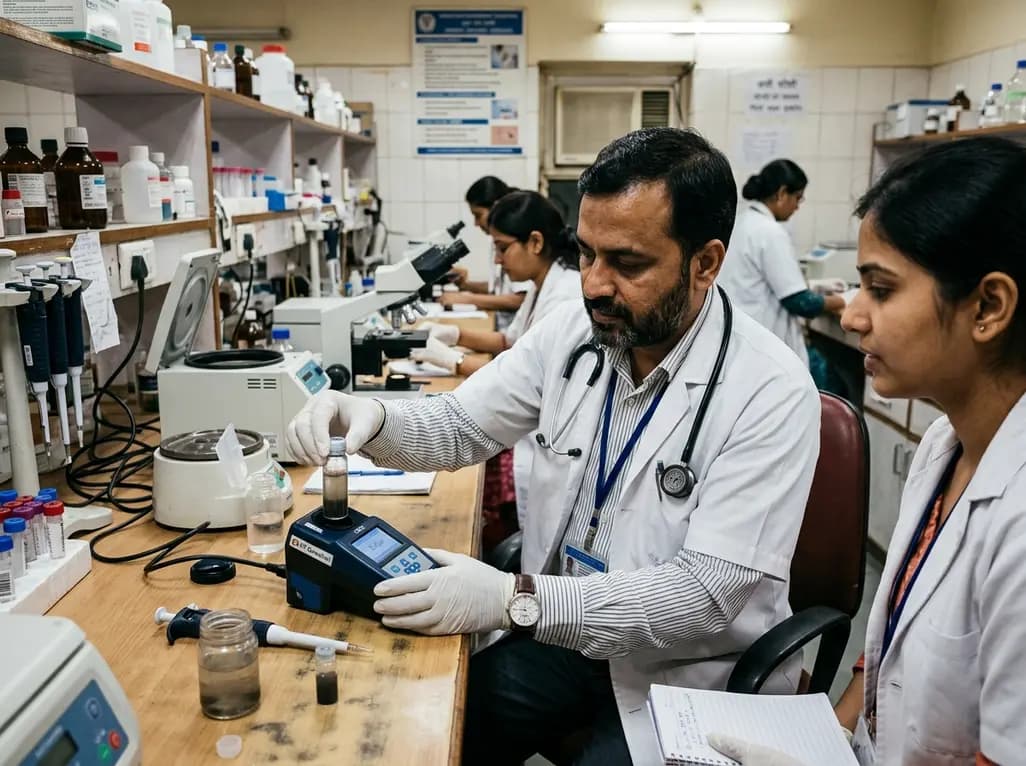
IIT Guwahati researchers have developed E-Eye, a portable optical sensing device that offers rapid, point-of-care detection of heavy metals and bacteria in water and biological samples. Operating on the Beer-Lambert law, this affordable device strengthens water quality monitoring across India.
Today

A photovoice study in Elmhurst, Queens explores how low-income immigrant pregnant women express maternal resilience through nature, family bonds, community resources, and psychological reframing, providing vital insights for strengths-based prenatal care.
Today

A systematic review and meta-analysis of 21 RCTs reveals that exercise snacks significantly improve VO2max and peak power output in adults. While aerobic gains were strongest in adults under 50, power output improved across all ages. Evidence for blood lipids and body fat changes remains inconsistent.
Today

An insightful analysis of next-generation cytokine therapies targeting interleukins 34 through 41, highlighting pro-inflammatory mechanisms, pro-resolving pathways, metabolic integration, and key translational strategies for major musculoskeletal disorders.
Today

A study demonstrates that gomisin N (25 µM) protects MIN6 pancreatic beta-cells by alleviating endoplasmic reticulum and oxidative stress induced by CPA. By reducing ROS levels and promoting correct proinsulin folding, gomisin N restores insulin secretion and beta-cell viability in diabetes models.
Today
